Grain Free Chicken Dog Food Recipe Your Pup | Healthy
If you want your dog to have steady energy, a healthy appetite, and a coat that actually feels good when you run your hand over it, food matters more than most people realize. I learned this the hard way after dealing with itchy skin, inconsistent stools, and that afternoon crash where my dog just looked tired instead of playful. That’s what pushed me toward making meals at home—and this grain-free chicken recipe became a staple.
This isn’t about trends or fear of grains. It’s about control. When you cook for your dog, you decide what goes in the bowl, how fresh it is, and whether it actually serves a purpose. This recipe focuses on clean protein, easy-to-digest vegetables, and enough healthy fat to support energy without overloading the system.
It’s straightforward, affordable, and realistic to make in batches. Once you see how your dog responds—better digestion, more consistent energy, and a bowl that gets cleaned every single time—it’s hard to go back.
What Makes This Special
What sets this recipe apart is how intentional it is. Every ingredient earns its place. There’s no filler added just to bulk it up, and nothing is included “just because dogs can eat it.” Chicken provides a reliable protein source that most dogs tolerate well, while vegetables add fiber, vitamins, and moisture that dry food simply can’t deliver.
Going grain-free here isn’t about demonizing grains. It’s about reducing common triggers. Over the years, I’ve noticed that many dogs with itchy skin, frequent licking, or gassy stomachs improve when heavy grains are removed and replaced with vegetables that are gentler on digestion. This approach keeps energy steady instead of spiking and crashing.
Another big advantage is flexibility. You can adjust portions easily, tweak fat levels, and swap proteins if needed without rebuilding the entire recipe. That kind of adaptability matters when your dog ages, becomes more active, or needs weight management.
Most importantly, you know exactly what’s in the bowl. No mystery ingredients, no artificial colors, no preservatives hiding behind complicated names. Just real food, prepared with intention.
Shopping List – Ingredients
This ingredient list is built to balance nutrition, digestion, and practicality.
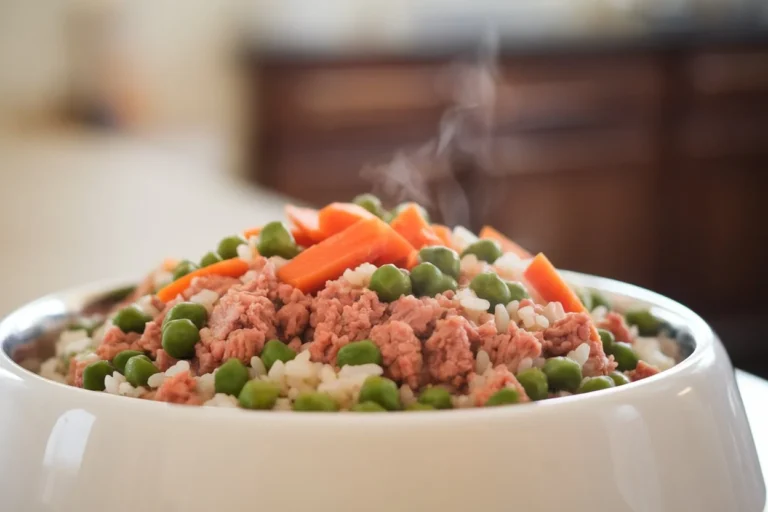
Boneless chicken thighs and chicken breast work together to provide both flavor and lean protein. Thighs add richness and energy, while breast meat keeps the overall fat level in check.
Carrots, green beans, and zucchini add fiber and micronutrients without unnecessary calories. Pumpkin puree supports digestion and stool quality, which becomes especially important when feeding homemade food regularly.
Cauliflower rice replaces grains as a light, digestible base that adds volume without irritation. Olive oil or salmon oil contributes essential fatty acids that support skin, coat, joints, and brain health.
Turmeric and ginger are optional, but when used lightly, they can support inflammation control and digestion. The broth adds moisture and flavor, making the food more appealing while keeping hydration high.
Calcium and a canine multivitamin are not optional extras—they’re essential. When you cook with boneless meat, calcium must be added deliberately to keep bones, teeth, and muscles healthy long term.
Step-by-Step Instructions
Start by preparing the chicken properly. Trimming excess fat keeps the meal balanced, and cutting the meat into even pieces ensures it cooks uniformly and stays tender.
Lightly cooking the chicken first helps lock in flavor without drying it out. You’re not trying to brown or fry it—just gently cook the surface so it finishes properly during simmering.
Once the vegetables are added, they soften slightly and begin to release their natural moisture. This is where the meal starts to come together. Adding broth, cauliflower rice, and pumpkin creates a cohesive mixture that simmers gently rather than boiling aggressively.
Seasoning is minimal and intentional. Dogs don’t need salt, and ingredients like onion or garlic should never be used. Gentle spices, if included, are added for digestive support only.
Cooling the food before adding supplements is critical. Heat can destroy nutrients, and rushing this step can undo the effort you put into making a balanced meal. Once cooled, oils, calcium, and vitamins are mixed in evenly.
Portioning the food right away saves time later and helps prevent overfeeding. Labeling containers may feel unnecessary at first, but it becomes invaluable when you batch cook regularly.
Feeding Note
A reliable starting point is feeding about 2–3% of your dog’s ideal body weight per day, split into two meals. This isn’t a fixed rule—it’s a guideline. Active dogs often need more, while seniors or less active dogs may need less.
Watch your dog. Energy levels, stool consistency, body condition, and coat quality will tell you more than a calculator ever will. Adjust slowly and consistently.
Your vet should always be part of the conversation, especially if your dog has health conditions or special needs.
Preservation Guide
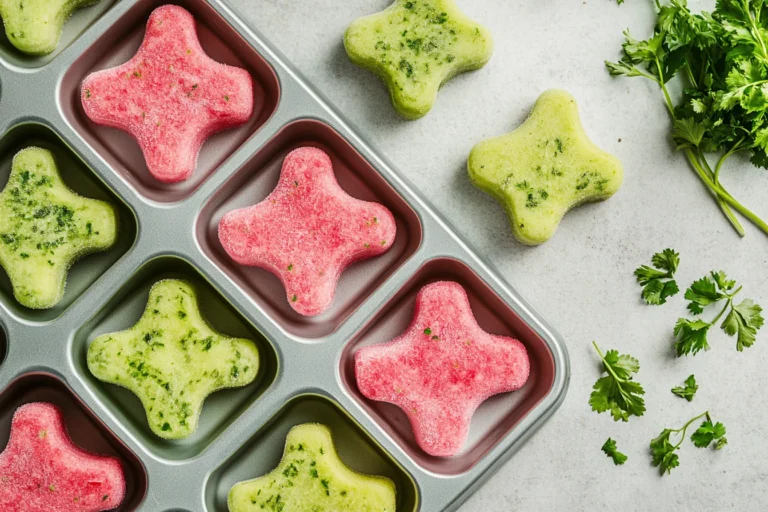
Homemade food stays freshest when handled properly. In the fridge, it’s best used within a few days. For longer storage, freezing in portioned containers works extremely well.
Flattening freezer bags speeds up thawing and saves space. Thaw slowly in the fridge whenever possible, and avoid reheating supplements directly. Gently warming the food improves aroma and palatability without destroying nutrients.
Always serve the food warm, not hot. Dogs don’t need piping-hot meals, and overheated food can reduce nutritional value.
Nutritional Perks
Chicken supports lean muscle, recovery, and overall strength, especially for dogs that stay active. The vegetables provide fiber that supports digestion without the heaviness some grains cause.
Healthy fats play a major role in skin health, coat shine, joint support, and mental sharpness. When dogs lack proper fats, it shows quickly in dull coats and flaky skin.
Micronutrients from vegetables and optional spices support immunity and digestive comfort. Added calcium ensures bones remain strong and prevents long-term imbalances that homemade diets can cause if not managed correctly.
Balance isn’t optional here—it’s the foundation.
Don’t Make These Errors
Skipping calcium is the fastest way to turn a good recipe into a harmful one. Boneless meat without calcium leads to serious nutritional issues over time.
Using unsafe ingredients, even in small amounts, is never worth the risk. Overcooking until the food becomes mushy reduces both nutrition and enjoyment.
Portion guessing should only be temporary. Regular adjustments based on real observations are what keep homemade feeding successful.
Hydration matters. Even with moist food, fresh water should always be available.
Supplements should only be added after cooling. Heat damage is real, and patience protects nutrient quality.
Recipe Variations
For dogs needing lower fat, using all chicken breast and reducing oil works well. Dogs with joint concerns may benefit from additional joint-support supplements added after cooling.
Sensitive stomachs often do better with simple swaps like sweet potato instead of zucchini and minimal spices. If chicken becomes an issue, turkey or lean pork can replace it without changing the overall method.
Extra fiber from ground flaxseed can support digestion when added carefully. Bone-in versions should only be attempted by experienced cooks using proper equipment to eliminate any risk.
FAQ
How much should I feed my dog daily?
Start with 2–3% of ideal body weight and adjust based on activity and condition.
Is grain-free always better?
Not for every dog. This approach works well for dogs with sensitivities, but quality and balance matter more than labels.
Do I need supplements?
Yes. Calcium and a canine multivitamin are essential when feeding boneless homemade meals.
Can I use a slow cooker?
Yes. Add supplements only after the food has cooled.
What if my dog is picky?
Warming the food slightly or adding a small amount of salmon oil often solves the issue quickly.
How do I transition from kibble?
Gradual changes over one to two weeks help prevent digestive upset.
Can I batch cook for a month?
Yes, as long as the food is cooled, portioned, and frozen properly.
Is this safe for puppies?
Puppies require specific mineral and calorie adjustments. Always confirm with your vet.
Wrapping Up of Grain Free Chicken Dog Food Recipe
This grain-free chicken dog food recipe gives you control, clarity, and confidence. You know what you’re feeding, why it’s there, and how it supports your dog’s body over time. When done correctly—with proper supplements and thoughtful portions—it can outperform many commercial options in both quality and results.
Dogs notice the difference. Energy improves, coats shine, digestion settles, and mealtime becomes something they genuinely look forward to.
And yes—bowls get licked clean. Every time.