Easy Homemade Turkey Dog Food Recipe (Your Pup Will Love It)
If you’ve ever looked at your dog’s bowl and wondered whether they’re really getting the nutrition they deserve, you’re not alone. Many dog parents reach a point where they want better control over what goes into their dog’s body—especially when digestive issues, food sensitivities, or picky eating come into play. Homemade turkey dog food is one of those meals that checks all the right boxes: it’s simple, nourishing, easy on the stomach, and genuinely enjoyable for dogs.
Turkey isn’t just another protein option. When prepared correctly and paired with the right supporting ingredients, it becomes the foundation of a balanced meal that supports energy, muscle health, digestion, and overall wellbeing. This isn’t about fancy ingredients or complicated cooking. It’s about feeding your dog real food that makes sense for their body.
Why Turkey Is One of the Best Proteins for Dogs
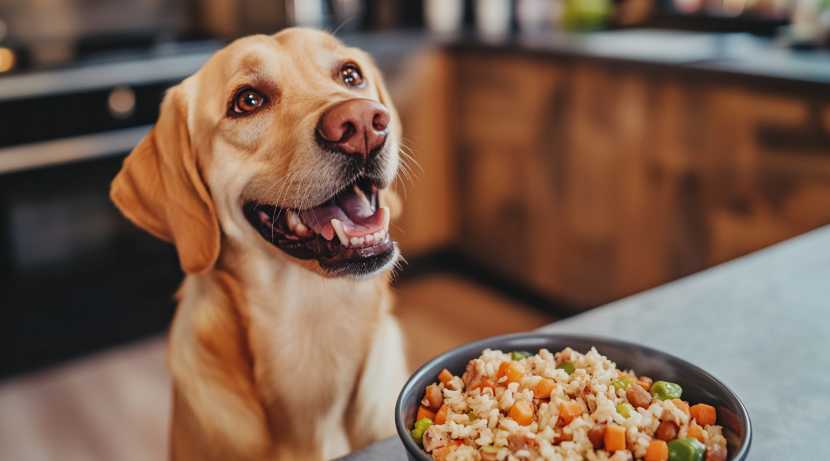
Turkey is often overlooked in favor of chicken or beef, but in many cases, it’s actually the better choice. From personal experience, dogs that struggle with itchy skin, loose stools, or frequent stomach upset often tolerate turkey far better than other common proteins.
Turkey is naturally lean, meaning it delivers high-quality protein without excessive fat. This helps maintain strong muscles while reducing the strain on the digestive system. For dogs that gain weight easily or need a lighter diet, turkey provides nourishment without unnecessary heaviness.
Another major advantage is digestibility. Turkey breaks down easily during digestion, which is especially important for dogs with sensitive stomachs, senior dogs, or dogs recovering from illness. When your dog eats turkey-based meals regularly, you’ll often notice firmer stools, steadier energy levels, and fewer digestive surprises.
How This Meal Supports a Balanced Canine Diet
A good homemade dog meal isn’t just about protein. Dogs need carbohydrates for energy, fiber for digestion, vitamins for immunity, and healthy fats for skin and coat health. This turkey-based meal brings all of that together in a way that feels natural—not forced or overcomplicated.
The goal is to create a bowl of food that fuels your dog’s body without irritating it. Every ingredient plays a role, and nothing is added just for the sake of appearance or trend.
Ingredients That Work With Your Dog’s Body (Not Against It)
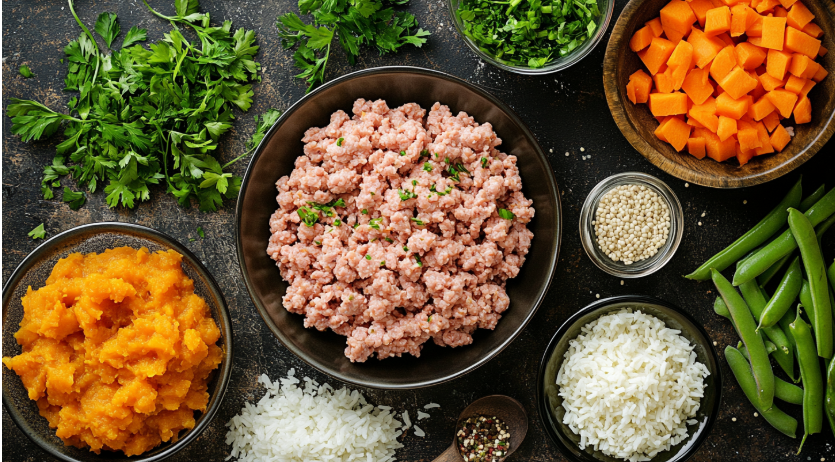
Ground Turkey
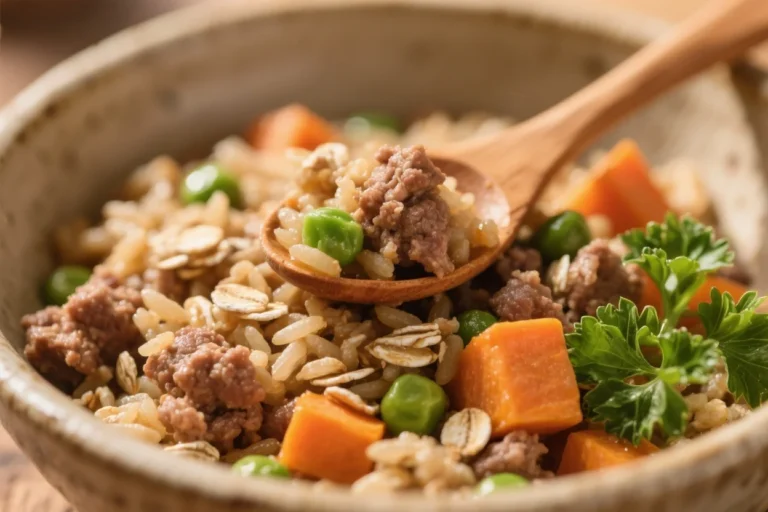
This is the heart of the meal. Ground turkey delivers essential amino acids that support muscle repair, immune function, and overall vitality. Because it’s low in fat, it’s ideal for daily feeding when balanced with carbohydrates and vegetables.
Rice (Brown or White)
Rice provides steady energy and helps bind the meal together. Brown rice offers more fiber, while white rice is gentler for dogs with very sensitive digestion. Both are acceptable, and many dog parents switch between them based on how their dog responds.
Carrots
Carrots bring natural vitamins, antioxidants, and a mild sweetness dogs tend to love. They support eye health and immune strength while adding texture to the meal.
Green Beans
Green beans are excellent for digestion and weight management. They add volume to meals without adding excess calories and help dogs feel satisfied after eating.
Pumpkin Purée
Pumpkin is a quiet hero in dog nutrition. It supports gut health, helps regulate bowel movements, and can calm both diarrhea and constipation. Even a small amount can make a noticeable difference.
Olive Oil
Healthy fats are essential for dogs, especially for skin, coat, and nutrient absorption. A small drizzle of olive oil helps keep coats shiny and supports joint and cellular health.
Step-by-Step: Preparing the Meal the Right Way
Cooking homemade dog food doesn’t need to feel intimidating. Once you’ve made this recipe once, it becomes second nature.
Start by cooking the ground turkey in a large pan over medium heat. Break it apart as it cooks so the texture stays fine and easy to chew. Fully cooking the turkey is essential—raw or undercooked meat is never safe for dogs.
While the turkey cooks, prepare the rice separately. Cooking rice properly ensures it’s soft and easy to digest. Let it absorb all the water so it blends smoothly with the rest of the ingredients.
Chop the carrots and green beans into small, manageable pieces. Dogs don’t chew vegetables the way humans do, so smaller pieces make digestion much easier. Add the vegetables to the cooked turkey and lightly sauté until they’re tender but still hold their shape.
Once everything is cooked, combine the rice, turkey, and vegetables in one pan. Stir gently so the ingredients distribute evenly. Add pumpkin purée and olive oil at the end, allowing them to coat the mixture without overheating.
Before serving, let the food cool completely. Hot food can burn your dog’s mouth and upset their stomach.
Feeding the Right Amount for Your Dog
Portion size matters just as much as ingredient quality. Dogs have different needs based on size, age, metabolism, and activity level. There’s no single perfect measurement, but general ranges help guide you.
Small dogs usually do well with smaller portions spread across meals, while medium and large dogs require more volume to meet their energy needs. Watch your dog closely—healthy weight, steady energy, and consistent digestion are the best indicators that portions are right.
Adjust gradually rather than making sudden changes, and always consider your dog’s individual response.
Why This Turkey Recipe Actually Works Long-Term
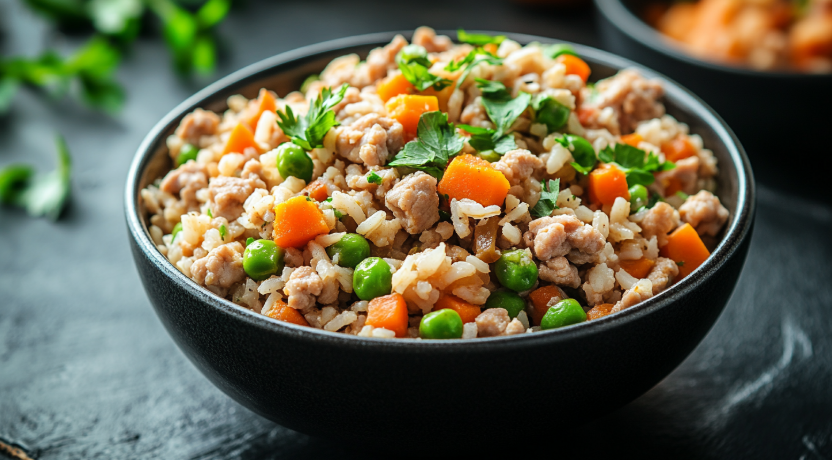
What makes this meal effective isn’t just the ingredient list—it’s how those ingredients work together. Lean protein supports muscles, rice provides clean energy, vegetables deliver vitamins, and pumpkin protects digestion. When dogs eat meals like this consistently, their bodies respond.
Over time, many dog parents notice improved stool quality, better coat condition, fewer stomach issues, and more enthusiasm at mealtime. Dogs feel better when their food supports them instead of challenging their system.
Common Questions Dog Parents Ask
Can vegetables be changed?
Yes, as long as they’re dog-safe. Sweet potatoes, peas, and spinach can work well. Avoid onions, garlic, and heavily seasoned foods.
How long does homemade turkey dog food last?
In the refrigerator, it stays fresh for about three days. Frozen portions can last several months and make feeding incredibly convenient.
Is this safe for puppies?
Yes, when prepared properly and chopped finely. Puppies have different nutritional needs, so consulting a vet ensures long-term balance.
Can supplements be added?
They can, but only when needed. Fish oil, calcium, or joint supplements should always be added with veterinary guidance.
Final Thoughts of Easy Homemade Turkey Dog Food Recipe (Your Pup Will Love It)
Feeding your dog homemade food isn’t about perfection—it’s about intention. When you prepare meals like this turkey dog food, you’re choosing transparency, quality, and care. You know exactly what’s going into your dog’s body, and that peace of mind is priceless.
Dogs may not understand nutrition labels, but they understand how food makes them feel. When their bowl is filled with real, gentle, nourishing food, it shows—in their energy, their digestion, and their happiness.
This turkey recipe isn’t just a meal. It’s a foundation for better health, built one bowl at a time.