Homemade Dog Food With Sardines for Skin and Coat Health – Simple, Nutritious, and Tasty
When I notice a dog dealing with flaky skin, nonstop scratching, or a coat that looks dry and lifeless, I often recommend homemade dog food with sardines as part of a balanced diet. I’ve prepared homemade meals for dogs for many years, and I’ve seen how adding natural sources of omega-3 fatty acids can support healthier skin and a shinier coat over time.
I like this recipe because it’s made with simple, affordable ingredients that provide quality nutrition without unnecessary fillers. Every dog responds differently, so I always suggest talking with your veterinarian before making significant diet changes, but this meal is one I trust for supporting everyday skin and coat health.
Save For Later
Key Takeaways
- Sardines provide natural omega-3 fats that help maintain healthy skin and a glossy coat.
- This recipe combines lean protein, healthy fats, and fiber-rich ingredients.
- Homemade meals allow me to choose fresh ingredients and avoid common fillers.
- Regular feeding may help reduce seasonal itching and excessive shedding.
- A proper calcium source is important when preparing homemade dog food.
- Fresh, balanced recipes can support overall wellness and healthy digestion.
Pro Tip
I always mash the sardines well before mixing them with the other ingredients so every bite contains the same amount of nutrients. If I’m introducing this recipe for the first time, I mix a small portion with my dog’s current food for several days instead of switching all at once. I also choose sardines packed in water without added salt whenever possible. Any leftovers go into airtight containers and stay refrigerated for only a few days. If I’m making a larger batch, I freeze individual portions so each meal stays fresh and easy to serve.
Other Posts
- Homemade Pumpkin Peanut Butter Dog Chews for Healthy Treats
- Healthy Homemade Dog Food with Beef Recipe
- Turkey and Sweet Potato Patties for Homemade Dog Treats
Key Takeaways
• Sardines are rich in omega-3 fatty acids that support skin and coat health
• This recipe provides balanced protein, fiber, and healthy fats
• Omega-3s may reduce itching and shedding within 2–6 weeks
• Homemade food helps avoid fillers and common irritants
• Calcium balance is essential when feeding homemade meals
Jump to Recipe Card
What Makes This Recipe So Good
Rich in omega-3s
Sardines are one of the most concentrated natural sources of EPA and DHA. Studies show omega-3 fatty acids can reduce inflammatory skin conditions and improve coat shine in dogs when fed consistently.
High-quality protein
Sardines and eggs deliver complete amino acids that support skin repair, muscle maintenance, and immune health. I’ve found this combination especially useful for senior dogs and active breeds.
Digestible carbs and fiber
Sweet potato and brown rice provide steady energy and soluble fiber, which helps regulate bowel movements. Fiber intake has been shown to support gut health in over 70% of dogs with mild digestive issues.
Skin-loving micronutrients
Spinach, carrots, and blueberries contribute vitamins A, E, and antioxidants that support the skin barrier and cellular repair.
Easy and affordable
This recipe uses widely available ingredients, takes under an hour, and works well for batch cooking.
Ingredients
2 cans sardines in water (3.75–4.4 oz each), drained
1 cup cooked brown rice (unsalted)
1 cup cooked sweet potato, mashed
1/2 cup finely chopped spinach, lightly steamed
1/2 cup finely diced carrots, steamed until soft
1 large egg, scrambled with a splash of water
1 tablespoon olive oil or coconut oil
1 teaspoon ground flaxseed (optional)
2 tablespoons plain pumpkin puree (optional)
Pinch of turmeric (optional)
Dog-safe calcium source: 1/2 teaspoon eggshell powder or vet-approved supplement
Clean water or unsalted bone broth to adjust texture
Instructions
Cook the base
Prepare brown rice and steam the sweet potato and carrots until very soft. Lightly steam the spinach for 1–2 minutes.
Scramble the egg
Whisk the egg with a splash of water and cook in a nonstick pan without oil or seasoning.
Prep the sardines
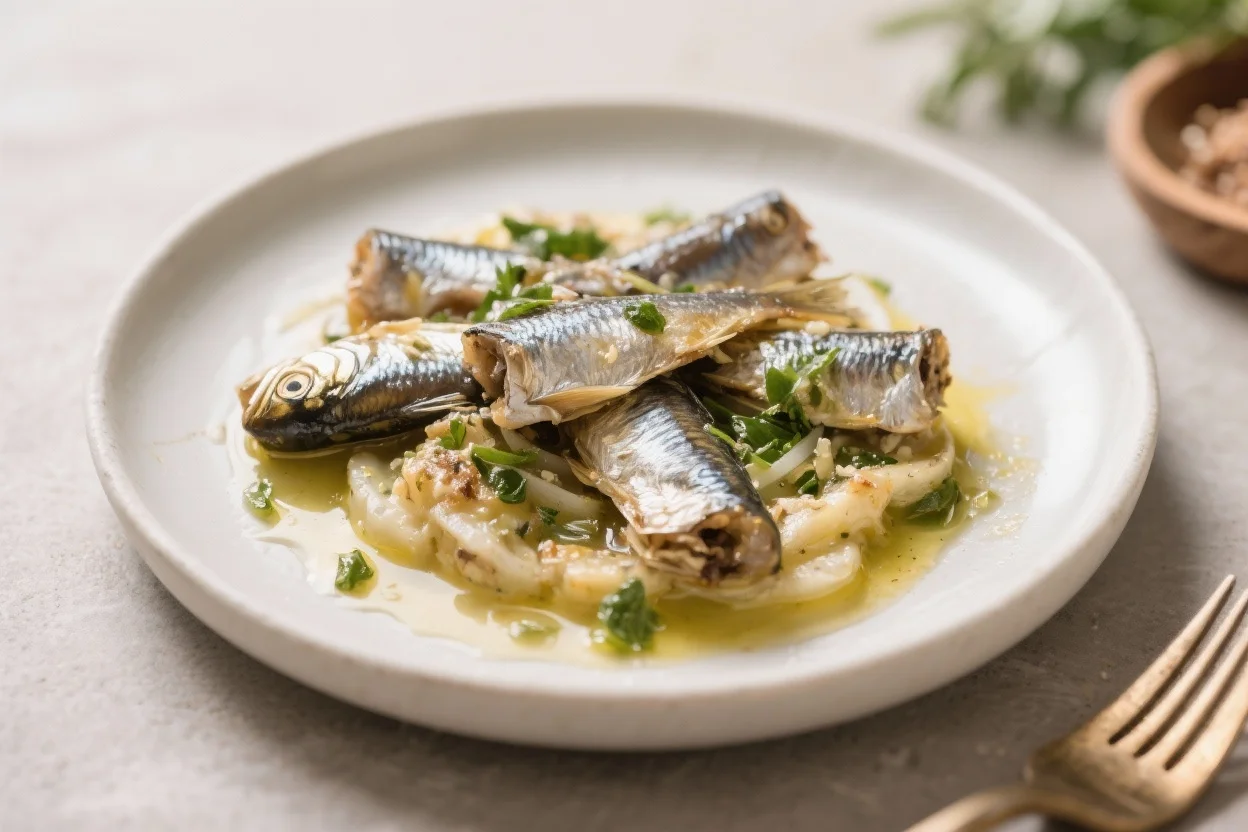
Drain thoroughly and flake with a fork. I always check for hard bone fragments, even though most canned sardine bones are soft and digestible.
Combine
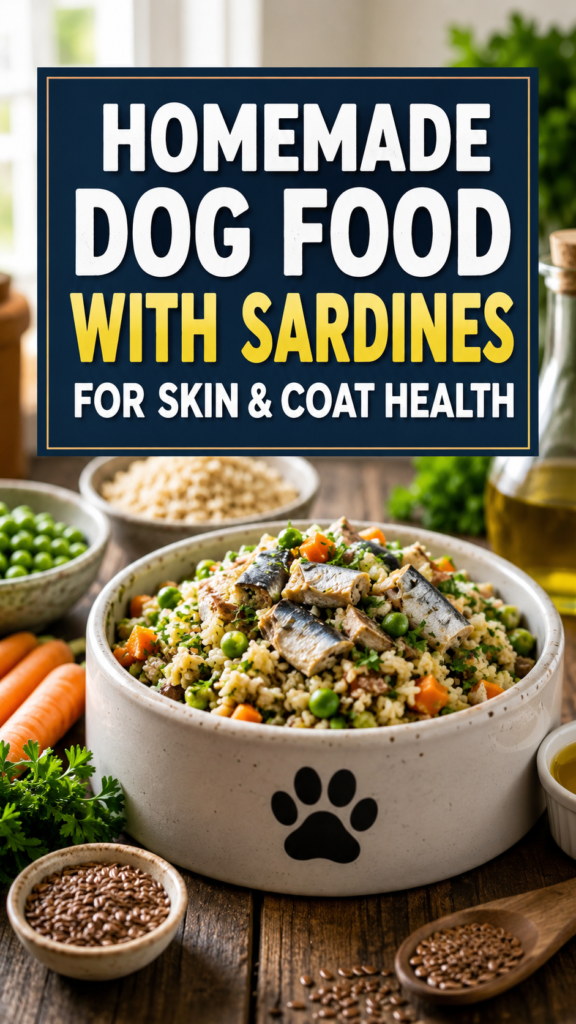
In a large bowl, mix rice, sweet potato, carrots, spinach, scrambled egg, and sardines.
Add extras
Stir in oil, flaxseed, pumpkin puree, and turmeric if using.
Balance calcium
Mix in eggshell powder or a vet-approved calcium supplement. I cannot stress enough how important this step is when feeding homemade food regularly.
Adjust texture
Add water or broth until the mixture is soft and scoopable.
Cool and serve
Allow food to reach room temperature before feeding.
Portion
Serve approximately 1/2 to 1 cup per 10 pounds of body weight per day, split into two meals. Adjust based on age, activity, and body condition.
Keeping It Fresh
Refrigerate
Store in an airtight container for up to 3 days.
Freeze
Freeze meal-sized portions for up to 2 months.
Reheat gently
Warm slightly with water; never serve hot.
Smell check
Fresh sardine food should smell clean and mild. If it smells sour, discard it.
Why This is Good for You
Healthy skin and a shiny coat are often outward signs of internal balance. I’ve seen dogs with chronic itching show visible improvement once omega-3s are introduced properly. Sardines help support the skin barrier, while fiber and slow carbs stabilize digestion.
Knowing exactly what’s in your dog’s bowl is invaluable when managing sensitivities, allergies, or recurring skin flare-ups.
What Not to Do
Don’t add salt, garlic, or onions
These are harmful to dogs.
Don’t use sardines in oil or sauce
Always choose sardines packed in water with no added salt.
Don’t rely on this recipe alone long-term
Homemade diets must be balanced over time with professional guidance.
Don’t skip calcium
Calcium is essential for bones, nerves, and muscle function.
Don’t switch abruptly
Transition over 4–7 days to avoid digestive upset.
Variations You Can Try
Grain-free option
Replace brown rice with additional sweet potato or cooked quinoa if tolerated.
Different greens
Swap spinach for kale or green beans, finely chopped and cooked.
Add probiotics
Stir in plain, unsweetened yogurt or a vet-approved probiotic at serving time.
Extra glow
A few drops of fish or salmon oil can increase omega-3 intake under vet guidance.
Low-fat tweak
Reduce added oil and increase vegetables for dogs needing calorie control.
FAQ
Can I feed this every day?
Yes, but it should be part of a balanced feeding plan. Long-term homemade diets should be reviewed by a vet or veterinary nutritionist.
Are canned sardines safe for dogs?
Yes, when packed in water with no added salt or seasonings.
How much should I feed?
Start with 1/2 to 1 cup per 10 pounds of body weight per day and adjust based on energy and weight.
Will sardines make my dog smell fishy?
A mild smell after meals is normal, but it shouldn’t linger with proper portions and dental care.
What if my dog has a sensitive stomach?
Introduce slowly over 4–7 days. Skip flaxseed and turmeric initially.
Can I use fresh sardines instead of canned?
Yes, cook thoroughly and remove hard bones.
Do I really need a calcium supplement?
Yes, if feeding regularly. Calcium keeps the diet nutritionally balanced.
How soon will I see coat improvement?
Most dogs show improvement within 2–6 weeks with consistent feeding.
Is this safe for puppies?
Puppies need precise mineral ratios. Always consult your vet first.
Can I add supplements?
Yes, but confirm dosages with your vet to avoid excess.
In Conclusion
Homemade Dog Food With Sardines for Skin and Coat Health is one of the most reliable recipes I’ve used over the years. With quality protein, omega-3 fats, and gentle carbs, it supports skin health from the inside out. Feed appropriate portions, store it safely, and never skip calcium.
When done right, this kind of nutrition doesn’t just improve coats—it improves quality of life.
All content on this site is written and reviewed by our experienced team to ensure it is accurate, reliable, and helpful for our readers. Our Our Process page explains how we carefully research and create high-quality content, while our Team page introduces the professionals behind our work. We also provide clear guidelines for content or image concerns on our Image Removal page, so you can trust that we prioritize transparency, quality, and reader safety.