Beef and Turkey Liver Cat Meal – A Protein-Rich Homemade Recipe
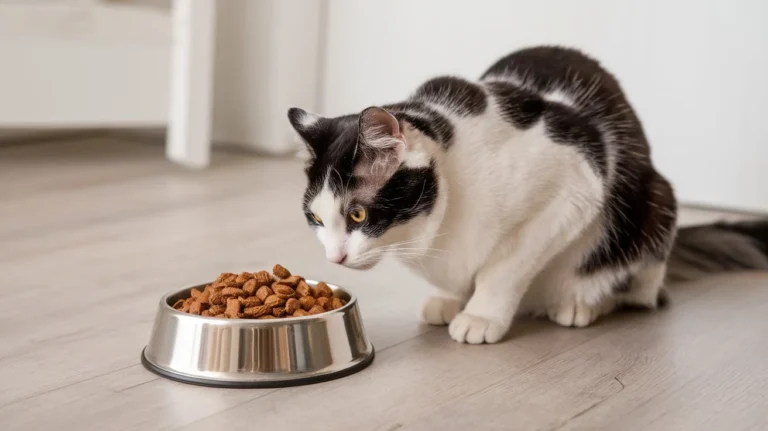
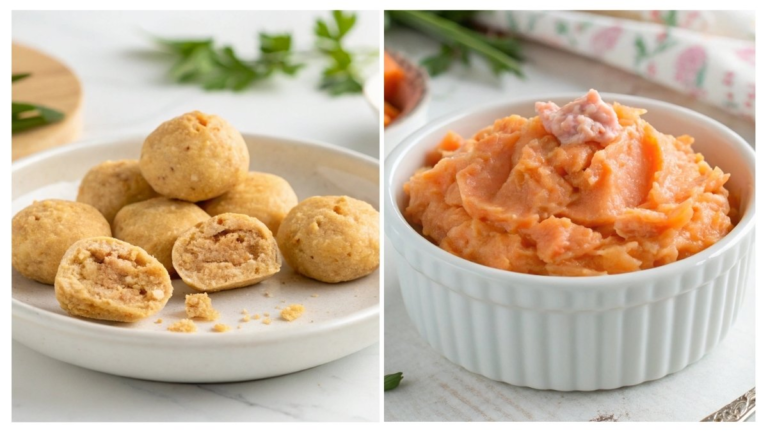
I’ve found that making Beef and Turkey Liver Cat Meal at home is a great way to give my cats fresh, protein-rich food without unnecessary fillers. After years of caring for cats with different appetites and nutritional needs, I’ve learned that simple recipes made with quality meat often work best for keeping them satisfied and healthy.
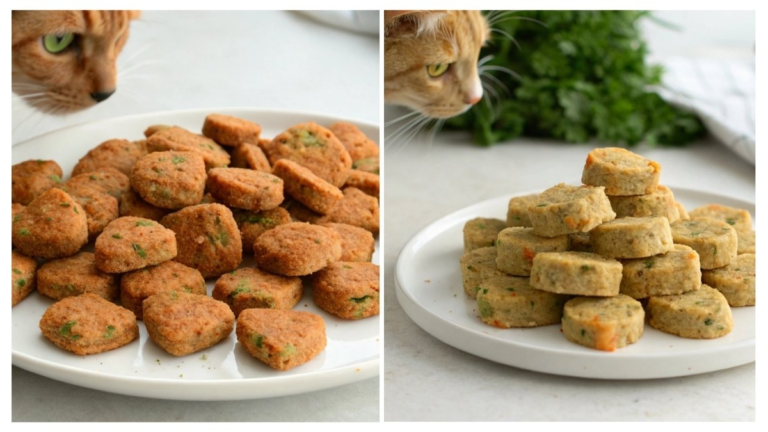
Over time, I noticed that liver can make homemade meals much more appealing, even for selective eaters. When I use the right amount alongside lean beef and follow a balanced recipe, my cats enjoy every bite while getting important nutrients that support their daily health.
Save For later
Key Takeaways
- Beef and turkey liver create a high-protein, moisture-rich homemade cat meal.
- Liver should only make up a small portion of the recipe for balanced nutrition.
- Taurine and healthy fats help support normal heart, eye, and muscle function.
- Introducing homemade food slowly can improve acceptance and digestion.
- Fresh ingredients and proper portioning help maintain quality and safety.
- Homemade diets should be balanced with the right supplements when needed.
Pro Tip
One habit that has worked well for me is weighing liver instead of estimating the amount. It’s easy to add too much, which can throw off the recipe over time. I prepare several small portions at once and freeze them immediately to keep every meal fresh. Before serving, I thaw the food overnight in the refrigerator instead of leaving it at room temperature. I also watch my cats’ appetite and stool whenever I introduce a new batch, making small adjustments only when necessary.
Other Posts
- Protein-Rich Beef Turkey Liver Cat Meal Recipe
- Homemade Turkey Thigh and Green Bean Blend for Cats
- Healthy Chopped Beef Steak and Butternut Squash Cat Rec
What Makes This Special
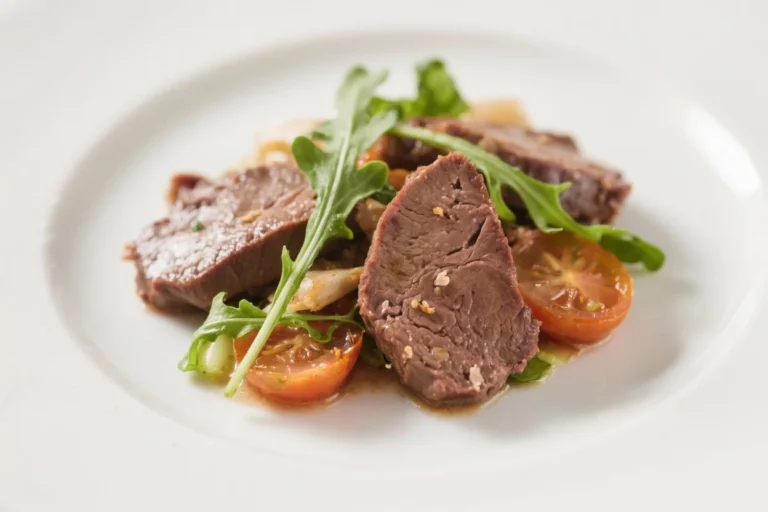
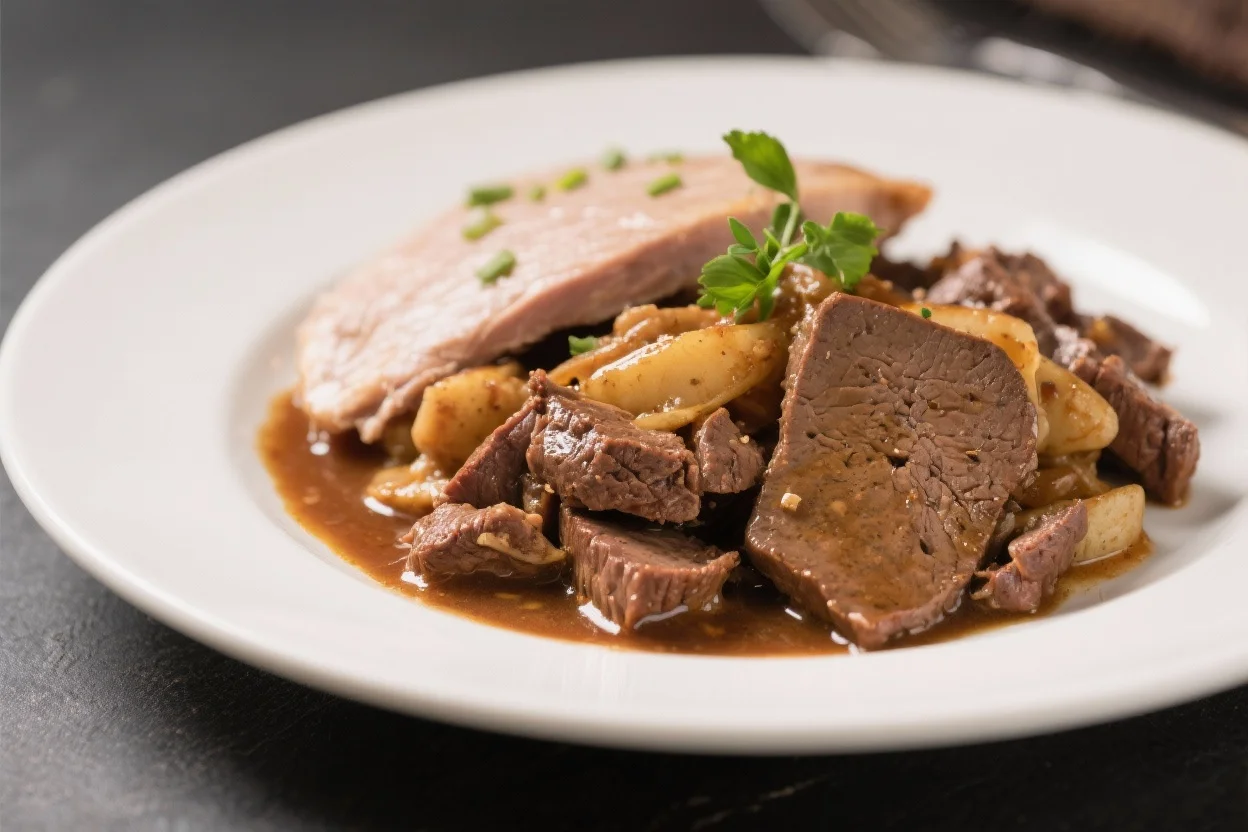
This recipe combines lean beef with nutrient-dense turkey liver to create a soft, flavorful meal that aligns well with how cats are meant to eat. In my experience, liver is one of those ingredients cats either adore instantly or grow to love when introduced slowly. Turkey liver provides vitamin A, B vitamins, iron, and copper, while beef delivers complete protein and healthy fats that support muscle maintenance and energy.
With the right supplements added, this recipe can fit well into a homemade feeding rotation. The moist texture also makes it easier for senior cats or those with dental issues to eat comfortably.
What You’ll Need
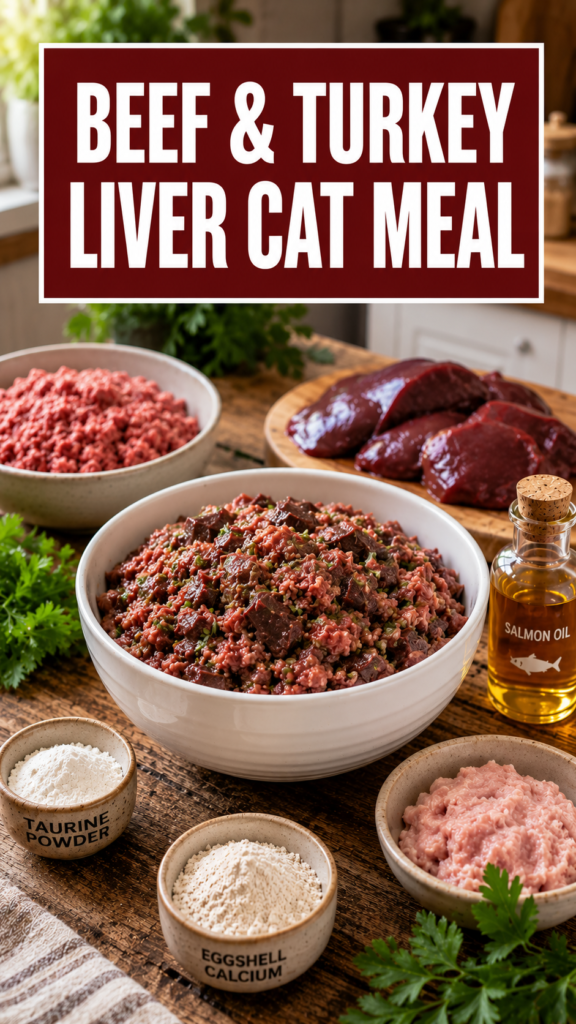
- 1 pound (450 g) ground beef, 85–90% lean
- 4 ounces (110 g) turkey liver, trimmed
- 1 large egg, lightly beaten (optional)
- 1 tablespoon salmon oil or sardine oil for omega-3s
- 1/4 teaspoon taurine powder, essential for cats
- 1/8 teaspoon iodized salt for iodine (omit if using a complete supplement)
- 1/4 cup water or low-sodium bone broth, onion- and garlic-free
- Optional: 1–2 tablespoons finely chopped cooked pumpkin or zucchini
- Optional: A feline multivitamin/mineral supplement formulated for homemade diets
Step-by-Step Instructions
Prep the liver:
I rinse the turkey liver, trim away any tough connective tissue, pat it dry, and chop it into small pieces so it cooks evenly.
Lightly cook the beef:
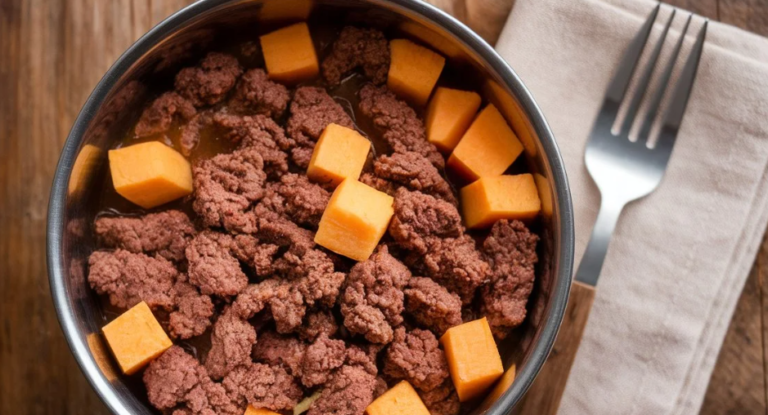
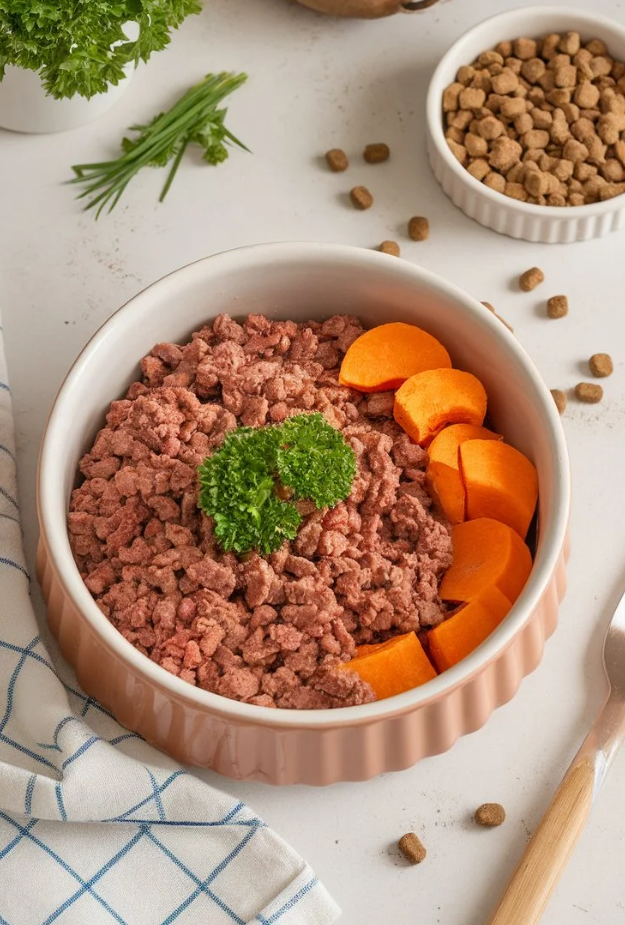
In a skillet over medium heat, I add the ground beef and break it apart. I cook it until it’s just browned on the outside but still tender and slightly pink inside. Overcooked meat dries out fast, and cats notice.
Add the liver:
I stir in the chopped turkey liver and cook for about 2–3 minutes, just until the color changes. Liver cooks quickly and should stay soft.
Add moisture:
I pour in the water or broth and let it simmer briefly to keep everything juicy.
Cool slightly:
I remove the pan from heat and let the mixture cool until warm, not hot. This protects heat-sensitive nutrients and makes it safer to add supplements.
Mix in supplements:
Once cooled, I stir in the egg (if using), salmon oil, taurine powder, iodized salt, and any feline multivitamin or mineral supplement according to directions.
Adjust texture:
For cats that prefer smoother food, I pulse the mixture briefly in a food processor. I add extra water or broth if needed to reach a moist, soft consistency.
Portion:
Most adult cats I’ve cared for eat about 2–4 ounces per meal, twice daily, depending on size and activity level. I always adjust based on body condition and veterinary advice.
Serve:
I offer a small portion first to gauge acceptance and store the rest promptly.
How to Store
Refrigerator:
Store in an airtight container for up to 2 days.
Freezer:
Portion into small containers or silicone molds and freeze for up to 2 months. Thaw overnight in the refrigerator.
Reheating:
Serve chilled or gently warmed to room temperature. I avoid overheating, which can destroy nutrients and create hot spots.
Freshness check:
If it smells sour or looks slimy or discolored, I discard it immediately.
Benefits of This Recipe
High-quality protein:
Beef provides complete amino acids that support muscle strength and energy. I’ve noticed better body condition and stamina in cats eating protein-forward diets.
Nutrient-dense liver:
Turkey liver delivers vitamin A, B vitamins, iron, and copper in small but powerful amounts.
Essential taurine:
Taurine is critical for feline heart health, vision, and digestion. Cats cannot produce enough on their own.
Healthy fats:
Salmon oil supplies EPA and DHA, which help maintain skin, coat, joints, and cognitive health.
Moisture-rich:
Extra water or broth supports urinary tract health—important since cats naturally drink very little.
Simple ingredient list:
This makes it easier to manage cats with sensitivities, when guided by a veterinarian.
Pitfalls to Watch Out For
Too much liver:
Liver should stay around 5–10% of the recipe. Excess can lead to vitamin A toxicity over time.
Skipping taurine:
This is not optional unless a complete premix already includes it.
Seasonings and alliums:
Onion, garlic, chives, and seasoned broths are toxic to cats and should never be used.
Unbalanced long-term feeding:
Without a complete supplement or careful formulation, this recipe alone may miss some micronutrients over time.
Texture issues:
Some cats prefer finely blended food. Adjust texture so your cat actually eats it.
Rapid diet changes:
I always transition over several days to avoid digestive upset.
Alternatives
Different proteins:
You can swap beef for ground turkey, chicken thigh, or rabbit. Keep liver at 5–10% of the total.
Liver type:
Chicken or beef liver can replace turkey liver in similar amounts.
Premix shortcut:
A feline diet premix designed for homemade meals can simplify balancing.
Oil options:
If fish oil isn’t tolerated, krill oil or algae-based DHA/EPA made for pets may work.
Bone content:
If calcium is needed, use eggshell powder or a feline calcium supplement—never cooked bones.
FAQ
Can I serve this raw?
Some people feed raw, but raw meat can carry bacteria. If considering raw feeding, I strongly recommend discussing safe handling and complete balancing with your vet.
How often can I feed this?
It works well as part of a rotation or as a primary meal if properly supplemented.
Is beef safe for cats with sensitive stomachs?
Many cats tolerate beef well, but some do better with poultry or rabbit. Start small and monitor closely.
Do I need to add calcium?
If this replaces most of your cat’s diet, calcium is often recommended. Ask your vet about the right source and amount.
Can I freeze individual portions?
Yes. I portion, freeze, and thaw in the fridge 12–24 hours before feeding.
What if my cat won’t eat liver?
Blending the liver thoroughly into the beef often helps. Some cats also prefer chicken liver.
Is the egg necessary?
No. It’s optional. Egg adds protein and choline but can be skipped.
How do I transition from commercial food?
I mix 25% new food with 75% old food for a few days, then gradually increase. Slow transitions reduce stomach upset.
In Conclusion
This Beef and Turkey Liver Cat Meal is simple, flavorful, and packed with nutrients cats naturally crave. With mindful liver portions, added taurine, and healthy fats, it fits well into a thoughtful homemade feeding plan. After years of hands-on cat care, I’ve found that meals like this—when prepared carefully and balanced correctly—can support energy, coat health, and overall well-being. For long-term feeding, working with a veterinarian ensures your cat gets everything they need to stay healthy and happy.
All content on this site is written and reviewed by our experienced team to ensure it is accurate, reliable, and helpful for our readers. Our Our Process page explains how we carefully research and create high-quality content, while our Team page introduces the professionals behind our work. We also provide clear guidelines for content or image concerns on our Image Removal page, so you can trust that we prioritize transparency, quality, and reader safety.