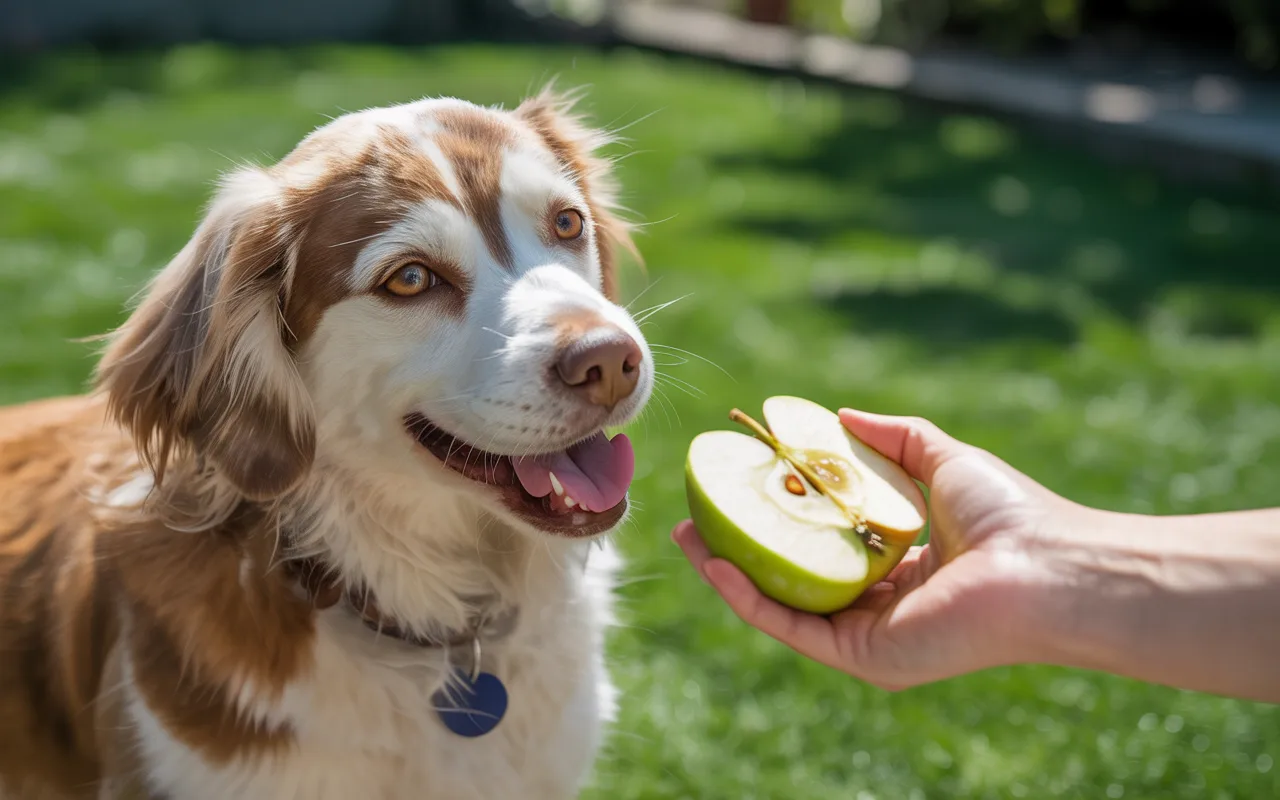
Can Dogs Eat Apples? Complete Guide for Dog Owners
If you’ve ever wondered can dogs eat apples, you’re definitely not alone. I get questions about safe fruits for dogs all the time, and apples are one of the most common foods pet owners ask about. They’re crisp, naturally sweet, and easy to find year-round, but that doesn’t automatically mean they’re suitable for every dog.
The first time I offered apple slices to my dog, I was looking for a healthier snack option than packaged treats. After learning the proper way to prepare them and understanding the risks involved, apples became an occasional reward in our routine. Here’s what I’ve learned about feeding apples safely and responsibly.
Save For Later

Key Takeaways
- Apples are generally safe for dogs when prepared properly.
- They provide fiber, vitamins, and hydration.
- Seeds and cores should always be removed before serving.
- Small portions are best for avoiding digestive upset.
- Fresh apple slices make a simple low-calorie treat.
- Apples should supplement, not replace, a balanced diet.
Pro Tip
One habit I’ve developed is cutting apple slices into very small pieces before giving them to my dog. This makes chewing easier and reduces the risk of gulping large chunks. I also prefer serving chilled apple pieces during warmer months because my dog seems to enjoy the refreshing texture. Whenever I introduce a new fruit, I start with only a few bites and watch for any stomach issues over the next day. I never leave the core attached, even if there’s still fruit on it. Taking a few extra minutes to prepare apples properly makes a big difference in safety and digestion.
Related Posts
- Pumpkin Apple Nibbles Dog Treats Recipe
- Apple Cinnamon Dental Dog Chips for Healthy Teeth
- Homemade Apple Peanut Butter Dog Cookies
Are Apples Safe for Dogs?
Yes, apples can be a healthy snack for dogs when prepared properly. They are packed with vitamins, fiber, and antioxidants, which can support your dog’s overall health. But there are some important precautions to keep in mind:
What Makes Apples Healthy for Dogs
- Vitamins A and C: These help strengthen your dog’s immune system and support healthy skin and coat.
- Fiber: Apples aid digestion and help maintain regular bowel movements. I’ve noticed dogs with mild digestive issues often tolerate small apple slices well.
- Low in Calories: A great treat option for dogs who need to manage their weight.
- Dental Benefits: The crunchiness can help reduce plaque buildup, though it’s not a replacement for regular brushing.
What Makes Apples Risky
- Seeds and Core: Apple seeds contain trace amounts of cyanide. Though a few seeds may not harm a medium dog, I always remove the core and seeds to be safe.
- Choking Hazard: Stems and cores can get stuck in your dog’s throat.
- Sugar Content: Apples have natural sugar. Dogs with diabetes or those prone to obesity should have limited portions.
How to Prepare Apples for Your Dog
Feeding apples safely is simple if you follow a few preparation steps:
Wash Thoroughly
Always wash the apple to remove pesticides or wax coating. Organic apples are a great option.
Remove Core, Seeds, and Stem
I never give my dogs an apple with the core intact. Even well-behaved dogs can accidentally swallow seeds, so remove them carefully.
Cut into Bite-Sized Pieces
Slice apples according to your dog’s size. Small breeds need tiny cubes, while larger dogs can handle larger slices.
Optional: Peel the Skin
Most dogs tolerate apple skin fine, but if your dog has a sensitive stomach, peeling can reduce the risk of digestive upset.
How Much Apple Can Your Dog Eat? (Portion Guide)
Apples should only be a treat, making up no more than 10% of your dog’s daily calories. Start with a small slice to see how your dog reacts.
| Dog Size | Recommended Apple Portion |
|---|---|
| Toy (2–10 lb) | 1–2 slices |
| Small (11–20 lb) | 2–3 slices |
| Medium (21–50 lb) | 3–4 slices |
| Large (50+ lb) | 4–6 slices |
Apple Treat Ideas
Apples can be a fun and healthy way to reward your dog:
- Frozen Apple Cubes: Perfect for hot days and teething puppies.
- Apple + Plain Yogurt Mix: Use only unsweetened, xylitol-free yogurt.
- Training Treats: Small apple slices can replace store-bought treats during training sessions.
- Dehydrated Apple Chips: Homemade, sugar-free, and easy to store.
When Apples Are Not Right
- Dogs with diabetes or weight issues should have apples sparingly.
- Allergies are rare but can occur. Watch for itching, vomiting, or diarrhea after first introduction.
- Puppies should get very small pieces to avoid choking.
Signs Your Dog Might Be Having Trouble
If your dog eats apples and shows any of these signs, remove apples from their diet and consult your vet:
- Upset stomach or diarrhea
- Choking or difficulty swallowing
- Allergic reactions like itching or rashes
My Top Tips for Feeding Apples
- Treat, don’t feed as a meal.
- Start small and monitor your dog’s reaction.
- Use apple slices in training to make rewards healthy and engaging.
- Frozen pieces make a refreshing summer snack.
FAQs
Can puppies eat apples?
Yes, but in very small pieces to prevent choking.
Can dogs eat apple sauce?
Only plain, unsweetened apple sauce. Avoid any with added sugar or artificial sweeteners.
Is apple skin safe?
Generally, yes. It provides extra fiber, but peel it if your dog has a sensitive stomach.
Conclusion — Apples as a Smart, Safe Snack
Apples are a safe, nutritious, and versatile snack for most dogs. By preparing them correctly and offering them in moderation, you can give your dog a tasty treat while supporting their health and training routines. From crunchy slices to frozen cubes, apples can be a fun addition to your dog’s diet.
All content on this site is written and reviewed by our experienced team to ensure it is accurate, reliable, and helpful for our readers. Our Our Process page explains how we carefully research and create high-quality content, while our Team page introduces the professionals behind our work. We also provide clear guidelines for content or image concerns on our Image Removal page, so you can trust that we prioritize transparency, quality, and reader safety.