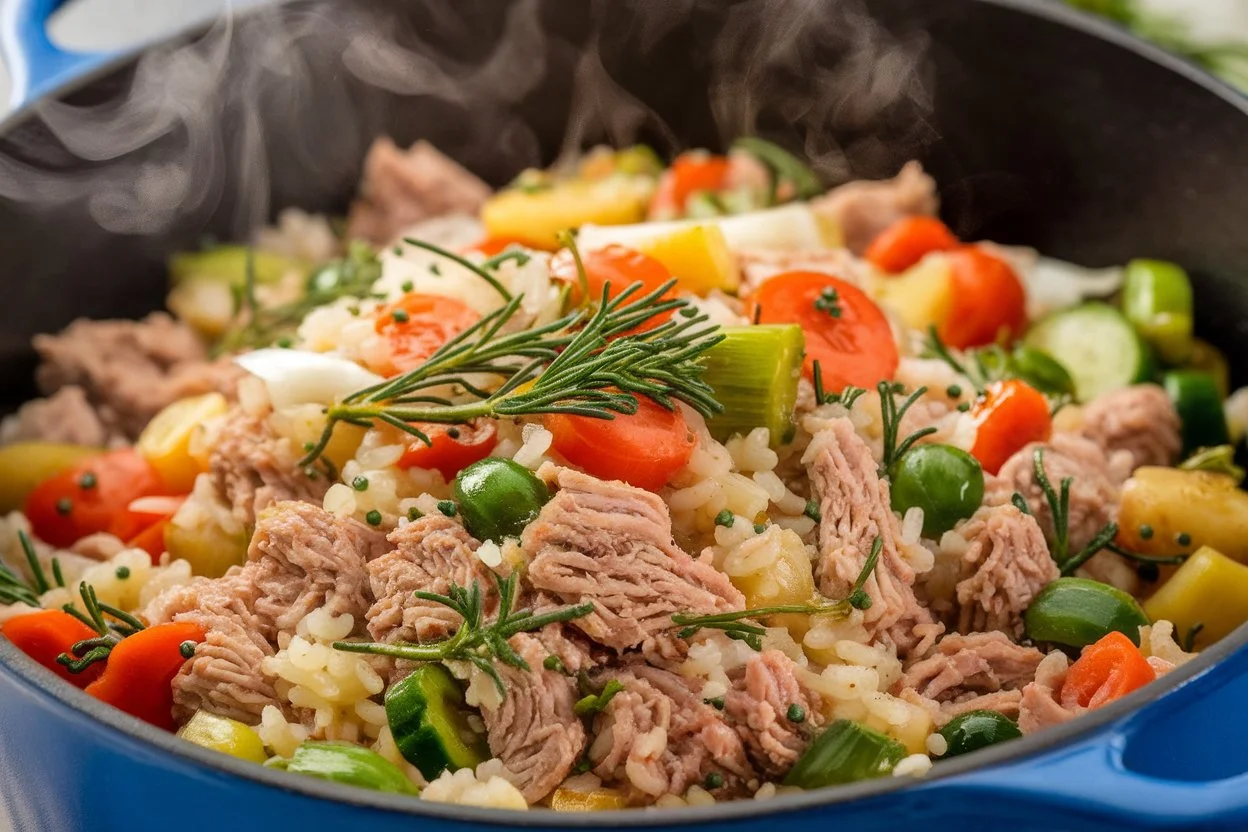
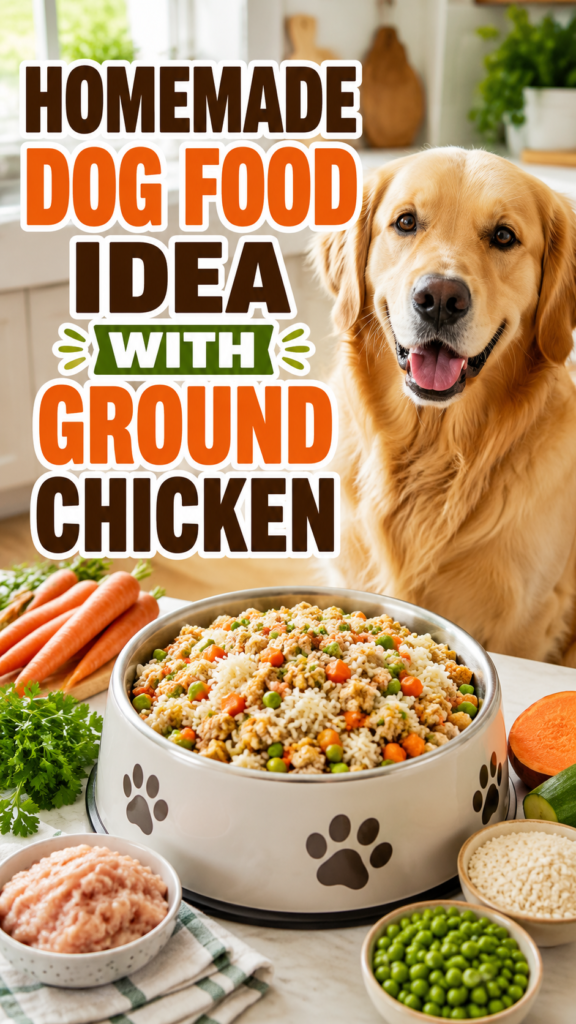
Homemade Dog Food Idea With Ground Chicken – Simple, Balanced, and Fresh
If you’re searching for a Homemade Dog Food Idea With Ground Chicken, this is one of the recipes I make most often for my own dogs. Over the years, I’ve cared for dogs with different activity levels, ages, and dietary needs, and I’ve found that meals made with a few wholesome ingredients are often the easiest to manage and the most enjoyable for dogs to eat.
One reason I keep returning to this recipe is its simplicity. Ground chicken, rice, and vegetables create a practical foundation that’s affordable, easy to prepare, and convenient for weekly meal prep. While every dog has unique nutritional requirements, this recipe can work well as part of a homemade feeding routine when properly balanced and approved by your veterinarian.
Save For later
Key Takeaways
- Ground chicken provides a lean source of protein for dogs.
- Simple ingredients can help reduce digestive stress.
- Homemade meals give you complete control over ingredient quality.
- Batch cooking makes feeding more convenient throughout the week.
- Proper supplementation is important for long-term nutritional balance.
- This recipe can be adjusted to fit different dog sizes and activity levels.
Pro Tip
When I prepare ground chicken meals for dogs, I cook a large batch and divide it into daily portions before storing it. This prevents accidental overfeeding and makes mealtime much easier during busy weeks. I also let the food cool completely before refrigerating it to help maintain freshness. If I’m introducing the recipe to a dog for the first time, I mix a small amount with their current food for several days. That gradual transition helps reduce digestive upset and gives me a chance to monitor how well the dog tolerates the new ingredients. Keeping a simple feeding journal can also be helpful when testing homemade meals.
Related Posts
- Freezable Ground Turkey Dog Food Recipe for Easy Meal Prep
- Grain Free Chicken Dog Food Recipe for Sensitive Dogs
- Homemade Chicken Soup for Dogs Recipe for Comfort and Recovery
Print Recipe
Prep Time
10 minutes
Cook Time
20 minutes
Total Time
30 minutes
Servings: 4 servings
Ingredients
1.5 pounds ground chicken (preferably 93% lean or similar)
1 cup white rice (or rolled oats if you prefer; both are gentle)
2 cups low-sodium chicken broth (or water)
1 cup carrots, finely diced or shredded
1 cup peas (frozen is fine)
1 cup spinach, chopped
1 tablespoon olive oil (or 1 teaspoon fish oil)
Optional: 1 large egg, scrambled in the pan
Optional: 1 teaspoon ground turmeric (for mild anti-inflammatory support)
Dog-safe mineral/vitamin topper or canine multivitamin (as recommended by your vet)
Instructions
Rinse the rice:
Rinse 1 cup of white rice under cold water until the water runs clear. This step improves texture and helps dogs digest it more easily, something I’ve consistently noticed with sensitive-stomach dogs.
Brown the chicken:
In a large skillet or pot, warm the olive oil over medium heat. Add the ground chicken and break it up with a spoon. Cook until no pink remains, about 6–8 minutes. Drain excess fat if needed. Fully cooking protein is critical for preventing bacterial issues.
Add the broth and rice:
Stir in the rice and low-sodium broth. Bring to a gentle simmer. Avoid high heat, which can scorch the rice and reduce nutrient quality.
Cook the base:
Cover and cook on low until the rice is tender, about 15–18 minutes. Stir occasionally and add a splash of water if needed.
Fold in veggies:
Add carrots and peas. Cook for 5 minutes until carrots are tender but not mushy. Stir in spinach last and let it wilt for 1–2 minutes. Light cooking preserves nutrients while improving digestibility.
Optional add-ins:
If using egg, push the mixture to one side of the pan, scramble the egg separately, then fold it in. Add turmeric if using and mix thoroughly. Turmeric has been studied for its role in reducing joint inflammation in dogs when used sparingly.
Cool completely:
Remove from heat and allow the food to cool to room temperature. Dogs can burn their mouths easily, something I’ve unfortunately seen happen when owners rush this step.
Portion and serve:
A general starting point is about ½ to 1 cup per 10 pounds of body weight per day, split into two meals. Adjust based on activity level and vet guidance.
Add supplements:
Homemade diets often lack calcium and trace minerals. Always mix in a vet-approved canine multivitamin or mineral topper to ensure nutritional completeness.
Jump to Recipe Card
Why This Recipe Works
Lean protein:
Ground chicken is light, digestible, and suitable for dogs needing lower-fat meals. Studies show lean protein supports muscle maintenance without overloading the pancreas.
Simple carbohydrates:
White rice and oats are commonly used in veterinary diets for gastrointestinal recovery because they’re easy to digest and provide steady energy.
Dog-safe veggies:
Carrots, peas, and spinach provide fiber, antioxidants, and vitamins A, C, and K, supporting immune and gut health.
Healthy fats:
Olive oil or fish oil supports skin barrier function and coat shine. I’ve seen noticeable improvements in dry coats within weeks.
Easy to batch-cook:
One-pot cooking reduces time and cleanup, making consistency more realistic for long-term feeding.
What You’ll Need
1.5 pounds ground chicken (preferably 93% lean or similar)
1 cup white rice (or rolled oats)
2 cups low-sodium chicken broth (or water)
1 cup carrots, finely diced or shredded
1 cup peas
1 cup spinach
1 tablespoon olive oil (or 1 teaspoon fish oil)
Optional egg and turmeric
Dog-safe mineral/vitamin topper
Instructions
Final plated overhead:
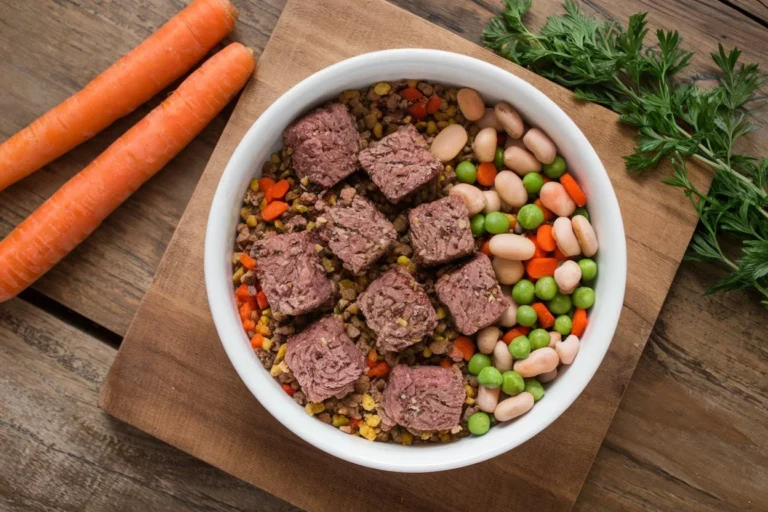
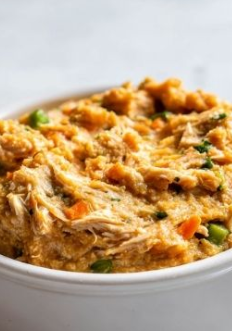
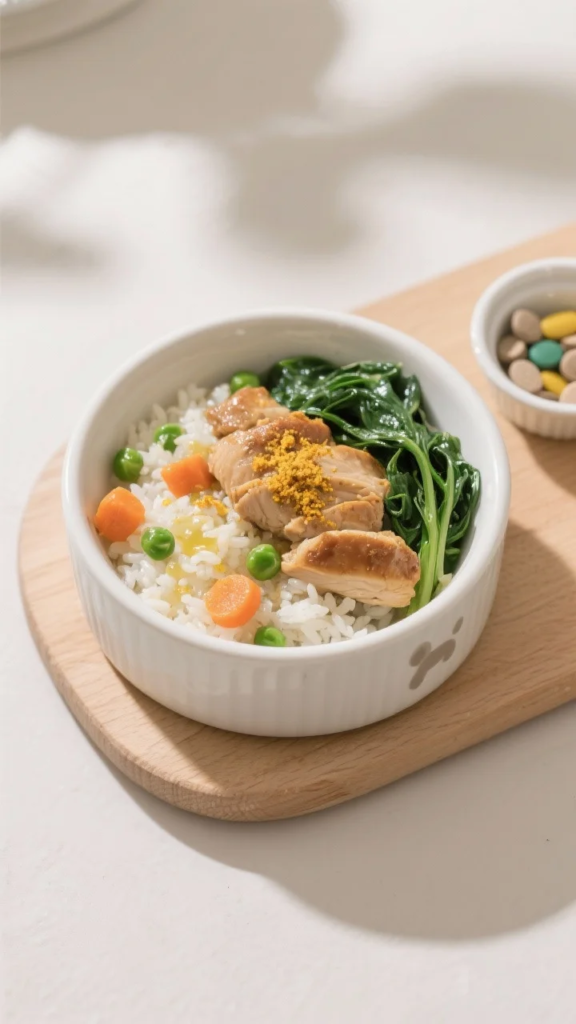
A neatly portioned bowl of chicken-and-rice dog food should appear moist, lightly textured, and evenly mixed.
Repeat the same cooking steps above to maintain consistency and safety.
How to Store
Refrigerator:
Store in airtight containers for up to 4 days.
Freezer:
Freeze in portion-sized containers for up to 2 months. Label with date.
Thawing:
Thaw overnight in the fridge or gently warm on the stove with water. Stir well and check temperature before serving.
Why This is Good for You
Homemade dog food gives you control. Over my years working with dogs, I’ve seen countless cases where switching to simple homemade meals reduced itching, improved stool quality, and boosted energy. You avoid fillers, reduce sodium, and tailor meals exactly to your dog’s needs.
Batch cooking also saves money compared to many premium fresh dog foods while maintaining ingredient transparency.
Pitfalls to Watch Out For
Missing nutrients:
Calcium and iodine are commonly deficient without supplementation.
Too much fat:
Avoid butter or rich oils, especially for dogs prone to pancreatitis.
Seasonings:
Never use onion, garlic, chives, or salt.
Overcooking veggies:
Cook until tender, not mushy, to preserve nutrients.
Portion creep:
Monitor body condition regularly and adjust portions.
Alternatives
Carb swap:
Use pumpkin or sweet potato instead of rice.
Protein swap:
Lean ground turkey or 90% lean beef work well. Salmon can be used occasionally.
Veggie rotation:
Green beans, zucchini, or butternut squash are excellent.
Grain-free version:
Use vegetables or cauliflower rice, but confirm suitability with your vet.
Bone-free calcium:
Never use cooked bones. Always use vet-approved calcium sources.
FAQ
How much should I feed my dog?
Feed about 2–3% of body weight per day, split into two meals. Adjust with vet guidance.
Can I use brown rice instead of white rice?
Yes, but white rice is easier to digest for many dogs.
Is ground chicken safe for dogs?
Yes, when fully cooked with no seasoning.
Do I need supplements?
Yes. Most homemade diets require supplementation.
Can I add fruit?
Yes, in small amounts. Blueberries, apple (no seeds), and banana are safe.
What if my dog has allergies?
Introduce ingredients one at a time and consult your vet for chronic symptoms.
How long can I keep leftovers?
Up to 4 days refrigerated or 2 months frozen.
Can puppies eat this?
Only with vet-approved adjustments and proper supplementation.
In Conclusion
This Homemade Dog Food Idea With Ground Chicken is simple, fresh, and adaptable. With balanced portions and the right supplements, it can be a wholesome part of your dog’s routine. After 20 years of caring for dogs, I’ve learned that knowing what’s in the bowl brings peace of mind—and healthier, happier dogs.
All content on this site is written and reviewed by our experienced team to ensure it is accurate, reliable, and helpful for our readers. Our Our Process page explains how we carefully research and create high-quality content, while our Team page introduces the professionals behind our work. We also provide clear guidelines for content or image concerns on our Image Removal page, so you can trust that we prioritize transparency, quality, and reader safety.