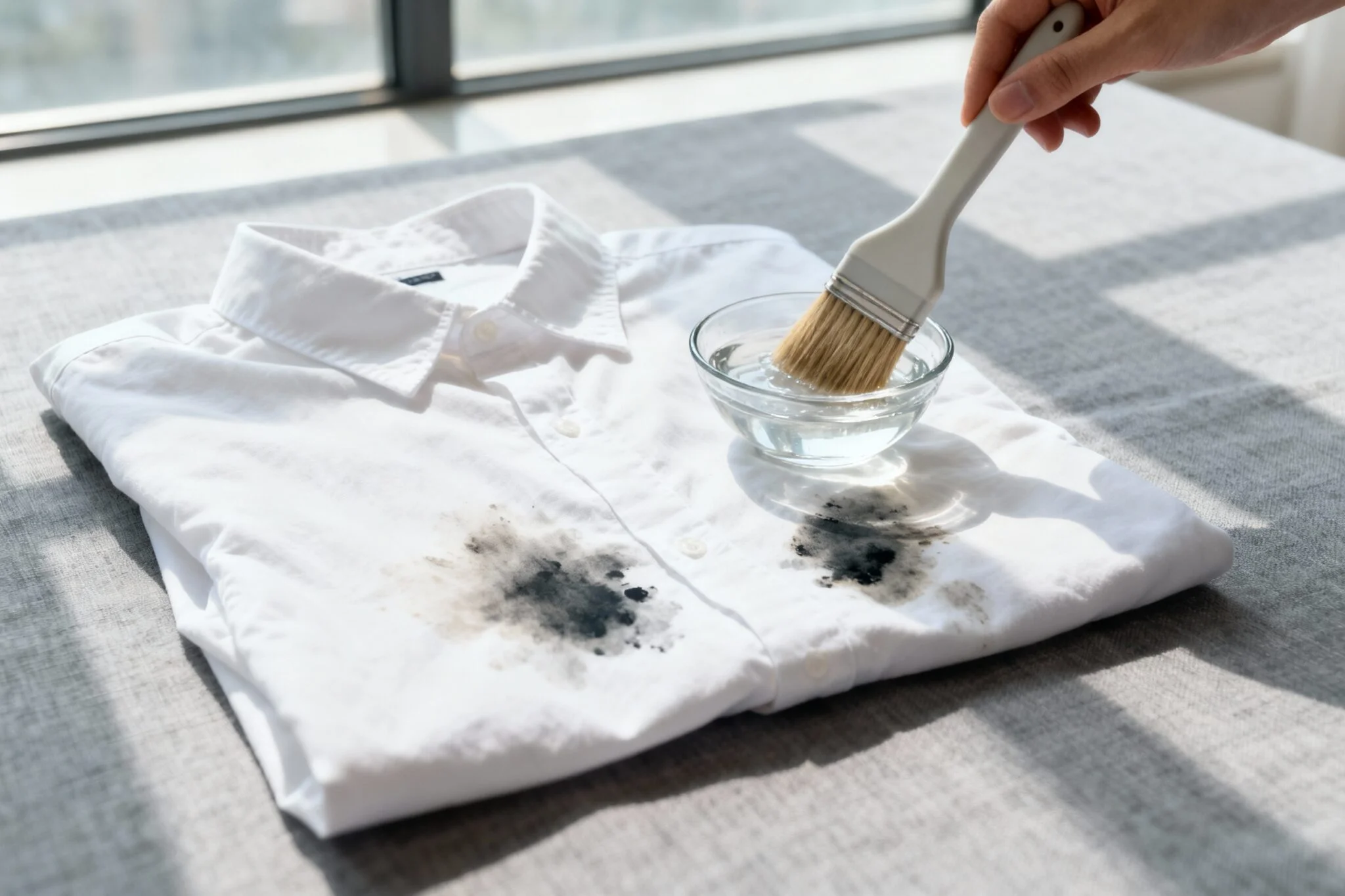
How I Keep My White Shirts Bright and Stain-Free
White shirts are my go-to for a clean, sharp look, but I’ve learned they can show stains instantly. Even a tiny spill or smudge can ruin the outfit. Over time, I’ve developed simple strategies using items I already have at home, so I can tackle stains quickly and effectively without harsh chemicals or complicated routines.
Save For Later
From pre-treating to the right washing methods, here’s my full approach.
Act Fast: Speed Beats Set-In Every Time
Whenever a stain happens, I act immediately. The longer it sits, the harder it becomes to remove. I always blot gently instead of rubbing, rinse with cold water, and keep the area damp if I can’t wash right away. On-the-go, I rely on stain pens, wipes, or even a little hand soap with water. Club soda works as a temporary fix too. Quick action is always the key.
Pro Tip: Act fast on stains—blot gently, rinse with cold water, and keep damp; quick action prevents set-in marks and makes removal much easier.
Pre-Treat Smart: Target the Stain Type
I’ve found that different stains respond better to specific treatments:
- Grease & oil: Sprinkle baking soda or cornstarch, brush off, then rub dish soap and rinse.
- Ink & dye: Dab rubbing alcohol from the edges inward, with a paper towel underneath.
- Food & drinks: Mix dish soap, vinegar, and cool water, then gently dab until the stain fades.
- Deodorant & sweat: Make a paste of baking soda and water, leave 30 minutes, then rinse.
Test First, Always
Before trying any solution, I patch-test on a hidden seam. Some whites have brighteners or prints that react poorly to certain cleaners. It saves me from ruining the shirt entirely.
Use Oxygen Bleach, Not Chlorine (Most of the Time)
I rely on oxygen bleach for most of my white shirts. It brightens fabrics gently, soaking anywhere from 1–6 hours depending on the stain. For tough stains, overnight soaking works wonders. I avoid silk, wool, and leather, opting for specialized cleaners or dry cleaning for these. Even adding oxygen bleach during regular washes keeps whites consistently bright.
Related Posts:
The Chlorine Bleach Exception
Sometimes, a dye stain requires chlorine bleach, but I use it sparingly. It can yellow synthetic fabrics or weaken cotton. I always dilute it properly, rinse thoroughly, and never mix it with ammonia or vinegar.
Try the Enzyme + Detergent Combo
Enzyme detergents break down residues that dull whites. I look for “protease,” “amylase,” or “lipase” on labels. Pre-soaking collars or cuffs in cool water for 30–60 minutes before washing makes a huge difference. Applying detergent directly to stubborn areas before the wash is another trick I use.
Make a Simple Paste for Spot Work
For small but stubborn spots, I mix enzyme detergent with a few drops of water into a paste, apply for 15 minutes, and rinse. I’ve found this often works better than commercial sprays.
Leverage Pantry MVPs: Vinegar, Baking Soda, and Hydrogen Peroxide
Some of the best stain removers are already in my kitchen:
- White vinegar: Soak stains in a 1:3 vinegar-to-water solution for 30 minutes.
- Baking soda: Works as a gentle scrub for deodorant or sweat marks.
- Hydrogen peroxide: Dab on wine, berry, or blood stains.
- Peroxide + Dish Soap hack: Mix equal parts, apply 10–15 minutes, then rinse.
I always avoid using these on wool or silk and test prints first.
Wash Right: Temperature, Cycle, and Drying Matter
How I wash my whites matters as much as treatment. I start with cool water for fresh stains, then use warm/hot water if the fabric allows. I follow cycle recommendations: normal for cotton, gentle for delicates. I always air-dry first to check if the stain is gone before using heat. Tools like water softeners, oxygen boosters, or mesh bags can protect fabrics and improve results.
Advanced Fixes for Stubborn Dark Stains
For stains that don’t budge, I repeat pre-treatment and soaking. Sometimes I use a color remover for dye transfer or a bluing agent to counter yellowing. For delicate fabrics, heirlooms, or even tough surfaces like car mats, professional cleaning—or tips on how to clean car mats—can save the day.
Key Takeaways
Treat stains immediately, choose methods based on the stain type, and use oxygen bleach, enzymes, and pantry staples wisely. Always check before drying, and your whites can stay fresh and bright longer.
All content on this site is written and reviewed by our experienced team to ensure it is accurate, reliable, and helpful for our readers. Our Our Process page explains how we carefully research and create high-quality content, while our Team page introduces the professionals behind our work. We also provide clear guidelines for content or image concerns on our Image Removal page, so you can trust that we prioritize transparency, quality, and reader safety.