How to Make Dog-Safe Soap with Castile Soap & Essential Oils
Why DIY Dog Soap Instead of Store-Bought?
Your dog rolls through something questionable, comes home looking like a walking mud sculpture, and suddenly bath time becomes an emergency.
You reach for a bottle of soap and then stop to wonder whether it’s actually suitable for your dog’s skin. That’s a smart question. Dogs have different skin characteristics from people, and products designed for humans aren’t automatically appropriate for pets. Veterinary guidance generally recommends shampoos specifically formulated for dogs, particularly for routine bathing.
Save for later
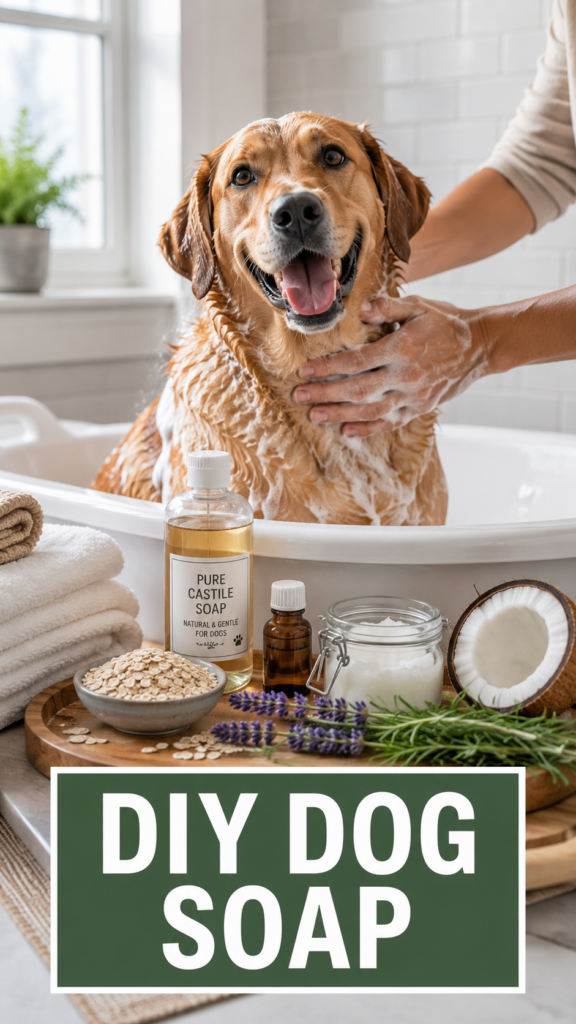
If you still want to make a simple homemade wash, keeping the formula plain and minimal is the safest approach. An unscented, pet-appropriate cleanser with thorough rinsing is preferable to loading a DIY recipe with fragrances or concentrated essential oils.
Let’s make bath time a little easier—and a lot less chaotic.
Why DIY Dog Soap Instead of Store-Bought?
Making a homemade wash gives you control over the ingredients you’re putting on your dog’s coat. That can be appealing when you want to avoid unnecessary fragrances, dyes, or complicated ingredient lists.
But homemade doesn’t automatically mean safer.
Commercial dog shampoos are formulated specifically for canine skin, and veterinary guidance recommends pet-specific products because dogs have different skin pH and barrier characteristics from humans. Soap-based DIY formulas can also be more alkaline than ideal for a dog’s skin.
So if you choose a DIY option, keep it simple, use it only on healthy skin, and stop if your dog develops irritation.
What Makes a Soap Dog-Safe?
Dog-safe bathing isn’t simply about choosing ingredients that sound natural. The finished product should be gentle, easy to rinse away, and free from ingredients that can irritate the skin or create a toxicity risk if your dog licks its coat afterward.
Dogs can also react differently depending on their individual skin condition, age, health, and exposure level.
Key principles to follow:
- Choose a mild, unscented cleanser rather than a heavily fragranced product.
- Dilute appropriately when the product directions call for dilution.
- Keep essential oils out of DIY formulas whenever possible. Concentrated essential oils can be harmful through skin exposure or ingestion, and the risk varies by oil and concentration.
- Avoid potentially toxic oils such as tea tree, wintergreen, cinnamon, clove, peppermint, and several other concentrated oils.
- Keep the mixture away from the eyes, nose, mouth, and inside of the ears.
- Rinse extremely well so cleanser isn’t left sitting on the skin or coat.
About pH and Dog Skin
A dog’s skin has a different pH from human skin, which is one reason human shampoo isn’t a good routine choice for dogs. Veterinary sources recommend products formulated specifically for pets rather than assuming a human or homemade cleanser is suitable.
Castile soap is alkaline, so it shouldn’t automatically be described as an ideal canine shampoo simply because it is plant-based. If your dog has allergies, chronic itching, infections, hot spots, or another skin problem, ask your veterinarian about an appropriate shampoo instead of experimenting with homemade soap.
Safe Essential Oils (And Ones to Avoid)
This is the section where it’s worth being especially cautious.
Essential oils are highly concentrated substances. Although individual oils are sometimes promoted online as gentle or pet-friendly, safety depends on the particular oil, concentration, exposure route, and animal. The ASPCA advises caution with essential oils, while veterinary toxicology guidance warns that several oils can cause problems through ingestion or skin exposure.
For that reason, the safest choice for a homemade dog wash is to skip essential oils altogether.
If a veterinarian specifically recommends an essential-oil-containing product for your individual dog, follow the product and veterinary directions rather than creating your own concentration.
Generally safer choices (dilute properly):
Rather than labeling individual essential oils as universally “safe,” it’s better to treat all concentrated essential oils with caution. Even oils commonly described as gentle can cause irritation or become problematic when the concentration is too high or the dog licks the residue.
For a DIY dog wash, an unscented formula is the simplest option.
Skip these (for real):
- Tea tree (melaleuca) oil
- Clove oil
- Cinnamon oil
- Wintergreen and birch oils
- Peppermint oil
- Pine oil
- Ylang ylang oil
- Other concentrated oils unless specifically cleared for your dog by a veterinarian.
General Safety Rules for Oils
- Never apply concentrated essential oils directly to your dog.
- Don’t assume dilution makes every essential oil safe. Toxicity depends on the oil and concentration.
- Keep essential oils securely stored where pets cannot knock over or lick the bottles.
- Avoid experimenting with essential oils on puppies, elderly dogs, dogs with medical conditions, or dogs taking medication without veterinary advice.
- Stop immediately if your dog develops redness, itching, weakness, vomiting, breathing problems, tremors, or other unusual symptoms. Seek veterinary advice if exposure has occurred.
Simple Dog-Safe Castile Soap Recipe
A very simple formula is preferable to one packed with fragrances and add-ins.
Because castile soap is alkaline and homemade formulas aren’t professionally tested for canine skin compatibility, consider this an occasional DIY wash for a healthy dog, not a replacement for a veterinarian-recommended shampoo.
If your dog has sensitive skin, the better option may be a fragrance-free, dog-specific shampoo formulated for routine use.
What you’ll need:
- 1 cup unscented liquid castile soap
- 1 cup water
- Clean bottle with a secure cap or pump
For the simplest version, leave out the essential oils, fragrances, and unnecessary additives.
How to make it:
- Pour the castile soap into a clean bottle.
- Add the water.
- Gently mix by tilting the bottle back and forth rather than vigorously shaking it.
- Label the bottle so you know exactly what it contains.
- Make only a small amount rather than storing a large homemade batch.
How to use it:
- Wet your dog’s coat thoroughly with lukewarm water.
- Apply a small amount of diluted wash to the body.
- Massage gently through the coat.
- Keep the cleanser away from the eyes, nose, mouth, and inside of the ears.
- Rinse extremely thoroughly until no soap remains.
- Towel dry your dog and keep them warm until completely dry.
Thorough rinsing matters because leftover shampoo can irritate the skin. Veterinary bathing instructions also emphasize completely rinsing shampoo from the coat.
Optional Add-Ins (Use Wisely)
For a DIY wash, fewer ingredients are usually better.
- Colloidal oatmeal: A dog-specific oatmeal shampoo may be a better option than adding loose ingredients to homemade soap, particularly if your dog has itchy or sensitive skin.
- Aloe vera: Don’t assume household aloe products are automatically suitable for dogs. Some products contain additional ingredients that aren’t appropriate for pets.
- Hydrosols: These aren’t automatically risk-free simply because they’re less concentrated than essential oils. If your dog has sensitive skin, an unscented wash is the more conservative choice.
If your dog’s skin is persistently itchy, inflamed, flaky, or irritated, don’t keep adding ingredients to the bath hoping to solve the problem. Ask your veterinarian about the cause and the appropriate shampoo.
3 Easy Scent Profiles (Super Light!)
For dogs, unscented is the safest DIY scent profile.
Rather than encouraging homemade essential-oil blends, consider these three options:
- Calm Pup: No added fragrance
- Sensitive Skin: No added fragrance
- Unscented Hero: No added fragrance
Yes, they’re technically the same.
That’s the point.
Dogs don’t need perfume to be clean, and essential oils can create unnecessary exposure risks. The ASPCA specifically recommends caution with direct application of essential oils to pets.
When to Go Unscented
If your dog has allergies, recurring itching, sensitive skin, or requires frequent bathing, unscented is the better choice.
Even a fragrance that seems pleasant and subtle to you may be much stronger to a dog. More importantly, fragrance isn’t necessary for cleaning.
If your dog repeatedly develops skin problems after bathing, speak with your veterinarian rather than simply switching between scented DIY recipes.
Bath Day Workflow That Actually Works
Bath time doesn’t have to become a wrestling match.
A little preparation can make the whole process easier.
- Brush first to remove loose hair and tangles before getting the coat wet.
- Use lukewarm water that’s comfortable against your skin.
- Wet the body thoroughly before applying the cleanser.
- Keep soap away from the face, and use a damp cloth around sensitive facial areas.
- Massage gently rather than aggressively scrubbing the skin.
- Rinse thoroughly until the coat feels clean and free of product.
- Dry well with a towel and keep your dog somewhere warm until fully dry.
Veterinary bathing guidance similarly recommends warm water, thorough rinsing, and careful drying after bathing.
How Often Should You Bathe?
There’s no single bathing schedule that works for every dog.
Many healthy dogs only need occasional baths when they’re dirty or develop noticeable odor. Veterinary guidance notes that bathing needs vary according to factors such as coat type, lifestyle, age, and underlying health. Dogs with certain skin conditions may actually require more frequent medicated bathing under veterinary direction.
If you’re finding yourself bathing your dog very frequently because of itching or odor, that’s a reason to investigate the underlying issue rather than simply adding more baths.
Storage, Shelf Life, and Safety
Once you add water to a homemade product, you’re dealing with a mixture that doesn’t have the preservation system found in many commercial shampoos.
For that reason, making small batches is preferable.
- Store the mixture in a clean, closed container.
- Make small amounts rather than preparing months’ worth at once.
- Don’t add fresh food-based ingredients that can spoil.
- Discard the mixture if its smell, appearance, or texture changes.
- Don’t share an old batch between multiple pets if you’re unsure about its cleanliness.
- If you want a product with a predictable shelf life, a commercially formulated dog shampoo is generally the more practical choice.
Patch Testing and First-Time Use
Before using any new product over your dog’s entire body, apply a small amount to a limited area and monitor your dog for signs of irritation.
If you notice redness, intense scratching, swelling, or other concerning symptoms, rinse the product away and stop using it.
If your dog develops significant symptoms after exposure to an essential oil or other potentially toxic ingredient, contact your veterinarian promptly. Essential-oil poisoning can cause signs including vomiting, drooling, weakness, coordination problems, tremors, breathing difficulties, and skin irritation.
Troubleshooting: Common Issues and Easy Fixes
Coat feels sticky after rinsing? You may have used too much cleanser or haven’t rinsed long enough. Rinse again thoroughly with lukewarm water.
Dog starts itching after bath? Stop using the product. Rinse the coat thoroughly and switch to a simple, fragrance-free dog shampoo if your veterinarian recommends one.
Soap seems too watery? That’s expected when a cleanser is diluted. Don’t add random thickeners just to change the texture.
Strong scent lingers? That’s a reason to stop using fragrance or essential oils rather than adding more. Your dog’s coat doesn’t need to smell strongly scented after a bath.
When to Call the Vet
DIY bathing products are not a treatment for medical skin disease.
If your dog has hot spots, persistent itching, hair loss, redness, sores, recurrent ear or skin infections, unusual odor, or worsening skin problems, contact your veterinarian before experimenting with homemade products.
Veterinarians can determine whether your dog needs a specific therapeutic shampoo, antifungal or antibacterial treatment, allergy management, or another form of care. Medicated shampoos are formulated for particular skin conditions and shouldn’t automatically be replaced with DIY soap.
FAQs
Can I use regular human shampoo or baby shampoo on my dog?
It’s better not to use human shampoo as your dog’s regular bathing product.
Dogs have different skin characteristics and pH from humans, and veterinary guidance recommends shampoos specifically formulated for pets. A fragrance-free, hypoallergenic dog shampoo is generally a better routine choice.
Is tea tree oil safe for dogs if I use only a tiny amount?
I would not recommend adding tea tree oil to a homemade dog wash.
Tea tree oil is among the essential oils associated with toxicity in dogs, and the risk depends on concentration and exposure. Veterinary toxicology guidance specifically identifies tea tree oil as potentially poisonous through ingestion or skin exposure.
If your dog has been exposed to concentrated tea tree oil, contact your veterinarian promptly.
What if my dog has fleas?
A homemade soap shouldn’t be considered a flea-treatment program.
Bathing may physically remove some fleas, but effective flea control generally requires an appropriate preventive treatment and attention to the home environment. Your veterinarian can recommend a flea-control plan appropriate for your dog.
Can I make a big batch and store it?
It’s better to make small batches, especially when you’re working with diluted homemade products.
Water changes the storage characteristics of the mixture, and homemade products don’t have the controlled preservation system of commercial shampoos. Keep the container clean and closed, and discard the mixture if anything changes about its appearance, smell, or texture.
My dog hates baths—any tips?
Make the experience as predictable and comfortable as possible.
Use a nonslip surface, lukewarm water, gentle water pressure, and plenty of positive reinforcement. Prepare towels and everything else before bringing your dog into the bathing area so you’re not scrambling halfway through the process.
For nervous dogs, a cup or gentle rinse container may be less intimidating than a strong sprayer.
Will essential oils make my dog smell like a candle shop?
They shouldn’t be necessary at all.
If your dog’s coat smells strongly of fragrance after a bath, that’s a good reason to simplify the formula rather than adding more scent. Dogs have a much stronger sense of smell than we do, so a fragrance that seems subtle to you may not be subtle to them.
Conclusion
Making a simple homemade dog wash can be appealing when you want control over the ingredients, but simple doesn’t have to mean heavily scented or packed with essential oils.
A conservative DIY approach is to keep the formula minimal, use an appropriate dilution, rinse extremely well, and avoid potentially toxic essential oils. For regular bathing, a veterinarian-recommended dog shampoo—particularly a fragrance-free, hypoallergenic formula—is generally the safer and more predictable choice.
And if your dog’s skin isn’t behaving normally, don’t keep experimenting with homemade soap. That’s when your veterinarian should take over.
Clean coat, comfortable pup, less bath-time drama—that’s the real win.