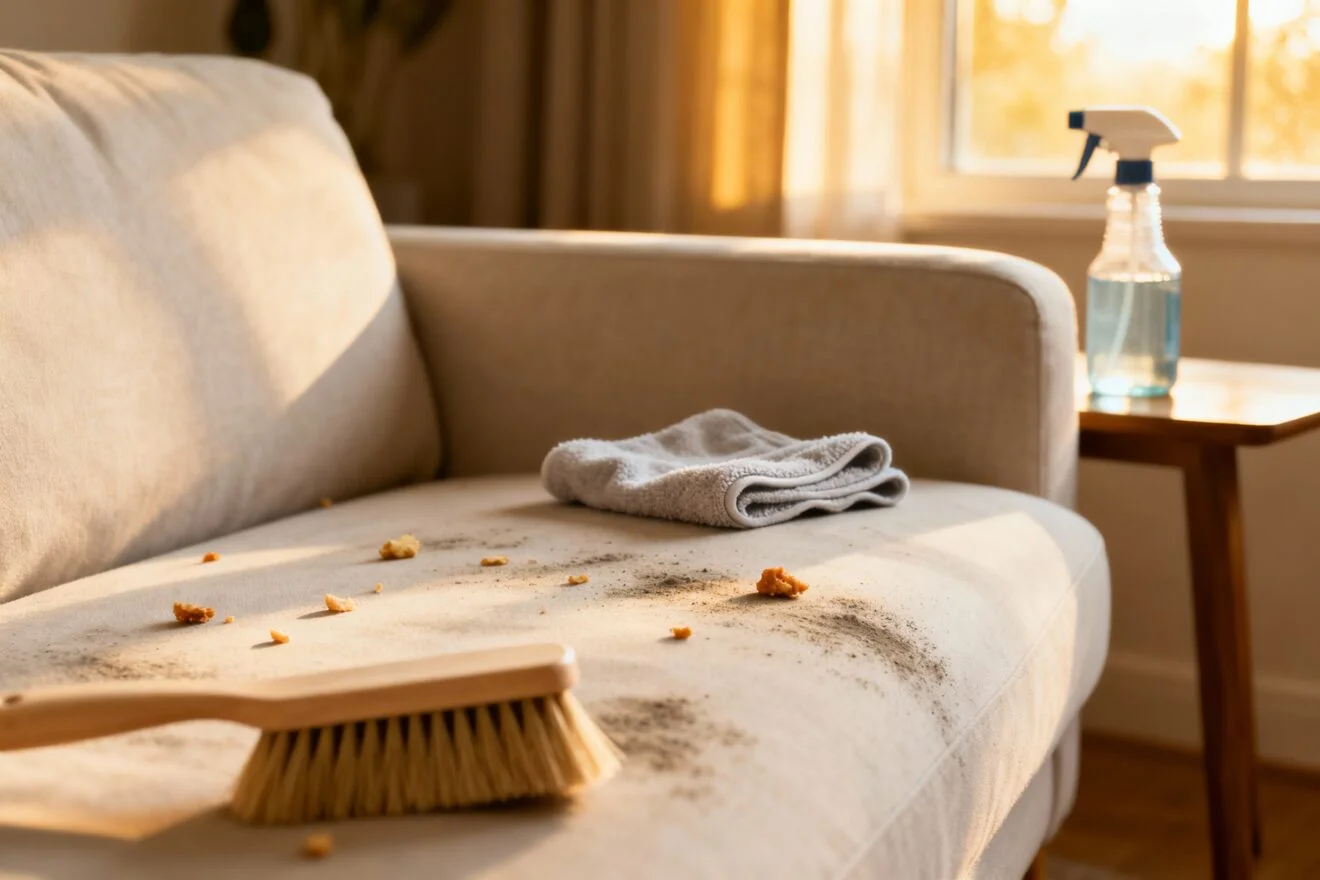
7 Sofa Cleaning Hacks To Refresh Your Furniture
Your sofa goes through a lot—movie nights, spilled drinks, dog paws, snack crumbs, and the occasional muddy zoomies. After more than 20 years of living with and grooming dogs, I’ve learned that furniture—especially sofas—takes the biggest hit in a dog-loving home. But the good news is that bringing your couch back to life doesn’t require expensive equipment or professional cleaning every time.
With a few smart cleaning habits and the right techniques, you can remove odors, tackle stains, and make your sofa feel fresh again—even in a busy home with pets.
Key Takeaways
- Regular vacuuming removes up to 80% of dust, fur, and debris before it becomes embedded in fabric.
- Always check the cleaning code tag (W, S, WS, X) before using any cleaning solution.
- Baking soda is one of the safest odor removers for sofas, especially in pet homes.
- Blot stains immediately—rubbing spreads stains deeper into upholstery fibers.
- Steam cleaning works well for deep cleaning but only on approved fabric types.
- Leather sofas require conditioning every 3–6 months to prevent cracking.
- Pet owners should use enzyme cleaners and protective covers to prevent lingering odors and damage.
Start with the Basics: Vacuum Like You Mean It
Before trying any cleaning solution, start with a thorough vacuum.
In my experience, most sofa stains look worse because dust, crumbs, and pet hair are trapped in the fibers. Removing that debris first instantly improves how the fabric looks and smells.
Here’s how I usually do it:
- Use a vacuum with an upholstery attachment.
- Go slowly across the entire surface.
- Use the crevice tool for seams and corners where crumbs and fur collect.
- Remove cushions and vacuum underneath them.
If you live with dogs like I do, you’ll know those areas become a hidden treasure chest of fur, treats, and mystery crumbs.
Pro move: Fabric brush + lint roller
After vacuuming, I like to go over the sofa with a fabric brush to loosen embedded hair. Then I finish with a lint roller.
This combination works especially well for short dog fur like Labradors or Beagles, which tends to cling stubbornly to upholstery.
Decode Your Sofa’s Tag Before You Clean
Every sofa has a small tag that tells you how it should be cleaned.
Ignoring this tag is one of the biggest mistakes people make when cleaning furniture.
Here’s what those letters mean:
- W – Water-based cleaners are safe
- S – Solvent-based cleaners only
- WS – Water or solvent cleaners can be used
- X – Vacuum only; professional cleaning recommended
If the tag is missing, always test your cleaning solution on a hidden area first, like the back or underside of a cushion.
From my experience, fabrics can fade, shrink, or transfer dye quickly, so a quick spot test saves a lot of regret.
Fight Odors with Baking Soda Magic
If your sofa smells musty—or a little too “doggy”—baking soda is one of the easiest solutions.
I’ve used this trick for years in homes with multiple dogs, and it works because baking soda neutralizes odors instead of covering them up.
Here’s what to do:
- Sprinkle a generous layer of baking soda across the sofa.
- Focus on seat cushions and armrests.
- Let it sit 30–60 minutes (longer for strong pet odors).
- Vacuum thoroughly.
Boost it with essential oils (carefully)
For a light fresh scent, mix:
- 1 cup baking soda
- 5–8 drops of essential oil
Shake it in a jar before sprinkling.
I personally like lavender or lemon because they smell clean without being overpowering.
Just remember: always test first, because some oils can stain fabric.
Blot Stains Fast (Stop Rubbing!)
Spills happen—especially in homes with kids, guests, and pets.
The biggest mistake people make is rubbing the stain. That pushes the liquid deeper into the fabric fibers.
Instead, do this:
- Use a clean white cloth.
- Blot gently, pressing to absorb the liquid.
- Continue blotting until no more transfers to the cloth.
If there are solids like food, scrape them off carefully with a dull knife or spoon.
DIY stain solutions by fabric code
For W or WS fabrics
Mix:
- 1 cup warm water
- A few drops of dish soap
Dab the stain, blot gently, then wipe with a damp cloth and dry.
For S fabrics
Use a small amount of rubbing alcohol or dry-cleaning solvent on a cloth and blot carefully.
For grease stains
Sprinkle cornstarch on the stain and leave it for about 15 minutes. Then vacuum before applying the proper cleaner.
Steam for the Deep Clean (When It’s Safe)
For deeper cleaning, steam can make a big difference.
I occasionally use a handheld steamer on fabric sofas when I want to lift embedded dirt and revive flattened fibers.
Steps I follow:
- Vacuum first.
- Pre-treat visible stains.
- Use light passes of steam without soaking the fabric.
- Let the sofa dry completely.
Use fans or open windows to speed up drying and prevent mildew.
Skip steam on these
Avoid steam if the sofa is labeled:
- S
- X
- Leather
- Delicate velvet
Heat combined with the wrong fabric can cause permanent damage or shrinkage.
Leather and Faux Leather: Clean, Condition, Glow
Leather sofas require a completely different cleaning approach.
Over the years, I’ve seen beautiful leather furniture crack simply because it wasn’t conditioned.
Here’s my simple routine:
- Dust and vacuum with a soft brush attachment.
- Wipe with a damp microfiber cloth.
- Add a tiny amount of mild soap if needed.
- Apply leather conditioner every 3–6 months.
Conditioning keeps the leather soft and prevents drying or cracking.
Quick fixes for scuffs
Small scuffs can sometimes be improved by gently rubbing with a soft cloth and a tiny drop of olive oil.
Buff it lightly.
Just remember—less is more.
Neutralize Pet Problems (Hair, Dander, and “Why Would You Do That?”)
If you share your home with dogs like I do, your sofa probably collects a lot of fur.
Pet hair, dander, and occasional accidents are unavoidable—but manageable.
Hair removal
A trick I’ve used for years:
Wear a slightly damp rubber glove and swipe across cushions.
Hair gathers into clumps that are easy to remove.
Odor control
- Sprinkle baking soda weekly.
- Use washable throw blankets on favorite dog spots.
This simple habit drastically reduces how often deep cleaning is needed.
Accidents
If a dog has an accident:
- Blot immediately.
- Use an enzyme cleaner safe for upholstery.
Enzyme cleaners break down odor-causing proteins so the smell doesn’t linger.
Protect against repeat offenses
One tip I recommend to every pet owner:
Place a waterproof liner under cushion covers.
This prevents liquids from soaking into foam cushions, where odors are hardest to remove.
Brighten and De-Pill: The Fabric Glow-Up
Over time, fabric sofas develop pilling, which makes them look older than they really are.
Luckily, fixing it takes just a few minutes.
Try this:
- Use a fabric shaver or sweater stone to remove pills.
- Brush the fabric with an upholstery brush to restore texture.
- Lightly mist with fabric refresher and let it air out.
Sunlight and airflow help
Fresh air is incredibly effective.
On dry days, I open the windows and let the sofa breathe.
Indirect sunlight and airflow help eliminate lingering odors and moisture.
Just avoid direct sunlight, which can fade upholstery and dry leather.
Protect and Maintain So You Clean Less
Cleaning is important, but prevention saves the most effort.
These habits keep sofas looking fresh longer:
- Apply fabric protector if the material allows it.
- Rotate cushions every few weeks.
- Use washable throws on high-use areas.
- Vacuum weekly.
- Deep clean every 3–6 months.
In homes with pets, these small routines make a huge difference.
FAQ
How do I get rid of a musty smell in my sofa?
Start by vacuuming thoroughly. Then sprinkle baking soda across the sofa and leave it for at least an hour before vacuuming again.
For W or WS fabrics, lightly mist a 50/50 mixture of water and white vinegar, then allow it to air dry with good ventilation.
If cushion foam smells musty, remove covers and let the cushions air out in indirect sunlight.
Can I use vinegar directly on my sofa?
Use diluted vinegar only on W or WS fabrics.
Mix equal parts water and white vinegar, test in a hidden spot, then lightly mist and blot.
Never soak upholstery, and avoid vinegar on leather or S/X fabrics.
What’s the best way to clean microfiber?
Many microfiber sofas are labeled S or WS.
For WS fabrics, use warm water with a small amount of dish soap. Dab the stain, then brush the fibers after drying.
For S fabrics, rubbing alcohol sprayed lightly and blotted with a white cloth often works well.
How do I dry my sofa faster after cleaning?
Use fans and open windows to improve airflow.
Remove cushions and stand them upright so air can circulate around them.
Avoid direct heat sources like hair dryers because they can damage upholstery fibers.
Are store-bought fabric refreshers safe?
Most are safe, but always test them first.
Some sprays can leave rings or alter the fabric texture.
A simple DIY option is distilled water, a splash of vodka, and a drop of essential oil.
When should I call a professional cleaner?
Call a professional if:
- The sofa tag says X
- Stains cover a large area
- There are deep pet odors or smoke smells
Professional cleaners have specialized tools that clean deeply without damaging upholstery.
Wrapping It Up
Your sofa doesn’t need constant expensive cleaning—it just needs consistent care and the right techniques.
Vacuum regularly, deal with spills quickly, and always use cleaners suited to your fabric type.
As someone who has spent decades living with dogs, I’ve learned that a few simple habits—like baking soda deodorizing, weekly vacuuming, and protective throws—can keep your sofa looking and smelling fresh for years.
And if all else fails?
A cozy blanket over the couch can hide a lot—and your dog will probably claim it anyway.