3 Simple Homemade Weight Gain Dog Food Recipes
My dog Bruno came home from the vet one Tuesday with a label I wasn’t expecting — underweight. He wasn’t sick, just naturally lean with a metabolism that burned through everything I fed him.
I remember feeling genuinely helpless standing in the pet food aisle, reading labels and doing math in my head, thinking there had to be a better way than overpriced commercial options that still weren’t doing the job.
That’s when I started cooking for him myself, and honestly, it changed everything. These homemade weight gain dog food recipes are what I landed on after a lot of trial, a few vet conversations, and one very enthusiastic dog who finally started filling out.
This article gives you three tested, calorie-rich homemade dog food recipes designed to help underweight dogs put on healthy weight — a beef and rice bowl, a chicken and oatmeal dish, and a salmon and quinoa mix.
I walk you through every step of cooking them, plus storage tips, serving sizes, feeding guidelines, and a full FAQ section based on real questions I’ve had along the way.
Key Takeaways
- All three recipes use high-fat, high-protein ingredients that support healthy weight gain and muscle development
- These meals are simple to make with everyday grocery store ingredients
- Each recipe offers variety so your dog stays interested and excited about eating
- Proper portion control and gradual introduction matter just as much as the ingredients themselves
- Always loop your vet in before making major changes to your dog’s diet, especially if they’re underweight for a medical reason
Why You’ll Love This Weight Gain Dog Food Delight
What I love most about these recipes is how straightforward they are. I’m not a trained chef, and my dog definitely isn’t a picky food critic — but even so, I wanted meals that were genuinely nutritious rather than just calorie-stuffed. Every ingredient here earns its place.
The calorie density comes from real food sources like fatty meats, healthy oils, and whole grains rather than fillers. That means Bruno gets energy and nutrition at the same time, which is exactly what an underweight dog actually needs to build back up properly.
Each recipe balances protein for muscle, carbs for energy, and fats for sustained calorie intake. And because there are three different options, I can rotate them so Bruno never gets bored of eating the same thing every single day.
Weight Gain Dog Food Recipes
I’ve put together three recipes below, each one built around a different protein source so you’ve got options depending on what’s in your fridge or what your dog responds to best. I’ll walk through every step so there’s no guesswork involved.
High-Calorie Beef & Rice Bowl
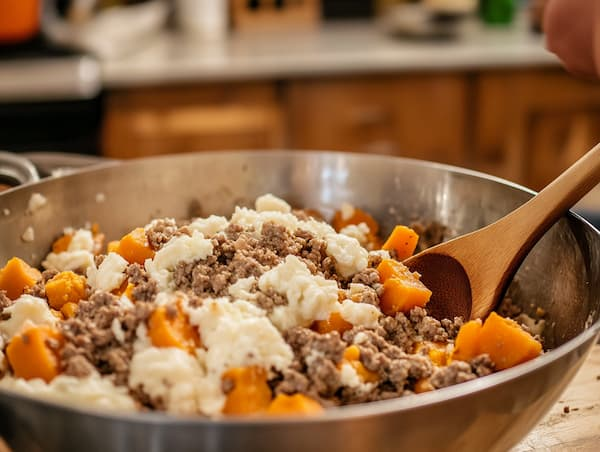
This one is Bruno’s all-time favorite and honestly the first recipe I ever made him. Ground beef with a higher fat content gives it the calorie density you need, and the brown rice and sweet potato round it out into a genuinely filling meal.
| Ingredient | Description |
|---|---|
| 2 lbs ground beef (80/20) | High-fat beef for calorie density and protein |
| 2 cups cooked brown rice | Quick-digesting carbs for energy and bulk |
| 1 cup sweet potatoes, mashed | Adds carbs and vitamins for sustained energy |
| ½ cup full-fat cottage cheese | Boosts calories with creamy fat and protein |
| 2 tbsp olive oil or coconut oil | Provides healthy fats for weight gain |
| 1 tbsp ground flaxseed | Offers omega-3s and extra calories |
| 1 egg, cooked | Adds protein and fats for muscle support |
Step 1: Cook the Beef
Heat a large skillet over medium heat and add the ground beef. I cook mine for about 10 to 12 minutes, breaking it up as it browns, and I leave a little of the natural fat in the pan rather than draining it all — that fat is part of the point here.
Let it cool slightly before moving on. You don’t want to add it to the other ingredients while it’s still steaming hot.
Step 2: Prepare the Brown Rice
Rinse one cup of dry brown rice under cold water, then combine it with two cups of water in a saucepan. Bring it to a boil, then reduce the heat and let it simmer covered for about 12 to 15 minutes until it’s tender and fluffy. Set it aside to cool.
Step 3: Cook the Sweet Potatoes
Peel and chop one or two medium sweet potatoes until you’ve got enough to make about a cup of mash. Boil them in a pot of water for 10 to 15 minutes until they’re soft enough to mash easily with a fork. Drain them, mash until smooth, and let them cool down.
Step 4: Cook the Egg
I hard-boil the egg by placing it in a small pot of cold water, bringing it to a boil, then letting it sit for 10 minutes. Cool it under cold running water, peel it, chop it into small pieces, and set it aside. Simple as that.
Step 5: Combine Ingredients
In a large mixing bowl, bring everything together — the beef, rice, sweet potato mash, cottage cheese, oil, flaxseed, and chopped egg. Stir it all until it’s evenly mixed and let it cool completely to room temperature before serving.
Pro Tip: I always use 80/20 ground beef for this recipe rather than the leaner options. The extra fat content is exactly what makes this recipe work for weight gain, so don’t swap it out thinking you’re doing your dog a favor.
Protein-Packed Chicken & Oatmeal
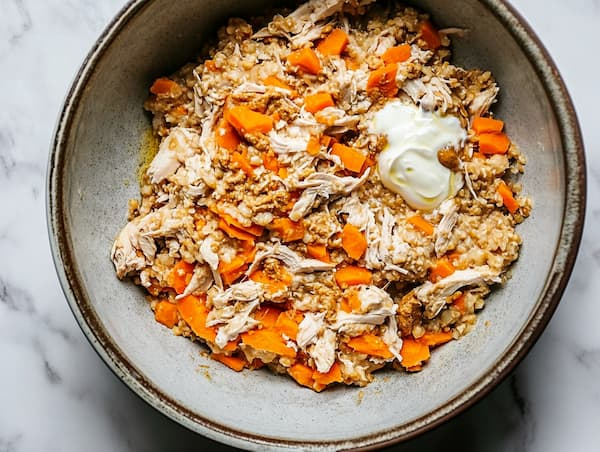
This recipe is my go-to when I want something a little lighter but still calorie-packed. Dark meat chicken is naturally fattier than breast meat, and pairing it with oatmeal gives you a soft, easy-to-digest meal that even picky dogs tend to enjoy.
| Ingredient | Description |
|---|---|
| 2 lbs shredded chicken (dark meat) | High-protein, fatty cuts for calories and muscle |
| 1½ cups cooked oatmeal | Comforting carbs for energy and weight gain |
| ½ cup plain Greek yogurt | Adds fat, protein, and creaminess |
| 1 tbsp peanut butter (no xylitol) | Boosts calories with a tasty fat source |
| 2 tbsp fish oil or flaxseed oil | High-calorie fats for coat and energy |
| ½ cup steamed carrots, mashed | Offers vitamins and a touch of natural sweetness |
| 1 egg, raw or cooked | Extra protein and fats for muscle support |
Step 1: Cook the Chicken
Place the dark meat chicken pieces in a large pot, cover with water, and bring it to a boil over medium-high heat. Simmer for 20 to 25 minutes until fully cooked through. I leave the skin on during cooking because that extra fat matters — once it’s cool enough to handle, I shred the meat with two forks and keep some of that skin mixed in.
Step 2: Prepare the Oatmeal
Measure out three-quarters of a cup of dry rolled oats and combine them with one and a half cups of water in a saucepan. Bring it to a gentle boil, then reduce the heat and stir occasionally for five to seven minutes until you’ve got a thick, hearty oatmeal. Let it cool before mixing.
Step 3: Steam the Carrots
Peel and chop enough carrots to get about half a cup of mash. Steam them over boiling water for eight to ten minutes until they’re soft, then mash them with a fork and let them cool. Carrots add a natural sweetness that a lot of dogs genuinely seem to love.
Step 4: Cook the Egg
Boil the egg the same way I described in the beef recipe — ten minutes in boiling water, cool under cold water, peel, chop, and set aside. If your dog tolerates raw eggs and your vet is okay with it, you can add it raw instead.
Step 5: Combine Ingredients
Mix the shredded chicken, cooked oatmeal, Greek yogurt, peanut butter, fish or flaxseed oil, mashed carrots, and the egg together in a large bowl. Stir it well until everything is evenly blended and let it cool fully before serving to your dog.
Pro Tip: Always double-check your peanut butter label before adding it. Xylitol is toxic to dogs and shows up in a surprising number of peanut butter brands these days. I personally use plain, unsweetened peanut butter with no additives to keep things safe.
Fat-Rich Salmon & Quinoa Mix
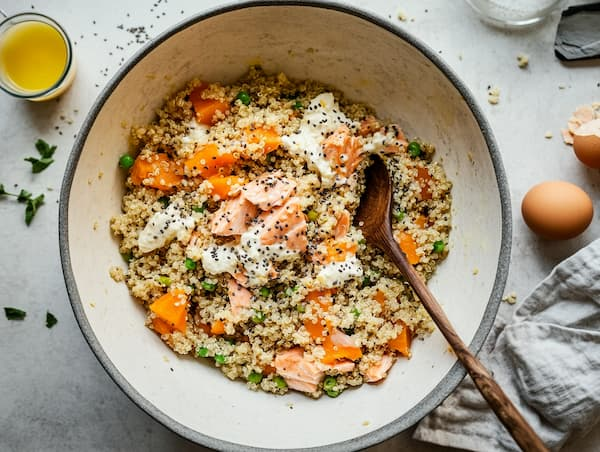
This is the fanciest of the three recipes and honestly the one I feel best about nutritionally. Salmon is loaded with omega-3 fatty acids that support coat health, joint health, and healthy weight gain all at once. Quinoa brings a protein boost that most grains don’t offer.
| Ingredient | Description |
|---|---|
| 1½ lbs cooked salmon | Fatty fish rich in omega-3s for weight and coat health |
| 1½ cups cooked quinoa | Nutrient-dense carbs for energy and bulk |
| ½ cup plain pumpkin puree | Adds fiber and calories to support digestion |
| ½ cup full-fat goat’s milk or kefir | High-fat dairy for calories and gut health |
| 2 tbsp chia seeds | Calorie-packed seeds with omega-3s |
| 1 tbsp coconut oil | Boosts fat content for energy and a shiny coat |
| 1 egg, cooked | Adds protein and fats for muscle gain |
Step 1: Cook the Salmon
Preheat your oven to 350°F. Place the salmon in a baking dish with a small splash of water in the bottom, and bake for 15 to 20 minutes until it flakes easily. Let it cool completely, then remove all skin and bones carefully before flaking it into small pieces.
Step 2: Prepare the Quinoa
Rinse three-quarters of a cup of dry quinoa under cold water — this step removes the natural bitter coating. Combine it with one and a half cups of water in a saucepan, bring to a boil, then simmer covered for 12 to 15 minutes until it’s fluffy and fully cooked. Fluff with a fork and cool.
Step 3: Cook the Egg
Hard-boil the egg for ten minutes, cool it down in cold water, peel it, chop it into small pieces, and set it aside. By this point in the process I usually have the other ingredients already measured out so everything comes together quickly.
Step 4: Combine Ingredients
Add the flaked salmon, cooked quinoa, pumpkin puree, goat’s milk or kefir, chia seeds, coconut oil, and chopped egg into a large bowl. Stir everything together until it’s well combined and let it cool completely to room temperature before serving.
Pro Tip: Use plain pumpkin puree here, not pumpkin pie filling. The pie version has added sugar and spices that aren’t good for dogs at all. The plain canned variety is widely available and works perfectly.
Storage and Serving
I store each of these recipes in airtight containers in the fridge for up to four days. If I make a big batch, I portion it into freezer-safe bags and freeze them for up to two months — I just thaw a portion overnight in the fridge the night before I need it.
For serving sizes, I start with about half a cup for small dogs, one to two cups for medium-sized dogs, and two to three cups for larger breeds. These are starting points though, and I always adjust based on my dog’s actual progress and what my vet recommends.
Feeding Guidelines
Because these recipes are calorie-rich by design, I don’t serve them as a complete meal replacement right away. I introduce them gradually over seven to ten days, mixing a small amount in with my dog’s regular food and slowly increasing the ratio over time to avoid any digestive upset.
My vet helped me figure out Bruno’s target weight and how many daily calories he needed to get there safely. I’d really encourage you to have that same conversation before you start, especially if your dog is underweight due to illness or a medical condition rather than just a naturally fast metabolism.
Tips for Success
Using fattier cuts of meat is genuinely the most important thing I can tell you here. Eighty-twenty ground beef and dark meat chicken are the versions you want — leaner cuts just won’t give you the same calorie density for weight gain purposes.
I also serve these meals slightly warm rather than straight from the fridge. Warming the food just a little releases more aroma, and that makes a real difference for dogs who are hesitant eaters or recovering from illness.
Weighing your dog weekly and keeping simple notes on their progress helps you know whether to increase portions or stay the course. And if your dog is being stubborn about eating, a splash of low-sodium broth stirred in usually does the trick to get them interested.
Substitutes and Variations
If ground beef isn’t available, ground pork at a similar fat ratio works well in the beef and rice bowl. For the chicken and oatmeal recipe, brown rice or mashed potatoes can stand in for oatmeal if that’s what you have on hand.
In the salmon and quinoa mix, full-fat plain yogurt works fine as a substitute if you can’t find goat’s milk or kefir. And across all three recipes, adding a tablespoon of unsalted melted butter is an easy way to bump up the fat and calorie content even further.
Benefits of the Ingredients
The proteins in these recipes — beef, chicken, salmon, and eggs — do double duty by building lean muscle while also adding meaningful calories. This matters because weight gain without muscle support can leave a dog soft and unhealthy rather than strong and thriving.
The carbohydrates from rice, oatmeal, quinoa, and sweet potato give your dog a steady energy source and help add healthy bulk to their frame over time. The fats from oils, dairy, and chia seeds are where the real calorie density lives, and they also support coat health and energy reserves.
Vegetables like pumpkin and carrots bring fiber and vitamins to the mix, which keeps digestion running smoothly even as your dog takes in more food and calories than they’re used to.
FAQs
How do I know if my dog is underweight?
When I first noticed Bruno’s ribs, I ran my hands along his sides to confirm — you should feel ribs without pressing hard, but not see them clearly from across the room. A tucked waist and visible hip bones are other signs. Your vet can confirm with a body condition score during a regular checkup.
Can these recipes replace my dog’s regular food entirely?
I use them as calorie boosters alongside regular kibble, not as a complete diet replacement. These recipes focus heavily on calories and macronutrients but aren’t formulated to cover every vitamin and mineral your dog needs long-term. Talk to your vet about whether supplements make sense.
How long before I see my dog gaining weight?
In my experience with Bruno, I started noticing a real difference after about three to four weeks of consistent feeding. Every dog is different, and the timeline depends on how underweight they started, their age, and their metabolism.
Important Notes
Protein from beef, chicken, salmon, and eggs is the foundation of healthy weight gain — it supports muscle growth so your dog gains real body mass rather than just fat. Carbohydrates from grains, sweet potato, and oatmeal add safe, digestible bulk and sustained energy throughout the day.
If you plan to use these recipes longer than a few weeks, bring them up with your vet. They may recommend a calcium supplement or a canine multivitamin to fill any nutritional gaps that these meals don’t cover on their own.
Conclusion
Watching Bruno go from a skinny, worried-looking dog to a healthy, sturdy boy who runs laps around the yard is genuinely one of the most satisfying things I’ve experienced as a pet owner.
These homemade weight gain dog food recipes made that possible, and I’m really glad I took the time to figure them out. If your dog needs a calorie boost and you want to know exactly what’s going into their bowl, I hope these recipes give you the same confidence and results they gave me and Bruno.
All content on this site is written and reviewed by our experienced team to ensure it is accurate, reliable, and helpful for our readers. Our Our Process page explains how we carefully research and create high-quality content, while our Team page introduces the professionals behind our work. We also provide clear guidelines for content or image concerns on our Image Removal page, so you can trust that we prioritize transparency, quality, and reader safety.