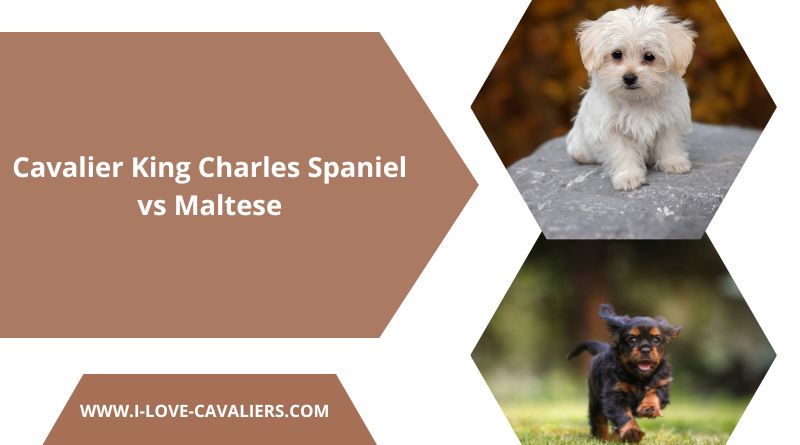
Cavalier King Charles Spaniel vs Maltese: Which is Better?
When it comes to choosing a small, affectionate companion dog, I’ve often found myself comparing the Cavalier King Charles Spaniel and the Maltese. Both breeds are incredibly loving and thrive on human companionship, but they do have important differences that can impact your lifestyle.
Key Takeaways
- Cavaliers are slightly larger and more relaxed, while Maltese are smaller and more energetic
- Both breeds are highly affectionate and thrive on human interaction
- Maltese require more frequent grooming due to their long coat
- Cavaliers need moderate exercise; Maltese can be surprisingly active
- Both breeds can develop separation anxiety if left alone too long
- I always suggest choosing based on your daily routine, grooming commitment, and activity level
Cavalier King Charles Spaniel vs Maltese
Cavalier King Charles Spaniel History and Origin
The Cavalier King Charles Spaniel has a rich royal history rooted in the United Kingdom. From what I’ve studied and observed, these dogs were beloved companions of British nobility for centuries.
Their lineage traces back to toy spaniels seen in classic paintings by artists like Anthony van Dyck and Thomas Gainsborough. They were especially adored by King Charles I and Charles II of England.
Despite their long history, Cavaliers were officially recognized as a distinct breed in the 20th century. Today, they consistently rank among the most popular companion dogs.
Maltese History and Origin
The Maltese is one of the oldest toy breeds, with a history spanning over 2,000 years. From my research, their origins are tied to the Mediterranean region, particularly the island of Malta.
They were highly valued by ancient civilizations. Influential figures like Aristotle and Pliny the Elder even wrote about small companion dogs resembling the Maltese.
These dogs were often associated with royalty and elegance, symbolizing status due to their pure white coats and refined appearance.
Cavalier King Charles Spaniel Physical Characteristics
Size:
Toy breed
Typically weigh 13–18 pounds
Height ranges from 12–13 inches
Coat & Color:
Silky, medium-length coat
Colors include Blenheim, tricolor, ruby, and black and tan
Eyes & Ears:
Large, expressive dark eyes
Long, feathered ears
Tail & Body:
Balanced, slightly athletic build
Tail carried naturally with gentle movement
Grooming Needs:
From my experience, Cavaliers are moderate when it comes to grooming. I usually recommend brushing at least 3–4 times a week to prevent tangles. Occasional professional grooming helps maintain coat quality. Regular ear cleaning is essential due to their floppy ears.
Maltese Physical Characteristics
Size:
Toy breed
Usually under 7 pounds
Height between 8–12 inches
Coat & Color:
Long, silky white coat
Sometimes slight cream or lemon tones
Eyes & Ears:
Dark, round, expressive eyes
Drop ears blending into the coat
Tail & Body:
Compact body with a fine-boned structure
Tail curves over the back
Grooming Needs:
I’ve noticed Maltese require more maintenance. Daily brushing is often necessary to prevent matting. Many owners opt for shorter cuts to simplify care. Dental hygiene is also critical since small breeds are prone to dental disease—studies suggest up to 80% of dogs show signs of dental issues by age 3.
Cavalier King Charles Spaniel Dietary Needs
Cavaliers need a well-balanced diet to support heart health and overall wellbeing. From my experience, portion control is especially important because this breed loves to eat.
They are prone to heart conditions like mitral valve disease, so I always suggest maintaining a healthy weight. Obesity can significantly increase health risks in small breeds.
Some Cavaliers may also have food sensitivities, so I recommend monitoring for signs like itching or digestive upset.
Maltese Dietary Needs
Maltese dogs benefit from high-quality, small-breed-specific diets. Because of their small size, they can be prone to low blood sugar (hypoglycemia), especially as puppies.
I usually recommend feeding smaller meals 2–3 times a day instead of one large portion. This helps maintain stable energy levels.
They can also be picky eaters, so consistency in diet is key once you find what works.
Cavalier King Charles Spaniel Temperament and Personality
Affectionate and Sociable:
Cavaliers are incredibly loving. I’ve found them to be one of the most people-oriented breeds.
Adaptable:
They adjust well to both active and relaxed lifestyles.
Good with Families:
Great with kids and other pets due to their gentle nature.
Sensitive:
They respond best to positive reinforcement training.
Maltese Temperament and Personality
Lively and Playful:
Maltese dogs are energetic and love playtime.
Companionable:
They form strong bonds and prefer not to be left alone.
Brave:
Despite their size, they can be surprisingly fearless.
Intelligent but Stubborn:
Training requires patience and consistency, something I’ve personally seen with small companion breeds.
Cavalier King Charles Spaniel Training and Exercise Needs
Exercise Requirements:
Moderate energy level
About 30 minutes of daily activity is usually enough
Training:
Easy to train due to their eagerness to please
Positive reinforcement works best
Maltese Training and Exercise Needs
Exercise Requirements:
Need around 45–60 minutes of activity daily
Indoor play works well due to their size
Training:
Smart but sometimes stubborn
Early socialization helps prevent excessive barking
Cavalier King Charles Spaniel Living Conditions
Cavaliers adapt well to most living environments, including apartments. However, I’ve noticed they struggle with being alone for long periods.
They thrive in homes where someone is around most of the day. Their sensitivity also means they do best in moderate climates.
Maltese Living Conditions
Maltese are excellent apartment dogs due to their size. However, like Cavaliers, they can develop separation anxiety.
I always recommend gradually training them to be comfortable alone. They also prefer indoor living due to their delicate coat and sensitivity to temperature changes.
Cavalier King Charles Spaniels Health Concerns
Lifespan: 9–14 years
Cavaliers are prone to conditions like mitral valve disease and neurological issues such as syringomyelia.
Regular vet check-ups are essential. Early detection can significantly improve quality of life.
Maltese Health Concerns
Lifespan: 12–15 years
Maltese may face issues like patellar luxation, hypoglycemia, and dental disease.
Consistent dental care and regular vet visits can help prevent many of these issues.
Which One is Better: Cavalier or Maltese?
From my experience, there isn’t a one-size-fits-all answer. Both breeds are loving, loyal, and make wonderful companions.
If you want a slightly calmer, more laid-back dog, the Cavalier might suit you better. If you prefer a smaller, lively dog with a bold personality, the Maltese could be a great choice.
Ultimately, the best dog depends on your lifestyle, time availability, and commitment to grooming and care. Either way, you’ll be welcoming a deeply affectionate companion into your life.