Honest Kitchen Dog Food Copycat Recipes
I’ll be honest — I didn’t expect my dog to care this much about food. But the first time I served a dehydrated meal, the reaction told me everything I needed to know. Since then, I’ve tested, adjusted, and even recreated similar recipes at home to save money without sacrificing quality.
Save For Later
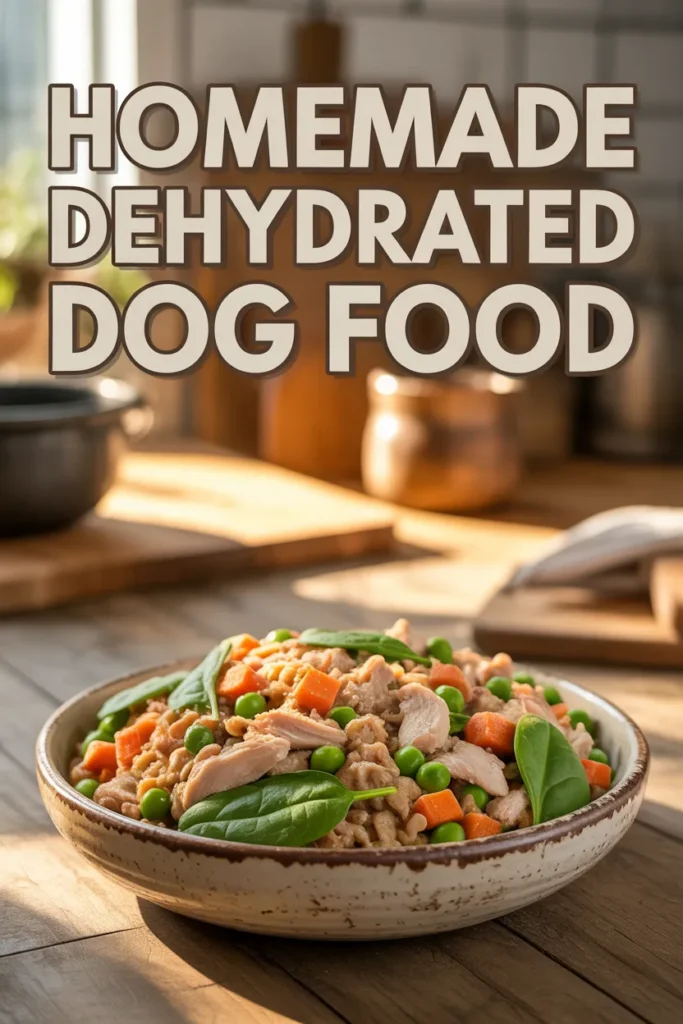
If you’re thinking about making your own version of dehydrated dog food, this guide covers everything I’ve personally learned — from ingredients to storage, nutrition, and real mistakes to avoid.
Key Takeaways
- Dehydrated dog food preserves more nutrients than kibble due to low heat processing
- Homemade versions can reduce cost by 40–60% compared to premium brands
- Proper dehydration is critical — moisture leads to mold and spoilage
- Calcium is the most commonly missing nutrient in homemade diets
- Always add oils and supplements after rehydration, not before
- Portion control matters — dehydrated food is calorie-dense
What Makes The Honest Kitchen Different (And What We’re Copying)
From what I’ve researched and tested, most kibble is made using high heat and pressure. This process can destroy sensitive nutrients like enzymes and certain vitamins.
What stood out to me about dehydrated food is the low-temperature process. It removes moisture but keeps more of the natural nutrition intact. When I rehydrate it, it turns into a soft, fresh-like meal instead of dry pellets.
Here’s what I focused on replicating:
- Real, whole proteins instead of processed meat meals
- Visible vegetables and fruits I can actually recognize
- Minimal processing to preserve nutrients
- No artificial preservatives
Pro tip: Low-heat dehydration typically retains more nutrients compared to extrusion, which can exceed 300°F in kibble production.
What You Need Before Starting
I learned quickly that the right tools make a big difference. You don’t need anything fancy, but skipping key equipment leads to uneven results.
Here’s what I personally use:
- Food dehydrator (more reliable than an oven)
- Food processor for flake texture
- Large pot for batch cooking
- Baking sheets with liners
- Airtight containers or vacuum bags
- Kitchen scale for accurate portions
Insight: A basic dehydrator (~$70) can pay for itself in 1–2 months compared to buying premium dehydrated dog food regularly.
Before making recipes, I also make sure to include supplements. Based on research, around 94% of homemade dog diets lack essential nutrients, especially calcium.
Recipe 1: Chicken & Oat Dehydrated Mix (The Honest Kitchen’s Signature Style)
This is the first recipe I tested, and it’s still my go-to. It’s simple, balanced, and works well for most dogs.
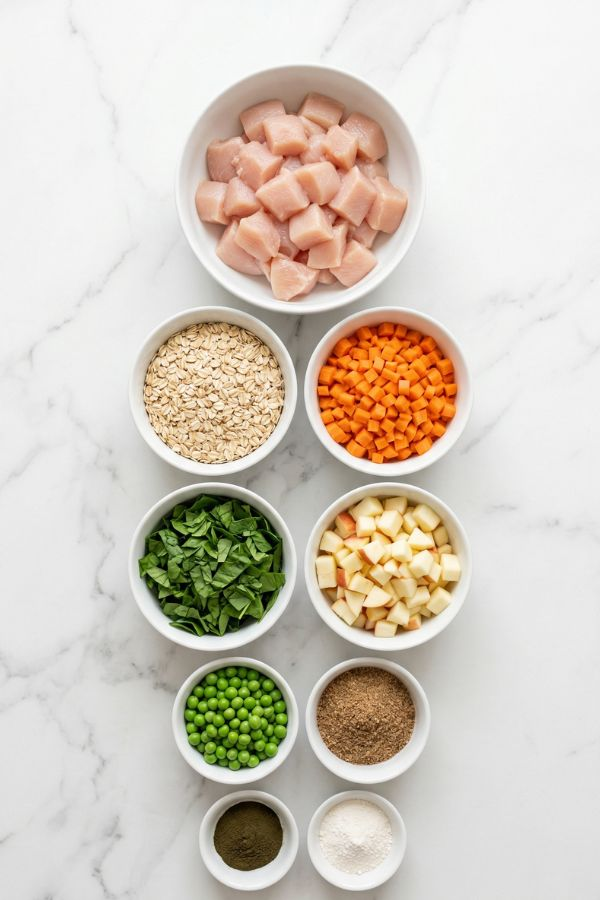
Ingredients
- Boneless chicken breast
- Rolled oats
- Carrots
- Spinach
- Peas
- Apple (no seeds)
- Flaxseed
- Kelp powder
- Eggshell powder
- Fish oil (added later)
- Water
Steps
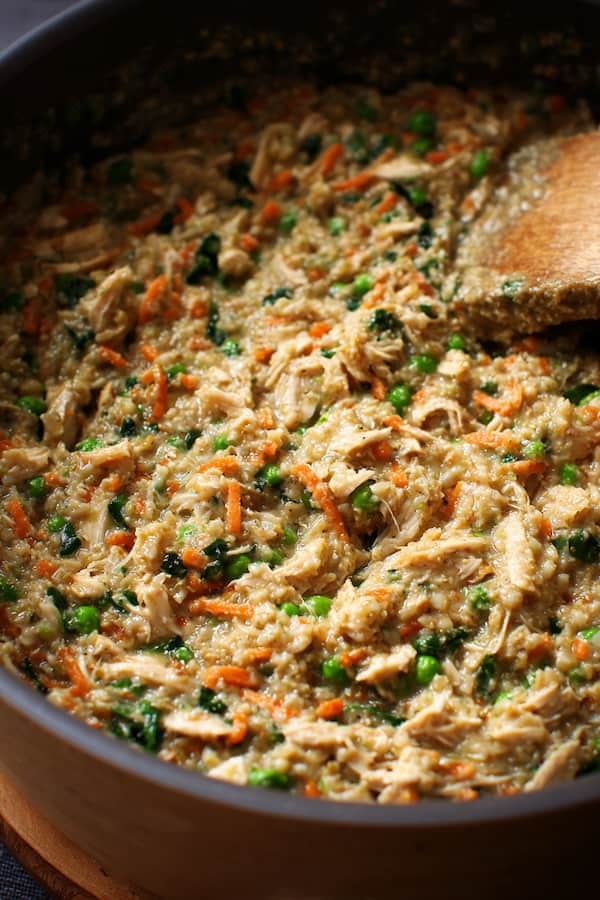
Step 1: Cook the Chicken
I simmer the chicken until fully cooked and keep the broth. That broth adds extra flavor and nutrients.
Step 2: Cook Oats and Vegetables
I cook oats, carrots, and peas in the broth. This step softens everything and blends flavors.
Step 3: Shred the Chicken Small
I prefer a fine texture, so I grind the chicken slightly instead of leaving chunks.
Step 4: Combine Everything
I mix all ingredients into a thick, porridge-like consistency.
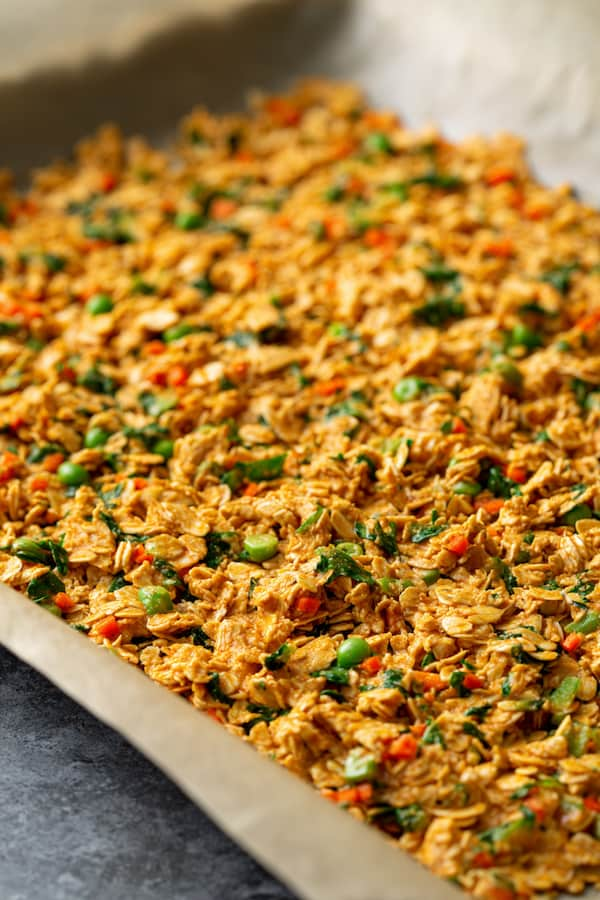
Step 5: Spread on Dehydrator Trays
I keep the layer thin (around 1/4 inch). Thick layers cause uneven drying.
Step 6: Dehydrate
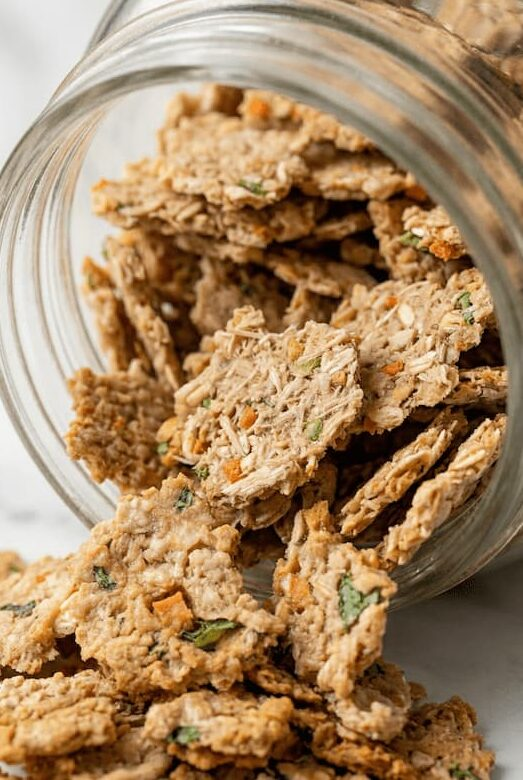
I dry it at 155°F for about 10–14 hours until completely brittle.
Step 7: Grind Into Flakes
Once cooled, I pulse it into coarse flakes — not powder.
Step 8: Store
I store it in airtight containers and label the date.
Storage
From my experience, moisture control is everything.
- Room temp (airtight): up to 3 weeks
- Vacuum sealed: up to 3 months
- Freezer: up to 6 months
Pro tip: In humid climates, always vacuum seal. Even slight moisture can ruin a batch.
Rehydrating and Serving
I usually follow a simple ratio:
- 1 cup flakes = 1 to 1.5 cups warm water
I let it sit for about 10 minutes. It thickens into a soft, fresh meal.
I always add fish oil right before serving.
Serving Guidelines (Rehydrated)
I start with general portions and adjust based on weight changes every two weeks.
Insight: Dehydrated food is calorie-dense, so overfeeding is easy if you don’t measure properly.
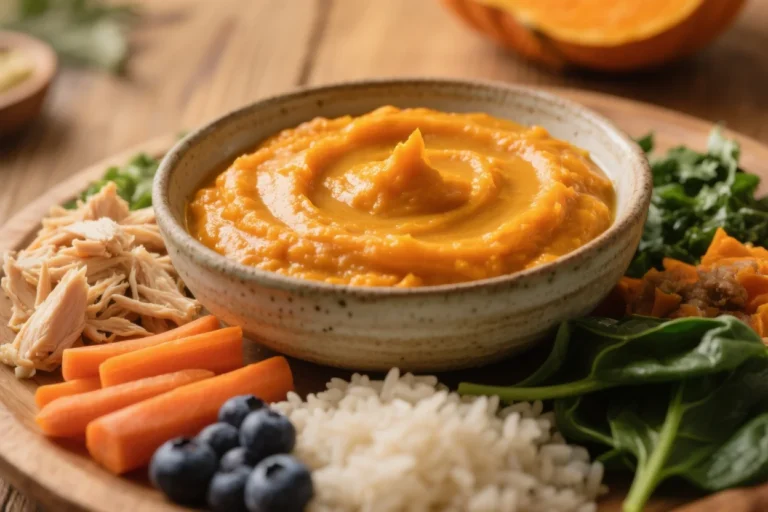
Recipe 2: Turkey & Sweet Potato Dehydrated Mix (Grain-Free Version)
This version works well for dogs with grain sensitivities. I’ve noticed it’s slightly richer and more filling.
Ingredients
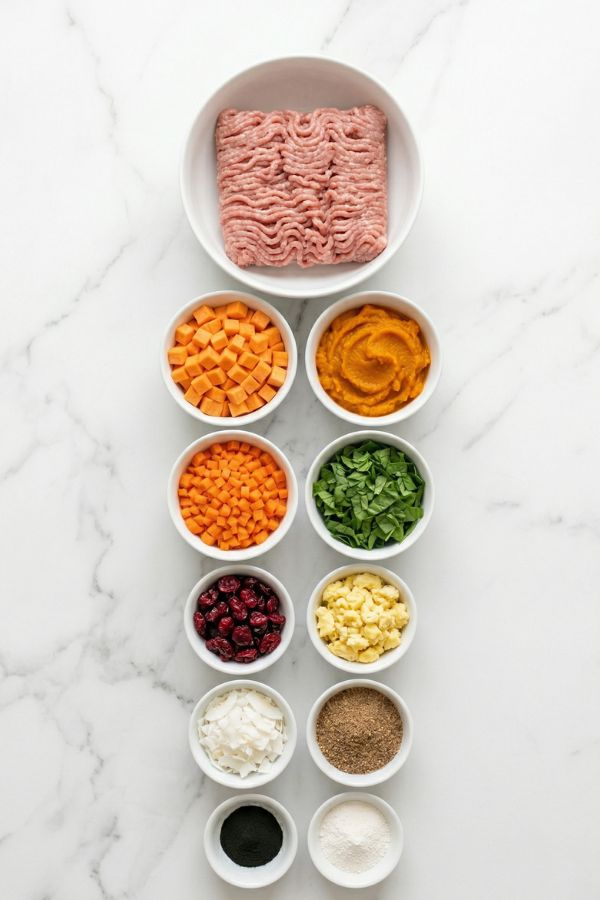
- Ground turkey
- Sweet potato
- Pumpkin puree
- Carrots
- Spinach
- Cranberries
- Eggs
- Coconut
- Flaxseed
- Kelp powder
- Eggshell powder
- Fish oil (added later)
- Water
Steps
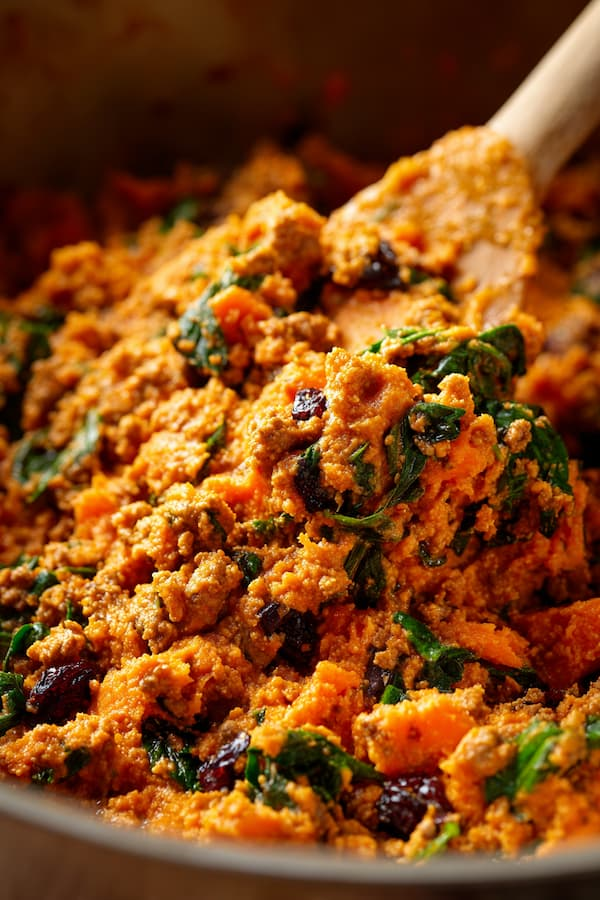
Step 1: Cook the Turkey
I cook it into fine crumbles and keep the natural juices.
Step 2: Add Vegetables
Sweet potatoes and carrots are cooked until soft. I mash part of them for texture.
Step 3: Scramble Eggs Separately
I cook eggs without oil and chop them finely.
Step 4: Combine Everything
I mix all ingredients evenly in the pot.
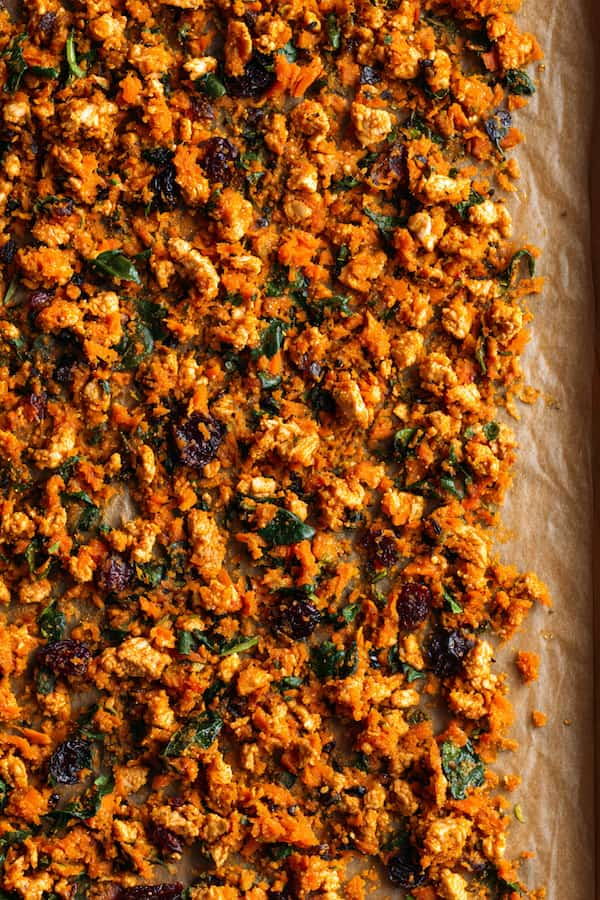
Step 5: Spread on Trays
This mix is wetter, so I take extra time to spread evenly.
Step 6: Dehydrate
I dry it longer (12–16 hours). I learned the hard way that under-drying causes spoilage.
Step 7: Grind Into Flakes
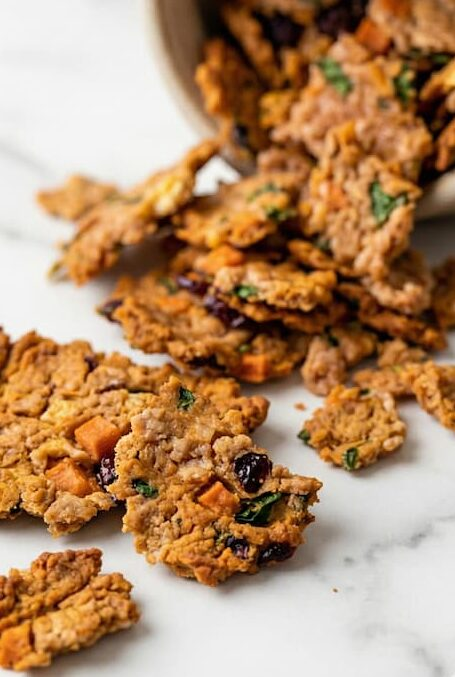
Same coarse texture as the chicken version.
Step 8: Store
Same storage rules apply.
Rehydrating and Serving
I use the same method but start with slightly less water since this mix absorbs faster.
Serving Guidelines (Rehydrated)
This recipe is more calorie-dense due to sweet potato and coconut.
I always start with smaller portions and adjust after monitoring weight.
A Note on Supplements (Don’t Skip This Part)
This is something I take seriously.
A large-scale study found that 94% of homemade dog meals miss key nutrients, especially calcium. That’s a big risk over time.
Here’s what I personally add:
- Eggshell powder for calcium
- Kelp powder for iodine
- Flaxseed for plant omega-3s
- Fish oil for EPA & DHA
- Multivitamin for overall balance
Pro tip: Never add supplements before dehydration — heat can break them down.
If you plan to feed homemade food long-term, I strongly recommend consulting a vet or nutritionist.
Tips for Getting the Dehydration Right
This is where most mistakes happen. I’ve made a few myself.
- Keep layers thin and even
- Always check the center, not edges
- Let food cool completely before grinding
- Avoid dehydrating fats or oils
- Always use tray liners
Insight: Over-drying is safer than under-drying. Even slight moisture can lead to mold within days.
Final Thoughts
From my experience, making dehydrated dog food at home is absolutely doable and cost-effective. It does take time and attention to detail, but the control over ingredients and quality makes it worth it.
I’ve seen better digestion, cleaner bowls, and more excitement at mealtime — which, honestly, says a lot.
All content on this site is written and reviewed by our experienced team to ensure it is accurate, reliable, and helpful for our readers. Our Our Process page explains how we carefully research and create high-quality content, while our Team page introduces the professionals behind our work. We also provide clear guidelines for content or image concerns on our Image Removal page, so you can trust that we prioritize transparency, quality, and reader safety.