
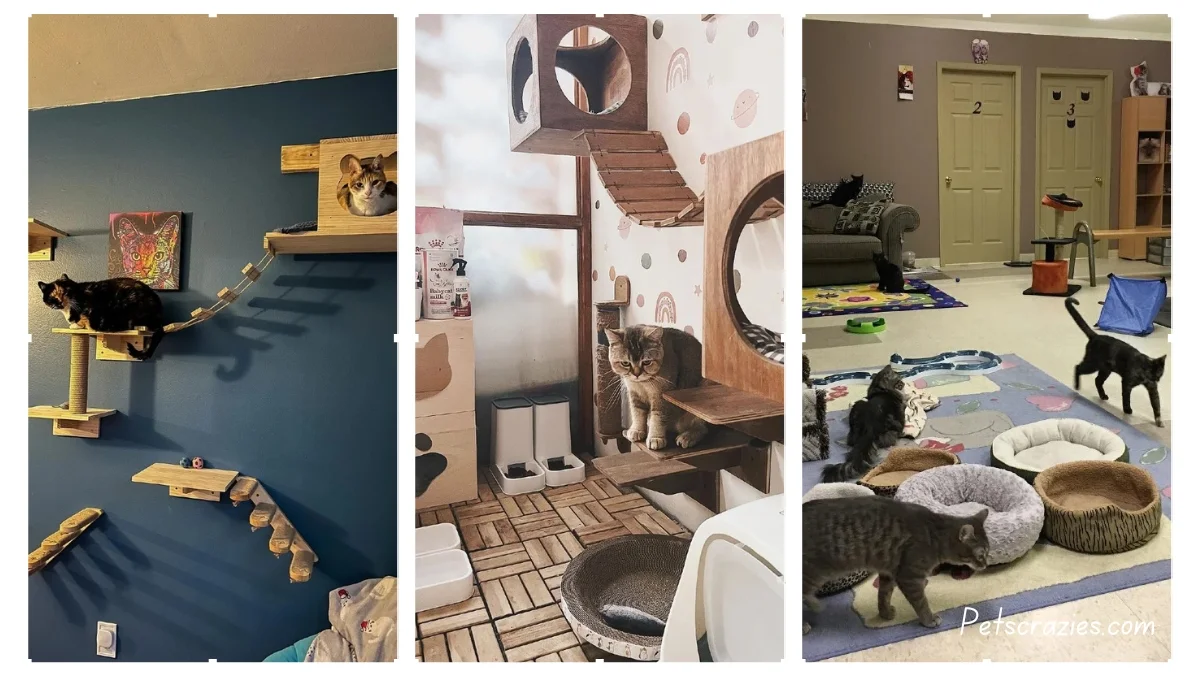
20 Cozy Cat Room Ideas to Pamper Your Feline Friend
When I started setting up a dedicated space for my cat, I quickly realized that cats need more than just a bed or a toy. They need a well-planned environment that supports their natural behaviors like climbing, hiding, scratching, and observing.
In this guide, I’m sharing 20 practical cat room ideas that I’ve either tested or researched deeply. These ideas are designed to improve your cat’s physical activity and mental health. Studies show indoor cats with enriched environments are 30–40% more active and show fewer stress behaviors.
In short: I’ve covered everything from compact setups to full cat rooms so you can create a space your cat will actually use and enjoy.
Key Takeaways
- I always use vertical space to maximize activity without crowding
- Cats need both private rest areas and active play zones
- Scratching surfaces help reduce furniture damage by up to 80%
- Natural light and window views improve a cat’s daily stimulation
- Smart layouts work even in small apartments
#1. Cozy Cat Café Haven
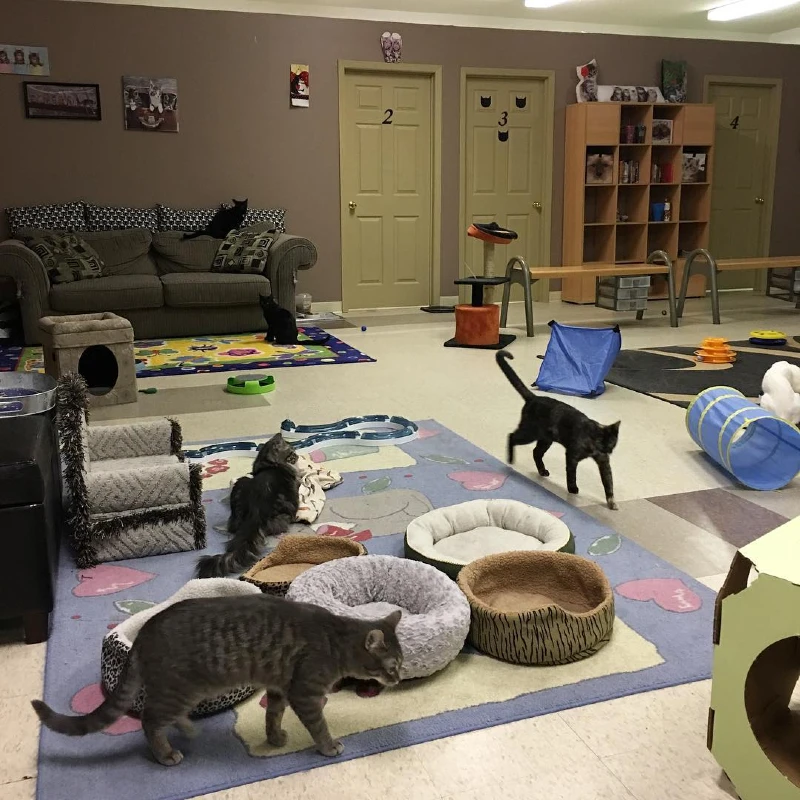
I like creating multiple rest zones when there’s more than one cat. In this setup, I use soft beds, tunnels, and open floor space so cats can choose where to relax or play.
From my experience, giving each cat separate resting spots helps avoid conflict. I also mix textures like cushions and rugs to make the space more inviting.
#2. Minimalist Cat Sanctuary
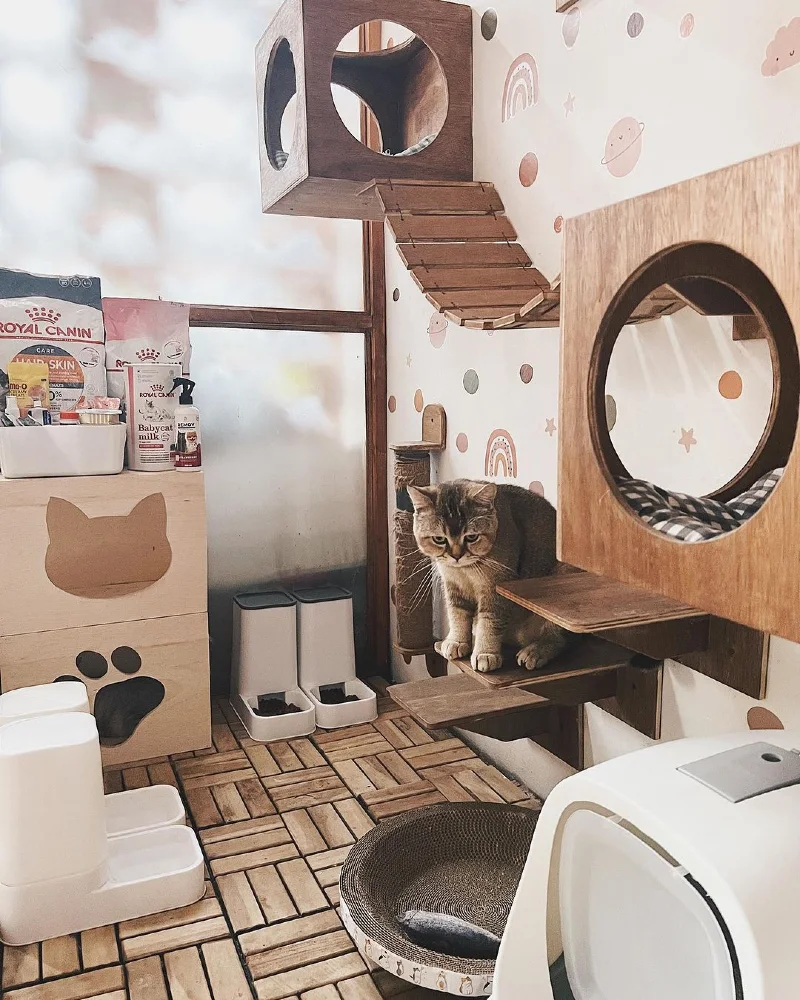
When I’m working with a small area, I focus on vertical solutions like wall-mounted cubes and bridges. This keeps the floor clean while still giving cats room to explore.
I also keep essentials like food and litter organized in one corner. This setup works well for cats that prefer calm and structured environments.
#3. Modern Cat Lounge Retreat
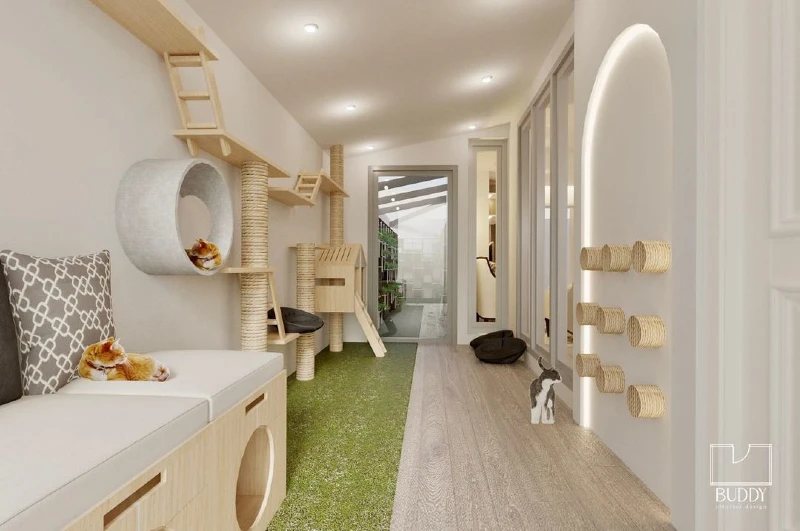
I prefer designs that blend into the home. A bench with hidden cubbies gives both seating and cat hideouts, which is a smart use of space.
Adding wall shelves and scratching posts keeps cats engaged. I’ve noticed this reduces destructive behavior over time.
#4. Wild Jungle Cat Retreat
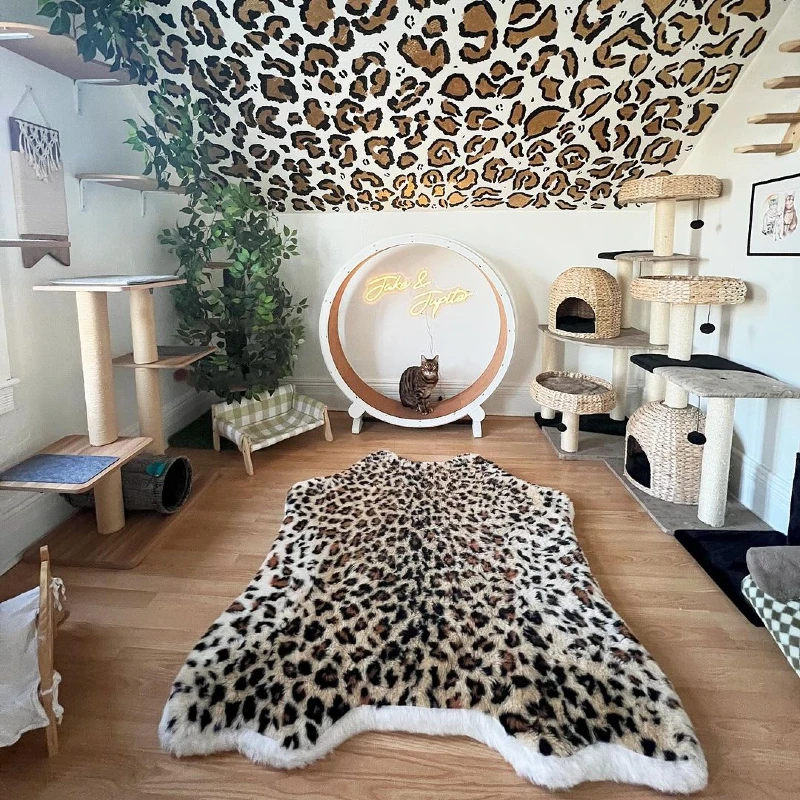
For high-energy cats, I like adding bold themes with lots of climbing options. Shelves, cat wheels, and scratch posts help mimic outdoor activity.
In my experience, active setups like this can help reduce weight gain in indoor cats, which affects nearly 60% of house cats.
#5. Playful Toy Wonderland
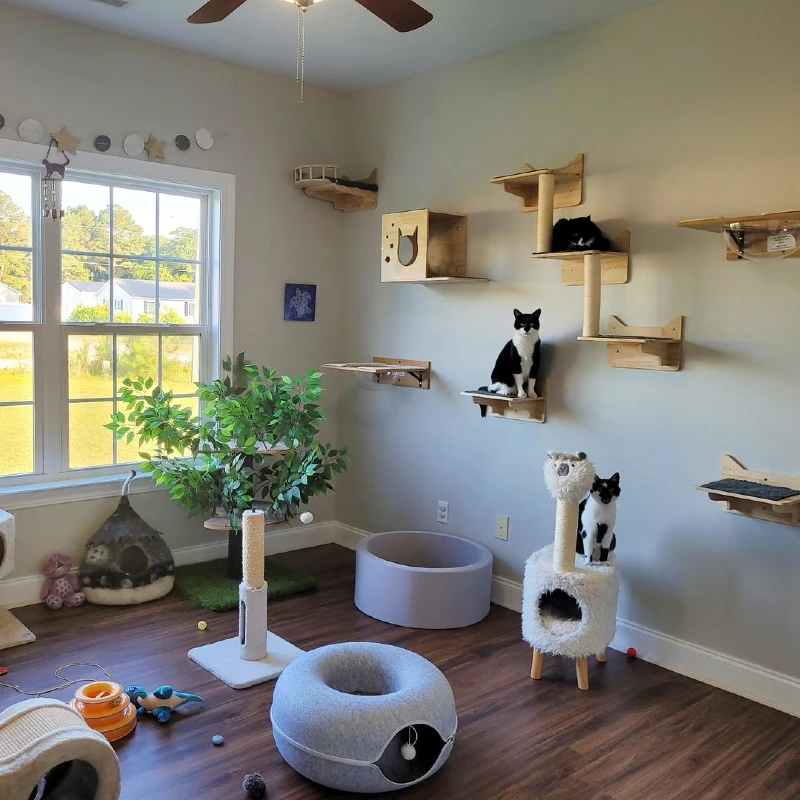
Some cats need constant stimulation, and this kind of setup works best for them. I usually include a variety of toys, balls, and scratchers spread across the space.
Rotating toys every few weeks is something I personally recommend to keep cats interested.
#6. Vertical Climber’s Paradise
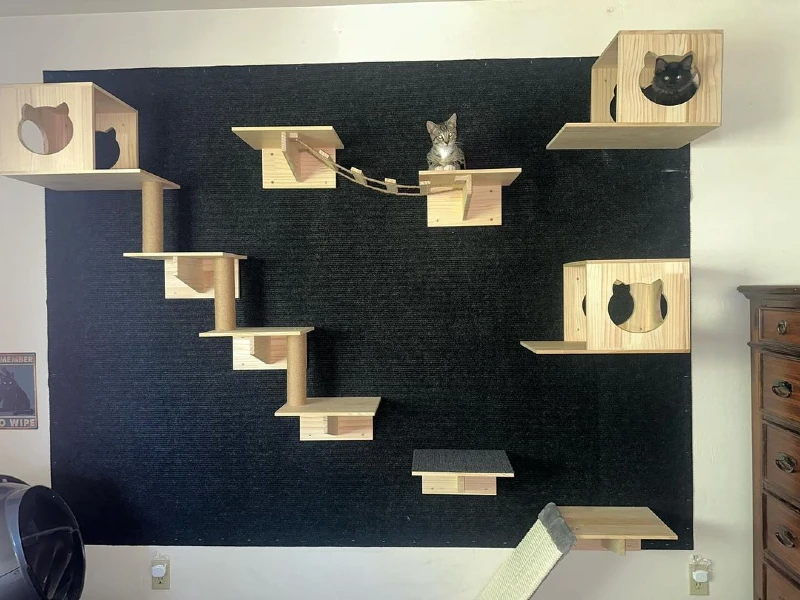
I always prioritize vertical climbing walls for energetic cats. Platforms at different heights give them a chance to jump, climb, and observe.
This type of setup also helps cats feel secure since they naturally prefer higher ground.
#7. Pastel Dreamscape for Cats
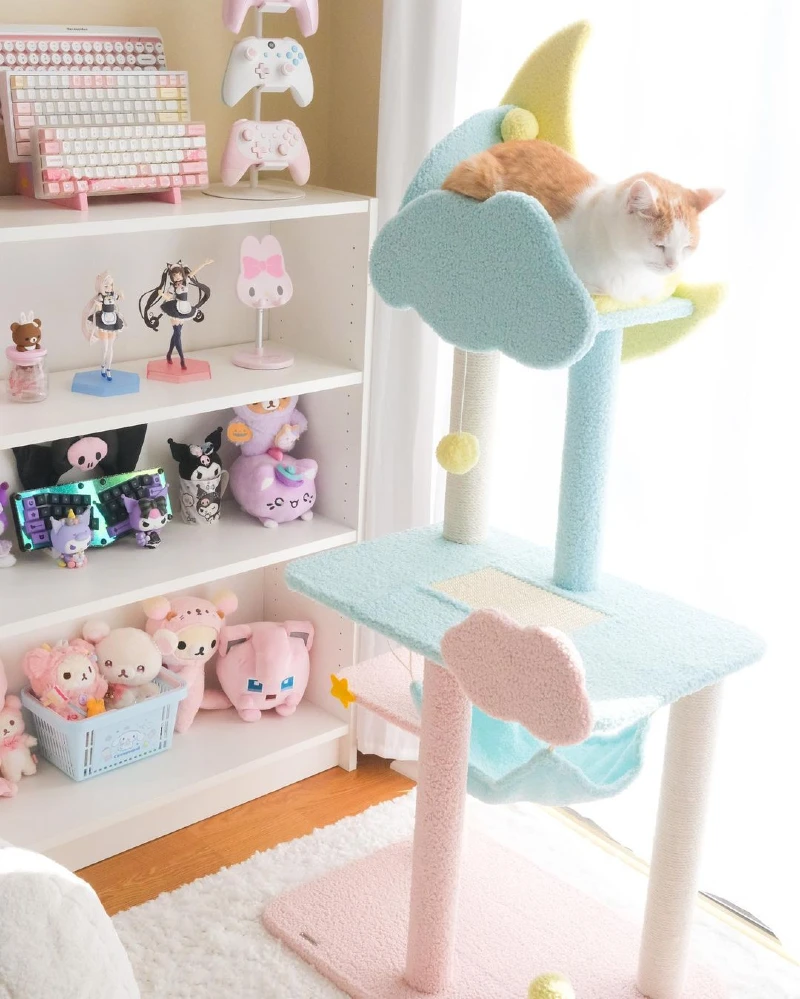
For smaller rooms, I like using compact cat trees with soft materials. This kind of setup combines comfort and style without taking up too much space.
It’s a good option if you want something functional that also looks visually appealing.
#8. Elevated Cat Adventure Wall
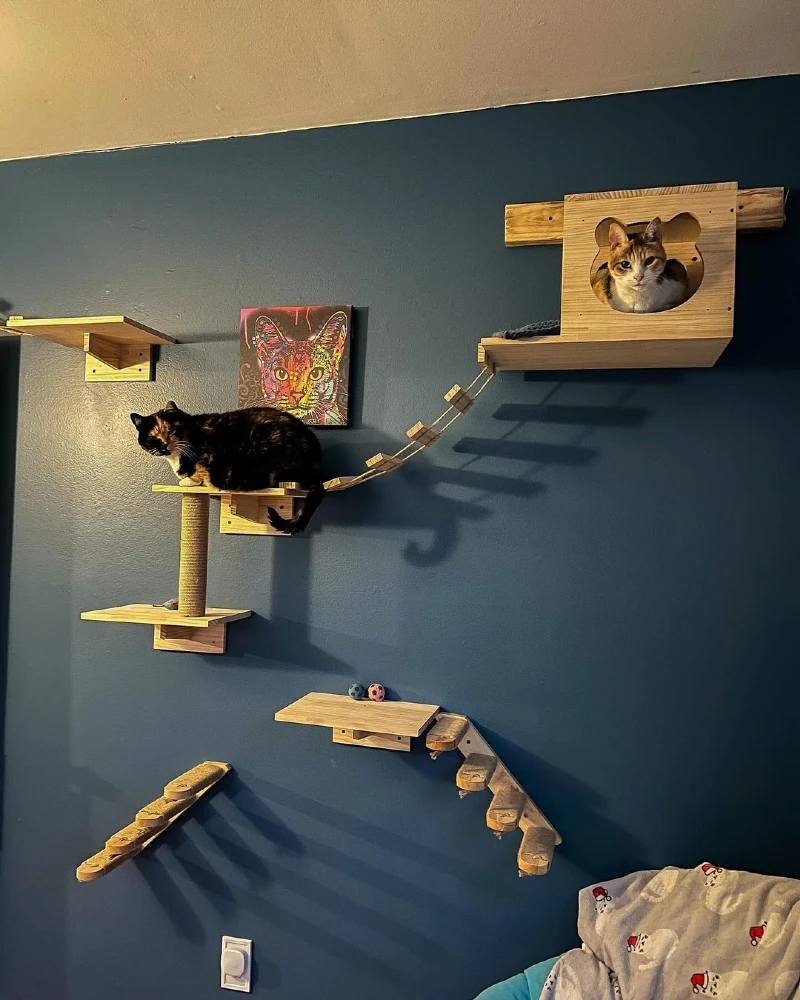
Wall-mounted systems are one of my go-to solutions. They save floor space and still give cats plenty of room to move.
I usually add bridges and small hideouts to make the setup more interactive.
#9. Modern Cat Lounge & Workspace
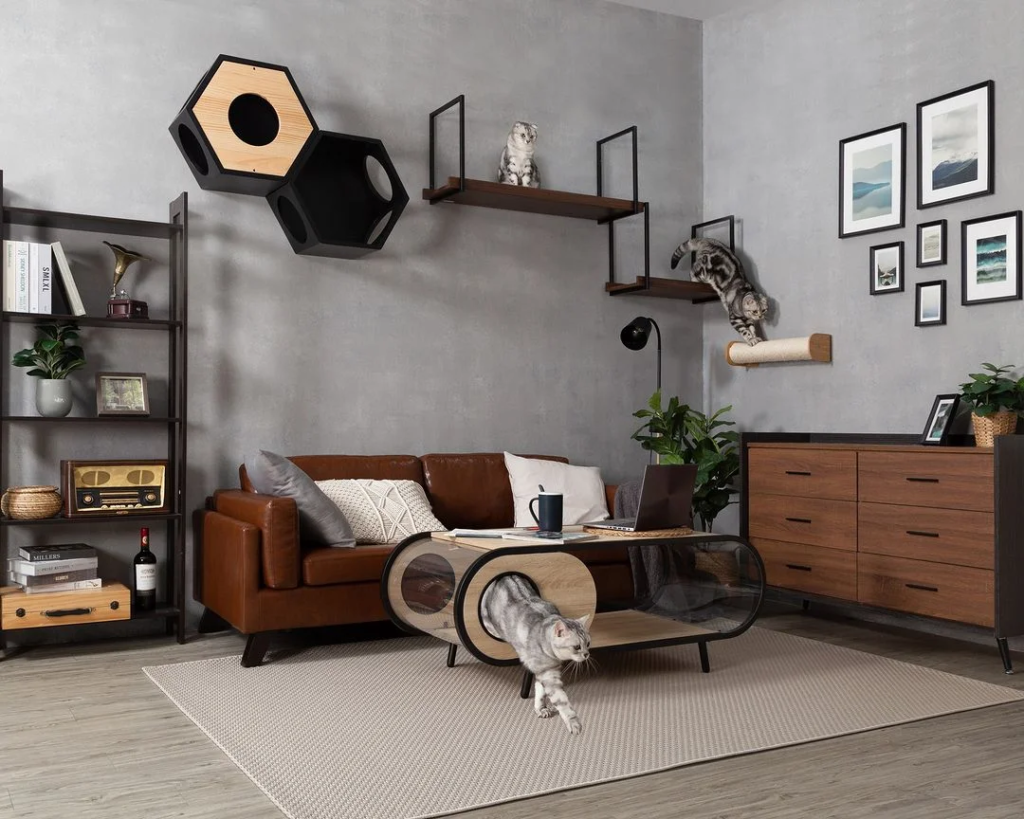
I’ve found that combining a workspace with a cat area works really well. Adding shelves and tunnels lets cats stay close without interfering.
This setup is ideal if you work from home and want your cat nearby but occupied.
#10. Cat’s Playful Haven
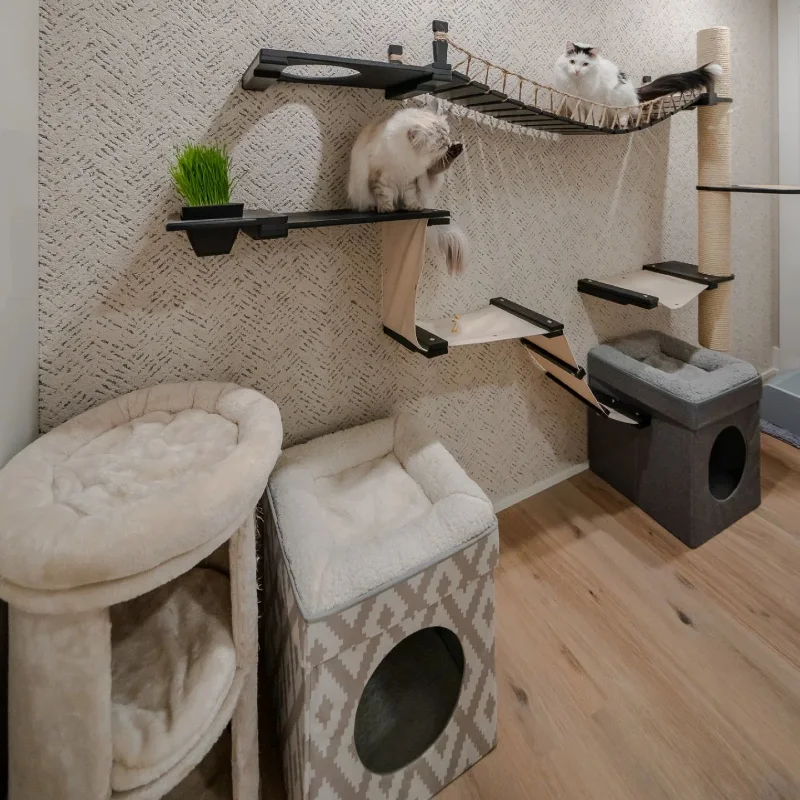
I like mixing climbing shelves with soft beds to create balance. Cats can play when they’re active and rest when they’re tired.
Neutral tones also help the space feel calm and less cluttered.
#11. Woodland Retreat for Cats
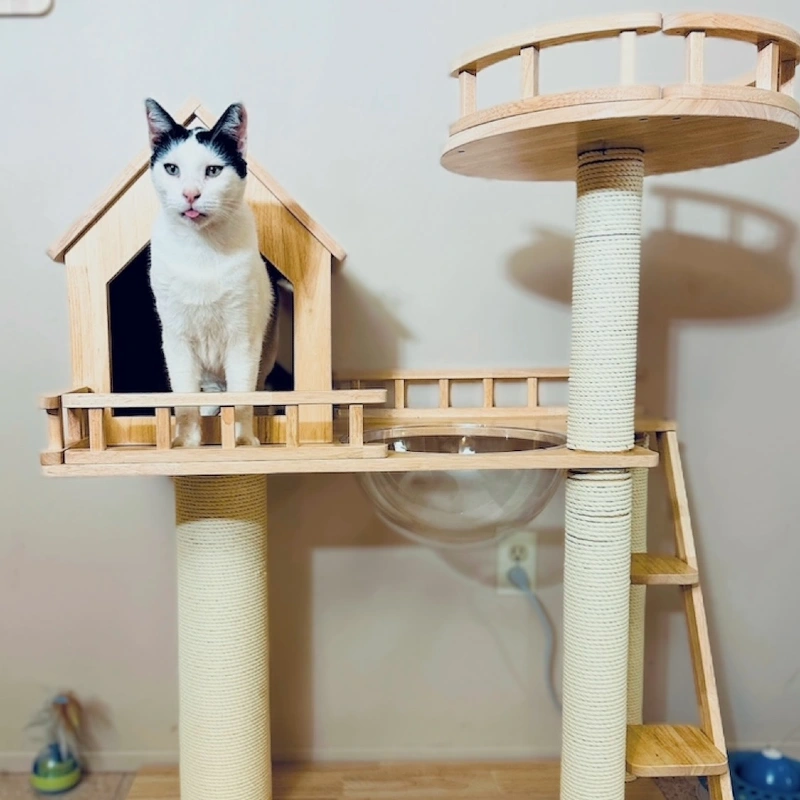
Natural wood designs are something I often recommend. They’re durable and blend well with most interiors.
I usually include enclosed spaces at the base so cats have a safe place to hide when needed.
#12. Chic Cat Loft
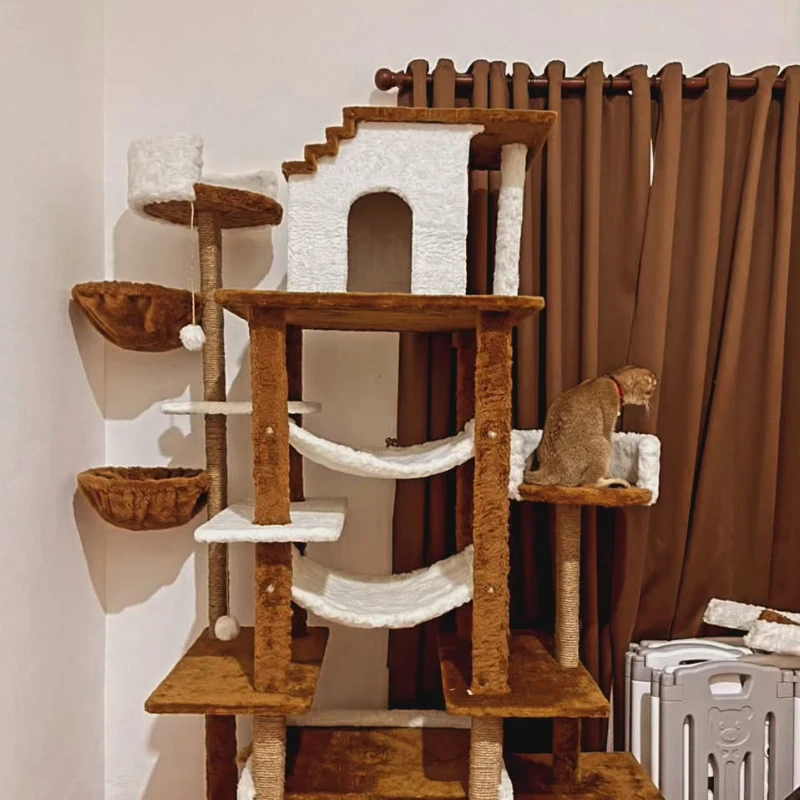
This is another design where I focus on clean lines and vertical movement. Wall platforms and scratch posts keep things functional without overcrowding the room.
It works best for modern homes where aesthetics matter.
#13. Plush Playhouse for Cats
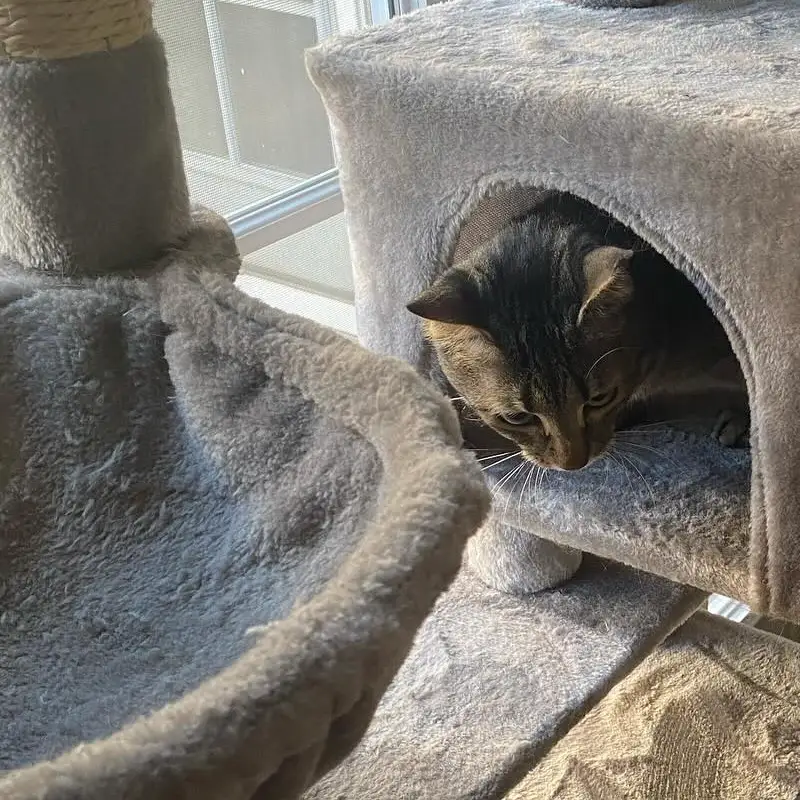
Soft, multi-level cat trees are great for comfort-focused setups. I’ve noticed cats spend more time resting when the material is plush and warm.
Built-in scratching posts also help maintain claw health.
#14. Sleek Retreat for Cats
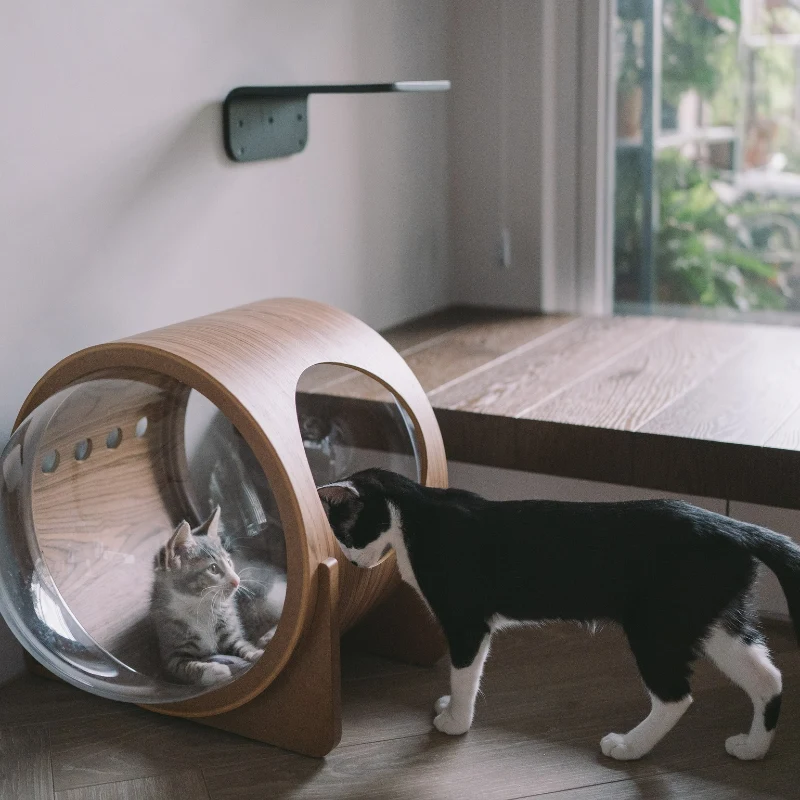
I like adding unique elements like transparent pods near windows. Cats enjoy observing their surroundings while staying comfortable.
Placing these near natural light improves their daily activity cycle.
#15. Modern Comfort for Cats
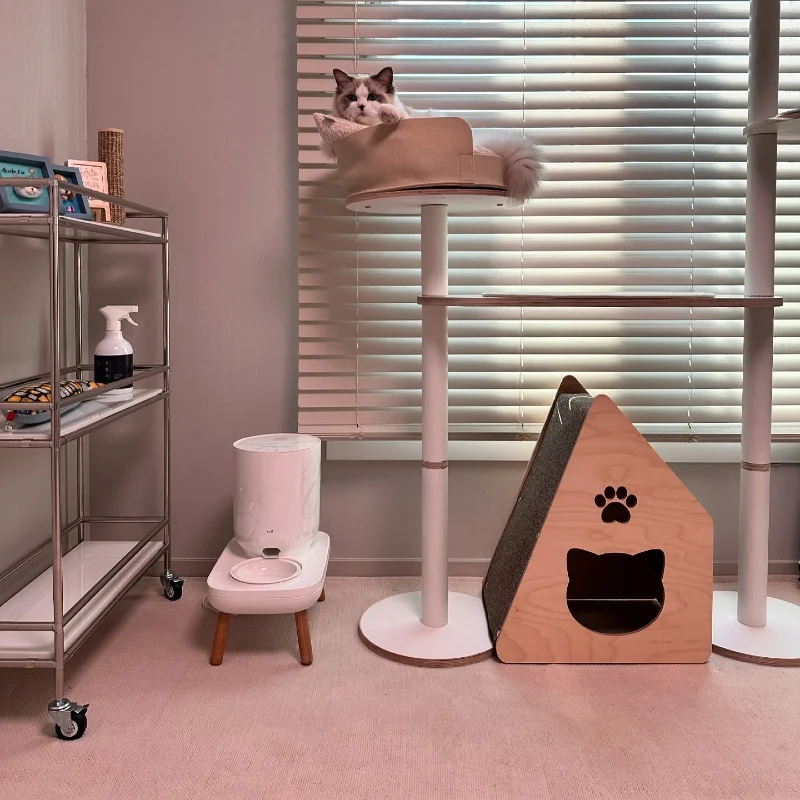
This setup focuses on simplicity and functionality. A tall cat tree, enclosed house, and organized feeding area cover all basic needs.
I also add storage solutions to keep the space clean and clutter-free.
#16. Modern Cat Playground Haven
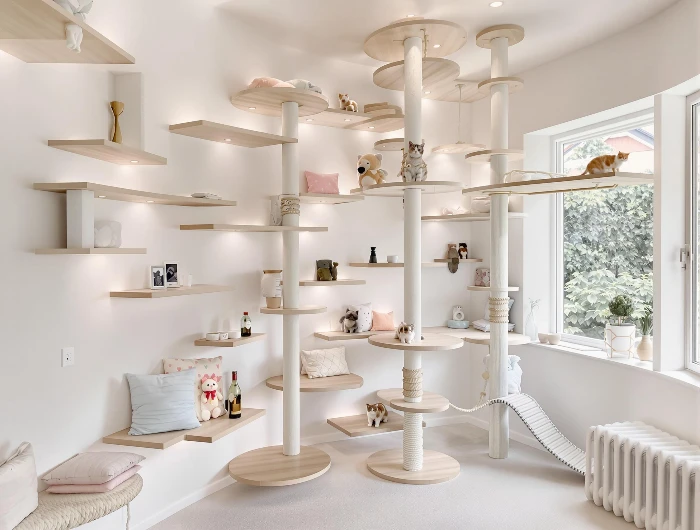
For larger rooms, I create a full climbing system with shelves and hideouts. This turns the entire wall into an activity zone.
Adding lighting under shelves is something I’ve tried—it improves visibility and adds a modern touch.
#17. Serene Cat Lounge with Natural Elements
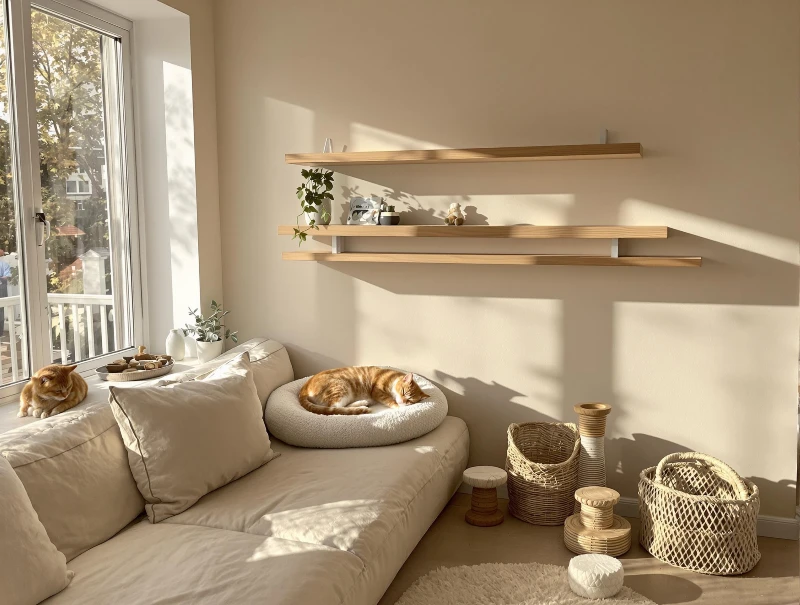
I like calm environments with soft lighting and natural materials. A simple sofa and a few shelves can be enough for relaxed cats.
Sunlight plays a big role here, helping regulate sleep and activity patterns.
#18. Sunny Window Nook for Cats
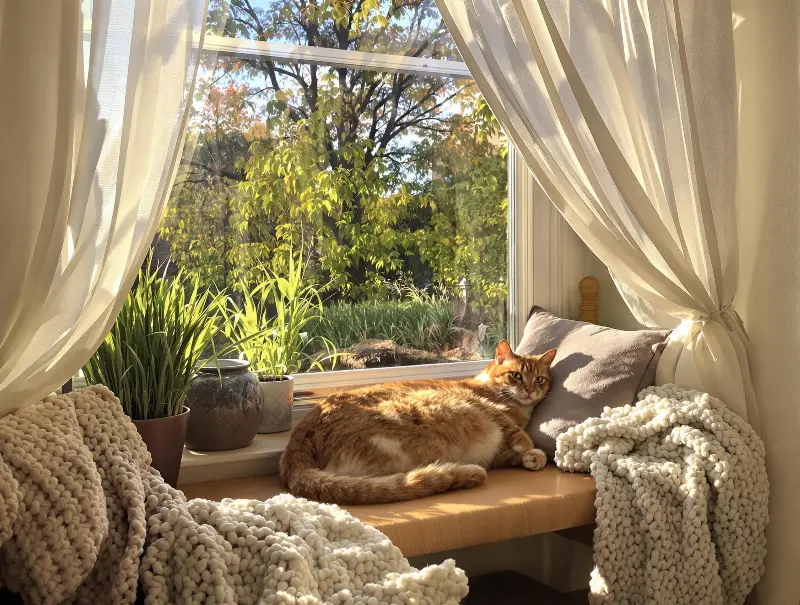
Window spots are one of the easiest upgrades I recommend. Cats love watching outside activity, which keeps them mentally engaged.
Adding a soft cushion or blanket makes the space even more comfortable.
#19. Hanging Cat Lounge with Bay Window Comfort
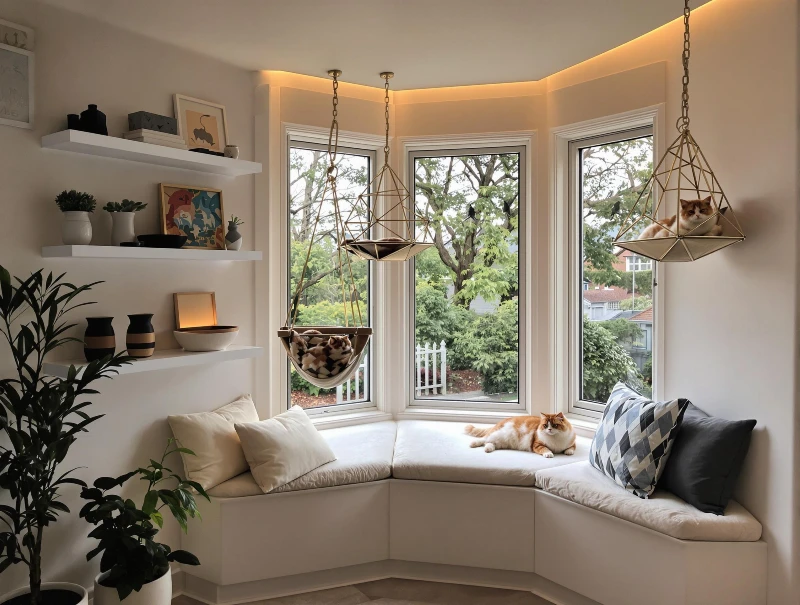
I’ve tested hanging hammocks, and cats tend to love them. They provide elevation without taking up floor space.
This setup works especially well near large windows where cats can relax and observe.
#20. Minimalist Cat Haven with Playful Touches
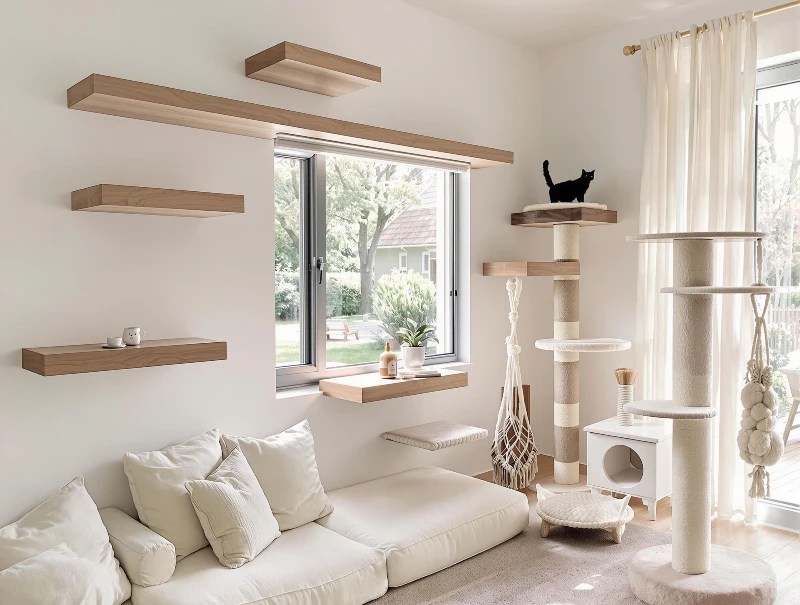
I prefer clean, simple layouts with a mix of shelves, scratching posts, and cozy beds. It keeps the space functional without overwhelming the cat.
Even a small room can feel complete if you balance play, rest, and climbing areas properly.
Final Thoughts
From my experience, the best cat rooms are not the most expensive ones—they’re the ones designed around a cat’s natural behavior. Whether you have a full room or just a small corner, focusing on vertical space, comfort, and stimulation makes a huge difference.
All content on this site is written and reviewed by our experienced team to ensure it is accurate, reliable, and helpful for our readers. Our Our Process page explains how we carefully research and create high-quality content, while our Team page introduces the professionals behind our work. We also provide clear guidelines for content or image concerns on our Image Removal page, so you can trust that we prioritize transparency, quality, and reader safety.