
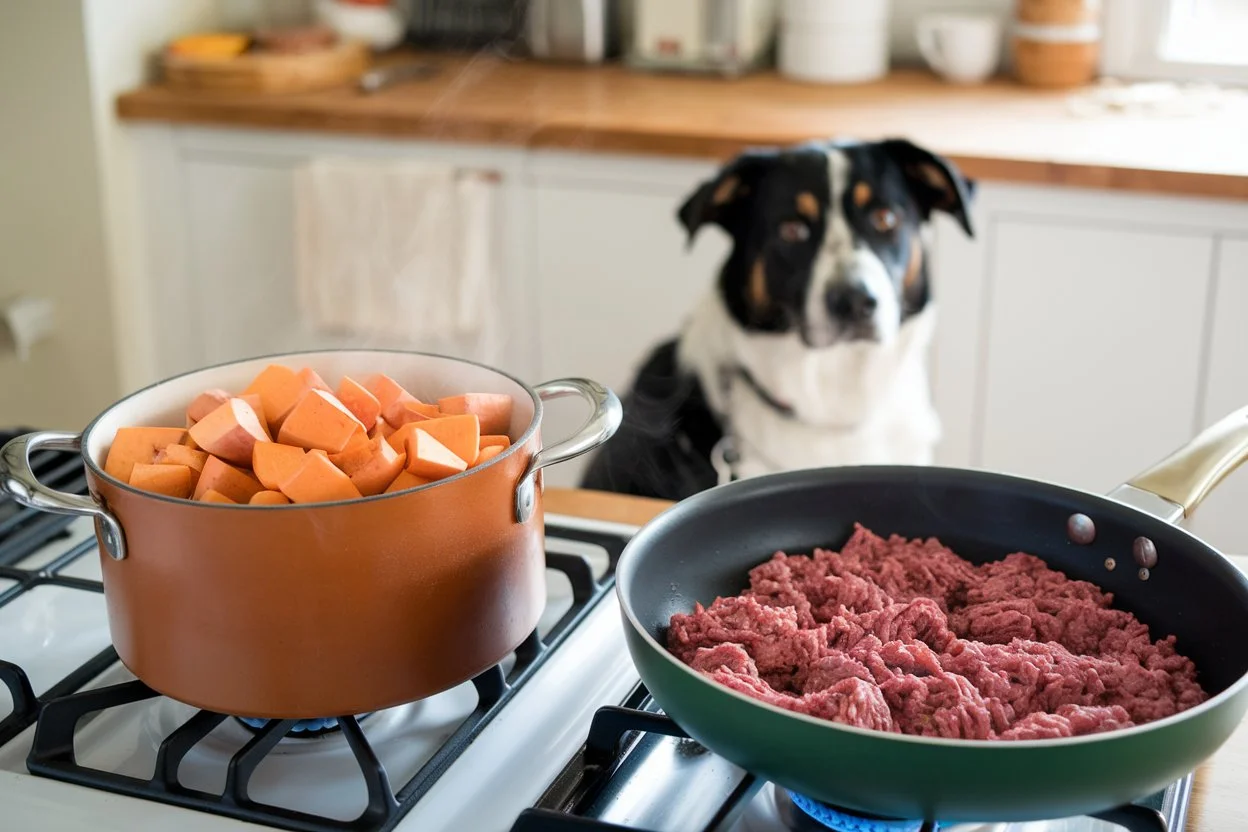
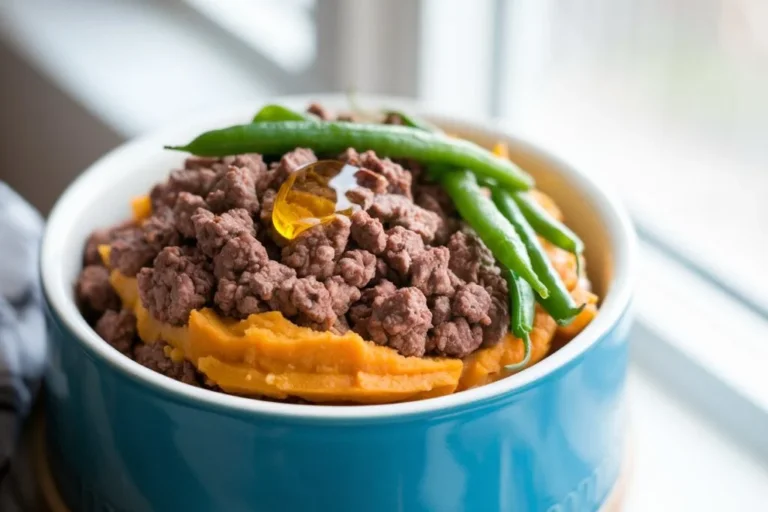
Beef & Sweet Potato Allergy-Friendly Delight
If your dog suffers from allergies, I completely understand how stressful mealtime can be. Over years of grooming, feeding, and cooking for dogs has shown me that simple, homemade meals are often the most reliable way to manage food sensitivities.
Save For Later

One recipe I consistently turn to combines lean beef and sweet potatoes, offering a balanced, easy-to-digest meal that supports skin health, digestion, and overall well-being.
In this article, I’ll explain why this combo works, share a step-by-step recipe, and give feeding tips to make allergy-friendly dog meals safe and effective.
Key Takeaways:
- Homemade meals eliminate hidden allergens and chemicals
- Beef and sweet potatoes are gentle on sensitive digestive systems
- Grain-free, whole food diets help reduce chronic itching
- Omega-3s and turmeric support coat and joint health
- Proper portions and storage keep meals safe and nutritious
Related Posts:
Why Beef & Sweet Potatoes?
Beef:
I’ve found beef to be an excellent protein for dogs who react poorly to chicken or other common proteins. Lean beef is rich in essential amino acids, B vitamins like B12 and B6, and supports muscle, immune function, and energy metabolism. Removing excess fat ensures it’s easier on digestion while still supplying vital nutrients.
Sweet Potatoes:
Sweet potatoes are my go-to carbohydrate for sensitive dogs. They’re grain-free, high in fiber, and packed with vitamins A, C, and potassium. Studies show fiber-rich carbs like sweet potatoes help regulate digestion and can reduce inflammation linked to allergies. Together with beef, they form a gentle, complete base that soothes itchy skin, ear infections, and upset stomachs.
Beef & Sweet Potato Allergy-Friendly Delight Recipe
Ingredients:
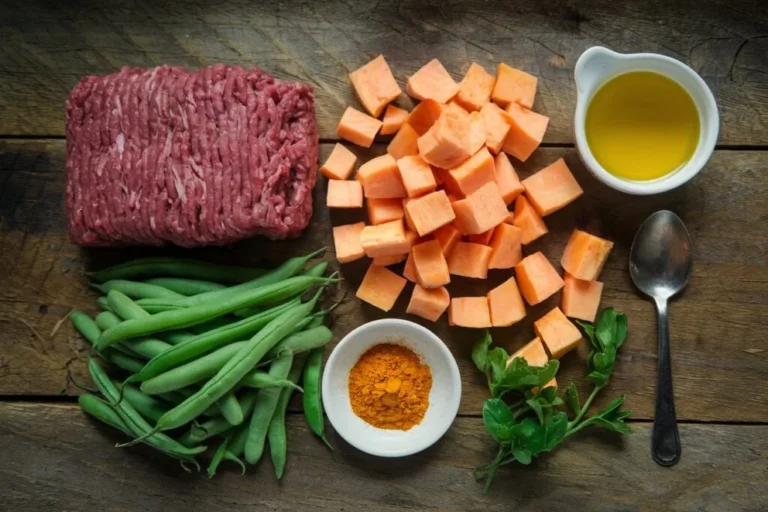
- 2 lbs lean ground beef
- 2 medium sweet potatoes, diced
- 1 cup steamed green beans (optional)
- 1 tbsp fish oil
- 1 tsp turmeric powder
Instructions:
Prep the Sweet Potatoes:
Peel and dice sweet potatoes into small cubes. Steam or boil for about 15 minutes until soft. Well-cooked potatoes are gentler on sensitive stomachs.
Cook the Beef:
Brown ground beef over medium heat, breaking it into crumbles. Drain excess fat to prevent digestive upset.
Optional Veggies:
Steam green beans until soft. They add fiber, vitamin K, and manganese. Skip if your dog reacts to greens.
Mix Together:
Combine beef, sweet potatoes, and green beans. Add fish oil for omega-3 benefits and turmeric for anti-inflammatory support.
Cool Before Serving:
Let the food reach room temperature to avoid burns and digestive stress.
Serving Size:
I usually feed ½–1 cup per 10 pounds of body weight daily, split into two meals, adjusting based on activity and body condition.
Why This Recipe Works for Allergies
Using limited, recognizable ingredients is the key. Beef and sweet potatoes are often novel proteins for dogs used to poultry-heavy diets. The recipe is grain-free, additive-free, and avoids common allergens like corn, wheat, and soy. Added omega-3s and turmeric target inflammation, often the root cause of itching, redness, and skin flare-ups. Many dogs show improved coat and digestion in 3–4 weeks.
Pro tip: Stick to simple, limited ingredients like beef and sweet potatoes, and add omega-3s and turmeric to help reduce inflammation and improve skin and digestion within weeks.
How Much Should You Feed Your Dog?
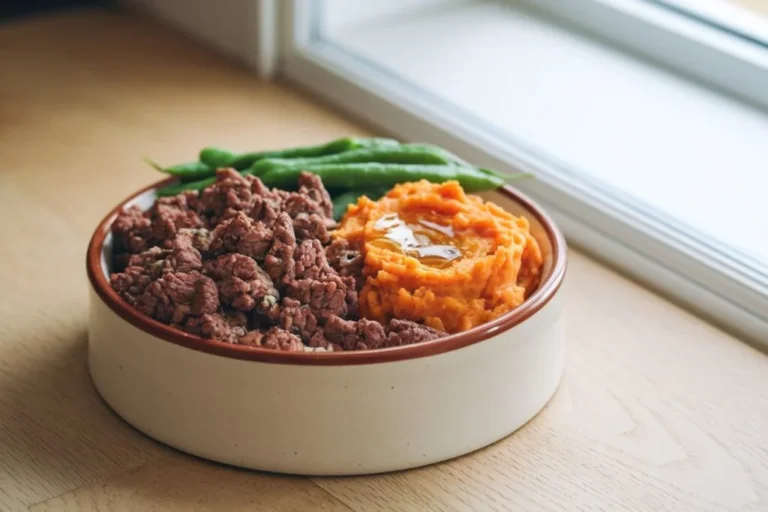
Portion size is crucial. Overfeeding can cause weight gain; underfeeding may leave nutrient gaps. I monitor my dog’s body condition and adjust servings rather than relying solely on standard measurements. Active dogs may need slightly more, less active dogs less.
Can You Freeze It?
Yes, I batch-cook and freeze portions in airtight containers. Meals last up to 2 months in the freezer. Thaw overnight in the fridge and never microwave directly to prevent hot spots.
Substitutions and Add-Ins
Protein Options:
Lean turkey, chicken, or venison can replace beef. Introduce slowly to avoid stomach upset.
Veggie Alternatives:
Zucchini, carrots, or peas work well. Always cook to improve digestibility.
Herbs & Spices:
Parsley or ginger in small amounts can aid digestion. Avoid garlic and onions completely—they’re toxic to dogs.
Final Thoughts: Why Make Homemade Dog Food?

From my experience, homemade meals are a game-changer for allergic dogs. Controlling ingredients removes guesswork and hidden allergens. Yes, it takes time, but the result is a happier, healthier dog, fewer vet visits, and the satisfaction of knowing exactly what’s in their bowl. Watching a dog finally eat comfortably after months of discomfort is priceless.
FAQ
Can I substitute sweet potatoes?
Pumpkin or butternut squash work similarly, providing fiber and nutrients.
How long does it last in the fridge?
About 3–4 days in an airtight container.
Is this safe for puppies?
Yes, but adjust portions for growth needs and consult your vet.
All content on this site is written and reviewed by our experienced team to ensure it is accurate, reliable, and helpful for our readers. Our Our Process page explains how we carefully research and create high-quality content, while our Team page introduces the professionals behind our work. We also provide clear guidelines for content or image concerns on our Image Removal page, so you can trust that we prioritize transparency, quality, and reader safety.