The Best Method For Removing Hard Water Stains
There’s nothing more frustrating than stepping into your shower, seeing the glass doors clouded with hard water stains, and realizing that no matter how much you scrub, those stubborn marks just won’t budge. They almost seem to mock your effort. But here’s the good news: you can remove them effectively without damaging your glass or turning your bathroom cleaning session into a full workout. With the right approach, patience, and a few clever tricks, your glass can regain its sparkling, crystal-clear look—and stay that way for longer.
Why Hard Water Stains Are So Stubborn
Hard water stains are more than just surface smudges. Every time water splashes on your glass and dries, it leaves behind tiny mineral deposits, mostly calcium and magnesium. Over time, these minerals bond with leftover soap scum and form that chalky, milky haze we all dread. Wiping it with a paper towel or a regular cloth won’t cut it—it just spreads the minerals around, making the glass look worse.
What’s needed is something that actually dissolves those minerals, not just smears them. Mild acids, like vinegar or citric acid, are incredibly effective when paired with a little patience and the right tools.
The Best Method: Vinegar + Baking Soda Paste (With a Twist)
If there’s one tried-and-true method for hard water stains, it’s the vinegar and baking soda combination. It’s affordable, safe for your glass, and highly effective. The trick is not just the ingredients—it’s also about temperature and dwell time.
Warm the Glass
Start by warming your shower glass. Turn on the hot water for 2–3 minutes so the glass becomes slightly warm. Warm glass helps the cleaning solution work faster and more effectively. Don’t overdo it though—you want it warm, not steaming like a sauna.
Spray With Hot White Vinegar
Warm a cup of white vinegar in the microwave for 30–45 seconds and pour it into a spray bottle. Spray the glass generously, covering every area with stubborn mineral deposits. Let it sit for 5–10 minutes. The warmth helps the vinegar penetrate and start dissolving the mineral buildup.
Make a Baking Soda Paste
Mix baking soda with just enough vinegar to make a thick, spreadable paste. Think of the consistency of frosting—thick enough to stick to the glass but not runny.
Apply With a Non-Scratch Pad
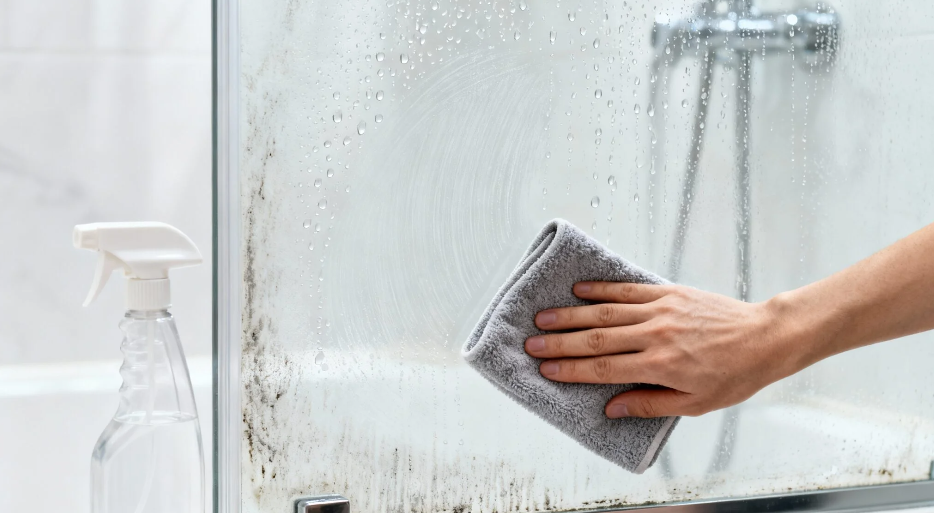
Use a microfiber cloth or a white, non-scratch scrub pad to gently massage the paste onto the glass. Move in circular motions and don’t apply heavy pressure. The combination of the vinegar and baking soda gently loosens the minerals and soap residue without scratching the surface.
Let It Dwell
After applying the paste, wait at least 5 minutes. Giving it time to work means you won’t need to scrub endlessly. This dwell time is crucial for dissolving buildup efficiently.
Rinse Thoroughly and Dry
Rinse off the paste with warm water, then wipe with a clean microfiber cloth. After that, squeegee from top to bottom and finish by buffing with a dry microfiber towel. This ensures no streaks remain and keeps the glass sparkling.
Why this works: Vinegar is a mild acid that dissolves mineral deposits, while baking soda provides gentle abrasion and enhances the cleaning effect. Together, they remove both soap residue and mineral buildup safely.
Got Stubborn Spots? Try Bar Keepers Friend (With Caution)
Sometimes, even vinegar and baking soda won’t remove very tough stains. In these cases, a glass-safe cleaner with oxalic acid, such as Bar Keepers Friend Soft Cleanser, can help.
- Apply a small amount to a damp, non-scratch pad.
- Work in small sections, keeping the surface wet at all times.
- Rinse thoroughly immediately after use.
Important: Avoid anything with grit designed for metal or ceramic surfaces. Never use steel wool or a Magic Eraser on coated glass, as they can scratch or strip the protective finish.
When You Should Skip DIY and Use a Commercial Spray
If you want faster results with less effort, a commercial hard water remover is a great option. Look for products with:
- Acid-based formulas like citric, lactic, or sulfamic acids.
- Labels indicating glass-safe use.
- Absolutely no hydrofluoric acid, which is dangerous for home use.
Use the spray, let it sit, lightly scrub with a non-scratch pad, and rinse thoroughly. Always ventilate and wear gloves to protect your hands from harsh chemicals.
What If Your Glass Has a Protective Coating?
Many modern shower doors come with a hydrophobic coating that repels water. These need gentler care:
- Stick to vinegar or citric acid sprays, avoid abrasive powders.
- Use microfiber cloths only, no textured scrub pads.
- Reapply a consumer-grade glass sealant every 3–6 months to maintain water beading.
How to Tell If It’s Coated
Water on coated glass should bead up and roll off quickly. If it spreads and clings, either the coating was never applied or has worn off. In this case, applying a DIY sealant can improve repellency and protect the glass.
Prevention: The Real Secret Sauce
Removing stains works, but preventing them is even better.
- Squeegee after every shower: It takes just 30–45 seconds and prevents mineral buildup.
- Wipe edges and frames: Minerals often accumulate along seals. A quick swipe with a microfiber keeps them clean.
- Weekly maintenance spray: Keep a 1:1 vinegar-water mixture in your bathroom. Spray, wait a minute, rinse, and squeegee.
- Use a rinse-aid: A tiny drop of dish rinse-aid on a microfiber cloth helps water sheet off effortlessly.
- Consider a water softener: Softening water reduces mineral deposits, keeps soap lathering better, and protects both your glass and plumbing.
Common Mistakes That Make Stains Worse
- Scrubbing too hard: Heavy pressure can scratch glass. Let the solution work instead.
- Mixing cleaners: Never combine vinegar and bleach—it produces toxic fumes.
- Using abrasive pads: Anything that can scratch a CD can scratch glass.
- Skipping the dry step: Letting water air-dry just redeposits minerals on your glass.
Level-Up: The Two-Step Professional Style
For a professional-grade clean without calling in a service:
Step 1: Acid Clean
Spray hot vinegar or citric-acid cleaner on the glass, let it sit for 10 minutes, lightly scrub, and rinse.
Step 2: Alcohol-Based Glass Polish
After drying, wipe the glass with isopropyl alcohol (70% or higher) on a microfiber cloth to remove remaining film and enhance clarity. Finish with a squeegee. The result is crystal-clear glass that looks like new.
FAQ
Will vinegar damage my shower door?
No, when used correctly. Vinegar is mild and safe for glass and most metal fixtures. Avoid using it on natural stone, as acids can etch the surface.
How often should I deep-clean hard water stains?
Daily squeegeeing allows for monthly deep cleaning. If you skip maintenance, plan for weekly or biweekly cleaning.
What if the stains don’t budge at all?
This could indicate etched glass, where minerals and soap scum have chemically roughened the surface. In this case, a glass polish kit or professional help may be needed.
Can I use a Magic Eraser?
Use carefully on uncoated glass with light pressure. Avoid coated surfaces and always test a small corner first.
Does a water softener really help?
Yes, softened water drastically reduces mineral buildup, helps soap lather, and keeps glass clearer longer.
What’s the quickest routine for busy mornings?
Squeegee immediately after showering, wipe edges with a microfiber cloth, and once a week, spray with vinegar and rinse. This simple routine takes under a minute daily but saves hours of scrubbing later.
Conclusion of Best Method For Removing Hard Water Stains
You don’t need harsh chemicals, endless scrubbing, or expensive cleaners to keep your shower glass sparkling. Using warm vinegar, a baking soda paste, and patience, along with routine squeegeeing and weekly touch-ups, will transform cloudy glass into crystal-clear brilliance. Your shower will not only look cleaner but also feel calmer and more inviting, leaving your bathroom truly sparkling.