Flowers and Plants That Can Hurt Your Cavalier
As a Cavalier owner, I’ve learned the hard way that almost any plant can upset my dog’s stomach. Some, however, are far more dangerous and can lead to vomiting, diarrhea, or even serious health problems.
When my pup was little, I made it a rule to keep houseplants and flowers completely out of reach and always watched him outdoors. By the time my Cavalier reached adulthood, I could tell which plants tempted him the most.
Here’s a guide to the common plants and flowers that can be toxic to Cavaliers.
Save For Later
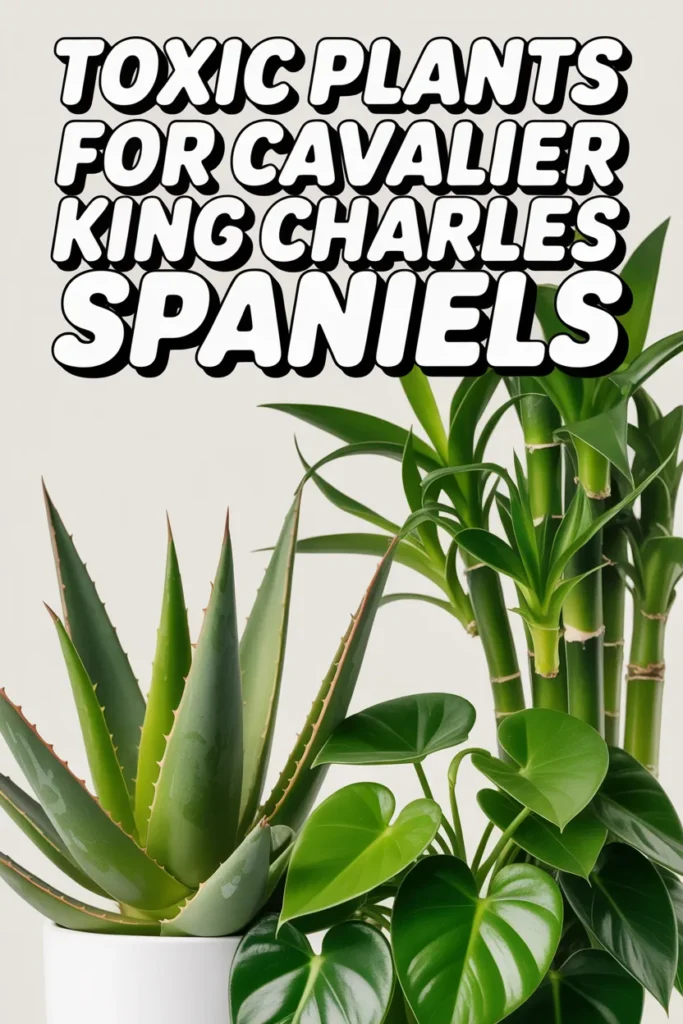
Plants Dangerous to Your Cavalier
Aloe – I know that the latex in Aloe can trigger vomiting, diarrhea, and tremors, so I keep it well away.
Bamboo – Most bamboo types are safe, but I double-check the species before letting him near it.
Boxwood – Even a few leaves can cause vomiting, diarrhea, and breathing issues, so I never allow access.
Chamomile – Surprisingly, both the plant and tea can be toxic, causing vomiting, diarrhea, and bleeding tendencies.
Elephant Ear – The calcium oxalate crystals irritate the mouth, making my dog drool and sometimes vomit.
Garlic & Onion – From the Allium family, these can cause anemia, weakness, and gastrointestinal problems.
Holly & Ivy – Even small amounts of berries or leaves can cause nausea, vomiting, and energy loss.
Lavender – While mild, I avoid letting him ingest it in large quantities since it can upset his stomach.
Philodendron & Shamrock – These plants contain oxalates causing drooling, vomiting, and mouth irritation.
Tomato Plants – Leaves and stems contain solanine, which can trigger GI issues, lethargy, and confusion.
Flowers Dangerous to Your Cavalier
Amaryllis & Azalea – I never let him near these; even a small bite can cause vomiting, low blood pressure, and in extreme cases, coma.
Carnation, Dahlia, Daisy, Gardenia – These may cause mild GI upset or dermatitis, so I keep them out of reach.
Cyclamen, Daffodil, Hyacinth – The bulbs are highly toxic, sometimes causing severe vomiting, tremors, or even death.
Geranium & Hydrangea – Leaves can upset the stomach, depress appetite, or cause lethargy.
Lily of the Valley – The most dangerous; ingestion can cause heart problems, convulsions, or death.
What to Do If Your Cavalier Nibbles Something Nasty
I’ve learned that speed is crucial if my dog eats something toxic.
- Check Their Mouth – Only if it’s safe, gently remove visible plant pieces.
- Don’t Induce Vomiting – Some plants can worsen symptoms if you try this; let a vet decide.
- Call Your Vet Immediately – Time matters; professional advice is essential.
- Poison Control – The ASPCA Animal Poison Control Center (888-426-4435) can guide you, even if there’s a small fee.
Why Speed Is of the Essence
I understand the panic, but fast action can prevent serious complications. Some toxic plants show symptoms quickly, and the sooner you respond, the better the chances for a full recovery.
Keeping Your Cool and Your Cavalier Safe
Staying calm is easier said than done, but it makes a real difference. Here’s what I do:
- Document Everything – Snap a photo of the plant if unsure what it was.
- Monitor Closely – Keep my dog calm, watch for changes, and note any new symptoms.
- Follow Vet Instructions – This is the ultimate way to protect my Cavalier.
Key Takeaways
- Many common plants and flowers are toxic to Cavaliers; even small bites can be dangerous.
- Puppies require extra supervision, while adult dogs’ tendencies can guide plant safety.
- Act quickly if ingestion occurs: check, monitor, and call professionals.
- Documenting the plant and keeping your dog calm can make a big difference.
- Prevention is the best strategy—know your plants and keep hazardous ones out of reach.
All content on this site is written and reviewed by our experienced team to ensure it is accurate, reliable, and helpful for our readers. Our Our Process page explains how we carefully research and create high-quality content, while our Team page introduces the professionals behind our work. We also provide clear guidelines for content or image concerns on our Image Removal page, so you can trust that we prioritize transparency, quality, and reader safety.