Ground Beef & Sweet Potato Bowl: A Wholesome Cat Dinner in Minutes
Let’s be real: after more than ten years of living with cats, I can confidently say they get bored with food just as fast as we do. I’ve watched my own cats sniff a bowl of kibble, sigh dramatically, and walk away like I personally offended them. That’s exactly why I started incorporating simple homemade meals into their routine.
One of the easiest and most reliable options I’ve made over the years is the Ground Beef & Sweet Potato Bowl. It’s quick to prepare, gentle on digestion, and uses ingredients I trust. When done right, it adds variety, moisture, and high-quality protein without turning mealtime into a science project.
Key Takeaways
- Lean ground beef is a strong protein source for cats when cooked plainly
- Sweet potato adds gentle fiber and supports digestion
- Homemade meals work best as supplements or rotation meals
- Moist, room-temperature food is more appealing to most cats
- Simple ingredients reduce the risk of digestive upset
Why Your Cat Will Love It
Cats are obligate carnivores, and I’ve seen firsthand how quickly they respond to the smell of freshly cooked beef. Protein isn’t optional for cats—it’s essential. According to feline nutrition research, adult cats require significantly higher protein levels than dogs to maintain muscle mass and metabolic health.
Sweet potato complements the beef nicely. While cats don’t need carbohydrates, small amounts of cooked, mashed sweet potato can provide fiber that helps with hairballs and stool consistency. I’ve found this especially helpful for indoor cats that struggle with digestion from time to time.
And honestly? This recipe works because it’s simple. No fancy steps, no questionable additives—just food that makes sense for a cat’s biology.
What You’ll Need
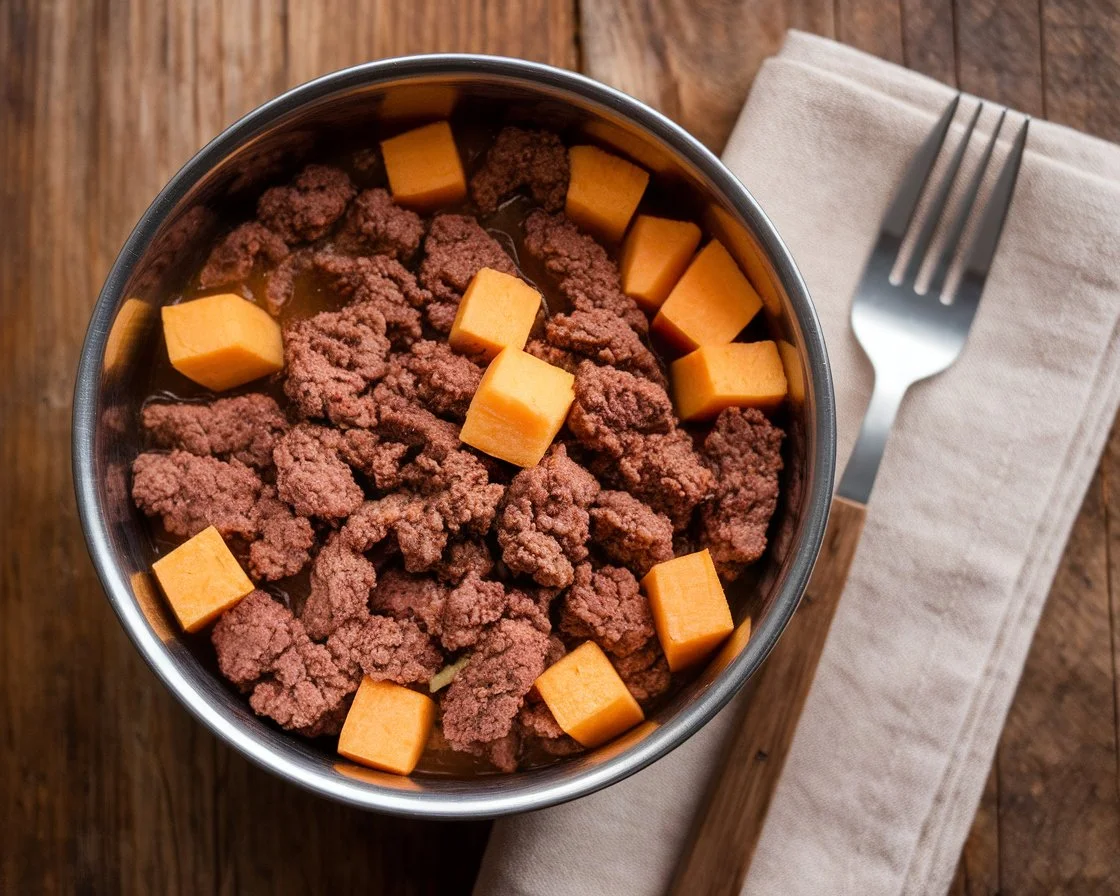
- 1/4 pound lean ground beef, unseasoned
- 1/4 cup mashed sweet potato (fully cooked, skin removed)
- 2 tablespoons water or low-sodium beef broth (onion- and garlic-free)
That’s it. I stick to minimal ingredients because cats process food very differently than humans, and simplicity is usually safest.
Let’s Cook This Up
Cook the ground beef
I use a non-stick pan over medium heat and cook the beef thoroughly, breaking it into very small crumbles. No oil, no seasoning. Once there’s no pink left, I drain off any excess fat—too much fat can upset a cat’s stomach.
Mash the sweet potato
I boil or bake the sweet potato until it’s very soft, then scoop out the flesh and mash it completely. No butter, salt, or spices. Cats need it plain.
Combine the ingredients
In a bowl, I mix the beef and sweet potato together, then add water or broth until the texture is soft and moist. From years of trial and error, I’ve learned that cats strongly prefer food with a little moisture—it’s easier to eat and helps support hydration.
Cool it down
This step matters more than people think. I always let the food cool to room temperature before serving. Cats are extremely sensitive to temperature, and food that’s too warm often gets rejected.
Serve it up
I place a small portion in the bowl and step back. When my cats approve, I usually get a focused stare, followed by enthusiastic eating—and occasionally a very smug tail flick.
Can Dogs Eat This Too?
Yes, dogs can eat this recipe, and I’ve safely served similar versions in multi-pet households. Dogs generally tolerate chunkier textures, so I don’t mash it quite as much for them.
That said, dogs and cats have very different nutritional needs. This recipe works as a treat or topper for dogs, not a complete diet.
Watch Out for These Common Mistakes
Using seasoned ground beef
Onion, garlic, and spices are unsafe for cats. I never use pre-seasoned meat.
Forgetting to drain excess grease
Too much fat can contribute to digestive upset and weight gain, especially in indoor cats.
Serving it too hot or too cold
Room temperature is the sweet spot. Cats will absolutely walk away if the temperature is off.
Using canned sweet potato
Many canned versions contain added sugar or spices. Fresh is always safer.
How to Store Leftovers
Refrigerator:
I store leftovers in an airtight container for up to 3 days. Before serving again, I warm slightly and let it cool back to room temperature.
Freezer:
This recipe freezes well for up to one month. I portion it into small containers so I can thaw only what I need.
Pro Tip:
Ice cube trays are incredibly useful for single-serving portions. I’ve used them for years.
Variations to Try
- Swap beef for ground turkey or chicken for a leaner option
- Use mashed butternut squash instead of sweet potato
- Add a small amount of plain, cooked carrot if your cat tolerates it
I always introduce variations slowly and watch closely for any digestive changes.
FAQs
Can I use raw beef instead of cooked?
I don’t recommend it. Raw beef can carry bacteria, and safe raw feeding requires strict handling and precise supplementation.
Is this recipe suitable for kittens?
It can be offered in very small amounts, but kittens have higher nutritional needs. I always suggest checking with a vet before serving homemade food regularly to kittens.
How often can I serve this to my cat?
Once or twice a week works well as a supplement or topper. This is not a complete, balanced diet on its own.
Wrapping It Up
After years of feeding cats with different tastes, ages, and health needs, I’ve learned that homemade food doesn’t have to be complicated to be effective. The Ground Beef & Sweet Potato Bowl is proof of that.
It’s simple, affordable, and genuinely appealing to cats when prepared properly. Use it as a treat, a topper, or a rotation meal—and enjoy the satisfaction of knowing exactly what’s in your cat’s bowl. If you’re lucky, you might even get a grateful purr… or at least less judgment at dinnertime.