How To Clean Dog Poop Out Of Roomba
Cleaning dog poop out of your Roomba is one of those situations you never think about until it actually happens. One minute your robot vacuum is doing its job, and the next minute you realize it has rolled through something it absolutely shouldn’t have. It’s frustrating, it smells awful, and it can feel overwhelming. But if you handle it correctly and patiently, you can completely restore your machine and prevent long-term damage.
Assess the Situation Carefully
Before you grab cleaning supplies, stop and evaluate what happened. Turn the Roomba off immediately to prevent the mess from spreading further inside the unit.
Gently flip it over and inspect:
- The main roller brushes
- The side brush
- The wheels and wheel wells
- The dustbin
- The underside housing
- The sensors
Sometimes the waste is only stuck to the brushes. Other times it may have been dragged across the floor and pushed into crevices. Understanding how far it spread will determine how deep your cleaning needs to go. Acting quickly reduces the chances of odor and internal contamination.
Protect Yourself First
This step is extremely important. Dog waste contains bacteria, and direct contact should be avoided.
Before starting:
- Wear disposable gloves
- Use a mask if the odor is strong
- Open windows for ventilation
- Keep paper towels and disinfectant wipes nearby
- Have a trash bag ready for disposal
You want to control the mess, not spread it. Working in a bathroom, laundry room, or garage is ideal because these areas are easier to sanitize afterward.
Power Down and Disassemble Properly
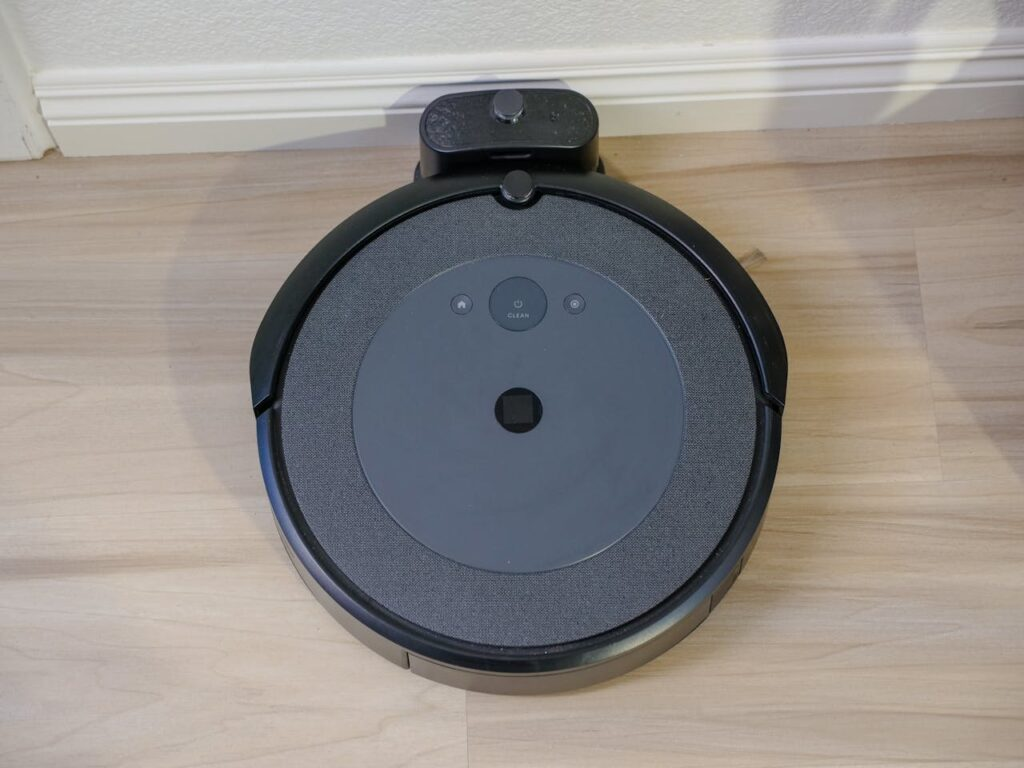
Never clean the unit while it is powered on or docked. Fully shut it down and remove it from the charging station.
Remove the Dustbin
Slide the dustbin out carefully and check inside. If debris was suctioned in, empty it directly into a sealed trash bag. Avoid shaking it, as that can spread contamination.
Detach the Brushes
Flip the Roomba over and remove:
- The main roller brushes
- The side brush
Most models allow easy removal without tools. These parts usually carry the heaviest contamination because they make direct contact with the floor.
Inspect Wheels and Corners
Check the small corners, wheel compartments, and brush housing. Waste can get lodged in tight areas and cause odor if not cleaned thoroughly.
Take your time here. Missing hidden residue can lead to lingering smells every time the vacuum runs.
Initial Surface Cleaning
Start by removing as much solid material as possible using dry paper towels. Do not use water immediately on heavily soiled parts. Removing solids first prevents smearing and makes deep cleaning easier.
Once visible waste is cleared:
- Lightly dampen a cloth with warm water and mild dish soap
- Gently wipe plastic surfaces
- Avoid soaking any electronic areas
- Use cotton swabs for tight crevices
Be patient. The goal is complete removal, not just surface-level cleaning.
Deep Cleaning Each Component
Now it’s time to focus on restoring each part properly.
Clean the Roller Brushes Thoroughly
Use an old toothbrush or small cleaning brush to scrub between bristles and rubber ridges. Waste can stick deep inside grooves. Rotate the rollers as you clean to ensure every section is addressed.
If the brushes remain stained or retain odor after cleaning, consider replacing them. Severely contaminated brushes can carry bacteria and affect performance.
Wash the Dustbin Correctly
If your Roomba model allows rinsing:
- Wash the dustbin with warm water and mild soap
- Rinse thoroughly
- Shake off excess water
- Allow it to air dry completely
Never reinstall a damp dustbin. Moisture trapped inside can cause odor, mold, or motor damage.
Sanitize the Wheels
Manually rotate each wheel while wiping around and inside the wheel wells. Debris stuck here can affect movement and tracking.
Clean the Sensors Gently
Use a slightly damp microfiber cloth to wipe the sensors. These are essential for navigation and docking. Any residue left behind can interfere with performance.
Avoid dripping water into sensor openings.
Drying Is Non-Negotiable
Every cleaned component must be fully dry before reassembly. Even small amounts of moisture can damage electronics or create future odor problems.
Allow parts to air dry for several hours if needed. Do not use high heat tools like hair dryers, as excessive heat can warp plastic.
If you’re unsure whether something is completely dry, give it more time. It’s better to wait than risk internal damage.
Reassemble With Care
Once everything is completely clean and dry:
- Reinstall the roller brushes securely
- Attach the side brush properly
- Slide the dustbin back into place
- Ensure wheels spin freely
- Check that all parts click firmly into position
Nothing should feel loose or misaligned. If a component does not fit smoothly, remove it and reposition it rather than forcing it.
After reassembly, run the Roomba briefly in an open area. Listen for unusual noises and confirm it moves smoothly.
How to Eliminate Lingering Odor
If you still notice a smell after cleaning:
- Wipe exterior surfaces again with a disinfectant wipe
- Place baking soda near the unit overnight (not inside it)
- Replace heavily contaminated brushes if necessary
Persistent odor usually means residue was missed. A second inspection often solves the issue.
Prevent This From Happening Again
Once you’ve experienced this situation, prevention becomes a priority. A few simple habits can save you hours of cleanup.
Do a Quick Floor Check
Before running your Roomba, walk through the area and scan for accidents or debris. This takes less than a minute and prevents major damage.
Schedule Smart Cleaning Times
Run the vacuum when your dog is outside or after you’ve confirmed the floors are clear.
Increase Potty Breaks
If your dog is still in training, take them outside more frequently to reduce indoor accidents.
Limit Access if Needed
Use baby gates or close doors to keep your Roomba out of certain areas until you are confident the space is clean.
Consistency and routine make a big difference.
What Not to Do
Avoid these common mistakes:
- Do not hose down the entire unit
- Do not submerge electronic parts in water
- Do not use harsh chemicals like bleach directly on components
- Do not reassemble while parts are damp
- Do not ignore hidden crevices
These mistakes can permanently damage your vacuum.
Final Thoughts of How To Clean Dog Poop Out Of Roomba
Cleaning dog poop out of your Roomba is unpleasant, but it is completely manageable when handled step by step. The key is staying calm, protecting yourself, disassembling properly, cleaning thoroughly, and allowing everything to dry before reassembly.
When you approach the process carefully and methodically, you protect both your machine and your home. With a few preventative habits in place, you can significantly reduce the chances of ever dealing with this situation again.
It may not be a glamorous task, but with the right approach, your Roomba can be fully restored and ready to get back to keeping your floors clean.