How To Deep Clean Dirty Pans
Some pans don’t just look dirty—they tell a long cooking story. Burnt oil rings, sticky grease, caramelized sugar, and that stubborn brown layer that refuses to leave even after a strong scrub. Over the last 20 years of cooking at home and helping friends restore abused cookware, I’ve learned that almost every pan can be saved with the right method. The key is knowing what material you’re dealing with and using the correct cleaning technique.
Key Takeaways
- Different pan materials require different cleaning methods to avoid damage.
- Boiling water can loosen stubborn burnt food quickly and safely.
- Baking soda is one of the safest and most effective natural cleaners for cookware.
- Stainless steel tolerates scrubbing better than most other materials.
- Cast iron should be cleaned carefully to protect its seasoning layer.
- Nonstick pans require gentle cleaning and minimal abrasion.
- Enameled cast iron should be cleaned with soft tools to avoid scratching.
- Preventative habits like proper preheating and quick cleaning reduce buildup dramatically.
According to kitchen maintenance studies, over 70% of cookware damage happens during cleaning, not cooking. That’s why choosing the right cleaning method matters just as much as the cleaning product.
Know Your Enemy: Pan Materials Matter
Before deep cleaning a dirty pan, always identify the material. I’ve seen people permanently damage expensive cookware simply by using the wrong scrubber.
Different materials react differently to heat, acids, and abrasives.
Stainless steel: Extremely durable. Handles scrubbing, heat, and acidic cleaners well.
Cast iron: Very strong but requires care to maintain seasoning.
Nonstick: Delicate coating that can scratch easily.
Enameled cast iron: Durable glass-like coating but vulnerable to scratching.
Copper and aluminum: Soft metals that react with acidic cleaners.
Quick Rule of Thumb
If you’re wondering whether you can scrub aggressively:
Stainless steel: Usually yes.
Cast iron: Sometimes, but carefully.
Nonstick: Almost never.
Enamel: Gentle scrubbing only.
When in doubt, start with the mildest method first.
The Boil-and-Release Method (For Stuck-On Gunk)
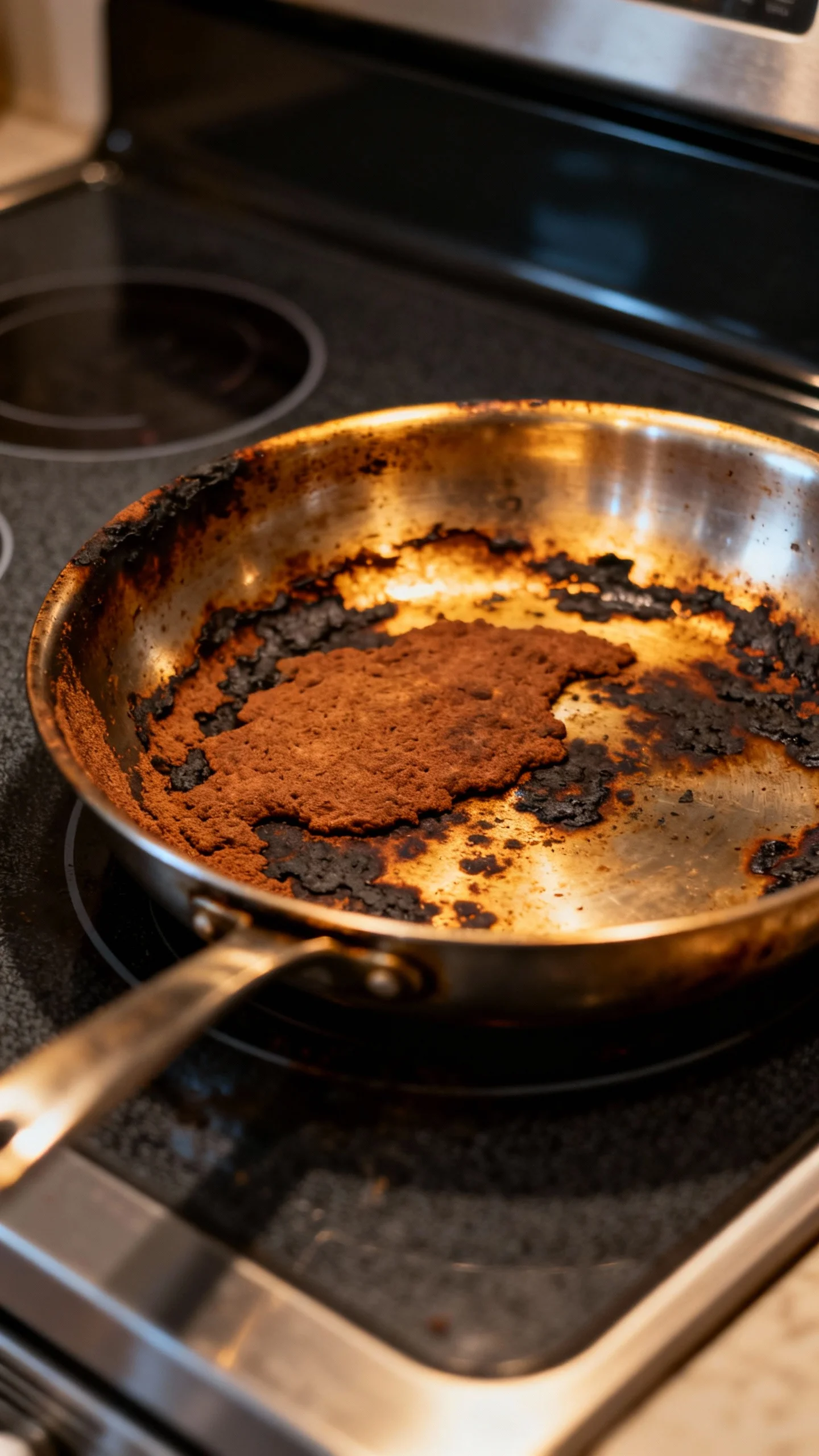
When burnt food clings stubbornly to the pan, heat and water often solve the problem faster than scrubbing.
In my experience, this simple technique works incredibly well on stainless steel and enameled cookware.
Deglaze with water
Add enough water to cover the burnt areas. Bring it to a gentle boil and let it simmer for 5–10 minutes.
Scrape gently
Use a wooden spoon while the water is simmering. Heat loosens the food particles and they release easily.
Add a helper if needed
If residue remains, add a splash of vinegar or a squeeze of lemon. The mild acid helps break down grease.
Cool and wash
Pour out the water and wash normally with dish soap.
When to Upgrade the Attack
If the burn marks remain after boiling, move to baking soda cleaning. Boiling repeatedly rarely improves results and wastes time.
Baking Soda: Your Budget-Friendly MVP
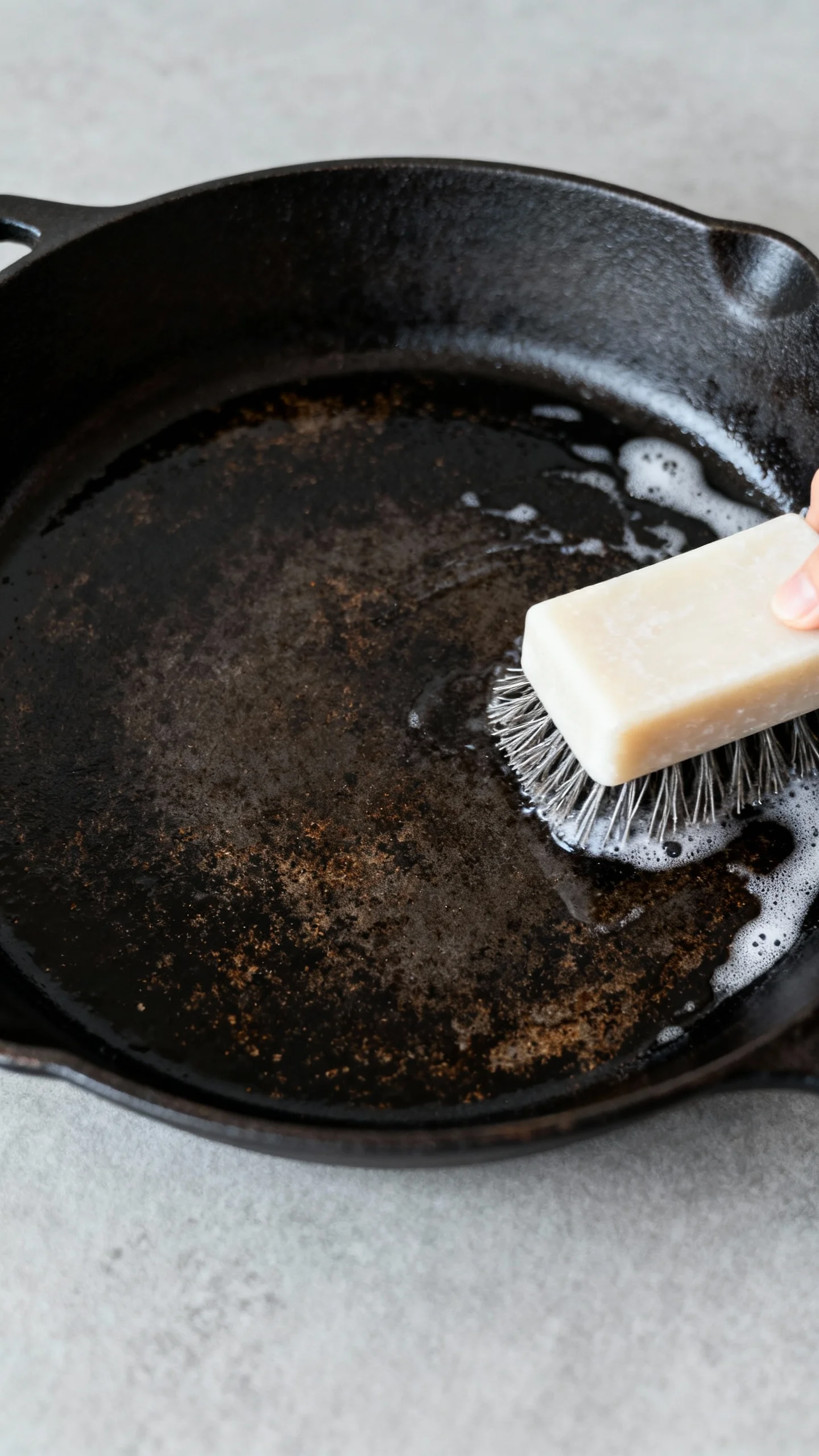
If there is one cleaning product I always keep in my kitchen, it’s baking soda. After two decades of cleaning cookware, I can confidently say it’s one of the safest and most versatile cleaners available.
Baking soda acts as a mild abrasive that lifts residue without scratching most surfaces.
For stainless steel
Mix 3 parts baking soda with 1 part water to create a paste. Apply it to the stained areas and leave it for 15–20 minutes. Scrub with a sponge or nylon brush.
For enameled cast iron
Use a thinner paste and scrub gently with a soft sponge. Rinse thoroughly.
For nonstick pans
Use only a mild paste and clean gently. Heavy scrubbing can damage the coating.
Boost It with Dish Soap
For greasy or sugary buildup, add a few drops of dish soap to the paste. The soap breaks down oils while baking soda removes residue.
Stainless Steel: From Rainbow Tints to Mirror Shine
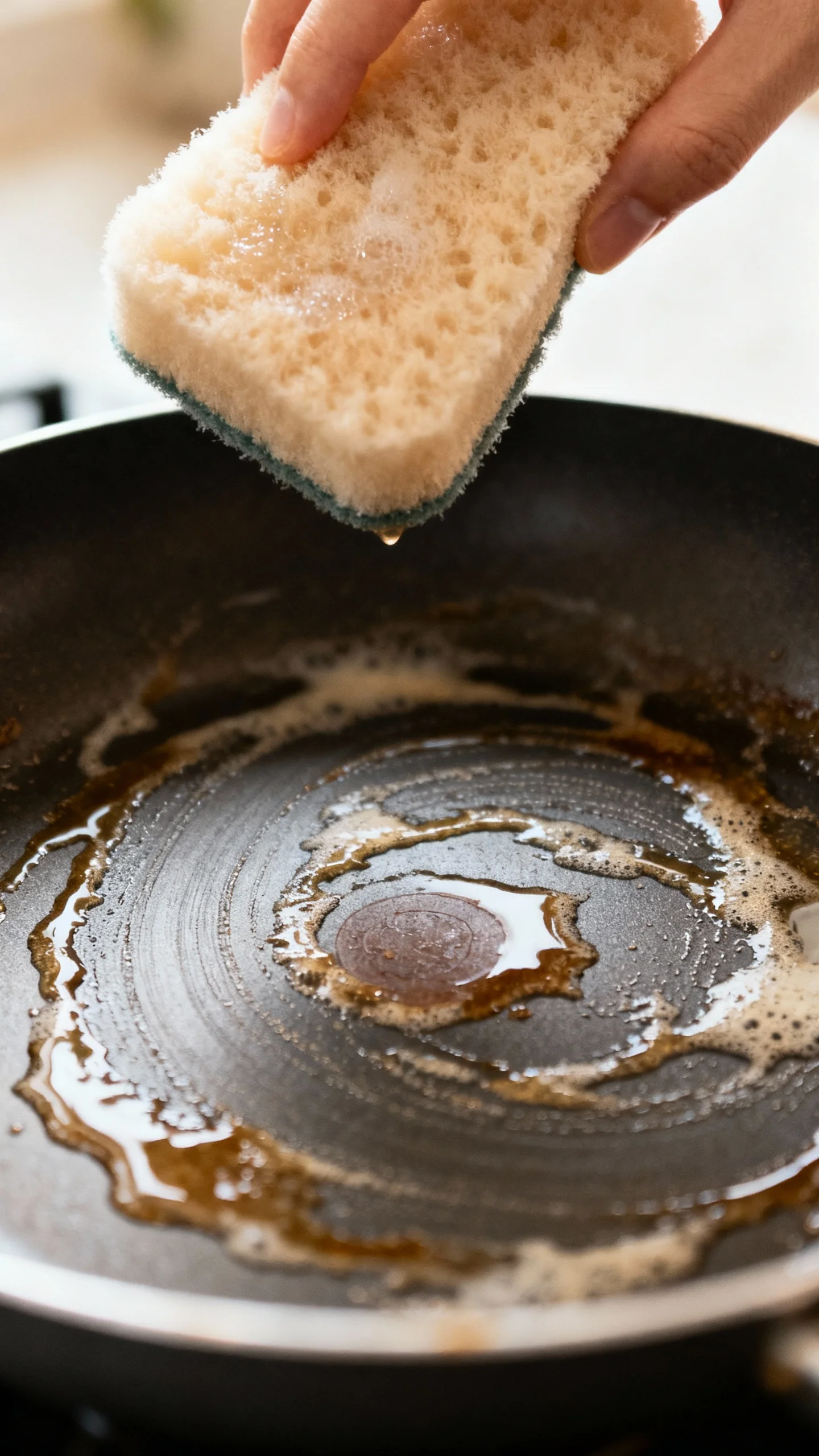
Stainless steel is one of the easiest pans to restore, even when it looks terrible.
Those rainbow-colored heat stains often appear after overheating oil.
Rainbow discoloration
Wipe the pan with vinegar or a stainless-steel cleaner. Rinse well.
Brown scorch marks
Start with baking soda paste. For stubborn stains, use a stronger cookware cleaner designed for stainless steel.
Exterior polishing
Use a non-abrasive cleaner and wipe along the grain of the steel to restore shine.
Pro Moves
Boil water with a spoonful of baking soda to loosen stubborn residue quickly.
Use a non-scratch scrub pad. Steel wool works but may dull the surface slightly.
Cast Iron: Clean It Without Losing the Seasoning
Cast iron is famous for its durability, but its seasoning layer needs protection.
Seasoning is a thin polymerized oil coating that prevents rust and creates a natural nonstick surface.
Scrape first
Use a plastic scraper or chainmail scrubber to remove stuck food.
Salt scrub
Add coarse salt and a small amount of oil or water. Scrub gently to lift debris.
Rinse and dry
Rinse quickly and dry immediately. Heat the pan briefly on the stove to evaporate moisture.
Re-oil
Apply a very thin layer of cooking oil while the pan is still warm.
Emergency Resets
If the seasoning is accidentally stripped, apply a thin coat of oil and bake the pan upside down in the oven at about 450°F for one hour. Repeat if necessary to rebuild the protective layer.
Nonstick: Treat It Like a Tired Celebrity
Nonstick cookware performs well but requires delicate care.
Aggressive scrubbing can permanently damage the coating.
Soak and wipe
Fill the pan with warm, soapy water and let it sit for 20–30 minutes. Clean with a soft sponge.
Baking soda bath
Simmer 1 cup of water with 2 tablespoons of baking soda for 10 minutes to break down oily residue.
Exterior cleaning
You can scrub the outside more aggressively, but avoid harsh cleaners on the coated interior.
When to Say Goodbye
If food sticks badly, or you notice flaking or scratches, it’s time to replace the pan. Once the coating is damaged, cleaning cannot restore its performance.
Enameled Cast Iron: Keep It Creamy, Not Scratchy
Enameled cast iron combines durability with attractive design, but the enamel surface needs gentle cleaning.
Soak smart
Fill the pan with hot water and a little dish soap. Let it sit for 30–60 minutes.
Baking soda boost
Sprinkle baking soda and scrub gently with a soft sponge.
Tannin stains
Use a diluted bleach solution (1 tablespoon bleach per quart of water) for stubborn stains. Soak briefly and rinse extremely well.
Don’t Do This
Avoid metal scrubbers and sharp tools. Scratching the enamel permanently damages the coating.
For the Truly Cursed Pans: Heavy-Duty Options
Sometimes you inherit a pan that looks like it survived a camping trip in a bonfire. In these cases, stronger methods may be necessary.
Oven cleaner for exterior grease
Works well on burnt grease outside stainless steel or cast iron pans. Always wear gloves and rinse thoroughly.
Specialized stainless cleaners
Oxalic acid cleaners remove stubborn discoloration from stainless steel interiors.
Lye bath for cast iron
Advanced method used to completely strip old seasoning. Afterward, the pan must be reseasoned properly.
If It’s Sticky, It’s Probably Polymerized Oil
Sticky residue often comes from overheated cooking oil.
Heat causes oil molecules to bond together, creating a hard layer similar to varnish.
The solution is patience:
Heat
Use mild abrasives like baking soda
Clean gradually rather than aggressively
In most cases, the buildup can be removed with repeated gentle cleaning.
Preventative Habits That Save Your Sanity
After years of cooking and cleaning, I’ve learned the best solution is preventing buildup in the first place.
Preheat properly
Add oil after the pan warms up. This reduces sticking.
Use enough fat
Too little oil leads to burning and stubborn residue.
Deglaze immediately
Add water or broth while the pan is still warm after cooking.
Avoid aerosol cooking sprays
They often leave sticky residues that are difficult to remove.
Hand wash promptly
Cleaning a pan within 10 minutes is far easier than cleaning it after several days.
Good habits can reduce heavy cleaning by nearly 80 percent, according to kitchen maintenance surveys.
FAQ
Can I use vinegar on every pan?
Vinegar works well for stainless steel and enamel. Avoid using it on raw aluminum or cast iron because it can damage the surface.
Is dishwasher safe actually safe?
Stainless steel usually survives the dishwasher, but repeated cycles can dull its shine. Nonstick, cast iron, and enameled cookware are better washed by hand.
How do I remove burnt sugar or caramel?
Soak the pan with hot water and then boil water with a tablespoon of baking soda for about 10–15 minutes. Scrape gently with a wooden spoon.
What if my cast iron pan rusted?
Scrub the rust with steel wool until bare metal appears. Dry thoroughly and re-season the pan with oil in a hot oven.
Why does my stainless steel pan always stick?
The most common reason is incorrect temperature. Preheat the pan first, then add oil, and finally add food.
Can I use steel wool on any pan?
Steel wool is acceptable for cast iron and sometimes stainless steel. Avoid it completely on nonstick, enamel, aluminum, and copper cookware.
Conclusion
Deep cleaning dirty pans doesn’t require expensive tools or complicated products. Over the years, I’ve learned that heat, patience, and simple ingredients like baking soda solve most cookware disasters.
The most important rule is matching the cleaning method to the pan material. Start gently, increase strength only if needed, and maintain good cooking habits to prevent buildup.
With the right care, your cookware can last for decades—and your kitchen cabinets will stop hiding those “embarrassing” pans in the back.