6 Labrador Puppy Training Tips For A Happy, Obedient Dog
If you’ve ever woken up to find your Labrador puppy racing around the living room at the crack of dawn, or discovered that your favorite shoes have become their latest chew toy, you already know that Labrador life is full of surprises. These dogs are bursting with energy, curiosity, and a strong desire to make you happy. The good news is that their enthusiasm can be guided. With a few consistent routines, clear expectations, and plenty of positive reinforcement, your playful little whirlwind can grow into a well-behaved, loving companion. You’ll also save your shoes, phone chargers, and furniture in the process.
Start Training on Day One
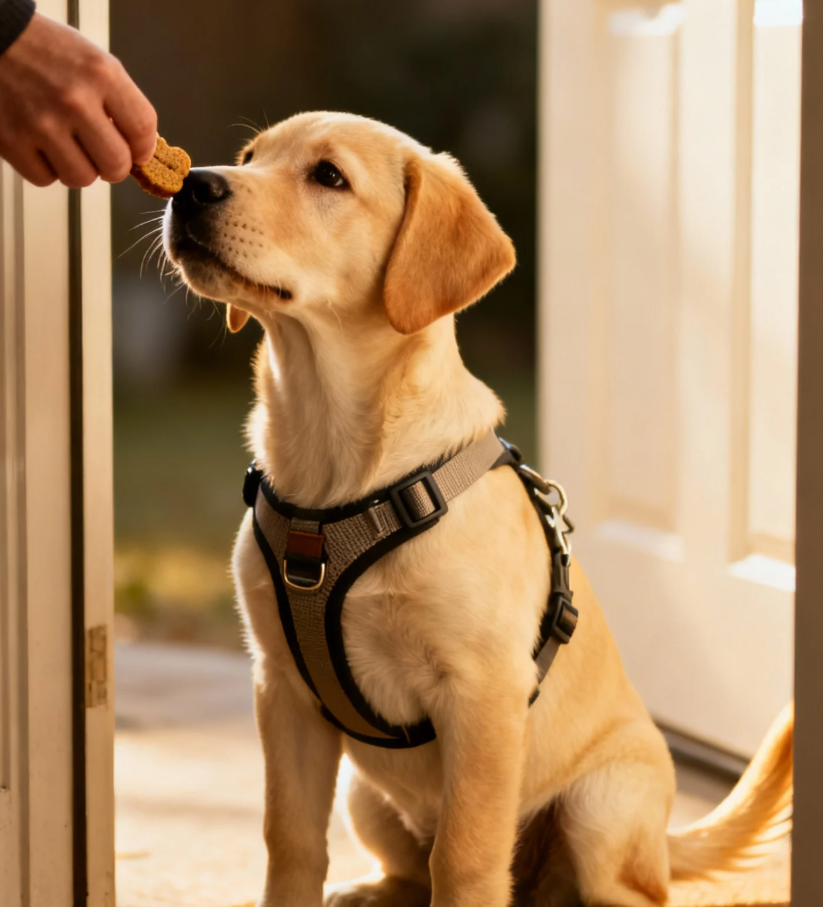
Training a Labrador doesn’t require a professional certificate or an arsenal of gadgets. What it truly takes is consistency, patience, and well-timed rewards. The moment your puppy comes home, you can begin teaching simple behaviors like responding to their name, sitting on command, and coming when called.
Name Recognition
When you say your puppy’s name and they look at you, mark the moment with a cheerful “Yes!” and follow it with a small treat. Repeating this just five times at a stretch helps them connect the sound of their name with paying attention to you.
Micro-Sessions
Labrador puppies learn incredibly fast, but their attention span is short. Keep training sessions between one and three minutes. Frequent, short bursts of learning are far more effective than long, exhausting sessions.
Reward What You Want
Always reward the behavior you want to see repeated. If your puppy sits naturally or stares at you politely, mark it with a treat. This approach builds a habit bank that they will rely on throughout life.
Build an Automatic Sit
Teaching a Labrador to sit automatically in daily moments is surprisingly simple. Stand still and wait. The instant your puppy sits, even briefly, mark it with a “Yes!” and reward. Repeat this in multiple everyday situations—at doors, before meals, and at crosswalks. Over time, sitting calmly will become second nature, reducing the need to nag or repeat commands hundreds of times.
Crate and Potty Training: Your Sanity Savers
Crates are not punishment—they are a safe space for your puppy, essentially their bedroom with a door. Choosing the right-sized crate is crucial: your Labrador should be able to stand, turn around, and lie down comfortably. Avoid oversized crates, as this can encourage them to use one corner as a bathroom.
Making the Crate Positive
Feed meals in the crate, toss in treats, and close the door for short naps. Gradually, your puppy will see it as a comforting retreat. At night, a simple routine—last potty break, quiet entry to the crate, lights out—helps them settle without drama.
Potty Schedule That Works
Take your puppy outside to the same spot after every nap, play session, and meal. Use a consistent cue like “Go potty” and wait patiently. Celebrate successes with praise and treats. If accidents happen indoors, clean them with an enzymatic cleaner and move on. Scolding only teaches your puppy to hide mistakes.
Bitey Crocodile Phase: Manage, Don’t Rage
Mouthing is natural for Labrador puppies—it’s how they explore the world. You can protect your hands and sleeves with a few simple strategies.
Redirect, Don’t Punish
When your puppy nips, calmly offer a tug toy or chew instead. Praise them when they switch to the correct object.
Puppy-Safe Chews
Frozen Kongs, braided bully sticks, and rubber toys are far better than your wrists.
Timeouts for Escalation
If mouthing gets too rough, stand up, cross your arms, and wait for 10 seconds. Resume play with an appropriate toy.
Teach a Soft Mouth
Hand-feed your puppy and watch how gently they take food. If teeth scrape your hand, say “Easy,” close your hand briefly, and try again. Reward gentle mouthing. Labs typically catch this quickly and respond well.
Leash Manners Without the Sled Team
Labradors love to pull because moving forward works for them. To teach polite leash behavior, change the rules: pulling stops progress, slack earns rewards.
Harness and Stop
Use a front-clip harness for comfort and leverage. The instant the leash tightens, stop walking. Wait until it slackens, mark the behavior with a “Yes!” and proceed.
Pay for Position
Place treats at your left hip and reward your puppy when they walk politely beside you.
Patterned Walks
Set a consistent cue spot, like every mailbox or driveway, to ask for a “sit,” then release with “Let’s go!” Short sniff breaks along the walk allow mental stimulation and help reduce pulling.
Socialization: Curate, Don’t Chaos
Labradors are friendly and outgoing, but not everything they meet will respond the same way. Socialization is about calm, positive exposure—not chaotic free-for-alls.
People and Places
Introduce your puppy to people with hats, wheelchairs, kids on scooters, and umbrellas. Reward calm curiosity with treats.
Surfaces and Sounds
Expose them to different floors, gravel, vacuums, doorbells, and traffic noises in a controlled way. Pair new experiences with positive reinforcement.
Dog Friends
Structured interactions with polite adult dogs or puppy classes are more beneficial than overwhelming free play sessions.
Stress Signals: The Three C’s
Watch for Curiosity (leaning in), Caution (hesitation), and Conflict (barking, freezing, hiding). Encourage curiosity with treats and space. Retreat or simplify situations if conflict arises.
Teach the Big Three: Come, Drop, Leave It
Reliable Recall (“Come!”)
Start indoors, crouch, call your puppy’s name, and reward generously. Practice with two people in different spots. Outdoors, use a long line and high-value treats. Never punish a recall.
Drop It
Trade items for a treat rather than chasing. Sometimes return the item so they don’t guard it. Keep it playful and positive.
Leave It
Hold a treat in a closed fist. When your puppy backs away, mark and reward from the other hand. Gradually progress to dropped food or objects outdoors.
Mental Work: Tire the Brain, Not Just the Legs
Bored Labs invent trouble. Provide mental stimulation to channel their energy:
- Meal puzzles, snuffle mats, and slow bowls make eating engaging.
- Short trick sessions (spin, touch, bow) keep them sharp.
- Nosework games, hiding treats in boxes, let them use their incredible sense of smell.
Calm on Cue
Teach a “Place” command on a dog bed. Reward them for staying there and gradually increase the duration. Use this during meals, TV time, or when guests arrive to maintain calm behavior.
Consistency: The Boring Secret Sauce
Everyone in the household must follow the same rules. If jumping or chewing is allowed sometimes, your puppy will test limits. Establish clear, simple rules:
- No jumping: ignore jumpers, reward sits.
- Chewing: remove tempting items and provide appropriate toys.
- Daily rhythm: potty, train, play, nap, repeat. Predictability helps reduce chaos.
FAQ
How long can my Labrador puppy hold their bladder?
Generally, age in months plus one equals hours they can hold it, up to 4–5 hours during the day. Nighttime stretches can be longer.
When do I start leash training?
Start indoors immediately with short, rewarded sessions. Gradually move to quiet outdoor areas before busier streets.
How do I stop my Lab from jumping on guests?
Have your puppy sit or go to their “Place” before greetings. Reward calm behavior and only allow attention when paws remain on the floor.
Is a clicker necessary?
No. A crisp “Yes!” is just as effective when delivered immediately after correct behavior.
What if my puppy ignores treats outside?
Reduce distractions, use higher-value rewards, shorten sessions, and always end on a success.
How much exercise does a Lab puppy need?
Short, frequent bursts of play and training are ideal. Mental enrichment and gentle fetch on soft ground are safer than long runs during growth stages.
Conclusion of Labrador Puppy Training Tips
With early, consistent training, positive reinforcement, and clear expectations, your Labrador will grow into a loyal, playful companion who listens even in exciting situations. Keep sessions short, rewards generous, and daily routines predictable. Stay patient, reset when needed, and enjoy the journey—your puppy, your shoes, and your sanity will all thank you.