
Microwave Cleaning Hacks You’ll Wish You Knew Sooner
Cleaning a microwave is one of those chores many people delay until the smell or splatters become impossible to ignore. I’ve spent over 20 years running a busy dog-friendly household where I cook homemade dog meals, warm broths, and reheat food constantly. That means my microwave works hard every single day. Over time, I’ve learned simple cleaning tricks that remove grease, stains, and odors quickly without harsh chemicals.
The good news is you don’t need expensive cleaners or hours of scrubbing. With a few basic pantry ingredients and a simple routine, you can restore your microwave in under 10 minutes. These cleaning hacks are the exact methods I personally use to keep my kitchen fresh, hygienic, and safe for preparing both human meals and dog food.
Key Takeaways
• Steam cleaning removes about 90% of microwave grime without scrubbing
• Lemon and vinegar naturally break down grease and eliminate odors
• Baking soda works best for stubborn, dried food splatters
• Cleaning the turntable, roller ring, and door gasket prevents hidden grime buildup
• Coffee grounds, vinegar, and baking soda are powerful natural odor removers
• A simple weekly 8–10 minute cleaning routine prevents heavy buildup
• Covering food while reheating reduces splatter by up to 70%
• Avoid bleach, oven cleaners, and metal scrubbers that can damage microwaves
According to home appliance maintenance studies, microwaves are among the most frequently used kitchen appliances yet one of the least regularly cleaned. Regular cleaning not only improves hygiene but can also extend appliance life and maintain efficient heating performance.
The Steam-Soak Shortcut (Your New Default)
If there’s one cleaning method I rely on the most, it’s steam. Steam softens dried food residue so it wipes away easily without aggressive scrubbing. In my experience, this trick handles the majority of microwave messes.
How to do it
Fill a microwave-safe bowl with 1 cup of water.
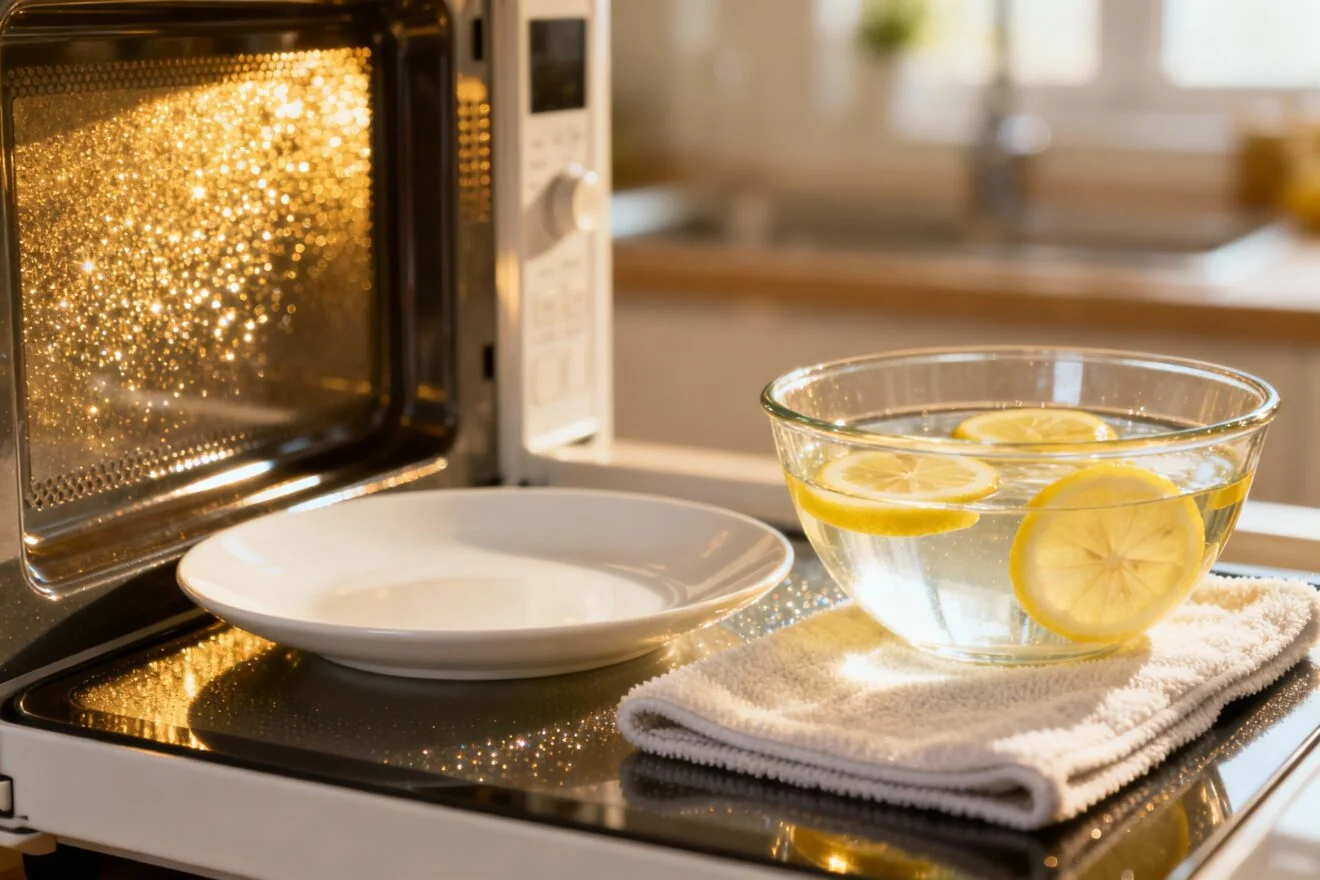
Add 2 tablespoons white vinegar or half a lemon.
Microwave on high for 3–5 minutes until the interior fills with steam.
Let it sit for 2 minutes with the door closed.
Carefully remove the bowl and wipe the walls, ceiling, and door with a cloth.
Steam loosens dried sauces, soup splashes, and grease within minutes. Vinegar is especially effective at cutting through stubborn smells, while lemon adds a pleasant fresh scent.
In my kitchen, I usually choose vinegar after reheating dog broth or fish dishes, while lemon works perfectly for routine freshening.
The Citrus Spa Treatment (For Stubborn Funk)
Strong food odors—especially fish, curry, or bacon—can linger in a microwave long after the meal is gone. Citrus is incredibly effective at breaking down grease and neutralizing these lingering smells.
Lemon scrub method
Slice one lemon.
Squeeze the juice into a microwave-safe bowl with 1 cup of water and add the lemon rinds.
Microwave for 3–4 minutes.
Let it sit for 2 minutes to allow steam to loosen grime.
Dip a cloth into the hot lemon water and wipe the microwave interior.
I often focus on the ceiling of the microwave because that’s where splatters hide the most. If the smell is particularly strong, I add a splash of vinegar to the lemon water for extra deodorizing power.
The Baking Soda Backup (When Stuff Won’t Budge)
Some messes refuse to disappear with steam alone. Dried pasta sauce or sugary splatters can harden like glue. That’s when baking soda becomes the best solution.
Baking soda is non-toxic, safe around food preparation areas, and mildly abrasive without damaging surfaces.
Make a quick paste
Mix 2 tablespoons baking soda with 1 tablespoon water.
Spread the paste on stubborn stains.
Let it sit for 5 minutes.
Wipe with a damp cloth and rinse with clean water.
After decades of cleaning kitchens where dog food prep happens regularly, I strongly recommend avoiding harsh scouring pads. They can scratch the microwave interior, and those scratches tend to trap grime later.
The Turntable, Track, and Door Gasket (AKA The Forgotten Trio)
Most people wipe the inside walls but forget the small components that collect crumbs and grease.
These three areas are the most commonly overlooked.
Glass turntable
Remove it and wash it with hot soapy water. Many turntables are also dishwasher safe. Dry it completely before placing it back.
Roller ring and wheels
Lift it out and wipe the ring and the microwave floor underneath. Grease buildup here can make the plate wobble.
Door gasket
Use a damp cloth or cotton swab to clean the rubber seal around the door. Food particles often hide inside the grooves.
One tip I always follow is to lift the glass plate and check the bottom floor of the microwave. Spills here can affect how evenly food reheats.
No-Scrub Deodorizers That Actually Work
Microwaves can trap odors surprisingly easily, especially when reheating fish, leftovers, or strong spices.
Fortunately, simple household ingredients work extremely well.
Vinegar bowl
Place a small bowl of white vinegar in the microwave overnight with the appliance turned off. By morning, most odors will be absorbed.
Coffee grounds
A bowl of fresh coffee grounds left inside for several hours neutralizes stubborn smells quickly.
Baking soda
An open box left in the microwave when it’s not in use helps absorb ongoing odors. Replace it monthly.
From personal experience, coffee grounds eliminate burnt smells fastest, while baking soda works best for continuous odor control.
Grease and Fingerprint Fixes (Outside Counts Too)
Cleaning the interior is only half the job. The exterior—especially the door and control panel—collects grease, fingerprints, and dust.
Shiny exterior, zero streaks
Mix a few drops of dish soap with warm water.
Dip a microfiber cloth into the solution and wring it out.
Wipe the microwave door, handle, and exterior surfaces.
Use a light touch around the control panel.
Finish by wiping with a clean damp cloth and drying with a microfiber towel.
If your microwave has stainless steel surfaces, wipe in the direction of the metal grain to avoid streaks.
When to Avoid Certain Cleaners (Don’t Void Your Sanity)
Over the years, I’ve seen people accidentally damage their microwaves by using the wrong cleaning products.
Avoid these completely:
Bleach
Bleach can damage interior coatings and leave strong fumes that are unsafe near food.
Oven cleaner
These chemicals are too harsh for microwave interiors and can corrode surfaces.
Metal scrubbers
They scratch the interior coating and create areas where grime sticks easily.
Excess water near vents
Avoid soaking the ventilation openings or the waveguide cover.
If your microwave has special coatings or sensor panels, it’s always wise to check the manufacturer’s manual before using any cleaner.
Speed-Clean Routine You’ll Actually Use
Keeping a microwave clean doesn’t require long cleaning sessions. I follow a quick routine once a week that takes less than 10 minutes.
Steam clean for 3 minutes using water and vinegar or lemon.
Wipe the walls, ceiling, door, and turntable.
Use baking soda paste on stubborn spots.
Leave the door open for 5 minutes to air out.
Wipe the exterior with a microfiber cloth.
Regular quick cleaning prevents the buildup that makes deep cleaning necessary.
Little Habits That Prevent Big Messes
Prevention is always easier than cleaning.
These small habits make a big difference.
Cover your food
Using a microwave cover or damp paper towel can reduce splatters by up to 70%.
Use lower power levels
Reheating food at 50–70% power helps prevent boil-overs.
Stir food halfway through reheating
This prevents uneven hot spots.
Clean spills immediately
Fresh spills wipe away in seconds before they harden.
Because I frequently warm homemade dog broths and meal toppers, covering bowls has saved me countless cleaning sessions.
FAQ
Can I use essential oils in the microwave to make it smell nice?
You can add a single drop to a steam bowl for scent, but use it sparingly. Essential oils may leave residue or affect food flavors if overused.
How do I clean the waveguide cover safely?
The waveguide cover is a small panel inside the microwave. Wipe it gently with a slightly damp cloth. Do not scrub it because the material is delicate.
Is it safe to microwave vinegar?
Yes, when diluted with water in a microwave-safe bowl. Allow the bowl to sit briefly before removing it to avoid steam burns.
My microwave smells like burnt popcorn. What should I do?
Run a vinegar steam cycle twice. Then leave a bowl of coffee grounds or baking soda inside overnight. If the smell persists, wipe the interior with a 1:1 vinegar and water solution.
Can I use disinfecting wipes on the control panel?
Yes, but make sure the wipe is only slightly damp. Follow with a dry microfiber cloth to prevent moisture from entering the electronics.
What if I see rust spots inside the microwave?
Clean and dry the area thoroughly. Small chips can sometimes be repaired with microwave-safe appliance paint if approved by the manufacturer. If rust spreads or sparks occur, replacing the microwave may be safer.
Conclusion
Keeping your microwave clean doesn’t require fancy products or complicated routines. After decades of cooking daily meals and preparing food for my dogs, I’ve learned that simple solutions like steam, lemon, vinegar, and baking soda handle almost every mess.
A quick weekly cleaning routine keeps odors away, prevents buildup, and ensures your microwave stays safe and hygienic. With just a few minutes of maintenance, you can avoid stubborn grime and enjoy reheating meals without leftover smells from last week’s popcorn.