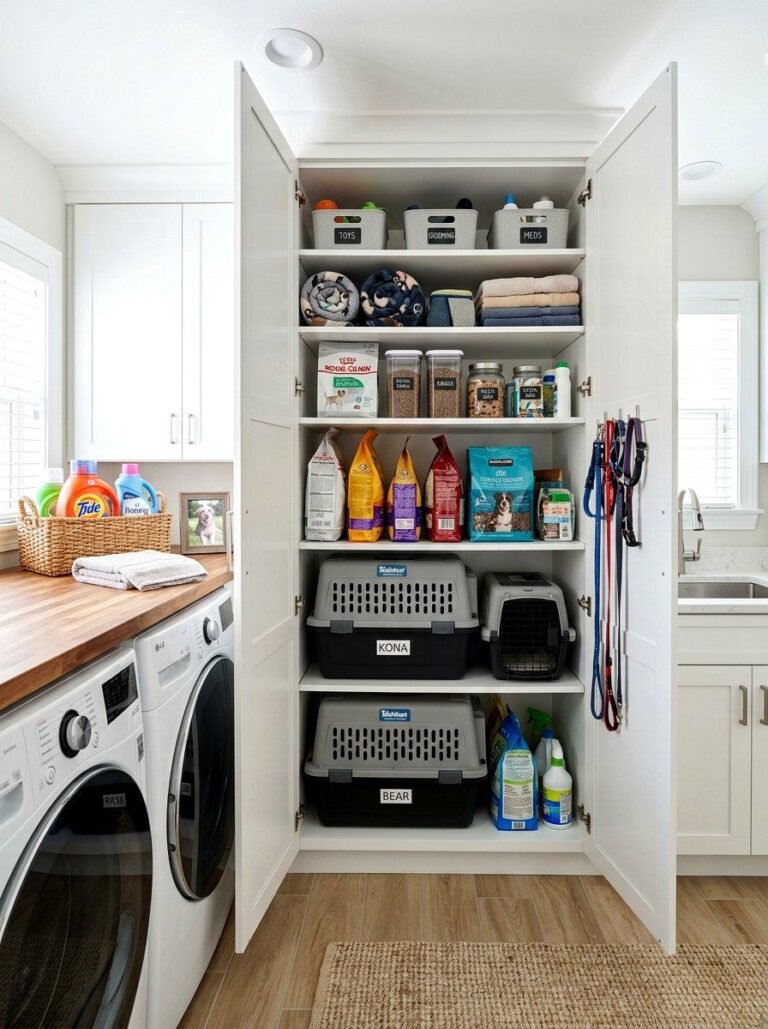
10 Ways to Organize Dog Supplies in a Small Home
Living with a dog in a small home is wonderful, but their stuff can take over fast. Leashes pile up by the door, toys spread across the floor, and bags of food eat up precious cabinet space. The good news is you don’t need a bigger place. You just need smarter storage. These ten ideas will help you organize dog supplies in a small home so everything has a spot and your space still feels like yours.
This post contains affiliate links. As an Amazon Associate, I earn from qualifying purchases at no extra cost to you.
1. Stack Clear Bins in the Closet

Want a Better-Trained, Happier Dog?
Get practical guidance for obedience, behavior, and everyday dog training with a collection of helpful training guides designed for dog owners.
This post may contain affiliate links. If you purchase through our link, we may earn a commission at no additional cost to you.
Clear bins make it easy to spot what you need at a glance.
Clear stackable bins are a small-home lifesaver because you can see what’s inside without opening every lid. Dedicate one bin to grooming supplies, one to extra leashes and collars, and one to seasonal gear like coats and booties. Stack them on a closet shelf or in a corner, and label each one so anyone in the house can find things. Choose bins with latching lids to keep dust out and curious noses from knocking them open.
Pro Tip: Put the bin you reach for most (usually treats or daily walking gear) on top so you’re not unstacking every morning.
2. Use an Over-the-Door Organizer for Daily Gear

Door organizers turn unused space into easy-access storage.
The back of a door is wasted space in most small homes, and an over-the-door organizer turns it into a command center. Hang one on the inside of a closet or pantry door and fill the pockets with poop bags, treats, a spare leash, grooming wipes, and medications. Everything stays visible and off your counters. Pick a sturdy fabric organizer with clear pockets so you can grab what you need without digging.
Pro Tip: Hang it on the door closest to where you leash up your dog, so grabbing gear becomes part of your leaving routine.
3. Roll a Utility Cart Between Rooms

A rolling cart keeps supplies mobile and tuckable.
A three-tier rolling cart is perfect for small homes because it moves where you need it. Load the top tier with daily items like treats and brushes, the middle with toys, and the bottom with bulkier things like towels or a spare blanket. Roll it into a closet when guests come over, or park it beside the couch for easy access during the evening. The wheels make it feel like furniture, not clutter.
Pro Tip: Use small baskets or cups on each tier to stop items from sliding around when you roll the cart.
4. Divide One Drawer Into Zones

Dividers turn one messy drawer into neat zones.
You don’t need a whole cabinet for dog supplies. Take one kitchen or hallway drawer and divide it into zones with adjustable dividers. One section holds poop bags and treats, another holds grooming tools, and a third holds medications or first-aid basics. Bamboo dividers expand to fit and look nice, too. When everything has a defined spot, the drawer stays tidy instead of becoming a jumble.
Pro Tip: Measure your drawer before ordering dividers, and leave one zone empty for new items so the system can grow.
5. Stack Bins for Bulk Food and Treats

Airtight stacked bins keep kibble fresh and floors clear.
Dog food bags are bulky and awkward, but decanting kibble into stackable bins with airtight lids solves two problems at once. The food stays fresh longer, and the square bins stack neatly in a pantry or closet instead of a floppy bag hogging floor space. Use a smaller bin on top for treats and dental chews. A scoop clipped inside the lid means you’ll never hunt for one again.
Pro Tip: Write the expiration date on a piece of masking tape on the bin so you always know when the food was opened.
6. Hang a Second Door Organizer for Toys

Keep toys off the floor and in rotation.
Toys multiply fast, and a second over-the-door organizer gives them a home without taking up floor space. Use the large pockets for plush toys and the smaller mesh pockets for balls and chew toys. Hang it on a bedroom or laundry room door where your dog can’t reach it, so toys stay clean and you control when playtime starts. Rotate a few toys each week to keep things interesting.
Pro Tip: Keep one “favorites” pocket at your dog’s nose height so they can pick their own toy, which is great mental enrichment.
7. Dedicate Cart Tier to Grooming

One rolling tier makes bath day effortless.
If you already have a rolling cart, dedicate one entire tier to grooming. Line up brushes, nail clippers, ear cleaner, and towels in a small caddy on that shelf. When it’s bath day, just roll the whole cart to the bathroom instead of gathering supplies from three rooms. Afterward, roll it back. This simple habit makes grooming feel less like a chore because the setup and cleanup take seconds.
Pro Tip: Keep a spare towel on the bottom tier at all times for muddy-paw emergencies by the door.
8. Create a Treat Station in a Drawer

A dedicated treat drawer speeds up training sessions.
Treats deserve their own spot, especially if you’re training. Use drawer dividers to carve out a treat station with sections for training treats, dental chews, and special-occasion goodies. Small jars or containers inside each section keep treats fresh and stop bags from spilling. When it’s training time, you open one drawer and everything is there, portioned and ready.
Pro Tip: Pre-portion daily training treats into a small container each morning so you never overfeed during sessions.
9. Stack Seasonal Gear Up High

Seasonal bins up high keep daily gear accessible.
Winter coats, rain jackets, booties, and cooling vests only get used part of the year, so store them up high in stackable bins. Label each bin by season and place them on the top closet shelf. When the weather changes, swap the seasonal bin down and move the off-season one up. This keeps everyday supplies at eye level and stops rarely used gear from clogging your daily routine.
Pro Tip: Toss a dryer sheet in each seasonal bin to keep stored fabrics smelling fresh between uses.
10. Combine Cart and Bins for a Mobile Station
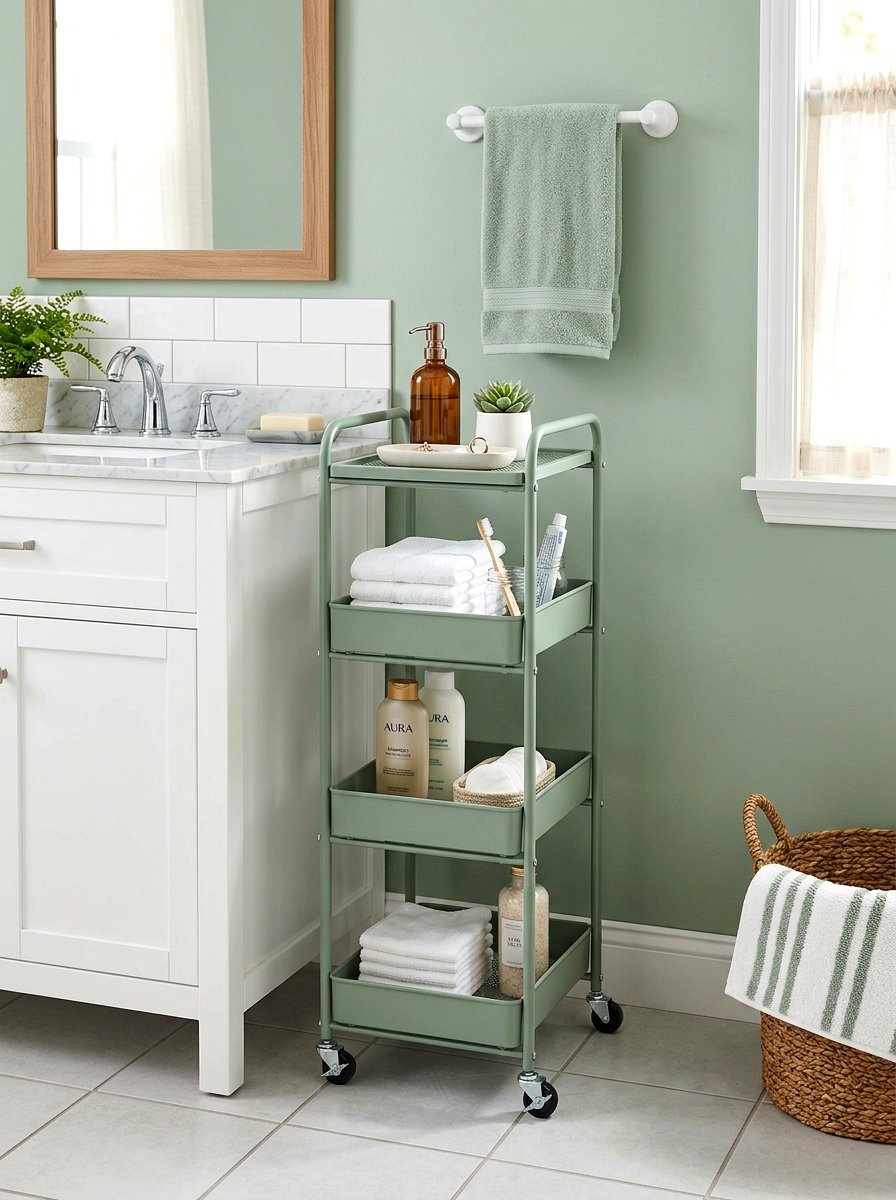
Cart plus bins equals a disappearing dog station.
For the ultimate small-home setup, combine a rolling cart with small stackable bins on each tier. The cart gives you mobility, and the bins give you categories. One tier holds a bin of walking gear, another holds a bin of grooming supplies, and the third holds toys. When you need floor space, roll the whole station into a closet. It’s a complete dog supply hub that disappears in seconds.
Pro Tip: Put locking casters on the cart so it stays put on hard floors when your excited dog bumps into it.
Quick Tips to Stay Organized
- Do a five-minute reset each evening: toys back in their spot, leash on its hook, treats sealed.
- Label everything, even if you think you’ll remember. Future you will be grateful.
- Keep only one week’s worth of poop bags in the daily spot; store the bulk pack elsewhere.
- Wash fabric bins and organizers monthly so they don’t hold odors.
- Reassess every season and donate supplies your dog has outgrown or ignores.
- If an item doesn’t have a home after a week, it probably doesn’t need to stay.
Frequently Asked Questions
Where should I store dog food in a small apartment?
Decant kibble into airtight stackable bins and keep them in a pantry, closet, or under a counter. Airtight bins keep food fresh and take up less space than the original bag.
How do I keep dog toys from taking over my living room?
Give toys a single home, like a basket or over-the-door organizer, and rotate a small selection each week. Store the rest out of sight so the room stays tidy.
What’s the best way to organize leashes in a small entryway?
Use wall hooks, an over-the-door organizer, or a small tray by the door. The key is having one dedicated spot you use every single time.
How often should I declutter my dog’s supplies?
Do a quick check every three months. Toss worn-out toys, expired treats, and outgrown gear. Dogs are happier with fewer, well-kept items than a pile of clutter.
Conclusion
You don’t need more square footage to stay organized with a dog. You just need the right containers in the right spots. Start with one idea from this list, like the rolling cart or the door organizer, and build from there. Before long, every leash, treat, and toy will have a home, and your small space will feel calm again.