
5 Rottweiler Puppy Training Tips To Build Early Discipline
Bringing home a Rottweiler puppy is exciting, but those adorable early weeks are also when you start building the habits your dog will carry into adulthood. Rottweilers are intelligent, powerful, people-oriented dogs, so the behaviors you encourage now can make everyday life much easier later.
You don’t need complicated training routines. A predictable schedule, clear boundaries, positive reinforcement, and frequent short practice sessions can give your puppy a strong start.
Know Your Rottie: Brains, Brawn, and a Soft Spot for You
Rottweilers tend to form strong relationships with their families, and they are often eager to participate in whatever their people are doing. Their intelligence and physical strength make early training especially valuable.
Want a Better-Trained, Happier Dog?
Get practical guidance for obedience, behavior, and everyday dog training with a collection of helpful training guides designed for dog owners.
This post may contain affiliate links. If you purchase through our link, we may earn a commission at no additional cost to you.
A puppy isn’t trying to challenge you simply because they ignore a cue or repeat an unwanted behavior. Young dogs are constantly learning which actions get attention, food, play, freedom, or access to interesting things.
A few characteristics are especially useful to keep in mind:
- Intelligence: Rottweilers can learn patterns quickly, including household routines and your reactions to their behavior.
- People orientation: Your attention, praise, play, and interaction can become powerful training rewards.
- Protective tendencies: Good socialization and calm exposure to different situations can help your puppy learn appropriate responses to unfamiliar people and environments.
What “discipline” actually means
Good discipline isn’t about frightening your puppy or using physical punishment. It means establishing predictable rules and teaching your dog what behavior earns a reward and what behavior makes access to something temporarily unavailable.
If you want calm behavior, consistently reinforce calm behavior. If your puppy makes an inappropriate choice, calmly interrupt it and show them what you would rather see.
Consistency is what makes the rules understandable.
Tip 1: Establish a Routine That Trains for You
A puppy’s day doesn’t need to run like a military schedule, but having a predictable rhythm can make training considerably easier.
Regular meal times, potty trips, naps, play, and training help your puppy learn when different activities happen. A simple routine could look like this:
- Wake up, go outside, and have a calm greeting.
- Eat breakfast followed by a few minutes of basic training.
- Have some playtime or an age-appropriate walk, then rest.
- Take another potty break and practice a short training game.
- Have dinner followed by another brief training session and controlled play.
- Finish the evening with quieter activities, a final potty trip, and bedtime.
You can adjust the schedule around your household. The goal is consistency rather than following exact times every day.
Crate = cozy den, not jail
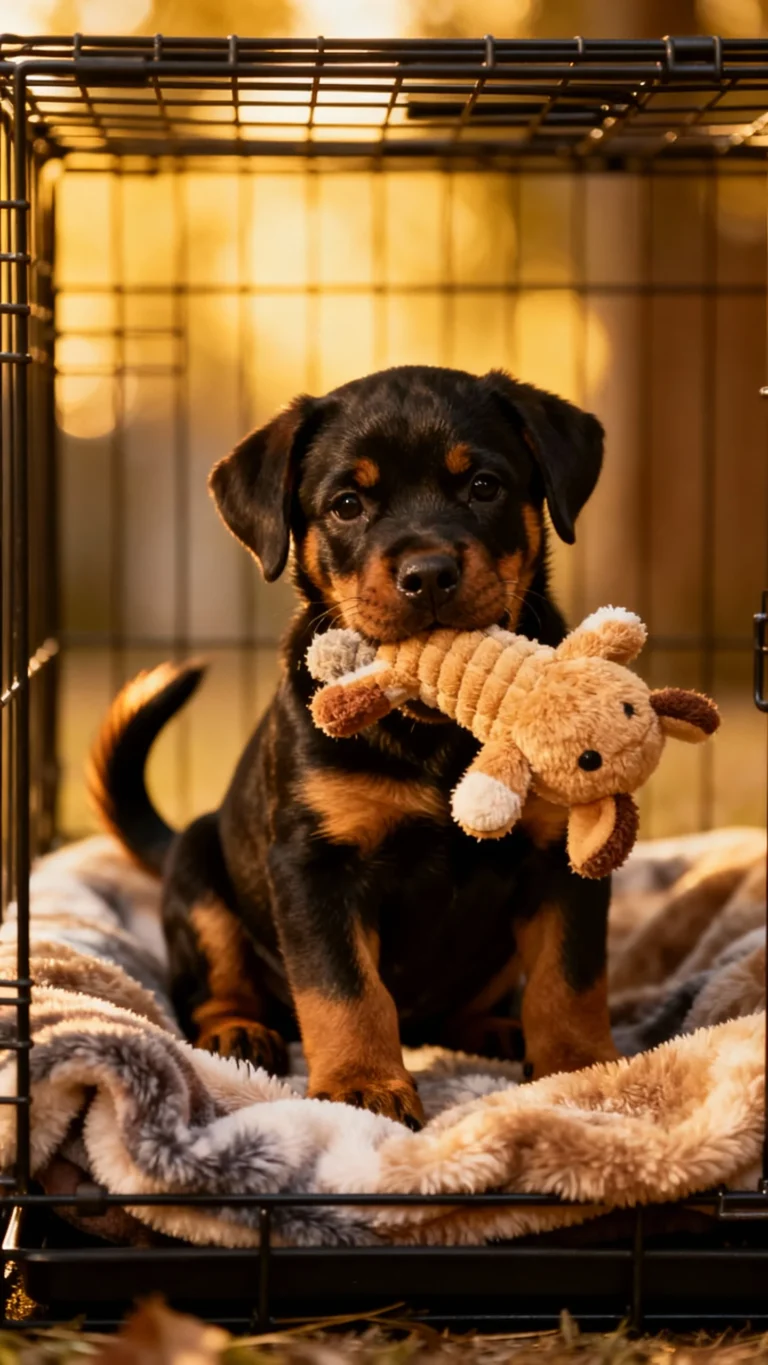
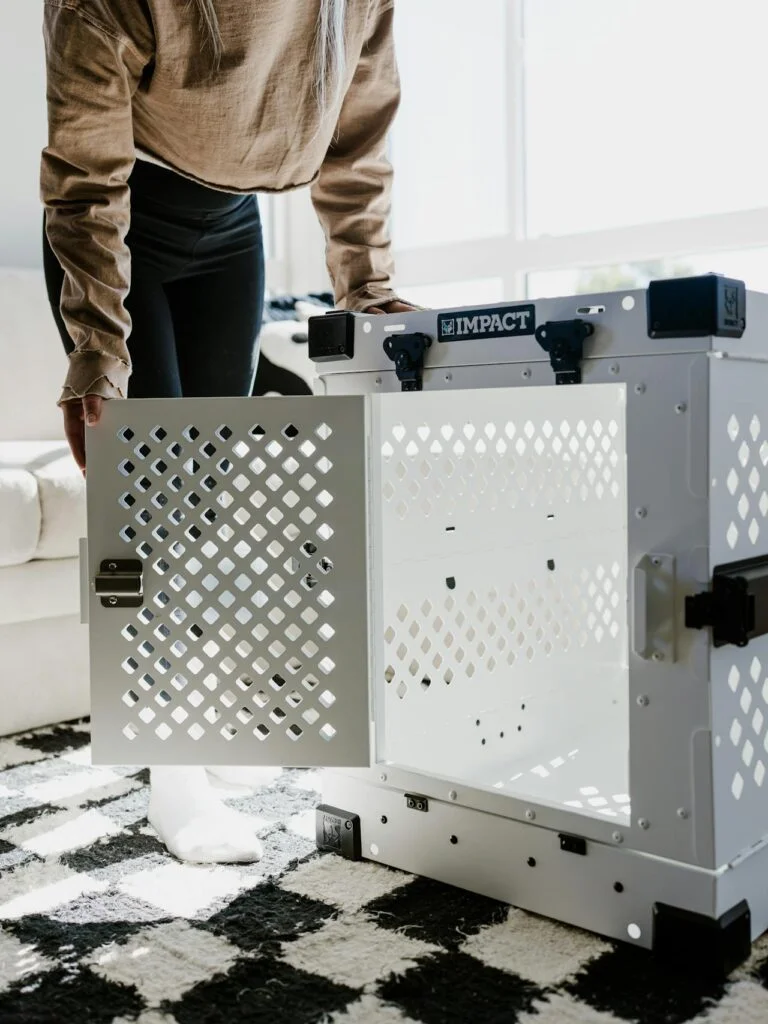
A crate can become a useful place for your puppy to sleep, relax, and take a break from household activity.

Introduce it gradually. Place comfortable bedding or an appropriate chew inside, feed some meals near or inside the crate, and begin with short periods of closed-door time while your puppy is relaxed.
Never use the crate as a punishment.
Over time, your puppy can learn that going into the crate means quiet time and rest. This can be particularly helpful when your Rottweiler reaches adolescence and becomes more energetic and independent.
Tip 2: Teach the “Big Four” Early
Before worrying about impressive tricks, concentrate on behaviors that will actually help you manage your dog in everyday situations.
- Name response: Say your puppy’s name once in a pleasant voice. When they turn toward you, immediately reward them. With repetition, their name becomes a cue to pay attention.
- Sit: Guide your puppy into the sitting position with a treat and reward as soon as their bottom reaches the floor. Eventually, sitting can become a useful default behavior before meals, greetings, and other activities.
- Down: Guide your puppy from a sitting position toward the floor and reward once they settle. This can later become a valuable way to encourage relaxation.
- Place/Mat: Teach your puppy to go to a specific mat or bed and remain there for gradually increasing periods. This is particularly useful when visitors arrive or when you need your dog to settle.
Micro-sessions win
Puppies don’t need long training classes at home. Several short sessions spread throughout the day are usually easier for them to handle.
Practice for just a few minutes at a time and finish after a successful repetition. You can train before meals, during play, after potty breaks, or whenever your puppy is naturally attentive.
Frequent repetition helps turn individual behaviors into everyday habits.
Tip 3: Socialize Like It’s Your Part-Time Job
Socialization isn’t simply about making your puppy meet as many dogs and people as possible.
The real goal is to help your Rottweiler become comfortable with different people, places, sounds, surfaces, handling experiences, and everyday situations.
Create opportunities for your puppy to calmly observe and experience things such as:
- People: Adults, children, older people, people wearing hats or sunglasses, visitors, delivery workers, and people using mobility equipment.
- Dogs: Healthy, appropriately vaccinated dogs with suitable temperaments and play styles.
- Places: Car rides, veterinary visits, sidewalks, quiet public areas, and other safe environments.
- Sensations: Household appliances, umbrellas, different floor surfaces, shopping carts, traffic sounds, and other normal sights and sounds.
How to do it right
Give your puppy enough distance and time to process something unfamiliar.
If your Rottweiler notices a new person or sound and remains relaxed, reward that behavior. If they appear worried, don’t force them closer. Increase the distance and allow them to recover.
Good socialization is about creating positive experiences at a pace your puppy can handle.
Tip 4: Prevent Nipping and Mouthing Like a Pro
Puppies explore with their mouths, and teething can make chewing and mouthing especially frequent. Rather than allowing your puppy to practice biting hands, clothing, or other inappropriate objects, teach them what they should bite instead.
A practical approach includes:
- Redirect: If your puppy reaches for your hands, calmly move the interaction toward an appropriate chew or toy.
- Remove attention: If biting becomes excessive during play, pause the game and give your puppy a brief opportunity to settle.
- Reward gentle behavior: Praise and reward your puppy when they interact gently with your hands or accept treats without grabbing.
- Structured tug: Teach clear start and stop cues for tug games so your puppy learns that exciting play still has boundaries.
Handling drills
Spend a little time each day getting your puppy comfortable with gentle handling.
Touch their paws, ears, collar, tail, and other areas briefly while providing treats or praise. Keep these exercises calm and gradual.
This can make future nail trims, grooming, veterinary examinations, and routine handling much less stressful.
Tip 5: Leash Manners Before They’re 80 Pounds
A pulling habit is much easier to manage when your Rottweiler is small than after they have grown into a powerful adult dog.
Begin practicing leash skills in quiet areas where your puppy can concentrate.
- Let your puppy become comfortable wearing their collar or harness and leash.
- Reward them for taking a few steps beside you.
- Change direction occasionally so following you becomes rewarding.
- When the leash becomes tight, stop moving rather than pulling back.
- Reward your puppy as soon as they return their attention to you or create slack in the leash.
Pro tip: Focus on rewarding the position you want rather than trying to make your puppy walk quickly.
If your puppy moves too far ahead, calmly change direction and encourage them to follow. The aim is to teach your dog that staying connected to you keeps the walk moving.
Tip 6: Impulse Control Games (That Feel Like Play)
Impulse control is an everyday skill that helps your puppy wait for food, doors, toys, greetings, and other exciting things.
Turn these lessons into simple games:
- It’s Your Choice: Hold a treat in your hand and reward your puppy when they stop trying to grab it and wait for your signal.
- Door Manners: Ask your puppy to pause before you open the door. If they get up, simply close it and try again.
- Food Bowl Wait: Ask for a brief sit while you place the bowl down. Release your puppy once they are calm enough to wait.
Why this matters
A puppy who learns to pause and think before reacting is easier to manage in many different situations.
These exercises can help build patience around food, entrances, visitors, toys, and other exciting parts of daily life. Keep the exercises short and gradually increase the difficulty as your puppy improves.
Tip 7: Use Rewards Strategically, Fade Them Smartly
Food rewards are particularly useful when teaching new behaviors because they provide immediate feedback.
As your Rottweiler becomes more experienced, however, you don’t want to depend on a treat being visible for every response.
Try using different types of rewards:
- High-value treats: Reserve especially exciting foods for difficult behaviors or distracting environments.
- Everyday rewards: Use praise, toys, sniffing opportunities, play, or access to something your dog wants.
- Variable reinforcement: Once a behavior is reliable, reward it with food sometimes while using other rewards at other times.
- Keep your marker: A consistent word such as “Yes” can tell your puppy exactly which behavior earned the reward.
The goal isn’t to suddenly remove rewards. Instead, gradually teach your dog that listening to you is worthwhile even when a treat isn’t immediately visible.
Common Mistakes to Dodge (So You Don’t Undo Your Work)
Even a well-planned training program can become confusing if the household rules change constantly.
Watch out for these common problems:
- Inconsistent rules: Allowing a behavior one day and correcting it the next makes it difficult for your puppy to understand what is expected.
- Too much freedom too soon: Use gates, pens, crates, and supervised areas while your puppy is learning.
- Overwhelming socialization: Exposing your puppy to too much activity at once can create unnecessary stress.
- Only training during formal sessions: Everyday moments are excellent opportunities to practice manners.
- Skipping rest: A tired puppy isn’t always a well-behaved puppy. Young dogs need substantial sleep and downtime.
FAQ
When should I start training my Rottweiler puppy?
Start as soon as your puppy comes home.
The first lessons can be very simple: learning their name, following you, settling in their crate, going outside for potty breaks, and responding to basic cues.
Keep everything positive and age-appropriate. Early training doesn’t need to be complicated to be effective.
How do I handle my puppy’s protective barking?
First, determine what is triggering the barking. Your puppy may be responding to a person outside, a strange sound, excitement, fear, or simply something unfamiliar.
Calmly redirect your puppy toward a behavior you have taught, such as coming to you, sitting, or going to their mat. Reward quiet behavior and manage the environment when possible by creating distance or reducing visual triggers.
If barking is frequent, intense, or accompanied by fear or aggression, consider working with a qualified trainer or veterinary behavior professional.
What treats should I use for training?
Small, soft treats that your puppy can eat quickly are convenient for training.
You can use commercial training treats or suitable foods such as tiny pieces of cooked chicken or another food your puppy tolerates well. Keep portions small so repeated training doesn’t add excessive calories.
Use more exciting rewards for challenging situations and ordinary rewards for behaviors your puppy already understands.
Is punishment ever necessary?
Training works best when your puppy clearly understands which behavior you want instead.
Instead of physical punishment or frightening corrections, manage the environment, remove access to something rewarding when appropriate, interrupt unwanted behavior calmly, and redirect your puppy toward an acceptable alternative.
If you’re dealing with persistent aggression, guarding, or another serious behavior problem, professional guidance is a better option than escalating corrections yourself.
How much exercise does a Rottie puppy need?
Young Rottweilers benefit from short periods of age-appropriate activity combined with training, sniffing, exploration, play, and plenty of rest.
Avoid treating a young puppy like an adult exercise partner. Long-distance running, repetitive high-impact activity, or excessive jumping may not be appropriate for a growing large-breed dog.
Your veterinarian can help you determine an exercise routine suited to your puppy’s age and development.
Can I train a Rottweiler if I’m a first-time owner?
Yes. You don’t need years of dog-training experience to start teaching a Rottweiler puppy.
What matters most is consistency, patience, supervision, and a willingness to learn. A reputable puppy class or qualified positive-reinforcement trainer can also give you practical guidance while helping you recognize and address problems early.
Conclusion
Training a Rottweiler puppy is much easier when you focus on everyday habits instead of trying to teach everything at once.
Create a predictable routine, establish household rules, teach the essential cues, introduce new experiences gradually, and practice calm behavior throughout the day. Give your puppy appropriate outlets for chewing, play, exploration, and mental stimulation, while making sure they get enough sleep.
Your Rottweiler will grow quickly, but the habits you build during puppyhood can continue to benefit both of you for years. Start small, stay consistent, and make learning a normal part of your puppy’s daily life.