
Easy Allergy-Friendly Beef Dog Food Recipe
Easy Homemade Beef Dog Food for Dogs With Food Sensitivities
If your dog deals with itchy skin, recurring ear problems, digestive upset, or other symptoms that make you wonder whether food could be involved, choosing what goes into their bowl can feel overwhelming.
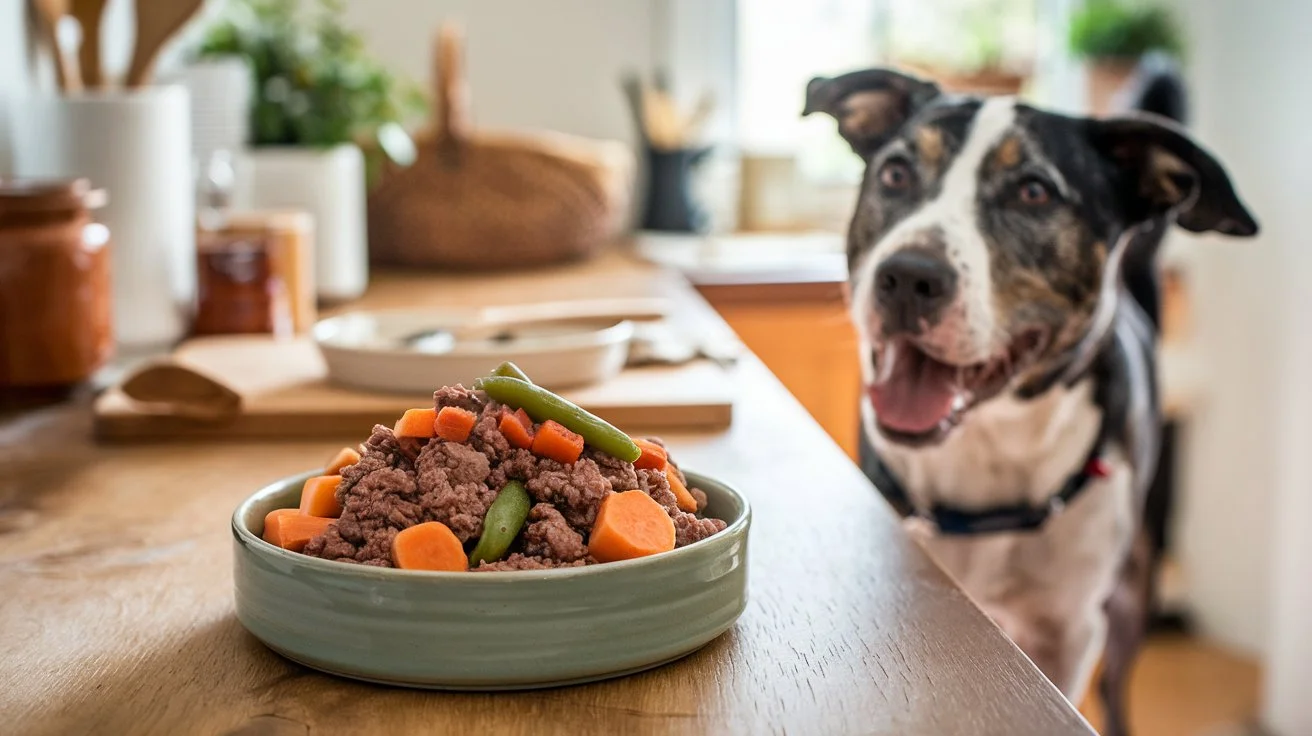
One option some dog parents consider is preparing meals at home with a short list of recognizable ingredients. This homemade beef dog food recipe combines cooked ground beef with sweet potato, carrots, and green beans for a simple meal that is easy to prepare.
However, there is one important thing to understand before getting started: beef is not automatically a hypoallergenic protein. Dogs can develop food allergies to many different ingredients, including beef. If your veterinarian has recommended an elimination diet, the ingredients need to be selected according to your dog’s previous diet and suspected triggers rather than simply choosing a recipe labeled “allergy-friendly.”
Important: This recipe is best viewed as a homemade meal idea or occasional food addition, not a nutritionally complete replacement for your dog’s regular diet. Long-term homemade diets should be formulated for your individual dog by a qualified veterinary nutritionist.
Why Consider Homemade Dog Food?
One advantage of preparing food at home is that you can see exactly which ingredients are going into your dog’s bowl.
For dogs with suspected food sensitivities, this can make ingredient tracking easier. You can avoid unnecessary flavorings, seasonings, and ingredients your veterinarian has asked you to remove.
Homemade meals can also be useful when you want to add variety to a dog’s normal diet, provided the additions fit within their overall nutritional plan.
But homemade does not automatically mean healthier or nutritionally complete. Dogs need the right balance of protein, fat, vitamins, minerals, essential fatty acids, and other nutrients. A recipe containing meat and vegetables alone may not provide everything a dog needs over the long term.
Is Beef a Good Protein for a Dog With Allergies?
This depends entirely on the individual dog.
Beef can be a perfectly suitable protein for dogs that tolerate it. But if your dog has a confirmed beef allergy, this recipe obviously would not be appropriate.
In fact, veterinary references list beef among the more common food allergens reported in dogs. Food allergies are diagnosed through a properly managed elimination diet followed by a controlled dietary challenge, rather than simply assuming that a particular ingredient is responsible for itching or digestive problems.
If your veterinarian has specifically recommended beef as a protein your dog can tolerate, this recipe may be useful as a starting point for a simple homemade meal.

Ingredients
For a basic batch, you’ll need:
- 1 pound lean ground beef
- 1 cup cooked sweet potato, mashed
- ½ cup cooked carrots, chopped
- ½ cup cooked green beans, chopped
- Water as needed for cooking
Optional ingredients
Only add optional ingredients if they fit your dog’s individual diet:
- A small amount of an appropriate fat source
- A veterinary-recommended vitamin and mineral supplement
- Other ingredients specifically approved by your veterinarian
Do not add salt, garlic, onion, seasoning blends, sauces, or spicy ingredients.
If this food is intended to become a significant part of your dog’s daily diet, don’t simply add supplements yourself. The exact nutrient requirements depend on the complete recipe, your dog’s life stage, health status, and other factors.
How to Make This Homemade Beef Dog Food
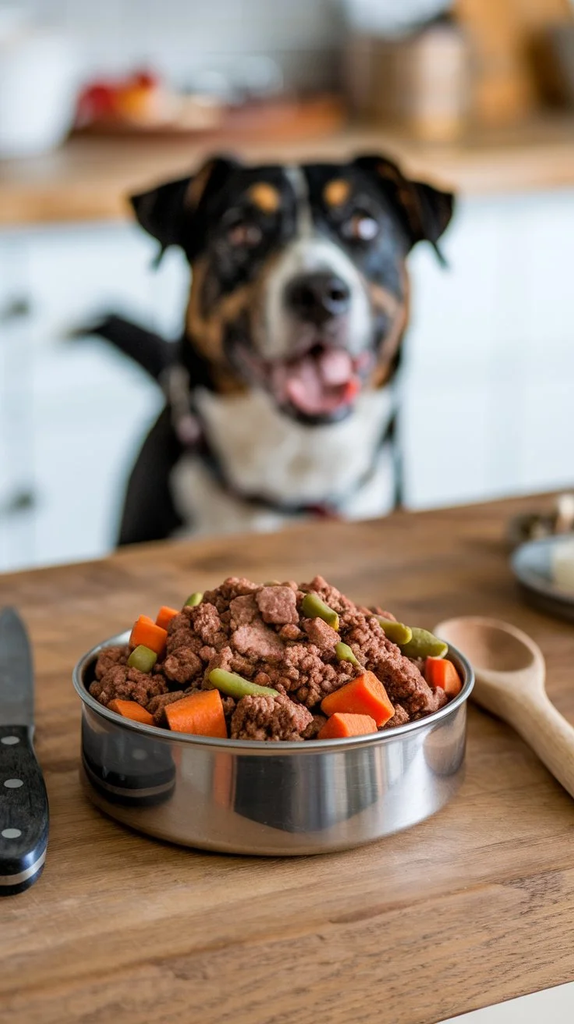
Step 1: Cook the Beef
Place the ground beef in a skillet over medium heat.
Break the meat into small pieces while it cooks and continue cooking until it is thoroughly cooked.
Don’t season the beef. Ingredients commonly used to flavor human food aren’t necessary for dogs, and some seasonings can be dangerous.
Once cooked, drain excess grease and allow the beef to cool.
Step 2: Prepare the Vegetables
Cook the sweet potato, carrots, and green beans until soft.
You can steam or boil the vegetables without adding salt, butter, sauces, or seasoning.
Mash the sweet potato and chop the carrots and green beans into small pieces that are easy for your dog to eat.
Step 3: Combine Everything
Place the cooled beef and vegetables into a large bowl.
Mix thoroughly until the ingredients are evenly distributed.
If your dog has a suspected food allergy and you’re conducting a veterinary-guided elimination trial, don’t add ingredients simply because they sound healthy. Even small additions can interfere with the purpose of the trial. Veterinary guidance generally calls for the prescribed diet to be fed exclusively during the trial.
Step 4: Cool, Portion, and Serve
Allow the finished mixture to cool completely before serving.
For easier storage, divide the food into individual portions and place them in airtight containers.
Refrigerate portions you plan to use soon and freeze the rest if you’re preparing food ahead of time.
How Much Homemade Beef Dog Food Should You Feed?
There isn’t one reliable portion size that works for every dog.
A dog’s calorie requirements depend on factors such as:
- Body weight
- Age
- Activity level
- Breed and body condition
- Whether the dog is growing
- Pregnancy or nursing
- Existing medical conditions
- The calorie density of the complete diet
For that reason, broad measurements such as “one cup for a medium dog” can be misleading.
If you’re replacing part or all of your dog’s normal food with homemade meals, ask your veterinarian to help determine the appropriate calories and portion size.
What About Dogs With Suspected Food Allergies?
This is where it’s important not to confuse a homemade recipe with an allergy treatment.
Dogs can develop adverse reactions to different dietary proteins, and symptoms such as itching, recurrent ear problems, vomiting, or diarrhea can have several possible causes. Food allergy is not confirmed simply because a dog improves after eating a different homemade meal.
A veterinarian may recommend an elimination-challenge diet. During this process, the dog is fed a carefully selected diet while other food sources are removed. This includes treats, table scraps, flavored supplements, and other food-based products that could interfere with the trial.
If beef is new to your dog’s diet, it also shouldn’t automatically be considered a “safe” protein. Your dog’s previous food history matters when selecting an appropriate novel protein.
Can You Customize This Recipe?
You can make ingredient changes, but do so carefully.
For a dog without a medically prescribed elimination diet, vegetables such as pumpkin, carrots, or green beans may provide variety when appropriately prepared.
However, substitutions are not interchangeable from a nutritional standpoint.
If a veterinary nutritionist has formulated a homemade diet for your dog, changing or removing ingredients can alter the nutritional balance. Even seemingly minor changes can affect the amount of essential nutrients your dog receives.
For dogs undergoing an elimination trial, substitutions can also defeat the purpose of the trial if they introduce another protein or ingredient that hasn’t been approved.
Ingredients to Avoid
When preparing homemade food for dogs, keep human-style seasoning out of the recipe.
Avoid ingredients such as:
- Onions
- Garlic
- Chives
- Excess salt
- Spicy seasonings
- Sauces containing unsafe ingredients
- Chocolate
- Xylitol-containing foods
- Foods your veterinarian has specifically told you to avoid
Also be cautious with packaged ingredients. A seemingly simple product can contain additional flavorings, sweeteners, seasonings, or other ingredients that aren’t appropriate for your dog’s diet.
Is This Recipe Complete and Balanced?
Not necessarily.
This is one of the most important differences between an easy homemade recipe and a properly formulated homemade diet.
Meat, sweet potatoes, carrots, and green beans can provide useful nutrients, but that combination does not automatically meet every nutritional requirement a dog has.
Veterinary nutrition sources recommend having long-term homemade diets formulated specifically for the individual dog by a qualified veterinary nutritionist. Homemade diets can otherwise be deficient or excessive in important nutrients.
This is particularly important for puppies, pregnant or nursing dogs, and dogs with medical conditions.
Storage Tips
Once the food has cooled:
- Divide it into portions appropriate for your dog.
- Store short-term portions in airtight containers in the refrigerator.
- Freeze additional portions if you have prepared a larger batch.
- Thaw frozen portions safely before serving.
- Discard food that appears spoiled or has been stored improperly.
Preparing individual portions can make homemade feeding much easier and reduce the temptation to repeatedly reheat the entire batch.
Important Tips for Dogs With Food Sensitivities
If you’re making this recipe specifically because you suspect your dog has a food allergy, keep a simple food diary.
Write down:
- Everything your dog eats
- Treats and chews
- Supplements
- Flavored medications
- Changes in itching or skin symptoms
- Digestive changes
- Any unusual exposures
This can give your veterinarian much more useful information when evaluating your dog’s symptoms.
During an elimination diet, even seemingly unrelated food-based products can interfere with the process. Veterinary sources specifically warn that treats, chews, flavored medications, and supplements may contain proteins that compromise a diet trial.
Frequently Asked Questions
Can I feed this beef dog food every day?
Not as a complete long-term diet unless the entire recipe has been properly formulated to meet your dog’s nutritional requirements.
A homemade combination of meat and vegetables can look nutritious while still lacking important vitamins and minerals. For daily homemade feeding, work with a veterinarian or qualified veterinary nutritionist.
Is beef hypoallergenic for dogs?
No. Beef should not automatically be described as hypoallergenic.
Dogs can develop allergies to many different food proteins, and beef is among the commonly reported food allergens in dogs.
Can I use chicken instead of beef?
Only if chicken is appropriate for your individual dog.
If you’re making this as a casual homemade meal, a protein substitution may be possible. But if your veterinarian has prescribed an elimination diet, don’t substitute ingredients without checking first.
Can puppies eat homemade beef dog food?
Puppies have particularly demanding nutritional requirements because they’re growing.
A simple homemade recipe should not replace a properly formulated puppy diet unless it has been specifically designed to be complete and balanced for the puppy’s life stage.
Will this recipe stop my dog’s itching?
Not necessarily.
If your dog is itchy, food may or may not be the underlying cause. Environmental allergies, fleas, infections, and other conditions can produce similar symptoms.
If a food allergy is suspected, a veterinarian-guided elimination and challenge process is the reliable way to investigate it.
Can I add turmeric or coconut oil?
You don’t need to add either ingredient simply because they’re often promoted online as beneficial for dogs.
For a dog with suspected food allergies, keeping the ingredient list controlled can be more useful than adding multiple extras. If you’re following a veterinary diet trial, discuss any additions with your veterinarian first.
Final Thoughts
This simple homemade beef and vegetable recipe can be a convenient way to prepare a recognizable meal for a dog that tolerates these ingredients.
But when allergies or food sensitivities are involved, simple doesn’t necessarily mean hypoallergenic. The right ingredients depend on your individual dog’s history and confirmed or suspected triggers.
If your dog has persistent itching, digestive problems, recurring ear infections, or other symptoms, talk with your veterinarian before making major dietary changes. And if you want to feed homemade food as your dog’s primary diet, have the recipe properly formulated so that your dog receives the nutrients they need for long-term health.
The goal isn’t simply to make a homemade meal. It’s to make sure the food you choose is appropriate, safe, and nutritionally suitable for your particular dog.