
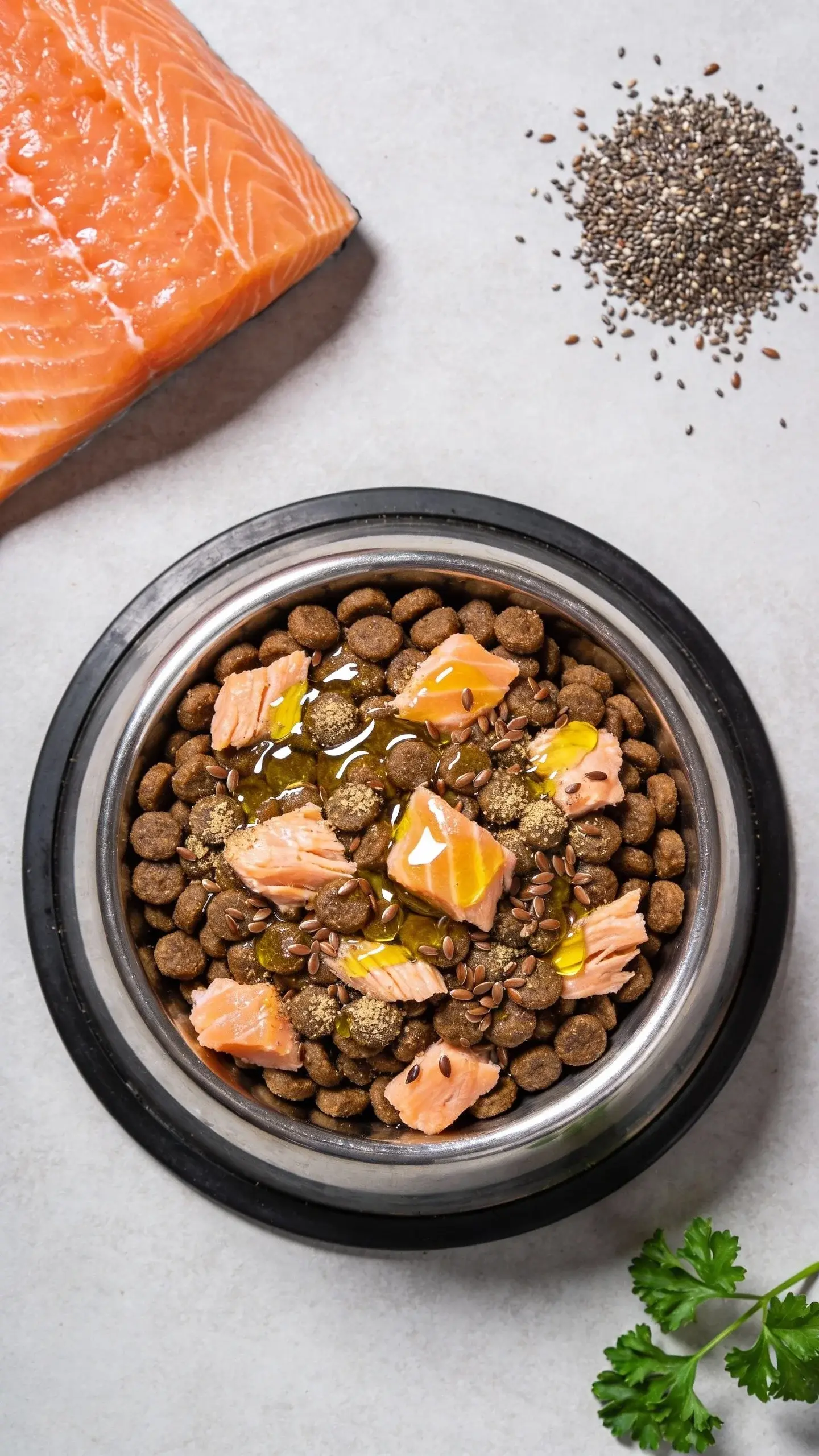
Allergy-Friendly Dog Food With Fish For Skin And Coat Health Made Simple
A dog that spends half the day scratching, licking their paws, or rubbing against the furniture is clearly trying to tell you something.
Diet can sometimes play an important role in managing skin and digestive problems, especially when a dog has a confirmed food allergy or another adverse reaction to an ingredient. Fish can be a useful protein source and provides EPA and DHA, the long-chain omega-3 fatty acids associated with normal skin function and other aspects of canine health.
But there’s an important distinction: fish isn’t a universal cure for itching, and a fish-based food isn’t automatically allergy-friendly. The right diet depends on what your individual dog has previously eaten and which ingredients, if any, actually trigger their symptoms.
Why Fish Works Wonders for Skin and Coat
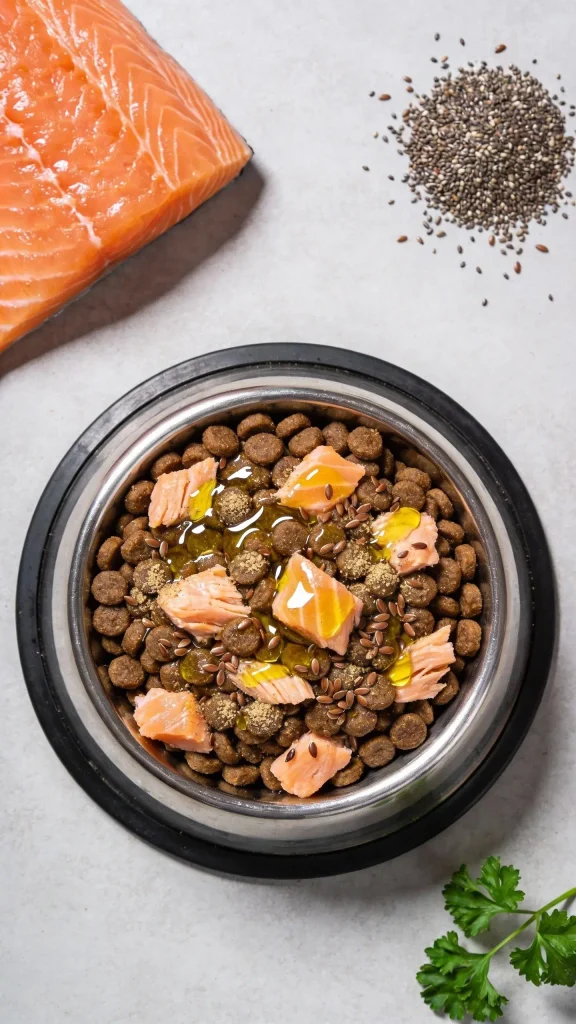
Fish can bring two useful nutritional features to a dog’s bowl: high-quality protein and, depending on the species and formulation, meaningful amounts of omega-3 fatty acids.
Oily fish such as salmon and sardines are particularly good sources of EPA and DHA. These fatty acids have important biological roles, and dietary omega-3s are commonly used as part of nutritional support for dogs with certain skin problems.
A fish-based diet can therefore be a sensible option for some dogs, particularly when the protein is appropriate for their dietary history.
Top Fish Choices
- Salmon: A naturally oily fish that provides EPA and DHA and is commonly used in commercial dog foods.
- Whitefish: Cod, pollock, and haddock are generally leaner fish and can be useful protein sources in appropriately formulated diets.
- Trout: Provides animal protein and omega-3 fatty acids, depending on the specific fish and preparation.
- Sardines and anchovies: Small oily fish that can provide EPA and DHA. If used as toppers, choose plain versions without added salt, sauces, onion, garlic, or seasoning.
The important part isn’t choosing the fish with the biggest nutritional reputation. It’s choosing a fish your dog can tolerate and a complete diet that meets their nutritional requirements.
Allergies vs. Sensitivities: What’s Actually Bugging Your Dog?
“Food allergy” and “food sensitivity” are often used interchangeably online, but they aren’t necessarily the same thing.
A true food allergy involves an immune response to something in the diet. Food intolerance or other adverse food reactions can have different mechanisms.
Dogs with food allergies may develop persistent itching, recurring ear problems, skin inflammation, or gastrointestinal signs. However, those symptoms can also occur with environmental allergies, fleas, infections, parasites, and other conditions.
Fish may be a useful alternative protein for some dogs, but you can’t assume a dog has never eaten fish simply because their current food doesn’t prominently advertise it. Ingredients, treats, toppers, and previous diets all matter when determining whether a protein is truly novel.
Allergy-friendly should therefore mean “appropriate for this particular dog’s suspected triggers,” rather than simply “contains fish.”
Signs Your Dog Might Benefit from Fish-Based Food
A fish-based diet might be worth discussing with your veterinarian when your dog has signs such as:
- Persistent scratching or paw licking
- Repeated ear irritation or infections
- Red or inflamed skin
- Recurring skin problems
- A dull or flaky coat
- Digestive problems that repeatedly occur after eating certain foods
These signs don’t prove that fish will solve the problem. They simply indicate that your dog’s diet may deserve closer attention alongside other possible causes.
Reading Labels Like a Pro (Without Needing a PhD)
The picture on the front of the bag is marketing. The ingredient list and nutritional adequacy statement give you much more useful information.
If you’re specifically looking for a fish-based food, start by identifying exactly which fish proteins are included and then check whether additional animal proteins appear elsewhere in the formula.
Look for:
- Clearly identified fish proteins: Ingredients should tell you what animal source is actually present.
- Sources of EPA and DHA: Fish oil or oily fish can contribute these omega-3 fatty acids.
- A complete-and-balanced nutritional statement: Particularly important when the food will provide most of your dog’s calories.
- A formula appropriate for your dog’s life stage: Puppies, adults, pregnant dogs, and other groups have different nutritional requirements.
- Ingredient consistency: Especially important when you’re trying to investigate a possible food reaction.
Skip or question:
- Vague animal ingredients when you’re trying to identify specific protein sources
- Foods containing proteins your dog is known to react to
- Products that don’t provide appropriate nutritional adequacy information when intended as a primary diet
- Treats and toppers that quietly introduce additional proteins during a food trial
And remember that “salmon recipe” doesn’t necessarily mean salmon is the only animal protein in the food.
If you’re conducting a strict elimination trial, even seemingly insignificant extras can matter. Flavored medications, supplements, treats, chews, and table food may contain proteins that interfere with the trial.
Dry vs. Wet vs. Fresh: Which Format Helps Skin Best?
There isn’t one food format that automatically produces healthier skin.
Dry, canned, and fresh diets can all be appropriate when they are properly formulated and your dog tolerates the ingredients.
Quick breakdown:
- Kibble: Convenient, easy to measure, and generally simple to store.
- Wet food: Contains considerably more moisture and can be appealing to dogs that prefer softer textures.
- Fresh/frozen: Can offer different ingredient combinations and textures, but the nutritional adequacy of the specific product still matters.
Rather than choosing based solely on the format, look at the complete nutritional profile, ingredient sources, manufacturing quality, and your dog’s individual needs.
What About Raw?
Raw fish isn’t automatically safer or healthier than cooked fish.
Raw animal foods can carry pathogens and parasites, and certain raw fish can contain compounds that create nutritional problems if consumed inappropriately or in large amounts.
If you want to include fish as a topper, thoroughly cooked, plain fish is a much simpler option for most households. Remove bones carefully and avoid salt, sauces, onion, garlic, and other seasonings.
For a complete homemade raw or cooked diet, work with a veterinarian or board-certified veterinary nutritionist rather than improvising the nutritional balance.
Transitioning Without Tummy Drama
A promising new food can still cause digestive upset if your dog goes from one diet to another overnight.
A gradual transition gives many dogs a better chance to adapt.
Easy 7–10 day plan:
- Days 1–3: About 25% new food and 75% old food
- Days 4–6: About 50% new food and 50% old food
- Days 7–9: About 75% new food and 25% old food
- Day 10: Move to the new food if your dog is tolerating the transition
Some dogs need an even slower change.
If vomiting, significant diarrhea, refusal to eat, or other concerning symptoms develop, don’t keep increasing the new food simply to finish the schedule.
And if you’re starting a veterinarian-directed elimination diet, follow the specific instructions you were given. Once the trial begins, unapproved toppers and treats can make the results impossible to interpret.
Smart Add-Ons for Extra Shine
Fish already provides nutritional benefits, so piling on multiple supplements isn’t necessarily better.
EPA and DHA can be obtained from oily fish, fish oil, and algae oil. The appropriate amount depends on the dog’s diet, health status, and the specific supplement.
Before adding a concentrated supplement, especially if your dog has a medical condition or takes medication, ask your veterinarian about the appropriate product and dose.
- Fish oil: A concentrated source of EPA and DHA.
- Algal oil: Can provide DHA and may be useful when a fish-free omega-3 source is preferred.
- Zinc and other nutrients: Important for normal skin function, but unnecessary supplementation can be harmful when a complete diet already provides adequate amounts.
- Probiotics: May be useful in certain situations, but they’re not a universal treatment for itchy skin or food allergy.
More supplements don’t automatically mean better skin.
DIY Toppers That Won’t Break the Diet
Simple toppers can be useful when they’re appropriate for your dog’s diet.
Options may include:
- Plain cooked salmon or sardines with bones removed
- Plain cooked whitefish
- A small amount of plain cooked fish mixed into the regular meal
If your dog is undergoing a strict elimination trial, don’t add these unless they are specifically allowed as part of that trial.
Even a healthy topper can undermine the purpose of an elimination diet if it introduces an ingredient you’re trying to test.
Common Mistakes (So You Don’t Make Them)
- Assuming every fish is a novel protein: Your dog may have eaten that fish before without you realizing it.
- Treating fish as a cure for allergies: A fish diet only helps if the underlying problem is actually related to a food ingredient and the chosen diet avoids that trigger.
- Forgetting hidden proteins: Treats, supplements, chews, flavored medications, and table scraps can introduce unexpected ingredients.
- Changing food too quickly: A sudden dietary switch can cause digestive upset.
- Expecting immediate skin changes: Chronic skin problems generally take longer to evaluate than a simple change in stool.
- Adding multiple supplements at once: It becomes difficult to determine what is helping, and unnecessary supplements can complicate the diet.
- Ignoring other causes of itching: Fleas, environmental allergies, parasites, and skin infections can all cause similar symptoms.
How to Choose a Truly Allergy-Friendly Fish Formula
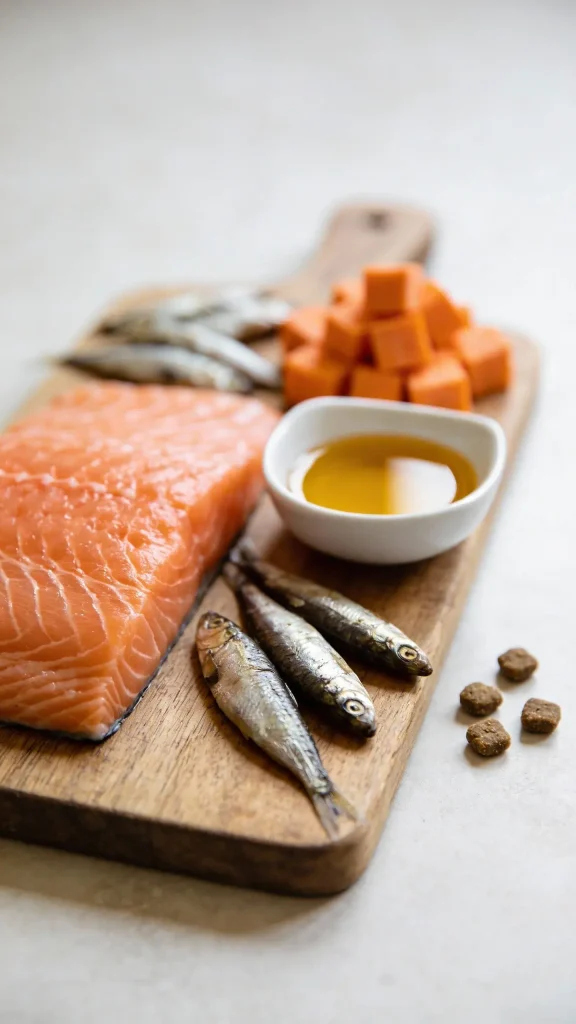
A genuinely useful fish-based diet isn’t simply one with a picture of salmon on the packaging.
Think about your dog’s previous diet, suspected triggers, nutritional requirements, and whether you’re choosing everyday food or performing a formal elimination trial.
Quick checklist:
- Clearly identified fish protein
- Ingredients that fit your dog’s known dietary restrictions
- Appropriate EPA and DHA sources
- Complete-and-balanced nutrition when used as the primary diet
- Appropriate formulation for your dog’s life stage
- Reliable ingredient and manufacturing controls
- No unnecessary ingredients that conflict with a veterinarian-directed elimination trial
If a food is being used specifically to diagnose a suspected food allergy, veterinary therapeutic diets may have advantages because manufacturers can take additional measures to reduce cross-contamination.
Grain-Free vs. Grain-Inclusive
Grains aren’t automatically responsible for itchy skin.
Dogs can develop food allergies to individual ingredients, but avoiding every grain isn’t necessary unless there is a specific reason to do so.
Likewise, choosing grain-free food simply because it sounds more “natural” isn’t a reliable allergy strategy.
The FDA has investigated reports of canine dilated cardiomyopathy involving various diets, including many grain-free diets containing substantial amounts of peas, lentils, or other pulses. The agency has stated that the relationship is complex and has not established that grain-free diets are inherently unsafe for every dog.
For a dog with suspected food allergy, focus on the actual ingredients involved and the nutritional adequacy of the diet rather than treating “grain-free” as synonymous with “hypoallergenic.”
FAQ
How long until I see improvements in my dog’s skin and coat?
It depends heavily on what’s causing the skin problem.
A diet change won’t necessarily improve itching if the real cause is fleas, environmental allergy, infection, or another condition.
For suspected food allergy, a proper elimination trial needs enough time to evaluate the response. Veterinary sources note that skin-related trials may require many weeks, with some evidence suggesting that around 10 weeks may be needed to identify most food-allergic dogs.
Coat appearance can also take time because damaged or dull hair doesn’t instantly become healthy simply because the diet changes.
Can I use fish oil instead of switching foods?
Sometimes fish oil can provide useful EPA and DHA, but it doesn’t replace an elimination diet when a food allergy is suspected.
If your dog’s current food contains an ingredient they’re reacting to, adding fish oil doesn’t remove that trigger.
Fish oil may be a nutritional addition for some dogs, but choosing the underlying diet still comes first.
What if my dog is allergic to fish?
That’s possible.
Fish is not automatically hypoallergenic, and dogs can develop reactions to many different dietary proteins. In fact, Merck notes that dogs can react to essentially any protein source, even though some ingredients are reported more frequently as allergens.
If fish appears to cause problems, your veterinarian may recommend a genuinely novel protein based on your dog’s dietary history or a hydrolyzed diet.
The right alternative depends on what your dog has already eaten.
Will fish food make my dog’s breath smell fishy?
It can happen.
Fish-based foods or toppers may leave a stronger odor around the mouth, especially immediately after eating. But persistent bad breath shouldn’t simply be blamed on fish.
Dental disease is a very common cause of chronic unpleasant breath, so regular dental care and veterinary dental examinations remain important.
Is canned fish safe as a topper?
Plain canned fish can be used for some dogs, but choose carefully.
Look for fish packed in water without added salt, sauces, onion, garlic, spices, or other ingredients that aren’t appropriate for dogs. Remove any bones that could pose a problem and introduce new foods gradually.
Keep toppers modest because too many extras can unbalance the overall diet or contribute unnecessary calories.
During an elimination diet, only use canned fish if it is specifically compatible with the prescribed trial.
Do I need a vet’s approval before switching?
A routine food transition doesn’t necessarily require a veterinary appointment for an otherwise healthy dog.
However, veterinary guidance is especially valuable when your dog has persistent itching, recurring ear infections, chronic diarrhea or vomiting, unexplained weight changes, or suspected food allergy.
A veterinarian can help determine whether you’re dealing with food allergy, environmental allergy, parasites, infection, or another condition and can recommend an appropriate elimination diet when necessary. Food allergy is confirmed through improvement on an elimination diet followed by controlled dietary challenge—not simply because symptoms happen to improve after switching to fish.
Conclusion
Fish can be a nutritious part of a dog’s diet and can provide valuable protein and omega-3 fatty acids, particularly EPA and DHA. But the biggest mistake is treating “fish-based” as automatically synonymous with “allergy-friendly.”
Choose the diet based on your dog’s history and nutritional needs, read the entire ingredient list, transition gradually, and keep extras under control.
If you’re dealing with persistent itching or recurring digestive problems, don’t keep cycling through foods indefinitely. A properly managed elimination diet with veterinary guidance can help determine whether food is actually part of the problem.
The goal isn’t simply a shinier coat. It’s finding a diet your dog can tolerate while still providing complete, balanced nutrition.