
5 French Bulldog Puppy Training Tips For A Well-behaved Companion
French Bulldog puppies have a way of winning people over almost immediately. They are affectionate, playful, curious, and full of personality. That same confidence and curiosity can also lead to chewing, jumping, barking, and ignoring you when something more interesting catches their attention.
The good news is that you don’t need complicated training techniques to raise a well-mannered Frenchie. Start early, keep lessons short, use rewards generously, and make good behavior part of your puppy’s everyday routine.
Start with the basics: routines, rules, and the right mindset

French Bulldogs generally do best when they understand what is expected of them. A predictable routine also makes it easier for a young puppy to learn when it is time to eat, sleep, play, go outside, and settle down.
Want a Better-Trained, Happier Dog?
Get practical guidance for obedience, behavior, and everyday dog training with a collection of helpful training guides designed for dog owners.
This post may contain affiliate links. If you purchase through our link, we may earn a commission at no additional cost to you.
Disclosure: As Amazon Associates, we earn from qualifying purchases at no extra cost to you.
- Set a daily schedule: Keep meals, potty trips, naps, playtime, and training reasonably consistent from day to day.
- Keep sessions short: A few minutes of focused practice is often more productive than one long lesson.
- Reward what you want: Praise, treats, toys, and attention can all reinforce behaviors you want your puppy to repeat.
Why your attitude matters
Your puppy is learning from your reactions as much as from your instructions. Staying calm helps keep training productive, especially when your Frenchie makes a poor choice.
Instead of becoming frustrated when your puppy grabs something inappropriate or loses focus, calmly interrupt the behavior and redirect them toward something acceptable. A relaxed approach makes learning easier and helps your puppy associate training with positive experiences.
House training without the tears (yours or theirs)
Potty training is mostly about supervision, timing, and repetition. A young French Bulldog doesn’t yet have the bladder control of an adult dog, so accidents are part of the learning process.
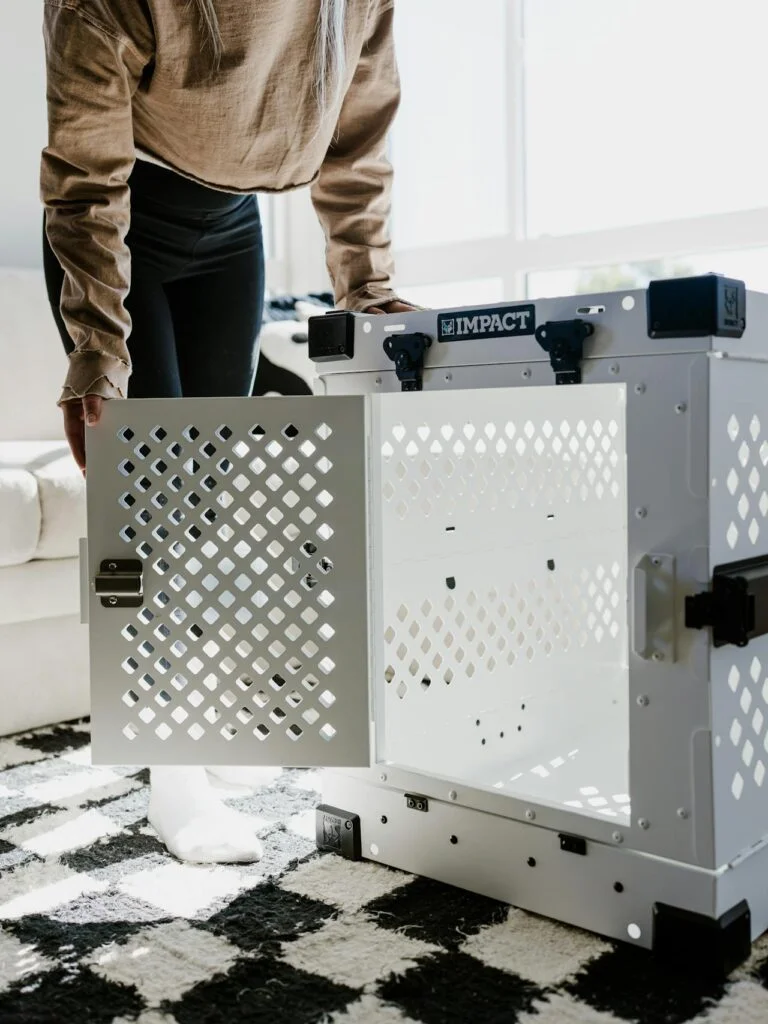
- Crate training = your best friend: A properly sized crate can provide a safe sleeping area and help establish a consistent potty routine. Your puppy should have enough room to stand, turn around, and lie down comfortably.
- Take them out often: Potty trips are especially important after waking up, eating, drinking, playing, and sleeping. Young puppies may need to go outside frequently throughout the day.
- Throw a party for success: When your puppy finishes outside, reward them promptly with praise and a small treat. Immediate feedback makes the connection much clearer.
- Missed the mark?: Clean accidents thoroughly with an enzymatic cleaner and continue the routine. Avoid punishment, which can make puppies fearful of eliminating around people.
Nighttime game plan
Take your puppy outside shortly before bedtime and keep nighttime potty trips quiet and boring. If your puppy is still very young, you may need one or more overnight trips until they can comfortably make it through the night.
Avoid turning nighttime bathroom breaks into play sessions. Take them out, let them eliminate, praise quietly, and return to bed.
With maturity and consistency, nighttime interruptions should gradually become less frequent.
Teach the essentials: sit, stay, come—without boring your pup
French Bulldogs can learn quickly, but motivation matters. Use rewards your puppy actually cares about and make each exercise easy enough to succeed.
- Sit: Hold a small treat near your puppy’s nose and slowly move it upward and slightly backward. When your puppy naturally lowers into a sit, mark the behavior and reward.
- Stay: Begin with only a very short pause. Ask for a sit, give your stay cue, wait briefly, and then release your puppy. Increase the duration gradually rather than expecting a long stay immediately.
- Come: Practice indoors first. Move a short distance away, use an upbeat voice, and reward your puppy enthusiastically when they come toward you.
Leash manners without the tug-of-war
Begin leash training in a quiet area where your puppy can concentrate.
Reward your Frenchie for walking near you with a loose leash. If the leash becomes tight, stop moving and wait for your puppy to reconnect with you. Once the leash loosens, continue walking.
You can also change direction frequently and reward your puppy for following. This teaches them that paying attention to you helps keep the walk moving.
Socialization: confident, not chaotic
Early socialization helps your French Bulldog become familiar with the people, animals, sounds, places, and handling experiences they may encounter throughout life.
The objective isn’t to overwhelm your puppy with constant activity. Instead, introduce new experiences gradually and make them as positive and manageable as possible.
- Quality over chaos: Choose calm environments and controlled interactions instead of exposing your puppy to overwhelming crowds or uncontrolled dog play.
- Pair with treats: When your puppy notices something new, offer a reward if they remain relaxed. This can help create positive associations with unfamiliar sights and sounds.
- Handle with care: Gently touch paws, ears, face, collar, and other areas while offering treats so your puppy becomes comfortable with routine handling.
Red flags to watch
Watch your puppy’s body language during new experiences. Hiding, freezing, persistent barking, trying to escape, excessive trembling, or refusing food can indicate that the situation is too intense.
If that happens, increase the distance or move to a quieter environment. Give your puppy time to relax before trying again.
Socialization works best when your puppy gradually learns that unfamiliar experiences are manageable and safe.
Break the big three: nipping, chewing, and jumping
Young puppies naturally investigate their surroundings with their mouths and bodies. Your job is to show them which behaviors are appropriate.
Nipping
If your Frenchie puts their teeth on your hands during play, calmly stop the interaction and redirect them to an appropriate toy.
When your puppy chooses the toy instead, praise them and continue playing. Repeatedly reinforcing appropriate chewing gives your puppy a clearer alternative to biting hands or clothing.
Chewing
Keep several puppy-safe chew options available and rotate them to maintain interest.
If your Frenchie grabs something they shouldn’t have, avoid chasing them around the house. Instead, offer a treat or another desirable item in exchange, then redirect them toward an appropriate chew.
Also manage the environment by keeping shoes, cords, children’s toys, and other tempting objects out of reach.
Jumping
Jumping often continues because it successfully earns attention.
When your puppy jumps, avoid rewarding the behavior with excited interaction. Wait for all four paws to return to the floor, then immediately reward calm behavior.
You can eventually ask for a sit before greetings so your Frenchie has a specific behavior to perform when meeting people.
Frenchie-specific care: train with their body in mind
French Bulldogs have physical characteristics that should be considered during training and exercise. Their short muzzle can make it harder for them to cool themselves efficiently, particularly in hot or humid conditions.
- Short noses, short workouts: Keep training and exercise sessions moderate, especially during warm weather. Choose cooler parts of the day for outdoor activities.
- Small rewards: Use tiny treats during repeated training sessions. French Bulldogs can gain excess weight relatively easily, and maintaining a healthy body condition is important.
- Watch for fatigue: Heavy or unusual panting, excessive slowing, weakness, or difficulty recovering after activity means it is time to stop and cool down.
- Use suitable equipment: A properly fitted harness may be preferable for many French Bulldogs, particularly when walking. Discuss equipment choices with your veterinarian if your dog has breathing or airway concerns.
Mental exercise beats mile-long runs
Your Frenchie doesn’t need exhausting physical workouts to stay occupied.
Use food puzzles, scent games, scatter feeding, basic obedience exercises, toy searches, and trick training to give your puppy opportunities to use their brain.
A few minutes of focused mental activity can be surprisingly satisfying for a young dog.
Make good behavior a lifestyle, not a course
Training shouldn’t disappear once your puppy learns the basics.
Instead, incorporate the behaviors you have taught into ordinary situations. Ask for a sit before putting down dinner, waiting at the door, attaching the leash, or receiving attention.
Life itself can provide plenty of rewards.
- Work for real-world stuff: Ask for a simple behavior before giving your puppy something they already want.
- Randomize rewards: As behaviors become reliable, vary the reward between food, praise, toys, play, or access to something enjoyable.
- Keep practicing: A few repetitions throughout the day can maintain skills without turning your entire day into a training session.
When to get help
Some puppy behaviors need more than basic training.
If your French Bulldog shows persistent fear, serious resource guarding, intense reactivity, repeated attempts to bite, or behavior that is becoming difficult to manage, seek help from a qualified reward-based trainer or veterinary behavior professional.
Getting assistance early can prevent a manageable puppy behavior from becoming an established adult problem.
FAQ
How early should I start training my French Bulldog puppy?
Start as soon as your puppy comes home.
Early lessons can be very simple. Teach their name, establish a potty routine, introduce the crate positively, practice handling, and begin basic cues such as sit and come.
Short, successful sessions are more useful than expecting a young puppy to concentrate for long periods.
What treats work best for training?
Choose small treats that your puppy enjoys and can eat quickly.
Soft training treats or tiny pieces of suitable cooked meat can work well. Break larger treats into smaller pieces so you can reward frequently without giving your puppy excessive calories.
Keep particularly valuable treats for difficult exercises or distracting environments.
How much exercise does a Frenchie puppy need?
French Bulldog puppies generally do better with several short periods of age-appropriate activity rather than prolonged strenuous exercise.
Combine gentle play, short walks when appropriate, sniffing, and training games. Be especially careful with heat and humidity because French Bulldogs can be more vulnerable to overheating.
Your veterinarian can help you determine an appropriate exercise routine based on your puppy’s age and individual needs.
My puppy ignores me outside. What do I do?
Outdoor environments contain far more distractions than your living room.
Return to an easier setting and practice the behavior there first. Then gradually increase distractions: move from the house to a quiet yard, then to a calm outdoor area, and eventually to busier locations.
Use rewards that are valuable enough to compete with the environment and keep the sessions short.
Is crate training cruel?
Crate training can be a useful part of puppy training when the crate is introduced gradually and used appropriately.
Make it comfortable, provide safe enrichment, and allow your puppy to build positive associations with spending time there. Never use the crate as a place to frighten or punish your dog.
The crate should function as a safe resting space, not a substitute for exercise, interaction, or supervision.
How do I stop whining?
First, determine why your puppy is whining.
They may need to eliminate, be hungry, be uncomfortable, feel anxious, need rest, or simply want attention. Address legitimate needs first.
If the whining is attention-seeking, avoid immediately rewarding the noise with excitement or prolonged interaction. Wait for a brief moment of quiet and then calmly provide attention when appropriate.
If whining is persistent or accompanied by signs of distress, speak with your veterinarian or a qualified behavior professional to identify the underlying cause.
Wrapping it up
Training a French Bulldog puppy doesn’t require hours of drilling or harsh corrections. What matters most is creating a predictable routine, rewarding useful behaviors, introducing new experiences gradually, and keeping lessons short enough to hold your puppy’s attention.
Remember to consider your Frenchie’s physical limitations, particularly when exercising in warm weather. Give them plenty of mental enrichment, appropriate rest, and opportunities to practice good manners throughout the day.
Start with small lessons, repeat them consistently, and build difficulty gradually. Those everyday habits can help your playful little Frenchie grow into a confident and enjoyable companion.