18 Large Dog House Ideas Sized for Giant Breeds
Finding a dog house that genuinely works for a giant breed can be surprisingly difficult. Many ready-made shelters are designed for smaller dogs, while the extra-large options often look more functional than beautiful.
For a Great Dane, Mastiff, Newfoundland, Saint Bernard, Rottweiler, or another large breed, the shelter needs to offer more than four walls and a roof. There should be enough room to enter comfortably, stand, turn around, stretch out, and move between sheltered and open areas.
The good news is that a large dog house can also complement your backyard. From elevated cedar cabins and covered porches to modern lean-tos and spacious kennel-and-run combinations, these ideas show how a practical dog retreat can become part of your outdoor design.
Want a Better-Trained, Happier Dog?
Get practical guidance for obedience, behavior, and everyday dog training with a collection of helpful training guides designed for dog owners.
This post may contain affiliate links. If you purchase through our link, we may earn a commission at no additional cost to you.
Designing for Giants: Outdoor Architecture That Works
Large dog houses require a little more planning than standard backyard kennels. Before choosing a design, think about your dog’s adult size, the climate where you live, the available yard space, and whether the structure will be used year-round or mainly as a shaded outdoor retreat.
The best designs balance generous interior space with weather protection. A raised floor can help keep moisture away from the sleeping area, while a properly designed roof protects the entrance from rain and excessive sun.
A few important considerations include:
- Scale: Your dog should be able to stand naturally, turn around, lie down fully, and enter without squeezing through the doorway.
- Durable construction: Outdoor-grade wood, properly protected siding, and a weather-resistant roof can help the structure withstand changing conditions.
- Backyard style: Coordinating the shelter’s colors and materials with your home can make a very large structure feel intentional rather than out of place.
- Ventilation: Large dogs can become uncomfortable in poorly ventilated shelters, especially during warm weather. Cross-ventilation and shaded openings are important.
- Elevation: Keeping the sleeping floor above wet soil or grass can help reduce moisture, mud, and premature wood deterioration.
1. White Stucco Cabin with Black Spanish Tile Roof and Glass French Doors

📷 Image credit: @nennus_catio_houses
This upscale dog house has the appearance of a miniature backyard guest cottage. White stucco-style walls contrast with a dark tile roof, while full-height glass French doors create an unusually open and residential feel.
The dark-framed doors allow plenty of natural light into the interior and give the dog a broad view of the surrounding yard. Exterior wall lights add another decorative touch and can make the structure feel like a genuine extension of the home.
Design idea: If your house already has white exterior walls and dark roofing, repeating those colors on the dog shelter can make the entire backyard feel more coordinated.
For a climate-controlled structure, any air-conditioning equipment should be properly installed, safely protected from the dog, and sized for the enclosed space. Good insulation and ventilation still matter even when cooling is available.
2. Elevated Natural Pine Kennel with Extended Front Deck and Dark Charcoal Trim

📷 Image credit: @waggytaildepot
This natural-wood kennel combines a roomy cabin with a raised front platform. The warm pine finish gives the structure a traditional outdoor-cabin appearance, while charcoal trim adds a modern contrast.
The front deck is particularly useful for a large dog that enjoys lying outside while still having access to shelter. A railing around the platform creates definition without completely closing off the lounging area.
Why elevate a large dog house?
A raised base helps separate the wooden floor from damp ground. It can also improve drainage beneath the structure and reduce direct contact between the floor and wet soil.
For giant breeds, make sure any stairs or ramps are wide, stable, and designed with good traction. A heavy dog should never have to navigate a narrow or slippery access point.
3. Cream and Charcoal Extended-Porch Kennel with Textured Asymmetrical Roof

📷 Image credit: @dfwdoghouses
This cream-and-charcoal design combines an enclosed sleeping cabin with a generous covered porch. The asymmetrical roof gives the shelter architectural character while creating additional overhead protection.
The porch provides a useful middle ground between being completely indoors and lying directly in the sun or rain. A giant breed can stretch out beneath the roof while still enjoying an open view of the yard.
A covered porch is especially useful when you want more lounging space without making the enclosed sleeping chamber unnecessarily huge.
Why This Works
- Scale: The extended porch gives a large dog another comfortable resting area outside the main cabin.
- Color Anchor: Charcoal structural details add definition to the lighter exterior.
- Texture: The textured roofing contrasts nicely with smooth painted siding and gives the shelter a substantial outdoor-cabin appearance.
4. Light Gray Poolside Mansion with White Trim and Heavy Industrial Casters

📷 Image credit: @dfwdoghouses
This oversized gray shelter looks more like a compact backyard pavilion than a conventional dog house. White trim surrounds the large openings, while a broad covered porch creates plenty of space for relaxing.
Heavy-duty wheels underneath the structure are an interesting feature for a shelter of this size. If the frame and casters are engineered to safely support the total weight, mobility can make seasonal repositioning easier.
Design idea: A movable shelter can be useful when one section of your yard becomes too sunny during summer or exposed to harsh weather during winter.
Large windows also make the interior feel less enclosed and allow the dog to keep an eye on outdoor activity.
5. Slate Gray Cabin with Integrated Feeding Station and Clear Strip Curtains

📷 Image credit: @melissasullivanandco
This slate-gray cabin has a practical covered porch with a built-in feeding area. The elevated bowls keep food and water organized, while flexible entrance strips can provide some separation from wind and rain.
The wooden deck creates a cleaner transition between the yard and the sleeping area, which can be especially helpful with large dogs that bring plenty of mud indoors.
A dedicated feeding station is a smart addition when you want food and water kept outside the main sleeping compartment.
Just make sure water remains accessible and fresh throughout the day. In hot weather, shade and frequent water checks are particularly important.
Quick Decorating Tips
- Budget version: Add a simple freestanding bowl stand beside an existing kennel instead of modifying the structure.
- Renter tip: Use large planters around the entrance to visually frame the shelter without permanently altering the property.
- Pro move: Consider passive roof ventilation or a properly installed ventilation fan to improve airflow during warm weather.
6. Stained Redwood Cabin with Corrugated Metal Roof and Custom Name Lettering

📷 Image credit: @casasparaperros
The rich stained wood gives this cabin a warm, handcrafted appearance, while the corrugated roof adds a more contemporary farmhouse touch. Personalized lettering across the front makes the shelter feel custom-built rather than mass-produced.
A covered front area provides room for feeding bowls while also protecting them from some direct sun and rain.
A deep wood stain can emphasize natural grain while giving a large dog house a polished outdoor-cabin appearance.
For long-term durability, exterior wood should be finished with a product appropriate for outdoor use and maintained according to the manufacturer’s recommendations.
7. Varnished Amber-Stained Kennel with White Metal Roof and Integrated Lattice Window

📷 Image credit: @casasparaperros
This kennel combines amber-toned wood with a bright white corrugated roof. The contrasting roof makes the structure look lighter and more contemporary, while the decorative lattice window adds visual interest.
The broad floor plan is a useful concept for giant dogs because the available space can be distributed horizontally rather than creating a narrow, deep interior.
For extra-large dogs, prioritize comfortable width and an appropriately sized entrance rather than simply making the structure taller.
A washable interior floor can also make everyday maintenance easier, particularly during rainy seasons when muddy paws are unavoidable.
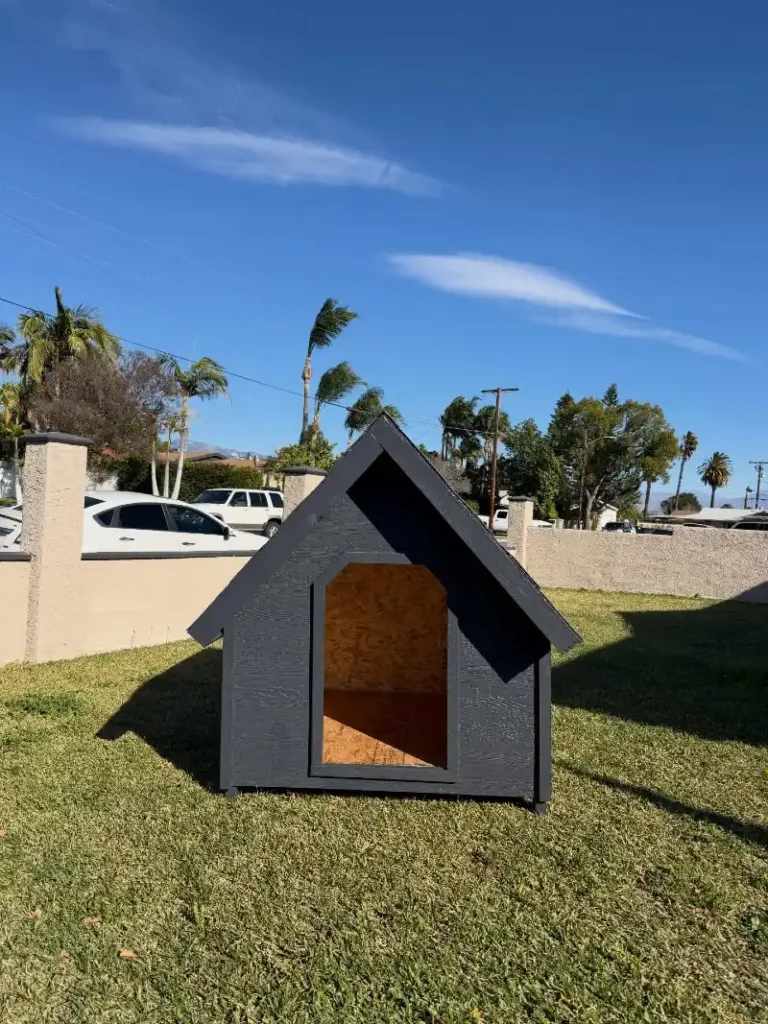
8. Deep Charcoal Minimalist Alpine Cabin with Textured Plywood Interior
📷 Image credit: @casitas.leyendaz
This minimalist A-frame shelter takes a very different approach. Instead of decorative trim, it relies on a strong silhouette, charcoal exterior, and simple wood interior.
The steep roof creates generous overhead space while giving the shelter a distinctive alpine-cabin appearance.
Minimalist construction can work beautifully when the architecture itself becomes the decoration.
If using plywood or OSB inside a dog shelter, choose appropriate construction materials and finishes and allow any coatings, adhesives, or sealants to fully cure before your dog occupies the space.
The dark exterior can also make the shelter visually recede into a landscaped backyard rather than becoming the first thing you notice.
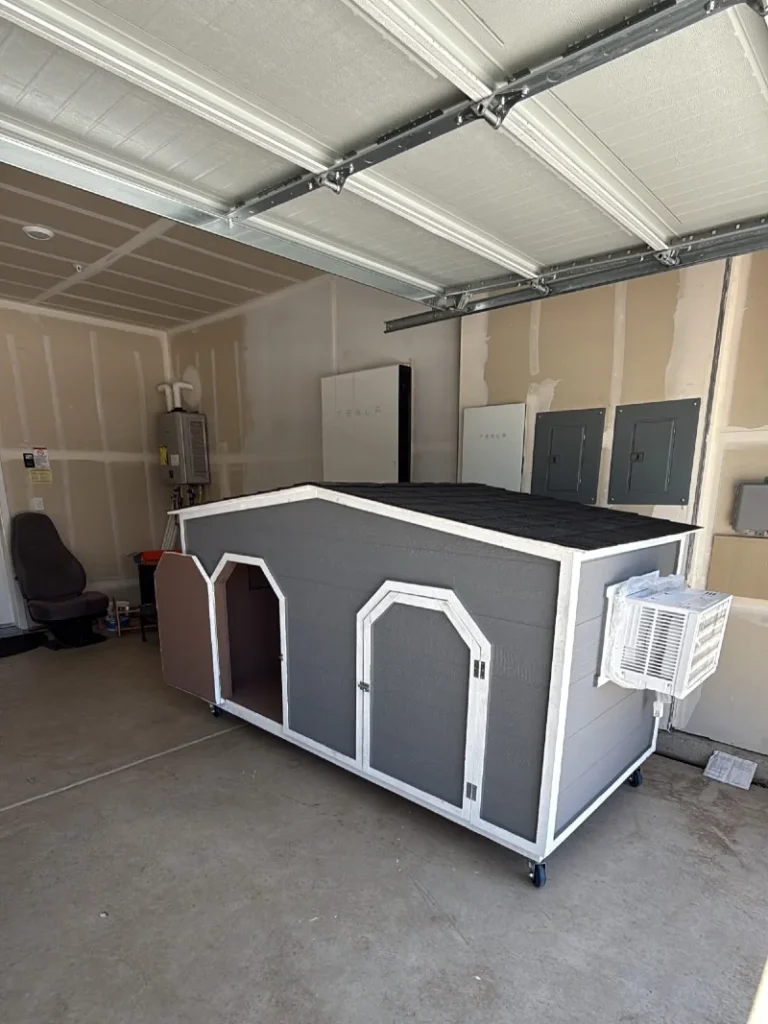
9. Muted Slate Double-Door Kennel with White Trim and Window AC Unit
📷 Image credit: @exotic_doghouses
This slate-colored kennel features two large arched openings and a compact cooling unit on the side. Its caster-supported base also gives the structure a mobile appearance.
Two entrances can be helpful in a large kennel because they make movement easier and provide alternative access points for cleaning and maintenance.
Wide doors are particularly valuable for giant breeds because shoulder clearance matters just as much as interior floor space.
If you install an air conditioner in a dog shelter, the unit and electrical components should be professionally installed and protected from chewing, moisture, and accidental contact. Temperature monitoring is also important because an enclosed shelter can heat up quickly if cooling fails.
Why This Works
- Scale: Broad arched openings provide comfortable access for large-bodied dogs.
- Renter Tip: A movable base can make repositioning easier where permanent construction is not practical.
- Texture: Dark roofing creates contrast against the painted exterior and gives the cabin a durable outdoor appearance.
10. Two-Story Taupe Bunkhouse with White Picket Railings and Climate Control

📷 Image credit: @hd_doghouse_jg
This imaginative two-level design resembles a miniature bunkhouse, complete with white railings and separate lounging areas.
The lower section provides a more enclosed retreat, while the upper platform creates an elevated viewing area for dogs that enjoy watching the activity around them.
A multi-level design can be visually impressive, but safety should come before appearance.
For giant breeds, stairs and elevated platforms need substantial structural support, secure railings, slip-resistant surfaces, and enough width for safe movement. Some dogs may be better suited to a single-level design, especially if they are older or have mobility limitations.
Quick Decorating Tips
- Budget version: Create separate lounging zones at ground level instead of building an elevated second floor.
- Renter tip: Place a large structure on a suitable removable surface rather than permanently altering the yard.
- Pro move: Use low-voltage outdoor lighting around the exterior rather than placing exposed electrical fixtures where a dog can reach them.
11. Warm Cedar Kennel with Dual Gable Slopes and Sheltered Front Deck

📷 Image credit: @patioheaterske
This cedar-toned kennel features a generous covered front deck and layered rooflines. The extended overhead section creates a shaded transition zone between the yard and the enclosed cabin.
An offset entrance can also help protect the doorway from direct weather exposure while creating a more interesting floor plan.
A covered porch is one of the simplest ways to increase the usable footprint of a large dog house without making the sleeping compartment enormous.
The porch should remain dry and stable, with boards or decking that provide reliable traction under wet conditions.
12. Walnut-Stained Kennel with Integrated Run and Elevated Dining Stand

📷 Image credit: @sandalo1001ideias
This setup combines an enclosed sleeping cabin with a secure outdoor run. The darker walnut finish gives the structure a substantial, custom-built appearance.
Inside the run, an elevated feeding station keeps the bowls organized and separates the feeding area from the surrounding ground.
Combining a sheltered room with a secure run can give a large dog more choice throughout the day.
A properly designed run should have strong, secure fencing with no openings that could allow a large dog to escape or become trapped. Rubber flooring can provide useful traction, but drainage and cleaning should also be considered.
Why This Works
- Scale: The run gives a giant breed room to stand, move, and relax outside the sleeping compartment.
- Texture: The rich timber finish gives the structure a warm, substantial character.
- Negative Space: Open fencing allows airflow and prevents the outdoor area from feeling enclosed.
13. Light Pine Twin-Door Mansion with White Corrugated Roof and Open Patio

📷 Image credit: @casasparaperros
This spacious pine structure features two separate entrances beneath a broad white metal roof. An open front patio adds another area where large dogs can relax without being completely enclosed.
A twin-door arrangement could work for households with multiple dogs when the interior is appropriately divided and each animal has enough individual space.
Two entrances can also make cleaning and daily access much easier in an oversized shelter.
The covered patio provides shade while the elevated base helps keep the wooden floor separated from wet soil. For hot climates, however, roof color alone should not be relied upon for cooling; shade, ventilation, airflow, and access to fresh water remain essential.
14. Charcoal Board-and-Batten Rancher with Natural Cedar Posts and Shingled Roof

📷 Image credit: @dfwdoghouses
This ranch-style dog house pairs dark board-and-batten siding with natural cedar posts and a sheltered front porch.
The combination creates a modern rustic look that can work particularly well alongside farmhouse, craftsman, or contemporary landscaping.
The front porch adds useful outdoor living space while keeping the main sleeping area protected from direct sunlight.
A flexible door flap can help reduce drafts, but it should never make the entrance difficult for a large dog to use. The base should also be elevated or otherwise protected from standing water.
15. Chestnut Slant-Roof Kennel with White Trim and Low-Profile Side Feeding Suite

📷 Image credit: @doghouse_ks
This chestnut-colored shelter uses a modern single-slope roof and a smaller side section for food and water bowls.
Separating the feeding area from the main sleeping chamber is a practical layout because spilled water is less likely to soak bedding.
A small exterior feeding station can make a large dog house feel more organized without taking valuable floor space away from the sleeping area.
The sloped roof also provides straightforward rain runoff, while the raised base creates separation from damp ground.
Quick Decorating Tips
- Budget version: Add a simple outdoor shelf or weather-resistant bowl stand beside the entrance.
- Renter tip: Use removable landscape pavers underneath the shelter to create a stable surface without permanent construction.
- Pro move: A motion-activated, weather-rated light can make the feeding area easier to see after dark.
16. White Siding Kennel with Black Trim, Shingled Gable Roof, and Dual Heavy-Duty Security Mesh Doors

📷 Image credit: @thewooofspot
This elongated kennel combines crisp white siding with dark trim and a traditional gable roof. Multiple access doors create a highly functional layout for a large shelter.
The metal security doors provide visibility and airflow while keeping the entrance defined. The extended footprint could be especially useful for a giant breed that needs more horizontal room.
When designing for powerful dogs, every door, latch, hinge, and mesh panel should be selected for the dog’s actual size and strength.
Raised construction also helps protect the floor from moisture. Make sure the support blocks or foundation are stable enough to handle the full weight of the structure and occupants.
17. Modern White Board-and-Batten Lean-To with Matte Black Trim and Side AC Unit

📷 Image credit: @hd_doghouse_jg
This modern lean-to shelter is positioned close to the main house, creating a compact footprint and a coordinated architectural appearance.
White board-and-batten siding contrasts with black trim and dark lighting fixtures, while the sloped roof gives the structure a contemporary profile.
Building the shelter near an existing wall can provide some protection from wind while helping a large structure blend into the architecture of the property.
If climate control is included, professional installation and proper ventilation are essential. An AC unit should never create an unsafe opening or expose the dog to electrical components.
Flexible entrance strips can provide some weather protection, but the dog should always be able to move through them comfortably.
18. White Gable Pavilion with Black Security Bars and Brass Latches

📷 Image credit: @thewooofspot
This final design takes the idea of a dog house in a more open direction. A white gable structure frames a shaded porch enclosed by dark vertical bars, with brass hardware adding a decorative contrast.
Rather than creating a completely enclosed cabin, the pavilion focuses on shade, airflow, visibility, and an open outdoor experience.
This style can work well as a daytime lounging area when weather conditions are mild and the dog has access to a more protected indoor space.
The bars should be spaced and constructed so the dog cannot get its head, paws, or other body parts caught between them. A secure latch is equally important for strong or determined dogs.
Raising the wooden structure away from damp ground can also help protect the lower frame from moisture.
Why This Works
- Negative Space: Open sides encourage natural airflow around the lounging area.
- Scale: The generous roof creates a comfortable shaded zone for large breeds.
- Color Anchor: Black structural details provide contrast against the white exterior and help the shelter coordinate with modern landscaping.
Final Thoughts
A giant dog deserves a shelter designed around its actual size—not simply a scaled-up version of a small kennel.
The best large dog house ideas combine comfortable proportions, durable construction, weather protection, ventilation, safe access, and practical maintenance. A covered porch can add valuable lounging space, while an elevated floor can help protect the sleeping area from moisture.
You can also make a very large shelter look intentional by matching its siding, roof, trim, or colors to the architecture already around your home.
Most importantly, remember that an outdoor dog house should complement your dog’s overall care rather than replace it. During dangerous heat, severe cold, storms, or other extreme conditions, bringing your dog indoors is often the safest choice.
With the right design, however, a spacious outdoor retreat can give a giant breed a comfortable place to relax while becoming a beautiful part of your backyard.