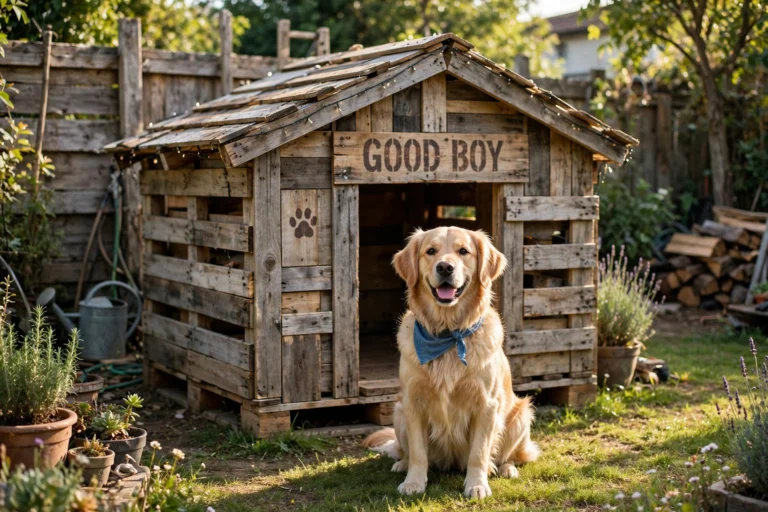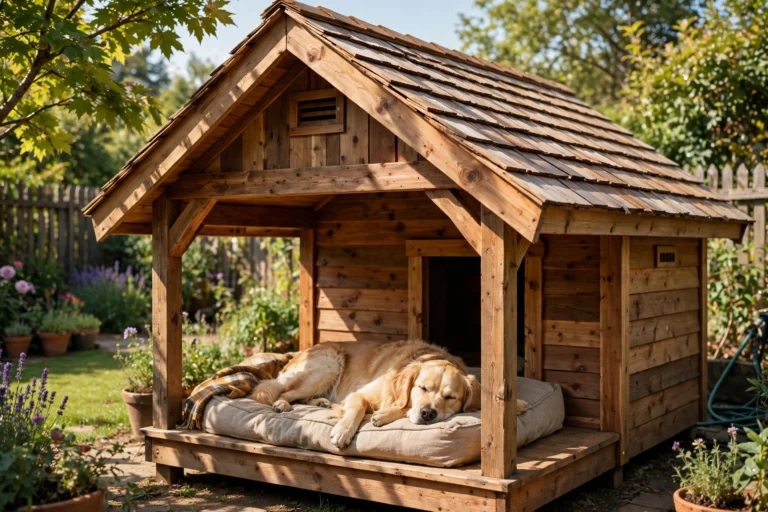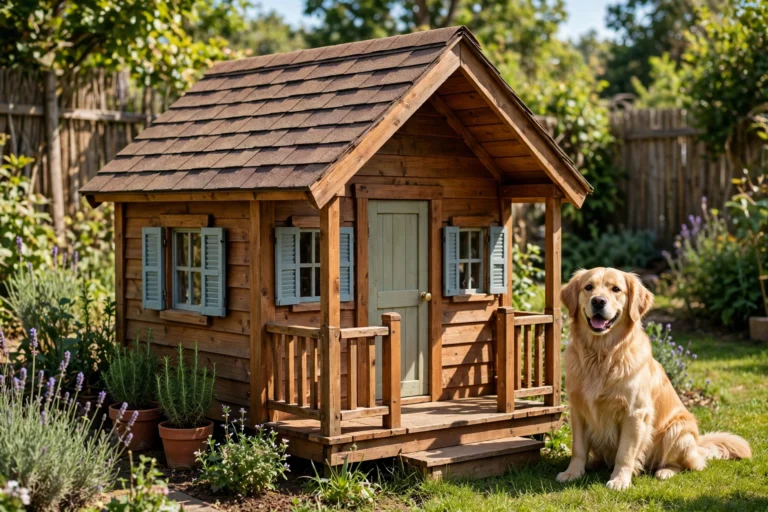

Dog House Size Guide
Getting the size right is the single most important decision you’ll make when choosing a dog house. Too big and your dog can’t stay warm; too small and they can’t move comfortably. This guide walks you through measuring your dog, understanding size charts, and picking dimensions that work in every season. A well-sized house also gets used more — dogs avoid shelters that feel wrong, and an unused dog house helps nobody.
1. Measure Your Dog Before You Shop

Grab a tape measure and note three numbers: your dog’s height (floor to top of head or ears, whichever is taller), length (nose to base of tail), and weight. Write these down before you look at a single dog house — they’re the foundation of every sizing decision that follows. For the most accurate height, have your dog stand naturally against a wall, mark the top of their head lightly with a pencil, then measure from the floor to the mark. If your dog is between sizes, the measurements below will tell you which way to lean.
Want a Better-Trained, Happier Dog?
Get practical guidance for obedience, behavior, and everyday dog training with a collection of helpful training guides designed for dog owners.
This post may contain affiliate links. If you purchase through our link, we may earn a commission at no additional cost to you.
2. The Golden Rule: Snug Beats Spacious
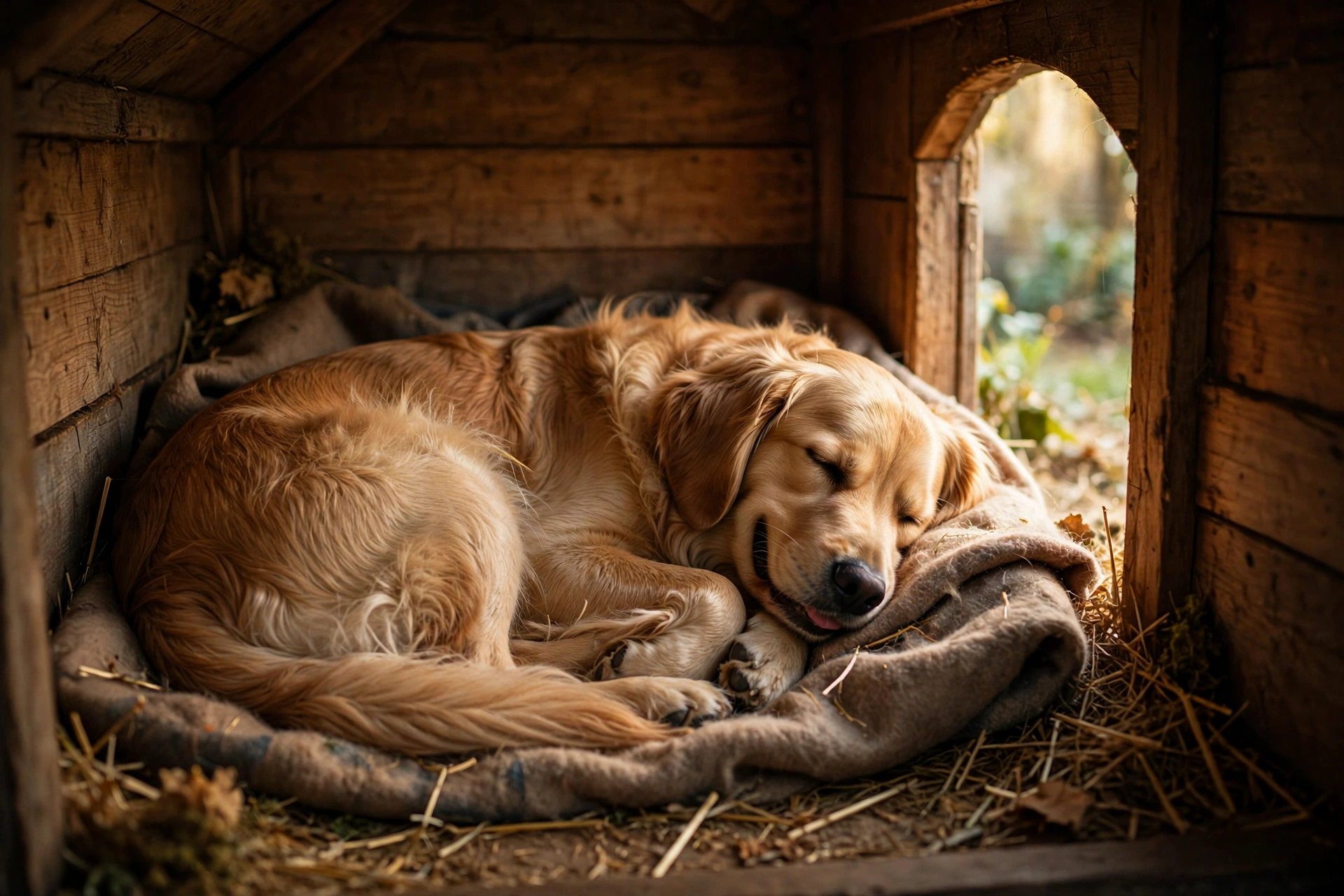
A dog house should feel like a den, not a ballroom. Dogs stay warm by heating the small pocket of air around their bodies, so an oversized house actually leaves them colder in winter. Aim for just enough room to stand, turn around, and lie down stretched out — nothing more. For more inspiration on right-sized designs, browse our dog house size ideas.
3. Door Size: The Most Common Mistake

The doorway should be about 75–80% of your dog’s shoulder height — tall enough to duck through comfortably, low enough to trap warm air inside. A door that’s too large is the number one reason dog houses fail in cold weather. Measure from the ground to your dog’s shoulders, multiply by 0.75, and that’s your ideal door height. In summer you can remove the flap or prop the opening wider, but in winter a smaller doorway with a flexible flap keeps the interior noticeably warmer.
4. Small Breeds: Chihuahuas to Beagles
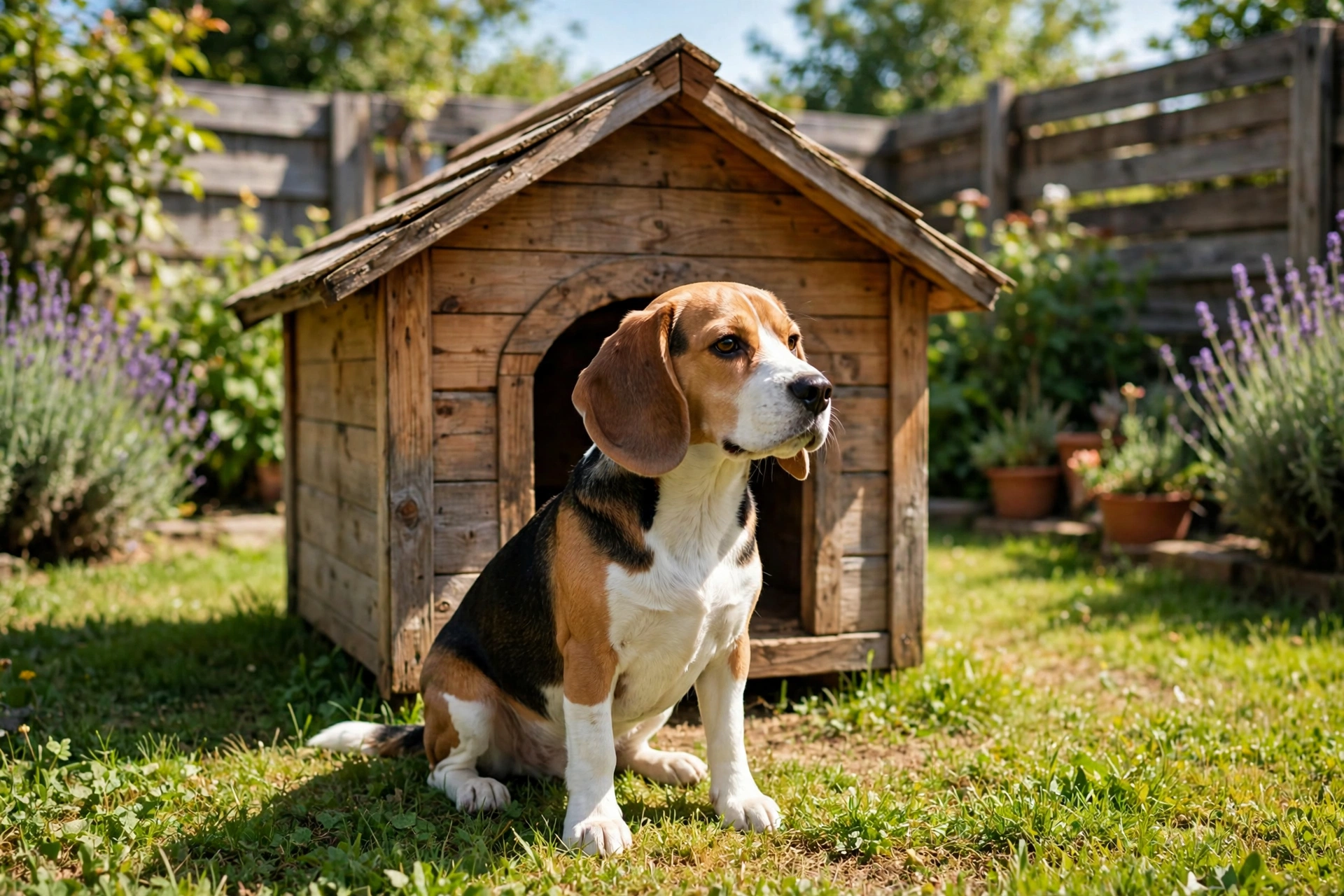
Dogs under 25 pounds do best in houses roughly 24 inches wide, 24 inches deep, and 20 inches tall. Breeds like Chihuahuas, Dachshunds, and Jack Russells fit perfectly in compact designs. Check out our small dog house ideas for styles built exactly for these dimensions.
5. Medium Breeds: Corgis to Border Collies
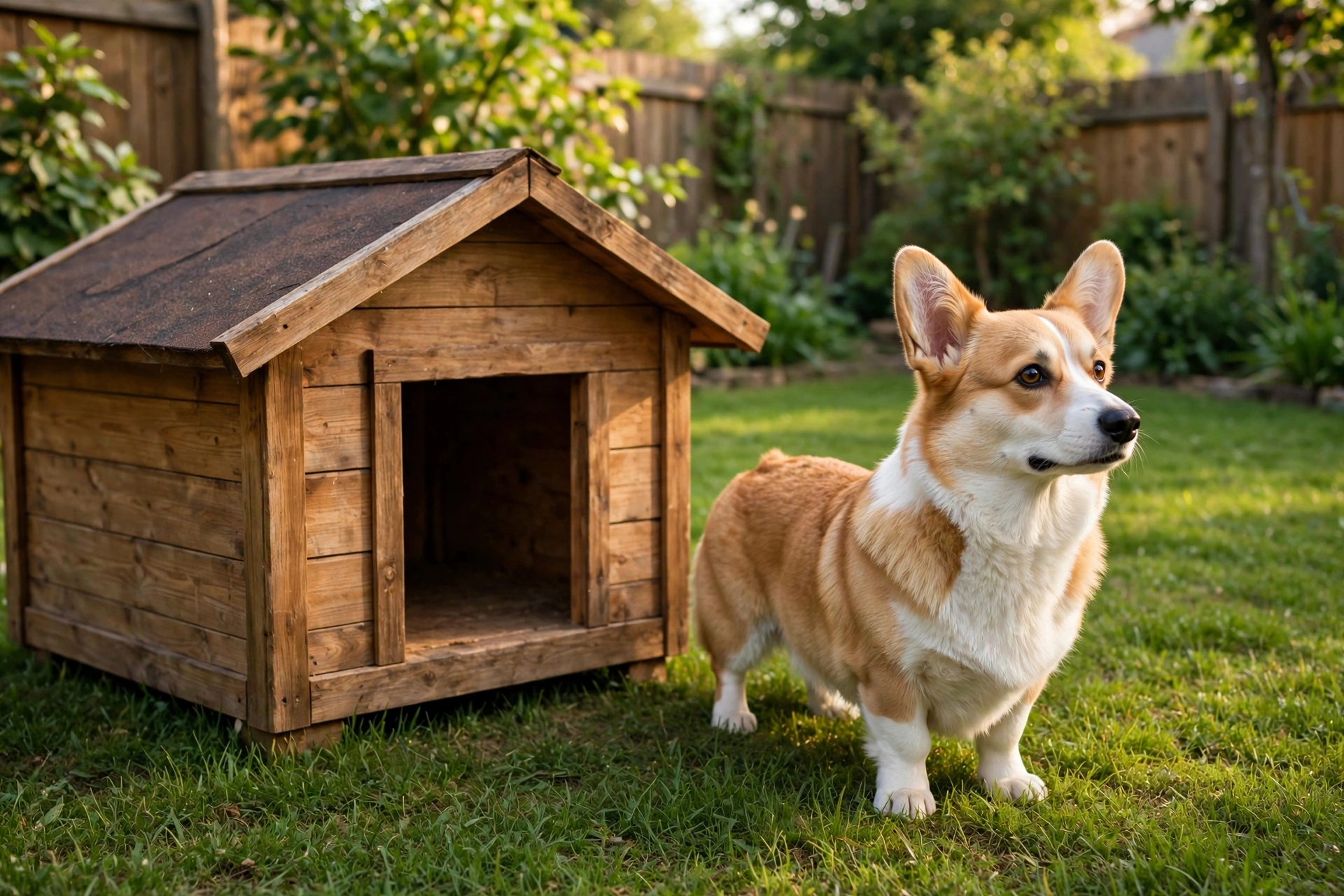
Dogs between 25 and 50 pounds need roughly 30 inches wide, 30 inches deep, and 26 inches tall. This range covers Beagles, Corgis, and Border Collies comfortably. Breeds like Australian Shepherds and English Bulldogs sit right in the middle of this range and rarely need adjustments. The doorway for this group usually lands around 14–16 inches tall — roomy enough for entry without dumping all the warm air.
6. Large Breeds: Labradors to German Shepherds
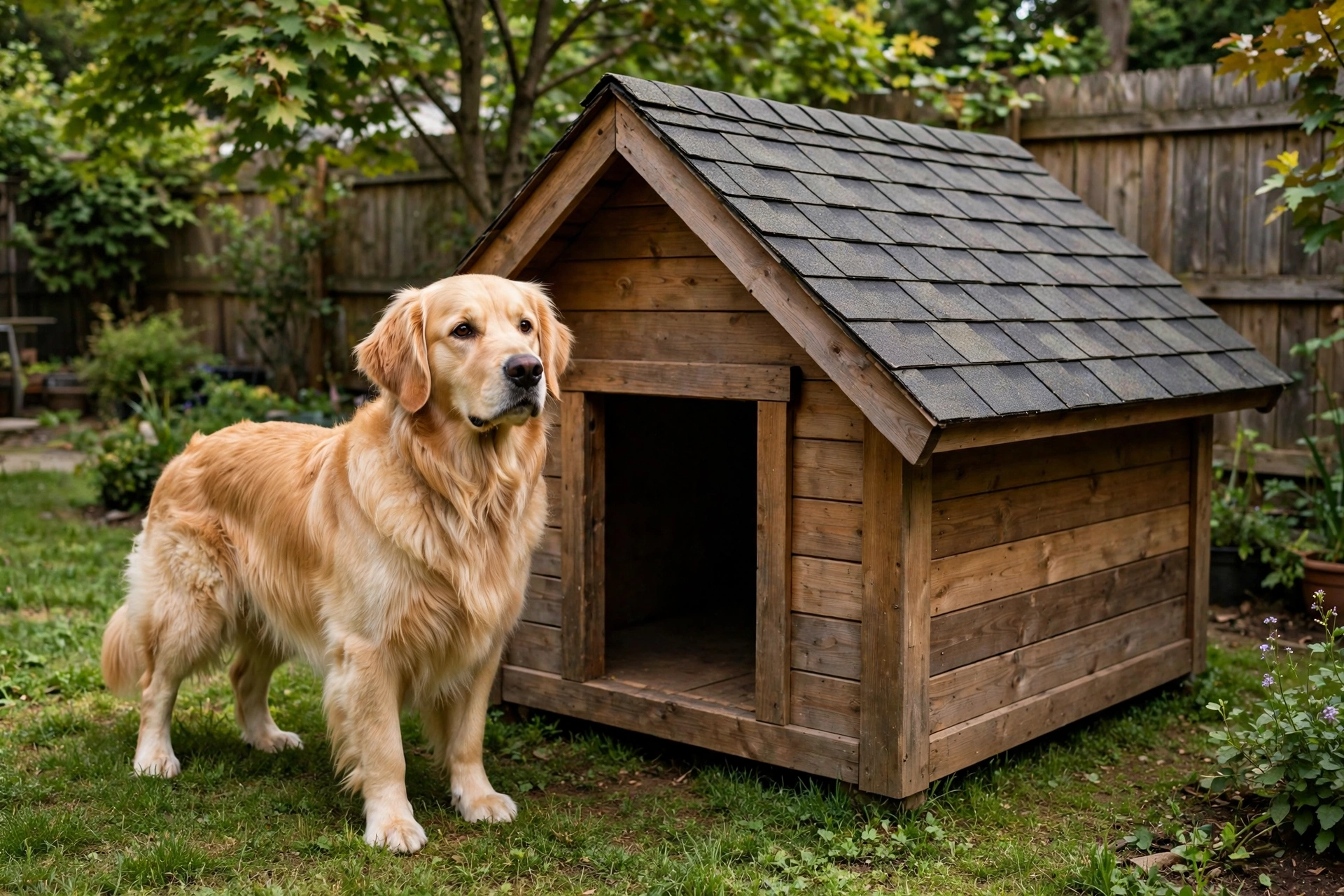
Dogs from 50 to 90 pounds need about 36 inches wide, 42 inches deep, and 32 inches tall. Labradors, Golden Retrievers, and German Shepherds fit this bracket. If your dog is on the upper end, see our large dog house ideas and dog house ideas for large dogs for designs with extra headroom.
7. Giant Breeds: Great Danes and Mastiffs
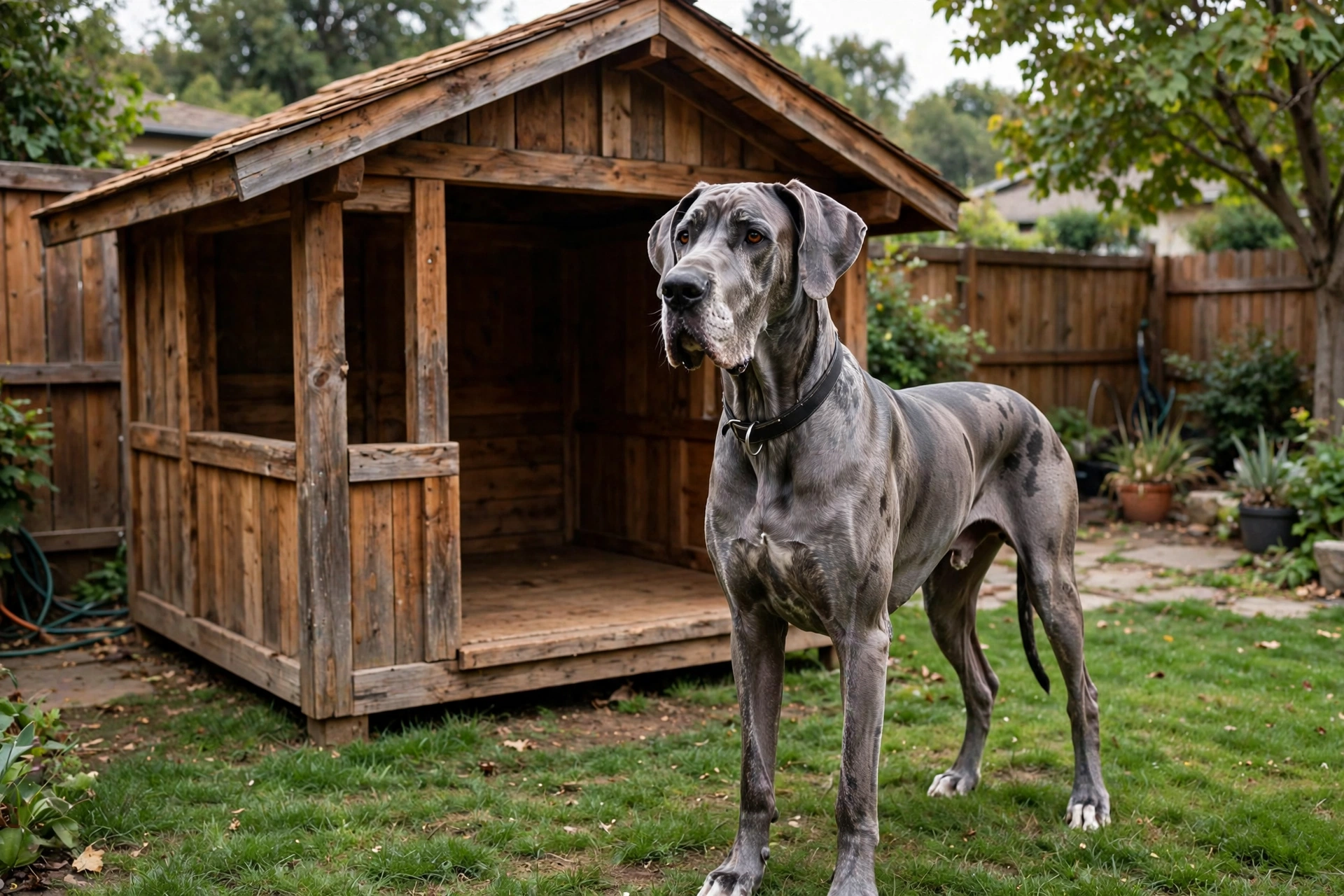
Dogs over 90 pounds need serious square footage: at least 48 inches wide, 48 inches deep, and 36+ inches tall. Great Danes, Mastiffs, and Saint Bernards should be able to stand fully upright with ears clear of the roof. Because stock options are limited at this size, many giant-breed owners go the DIY route — our DIY dog house ideas include several builds that can be scaled up for the biggest dogs.
8. Interior Height: The Stand-and-Turn Test

Your dog should stand with 2–3 inches of clearance above their head — enough to be comfortable, not so much that heat escapes upward. Watch your dog stand and turn in a circle; if they can do it without crouching, the height works. If their ears brush the roof when they perk up, the house is too short — but don’t overcorrect, since excess height just gives warm air somewhere to escape. Taller isn’t better here — every extra inch is warmth lost.
9. Interior Length: The Curl-Up and Stretch Test

Length should equal your dog’s nose-to-tail measurement plus about 25%. This gives room to curl up tight on cold nights and stretch out fully on warm ones. Too short forces an uncomfortable crouch; too long wastes the body heat your dog is generating. Measure twice, buy once.
10. Sizing for Puppies: Buy for the Adult

Puppies grow fast, so always size for the expected adult dimensions, not today’s tiny body. Check your breed’s average adult weight and height, then use the charts above. A temporary divider or stuffed bedding can make a big house feel cozy while your puppy grows — see our dog house ideas for puppies for grow-with-me setups.
11. Sizing for Two or More Dogs
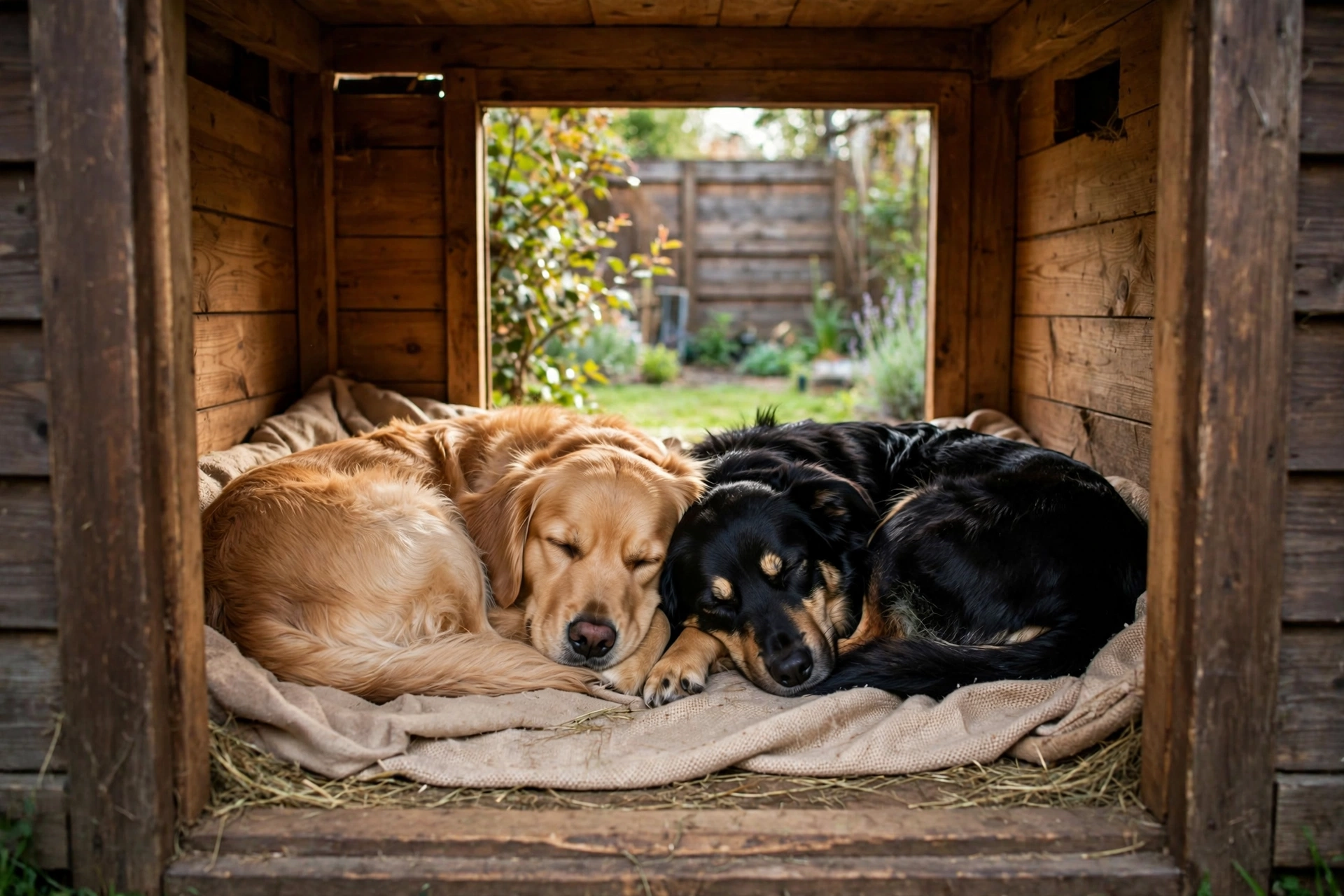
Sharing changes the math: add roughly 50% more floor space per additional dog rather than doubling it, since dogs that share naturally curl together for warmth. Two medium dogs do well in a house sized for one large dog. Watch how they settle on the first few nights: if both dogs can lie on their sides without pressing against the walls, the space is right. Make sure the doorway still fits the biggest dog in the group comfortably.
12. When to Size Up a Notch

Go one size larger if your dog is a senior who needs extra room to maneuver stiff joints, has an exceptionally thick coat that adds bulk, or simply sprawls rather than curls when sleeping. In warm climates, slightly more airspace also helps with ventilation. When in doubt between two sizes, pick the larger — comfort beats perfect efficiency.
Final Thoughts
The right dog house size comes down to three measurements and one principle: cozy, not cramped and not cavernous. Measure your dog, match the charts, keep the doorway modest, and you’ll have a house your dog actually wants to use — in January and in July. Revisit the fit once a year, especially for young dogs still filling out, and adjust bedding or dividers as needed.