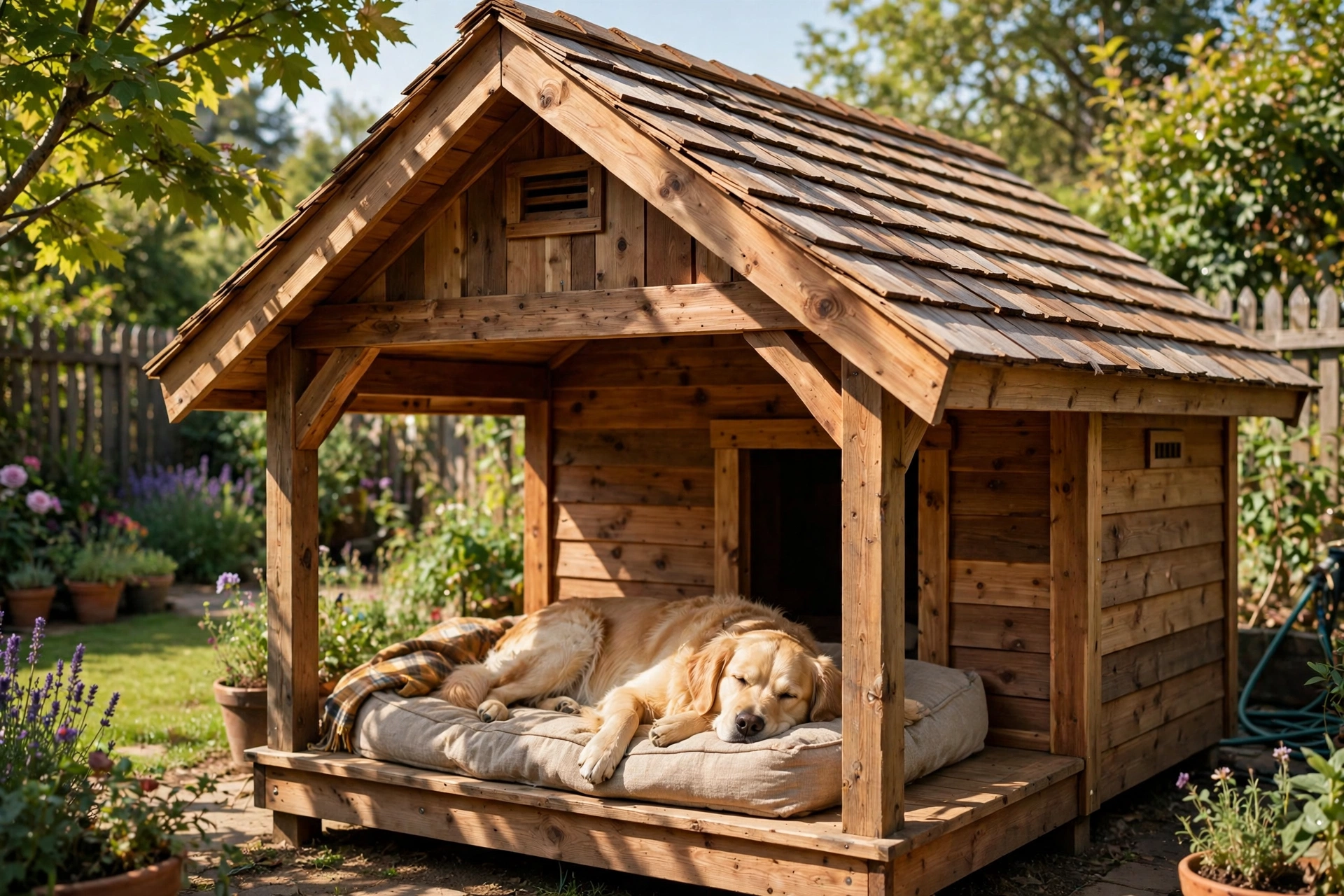
Dog House Ideas With Porch Roof
A porch roof on a dog house is one of those small additions that changes everything. It gives your dog a dry place to lounge when it is drizzling but not pouring, adds shade on hot afternoons, and — honestly — makes the whole structure look like a tiny home rather than a box with a hole in it. The porch roof is the little overhang or extended cover above the porch area of the house, and it comes in more styles than you might expect. Here are 12 porch roof ideas to inspire your build, from simple shingle overhangs to charming farmhouse awnings.
Classic Gable Porch Roof
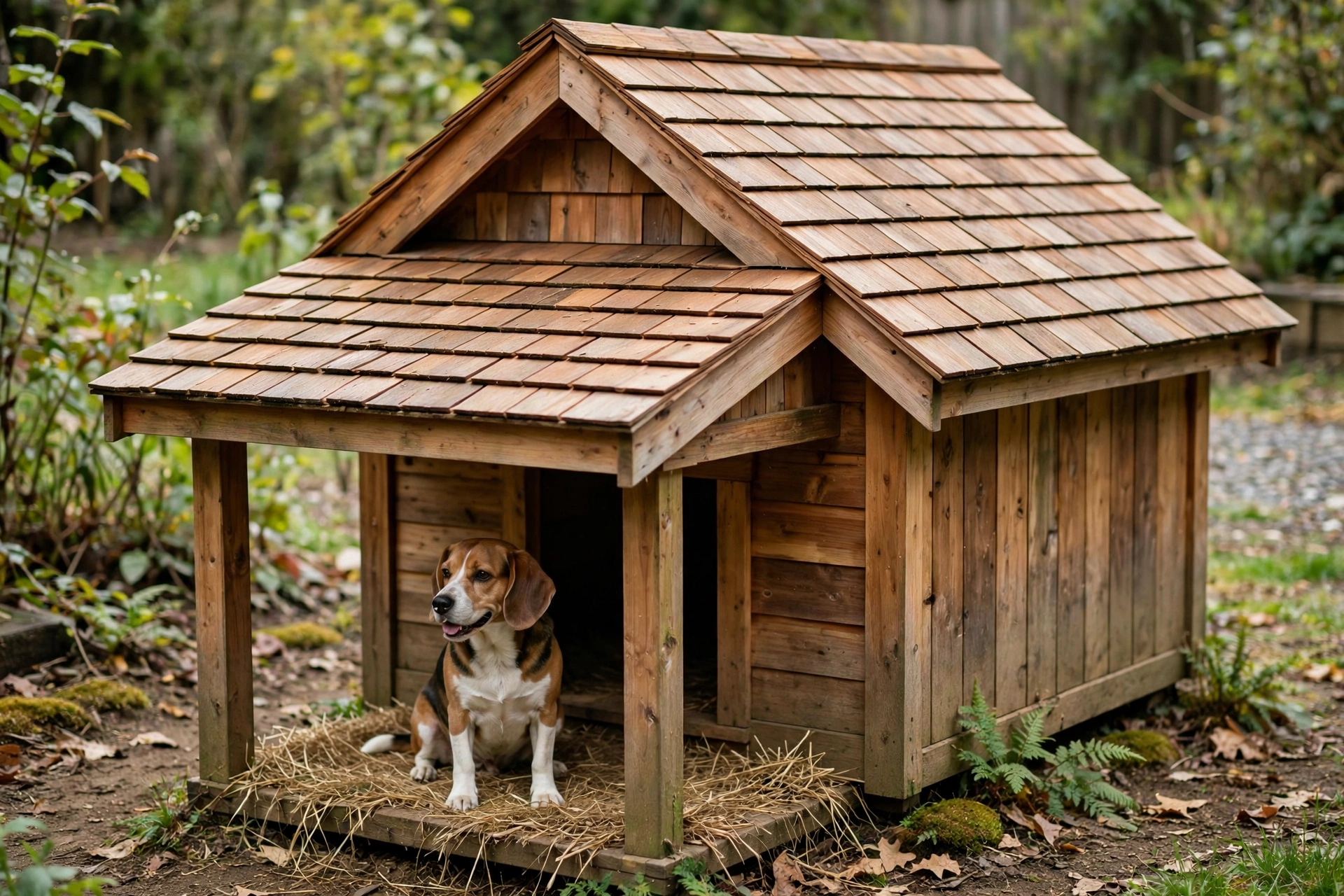
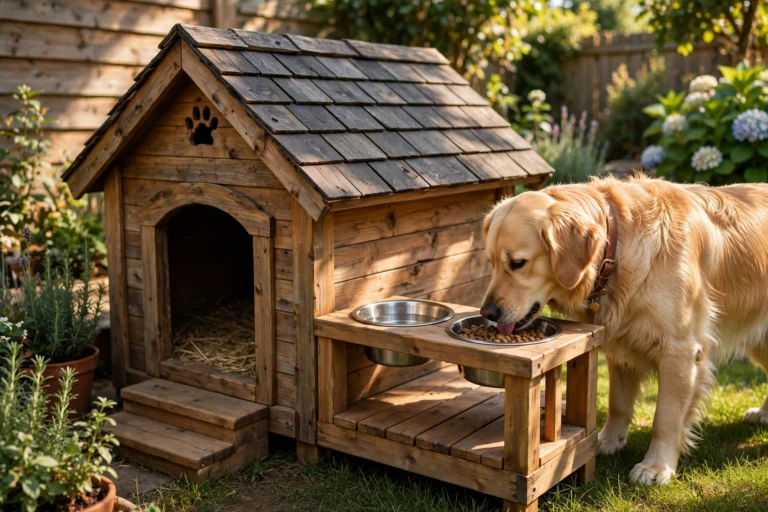
The gable porch roof is the timeless choice: a pitched roof section that extends forward over the porch at the same angle as the main roof. It looks like a miniature version of a real house, sheds rain away from the doorway, and gives your dog a tall, airy covered space to sit under. Cedar shingles on both the house and the porch extension tie the whole thing together visually. If you want a build that photographs beautifully and weathers well, this is the one. For more porch-centered designs, browse our dog house with porch ideas.
Want a Better-Trained, Happier Dog?
Get practical guidance for obedience, behavior, and everyday dog training with a collection of helpful training guides designed for dog owners.
This post may contain affiliate links. If you purchase through our link, we may earn a commission at no additional cost to you.
Shed-Style Sloped Porch Cover

A single-slope (shed) porch roof is the easiest option to build — one angled plane of roofing material, higher at the house wall and sloping down toward the porch edge. It directs rain away from the entrance, installs in an afternoon, and suits modern, minimalist dog houses especially well. Use metal roofing panels for a crisp contemporary look or shingles to match the main house. The clean line of the slope pairs beautifully with simple wooden walls.
Extended Eave Overhang
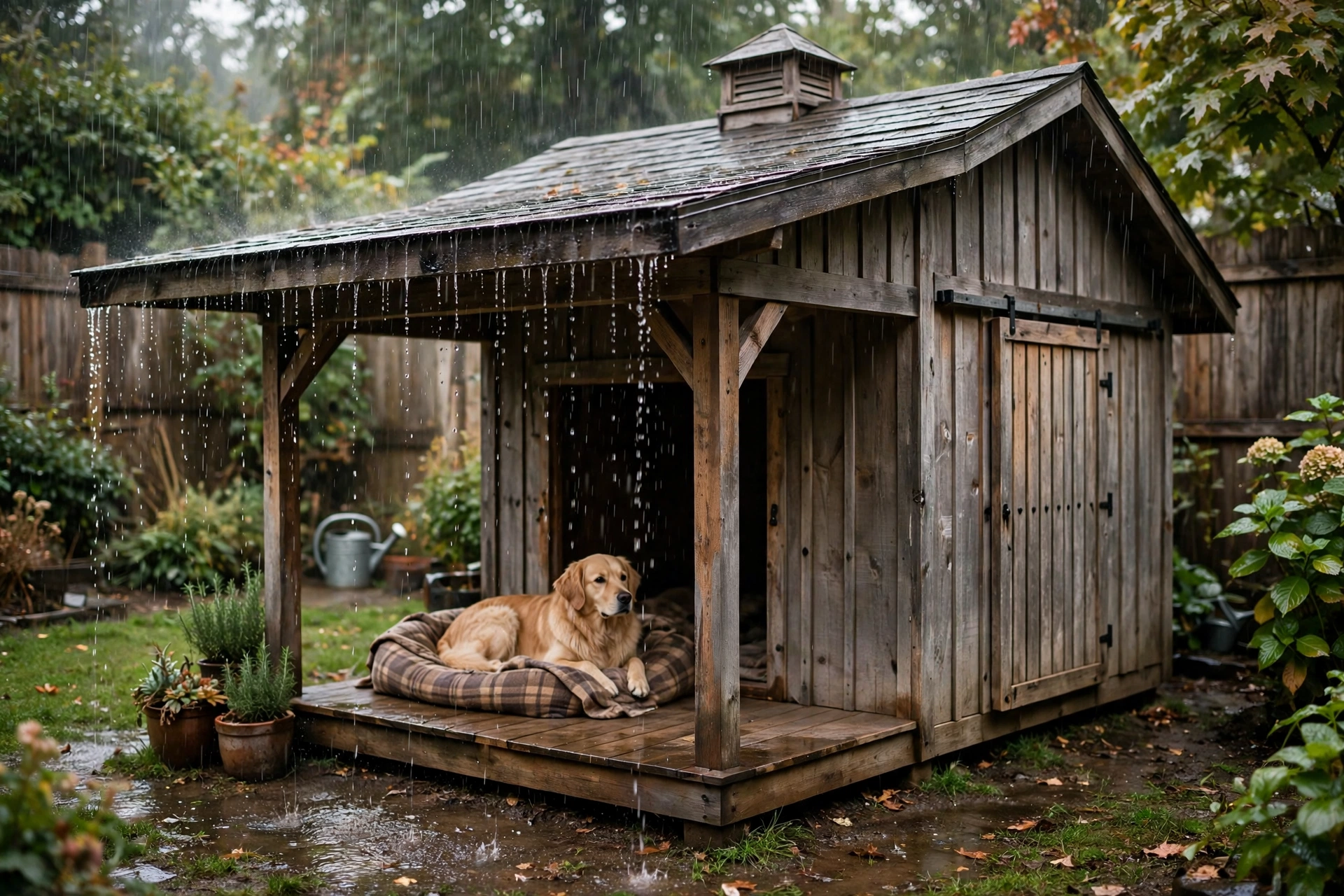
Instead of adding a separate roof structure, just extend the eaves of the main roof forward to cover the porch area. This creates a generous dry zone in front of the door without any extra framing, and it looks completely intentional — like the house was always meant to have a porch. A wide overhang of 12 to 18 inches keeps windblown rain off the entrance. This trick works best on gable and barn-style roofs, where the extension reads as a natural continuation of the design.
Metal Standing-Seam Porch Roof
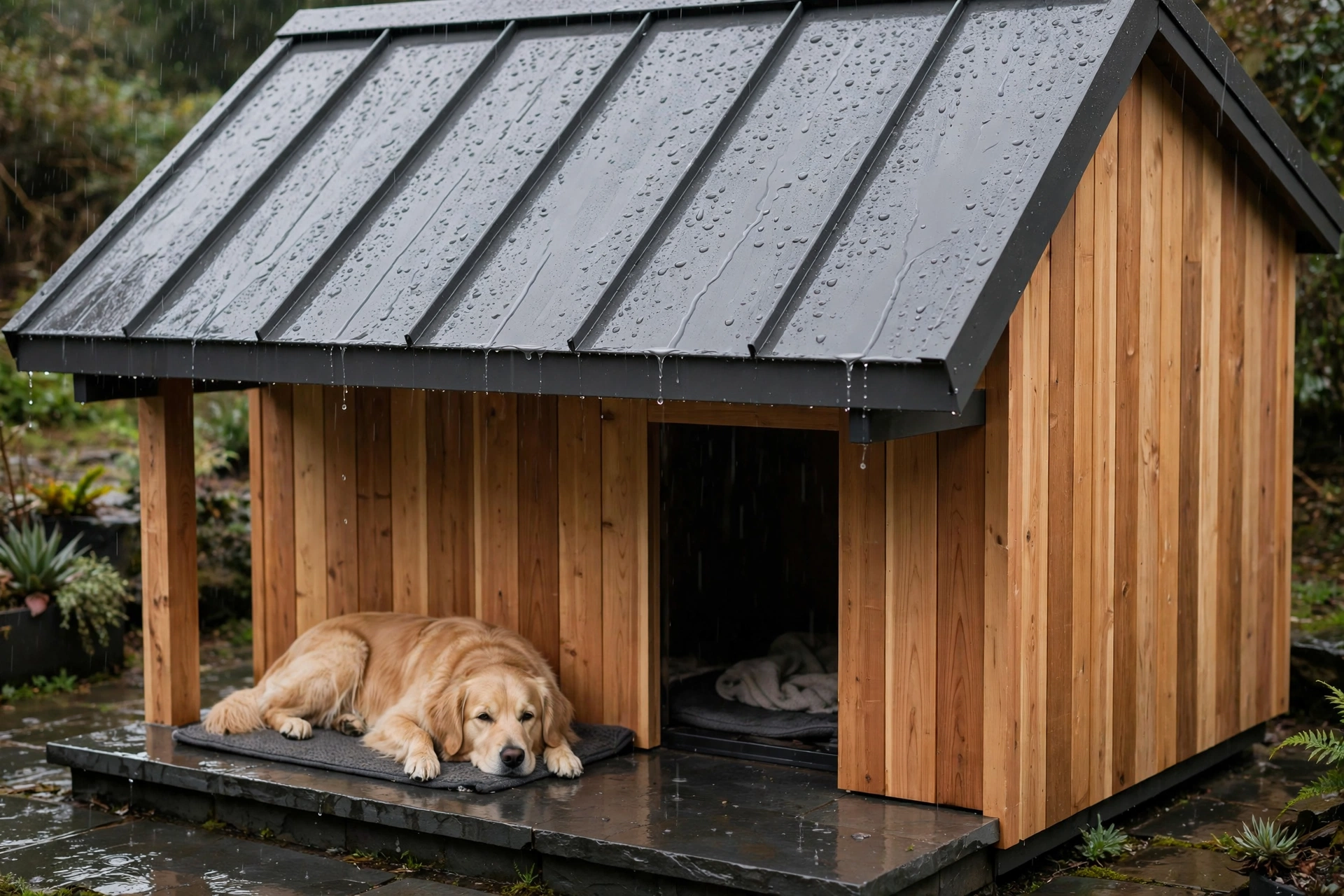
A standing-seam metal porch roof brings a modern, finished look and shrugs off weather for years. The raised seams channel water straight off the edge, and metal panels are lightweight enough to cantilever a good distance without heavy posts. Choose a color that contrasts with the wooden walls — charcoal over cedar, for instance — for a designer feel. Metal also stays cooler in direct sun than dark shingles, which matters for a porch your dog actually lounges under. Pair it with our rainproof dog house ideas for a fully weather-tight build.
Shingle-Matched Porch Awning
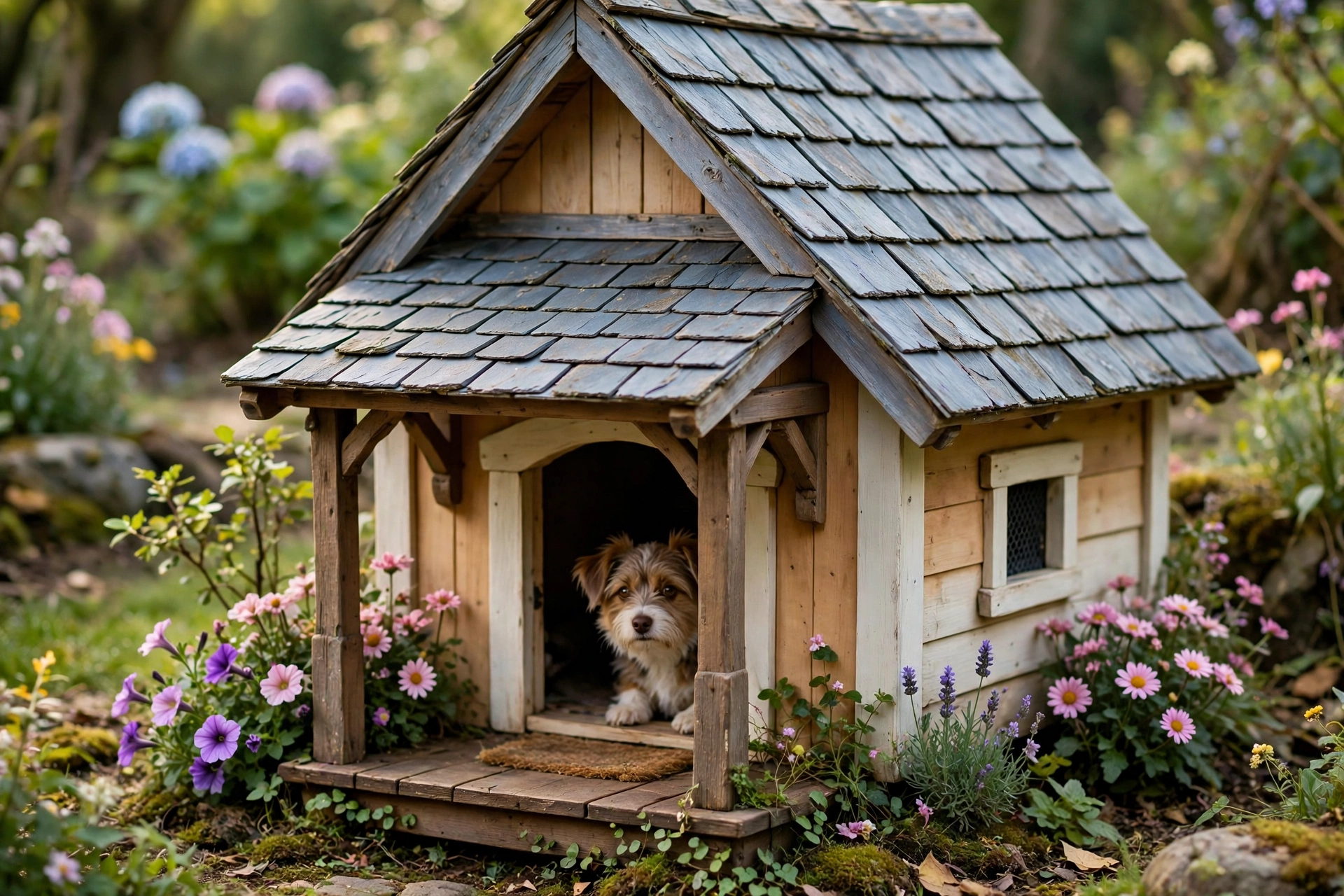
Match the porch roof material to the main house roof exactly — same shingle color, same pitch — and the porch reads as a true extension of the home rather than an add-on. This is the look most people picture when they imagine a charming dog house: a little cottage with a proper little porch. It takes a bit more measuring to align the courses, but the finished result is worth it. This approach is a natural fit for cottage dog house ideas, where cohesive styling is the whole point.
Curved Arched Porch Roof

An arched or gently curved porch roof softens the silhouette of the dog house and gives it a storybook feel. You can bend thin plywood over a curved frame or use flexible roofing felt to achieve the shape, then cover it with shingles or rubber roofing. The curve sheds water beautifully and adds headroom in the middle of the porch. This style suits whimsical, cute builds and looks especially sweet on small dog houses where every curve counts.
Flat Porch Canopy on Posts
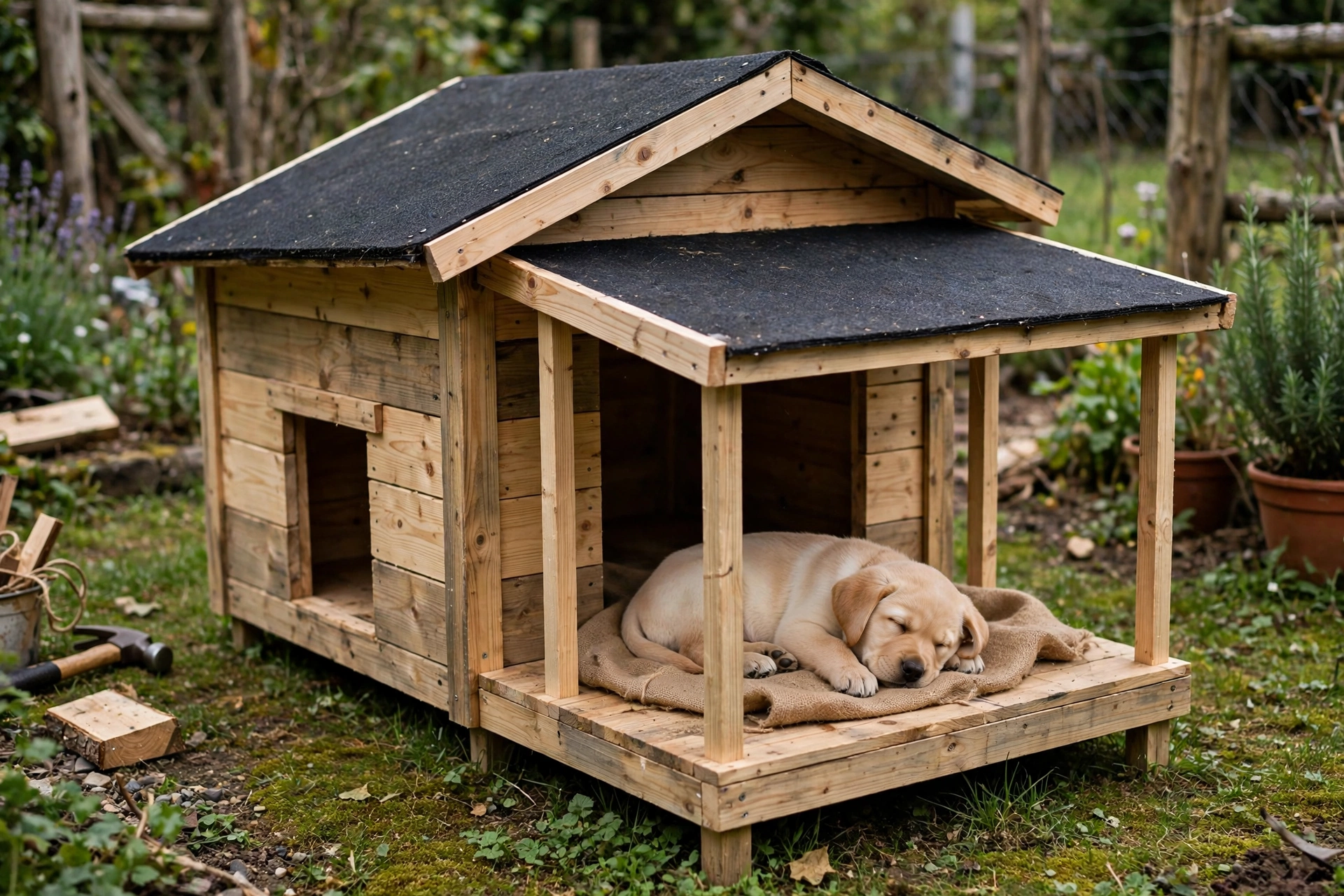
A simple flat porch canopy, held up by four slim posts and built like a little table top, is one of the most forgiving designs for beginners. Level everything, screw it down, and add a slight slope (a half inch of drop across the depth) so water runs off the front. Top it with outdoor-rated plywood and roofing felt, and you have a clean, shaded porch. The flat surface doubles as a sunny napping platform if your dog likes to climb — just make sure the roof of the main house is accessible and safe.
Clear Polycarbonate Porch Roof
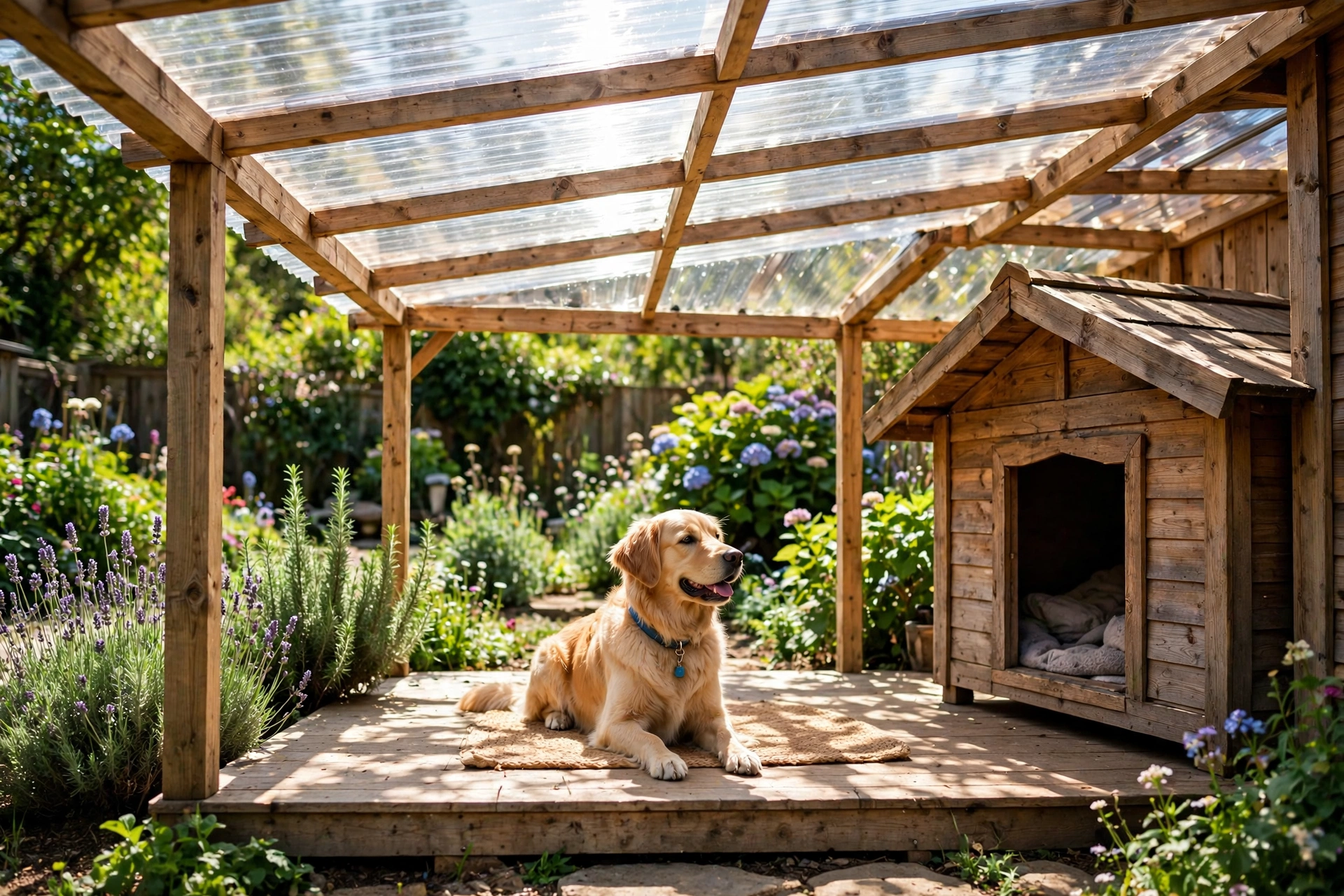
Clear polycarbonate panels let daylight flood the porch while keeping rain off — perfect if your dog house sits in a shady spot and you do not want to darken the entrance further. The panels are light, tough, and easy to cut with basic tools, and they give the build a bright, greenhouse-like quality. Slightly tinted panels cut glare while still admitting plenty of light. This is a great option for indoor-outdoor porch designs where you want the space to feel open. See also our dog house ideas with covered porch for fully enclosed options.
Farmhouse Corrugated Porch Roof
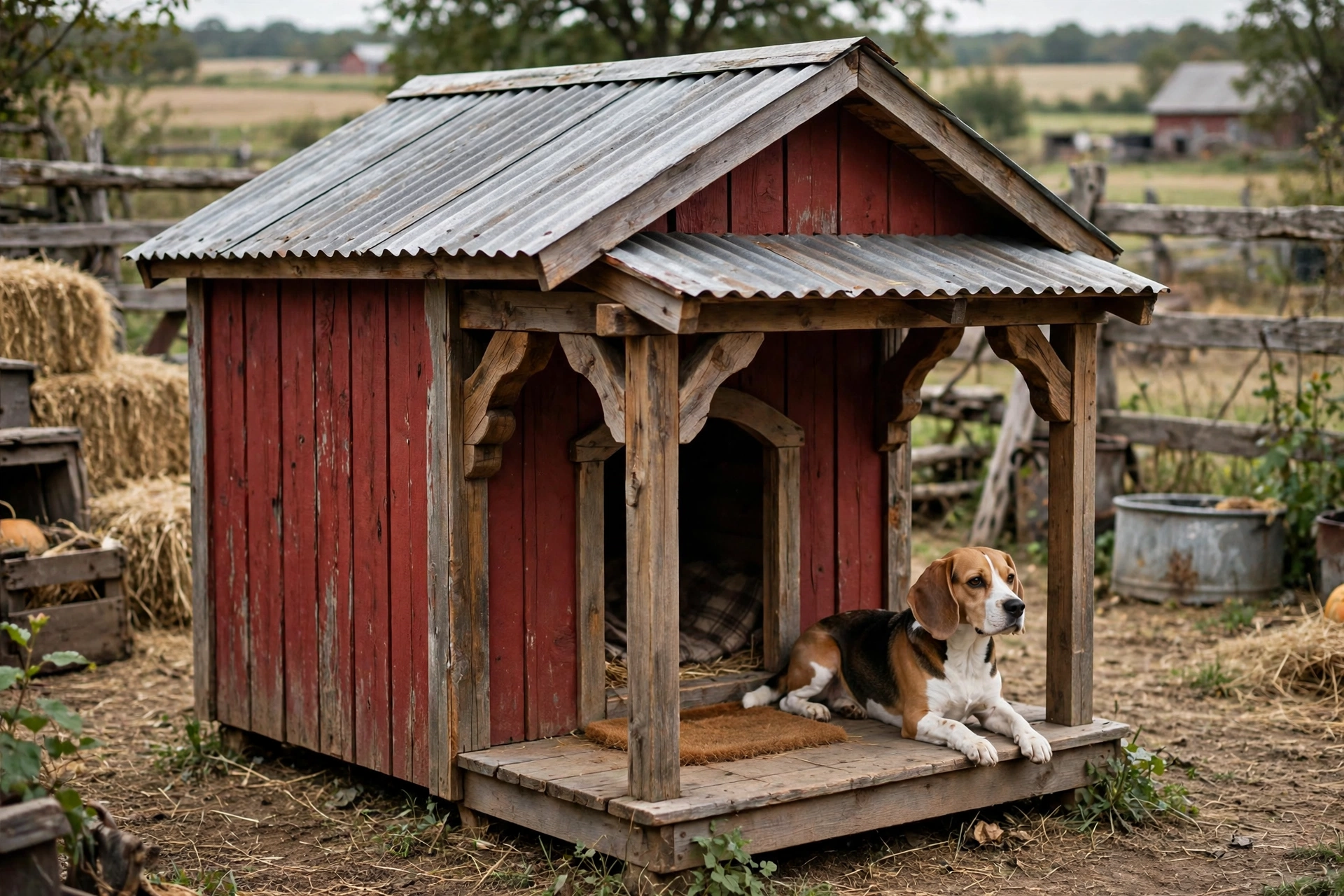
Corrugated metal or plastic roofing over the porch nails the farmhouse aesthetic in one step — wavy texture, silvery finish, and a sound of rain that dogs seem to find soothing. It is inexpensive, installs with basic screws and washers, and looks right at home on barn-red or whitewashed dog houses. Add chunky wooden brackets or corbels where the porch roof meets the posts for an authentic farmhouse detail. This look pairs naturally with our farmhouse dog house ideas.
Thatched-Look Porch Cover
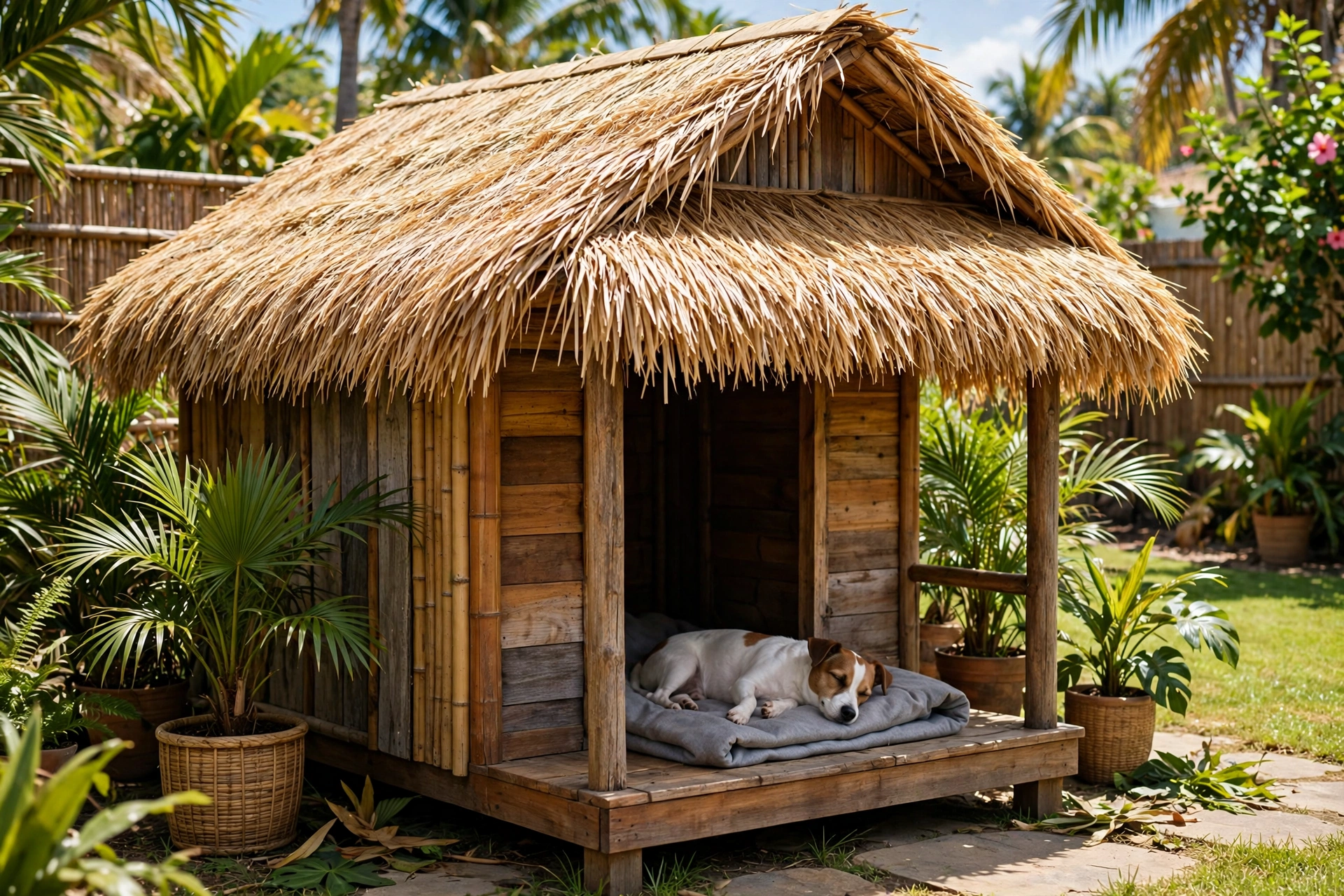
A thatch-style porch cover — real thatch for the ambitious, or synthetic thatch panels for the practical — turns a dog house into a tiny tiki hut. It provides deep shade, stays cool underneath, and makes a plain wooden house look like a vacation rental. Synthetic thatch is the sensible choice: it resists weather, does not harbor insects, and lasts for years. Drape it over a simple sloped frame extending from the main roof, and you have the most distinctive porch on the block.
Green Living Porch Roof

A living (sedum) roof on the porch section adds insulation, absorbs rain, and looks absolutely delightful. Build a shallow waterproof tray over the porch frame, fill it with a lightweight growing medium, and plant hardy sedum or creeping thyme. The plants keep the porch cooler in summer and the tray adds a layer of sound insulation in rain. Keep the planting shallow and the edges trimmed so the porch roof does not get too heavy — and check it occasionally, since dogs do love sniffing new greenery.
Double-Pitch Dutch Porch Roof
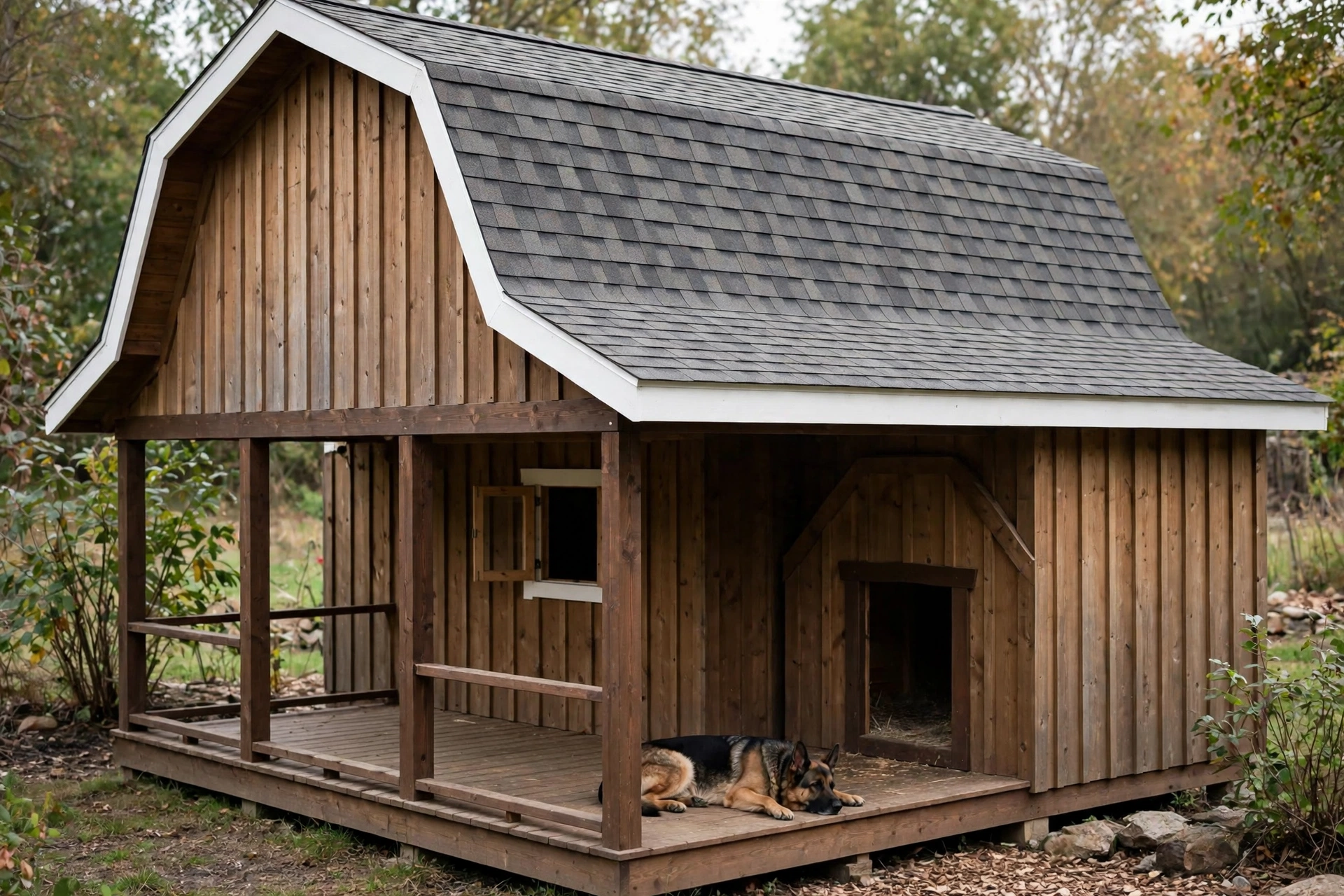
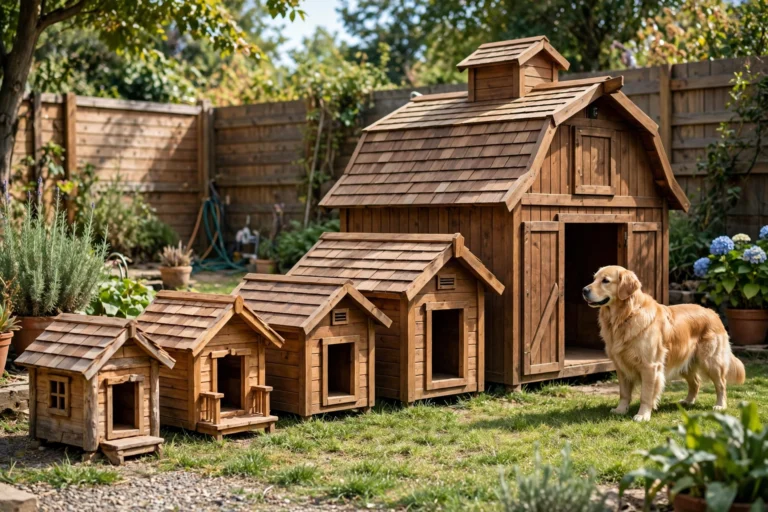
The Dutch (or gambrel-adjacent) porch roof uses two slopes — a steeper upper section and a shallower lower one — creating extra headroom and a distinctive barn-like profile. It sheds snow and heavy rain effectively and gives the dog house real architectural character. This style suits larger dog houses where the porch roof has room to show off its angles. Paint the fascia boards a contrasting color to emphasize the shape, and the whole structure will look like a tiny barn with its own covered veranda.
Final Thoughts
A porch roof is a small project with an outsized payoff: drier entrances, shadier lounging, and a dog house that looks finished instead of improvised. Pick a style that matches your main roof and your skill level — even the simplest sloped cover will make your dog’s porch dramatically more comfortable. Once you have the roof sorted, think about what goes under it: a raised bed, a water bowl station, or just a good patch of shade for long afternoon naps.