How to Get Odor Out of Clothes
Sweat, mildew, smoke, cooking smells, and that musty “left in the washer too long” odor can all cling to fabric — and ordinary washing doesn’t always remove them. The trick is to treat the cause, not just cover it with fragrance. Odor lives in bacteria, body oils, and trapped moisture inside the fibers, so the fix is to break those down, rinse them out fully, and dry the garment completely. The methods below work for most everyday clothes: T-shirts, gym wear, towels, jeans, and bedding. Always start with the gentlest method that fits the fabric, and only move to a stronger one if the smell survives a full wash-and-dry cycle.
Safety First — Read Before You Start
Check the care label first. If it says “dry clean only,” take it to a professional — do not soak or machine-wash it. Do not use vinegar, baking soda soaks, or hydrogen peroxide on silk, wool, or leather unless the label allows it. Never mix bleach with vinegar, ammonia, or any other cleaner. Mixing bleach with vinegar creates harmful chlorine gas; mixing it with ammonia creates toxic chloramine fumes. Use only one treatment at a time, and rinse thoroughly between methods. Test colored fabrics first. Dab your chosen solution on a hidden spot (inside a seam or hem), wait 10 minutes, and check for color change, fading, or damage before treating the whole garment. Never use hot water on a protein-based smell (sweat, milk, vomit) before treating it — heat can set the odor and the stain into the fabric. Hydrogen peroxide (3%) is for white and light fabrics only — it can bleach or lighten colored fabric. Always test a hidden spot first. Wear gloves when handling very smelly items (mildew, vomit, pet accidents) and wash your hands after.
What You Will Need
- Distilled white vinegar (5%) — 1 cup (240 ml) per soak or wash load
- Baking soda (bicarbonate of soda) — 1/2 to 1 cup (100-200 g)
- Mild liquid laundry detergent — your normal dose, plus 1-2 tablespoons extra for pre-treatment if needed
- 3% hydrogen peroxide (household grade) — 1/2 cup (120 ml), whites only (optional, for stubborn odors)
- Washing soda (sodium carbonate) — 1/2 cup (120 g), optional, for stubborn smells on sturdy cotton and synthetics only
- Clean white towels, a large basin or bucket, and a soft toothbrush
- A washing machine and a dryer or a sunny, well-ventilated drying spot
- Optional: enzyme-based laundry pre-treat or biological (“bio”) detergent, and an unscented oxygen bleach (sodium percarbonate) used exactly per packet instructions.
Step 1 — Find and Treat the Source
Before washing, identify what kind of odor you’re dealing with, because the best treatment depends on it:
Want a Better-Trained, Happier Dog?
Get practical guidance for obedience, behavior, and everyday dog training with a collection of helpful training guides designed for dog owners.
This post may contain affiliate links. If you purchase through our link, we may earn a commission at no additional cost to you.
- Sweat / body odor: Usually concentrated in underarms, collars, and waistbands. Pre-treat these areas (see Step 2).
- Mildew / musty smell: Common when clothes sat damp in the washer, a gym bag, or a hamper. These need a full soak (Method 2) and complete drying — mildew smell that survives one wash usually means the garment wasn’t fully dry.
- Smoke: Cigarette or cooking smoke clings to the surface fibers. A vinegar soak (Method 1) followed by fresh air usually lifts it.
- Pet odor / urine: Blot up as much as possible first, then use the vinegar rinse in Method 1. Never use ammonia-based cleaners on urine — to animals, ammonia smells like urine and can encourage repeat marking.
- Food, grease, or vomit smells: Remove any solids first with a blunt knife or spoon, blot (never rub) the area, then pre-treat before washing.
If the garment is only lightly smelly, skip straight to Method 1. If the smell is strong, old, or has survived a normal wash, use Method 2.
Step 2 — Pre-Treat the Smelliest Areas
- Turn the garment inside out — most body odor sits on the inside of the fabric.
- For underarms, collars, and cuffs: dampen the area with cool water and rub in 1 tablespoon of mild liquid detergent, or spray with an enzyme pre-treat. Work it in gently with your fingers or a soft toothbrush.
- Leave the pre-treat on for 15-30 minutes. Do not let it dry on the fabric.
- For a stubborn spot, make a paste of 3 tablespoons of baking soda mixed with 1 tablespoon of cool water, spread it over the area, and leave for 30 minutes before rinsing.
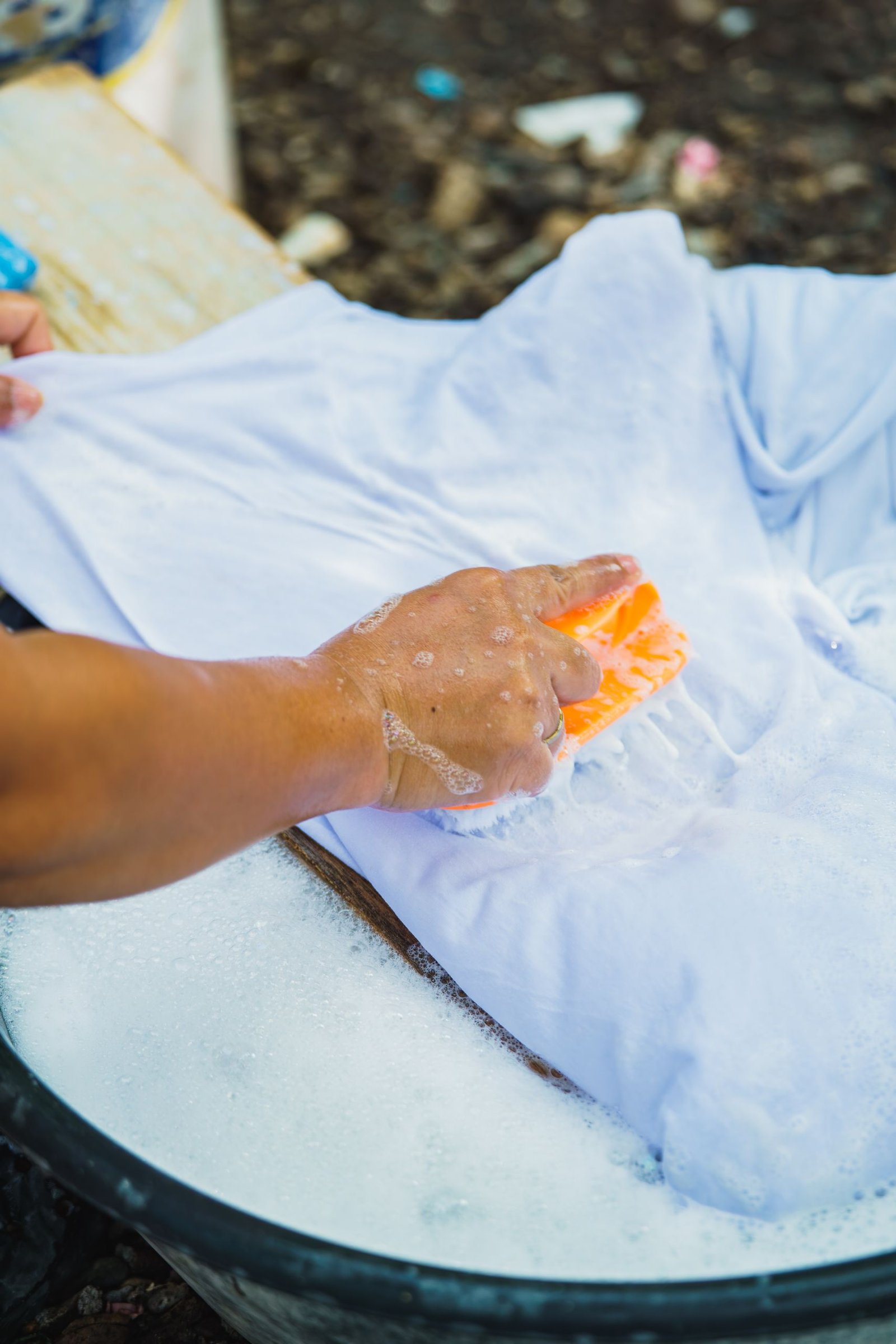
Method 1 — Vinegar Soak (Best First Step for Most Smells)
Vinegar breaks down the bacteria and mineral residue that trap odor, and it softens fabric so detergent can rinse out fully.
- Fill a basin or bucket with cool water — enough to fully submerge the garment.
- Add 1 cup (240 ml) of distilled white vinegar per gallon (about 4 liters) of cool water — roughly a 1:16 ratio.
- Submerge the garment completely, pressing it down so no part floats dry. Soak for 30 minutes for a light smell, or up to 1 hour for a strong one.
- Lift the garment out and rinse thoroughly with cool water.
- Wash as normal in the machine (see “Washing After Treatment” below).
Important: Never add vinegar to the wash cycle at the same time as detergent or bleach — vinegar cancels out detergent and reacts dangerously with bleach. Use vinegar in a separate soak, or in the rinse cycle only (1/2 cup / 120 ml in the fabric-softener dispenser), never in the wash with detergent.
Method 2 — Baking Soda Soak (For Strong, Set-In Odors)
Baking soda absorbs and neutralizes odor rather than masking it, which makes it the best choice for mildew, gym clothes, and smells that survived a normal wash.
- Fill a basin or bathtub with warm water (not hot — about 30-40°C / 85-105°F).
- Dissolve 1 cup (200 g) of baking soda in the water and stir until it disappears.
- Submerge the garment completely and soak for 30 minutes to 1 hour. For very stubborn mildew smells, soak for up to 4 hours — but never overnight on delicate fabrics.
- Drain, press the garment gently to remove dirty water (never wring or twist delicate items), and rinse with clean warm water until the water runs clear.
- Wash as normal in the machine.
Optional boost for sturdy fabrics only: For cotton and polyester that still smell after the baking soda soak, add 1/2 cup (120 g) of washing soda to a fresh warm-water soak for 30 minutes, then rinse thoroughly. Washing soda is stronger than baking soda — do not use it on silk, wool, down, or delicate fabrics, and always rinse very well, because residue irritates skin and attracts dirt.
Method 3 — Enzyme Treatment (Best for Sweat and Body Odor on Colors)
Enzyme detergents break down the proteins in sweat and body oils without bleaching color, which makes them the best choice for colored and patterned clothes.
- Apply an enzyme pre-treat or biological (“bio”) laundry detergent directly to the smelliest areas (underarms, collar, waistband).
- Leave for 15-30 minutes, following the product’s own instructions.
- Wash as normal at 30-40°C (85-105°F).
- Do not use enzyme products on silk or wool unless the product specifically says it is safe for them.
Method 4 — Oxygen Bleach Soak (Whites and Light Colors Only, for Stubborn Odors)
For white towels, sheets, and T-shirts that still smell after Methods 1 and 2:
- Dissolve oxygen bleach (sodium percarbonate) in warm water exactly per the packet instructions — typically 1-2 tablespoons per gallon (4 liters).
- Soak the white item for 1-6 hours (follow the packet; never exceed its maximum time).
- Rinse thoroughly and wash as normal.
- Never use chlorine bleach on colored clothes, and never use chlorine bleach to “fix” a yellow sweat stain — it can react with antiperspirant residue and make yellowing worse. Oxygen bleach is not the same as chlorine bleach; do not substitute one for the other.

Washing After Treatment
- Wash the treated garment in the machine on a cool or warm cycle (30-40°C / 85-105°F) with your normal detergent. Do not use hot water (60°C / 140°F or above) until the smell is fully gone — heat can set any remaining odor.
- Use the correct detergent dose — too much detergent leaves residue that traps odor; too little won’t clean. For a smelly load, an extra rinse cycle is worth more than extra detergent.
- Run one extra rinse cycle with no detergent. Leftover soap in the fibers is a common cause of clothes that smell “clean” out of the washer but musty once dry.
- Optional freshening rinse: add 1/2 cup (120 ml) of white vinegar to the rinse cycle (fabric-softener dispenser) — never in the wash with detergent or bleach.
- After washing, smell the garment while it is still damp. If any odor remains, repeat the treatment before drying — dryer heat sets odors just as it sets stains.
Drying — The Step That Locks In Freshness
- Dry promptly. Never leave washed clothes sitting damp in the washer for hours — that is how mildew smell starts. If you can’t dry immediately, run a quick rinse-and-spin again.
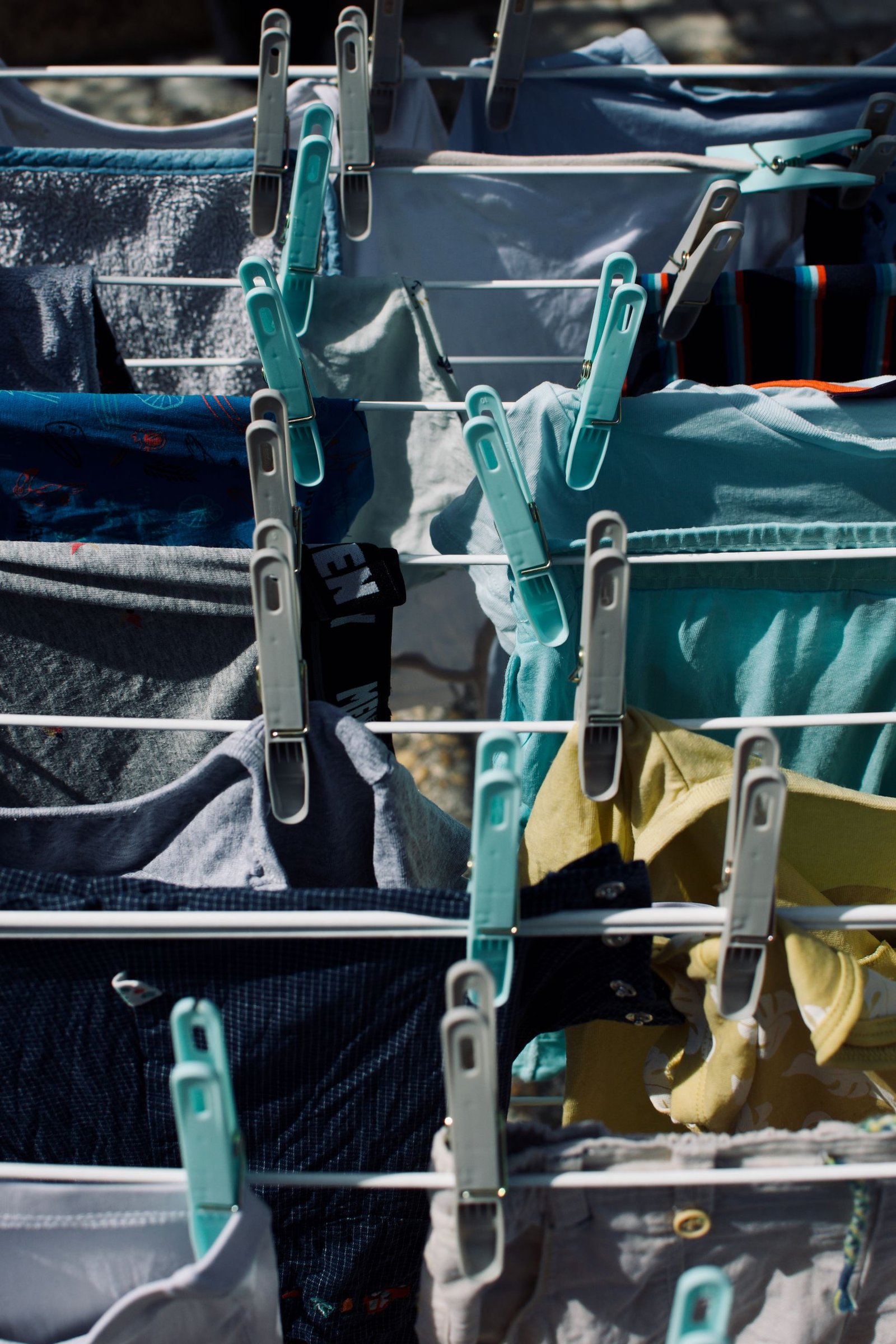
- Tumble dry on the setting the care label allows, or line-dry outdoors. Sunlight is a natural deodorizer and disinfectant: hang smelly items in direct sun for 1-2 hours where possible, turning once. (Note: prolonged strong sun can fade dark colors, so limit sun-drying for dark garments to 1 hour.)
- Make sure the garment is completely dry before folding or putting it away — even slightly damp fabric stored in a drawer or closet will smell musty within days.
- For items that can’t be machine-dried (wool, delicates), lay flat in a well-ventilated room with airflow, flipping after a few hours, until fully dry.
Preventing Odor From Coming Back
- Wash gym clothes and sweaty items promptly. Don’t leave them sitting in a closed gym bag or laundry basket for days — bacteria multiply in warm, damp fabric and the smell sets.
- Don’t overload the washer. Clothes need room to move and rinse; an overfull drum leaves detergent and odor behind.
- Leave the washer door ajar after use so the drum dries out and doesn’t grow mildew that transfers to the next load.
- Run a monthly maintenance wash: an empty hot cycle (60°C / 140°F) with 1 cup (240 ml) of white vinegar or a washing-machine cleaner.
- Use the right amount of detergent and skip fabric softener on gym wear and towels — softener coats fibers, reduces absorbency, and traps odor.
- Air out clothes between wears. Hang worn-once items in fresh air for a few hours instead of throwing them straight into a closed hamper.
- Store clothes dry. Use breathable storage, keep closets ventilated, and add a small open box of baking soda or a cedar sachet to drawers that tend to smell musty.
What NOT to Do
- Do not mix bleach with vinegar, ammonia, or any other cleaner — the fumes are harmful. Use one treatment at a time and rinse between methods.
- Do not use chlorine bleach on colored clothes or to fix a yellow sweat stain — it can deepen yellowing and damage fabric.
- Do not mask odor with extra fragrance, fabric softener, or scented sprays without cleaning first — perfume over bacteria just smells worse once it warms up, and softener residue traps future odor.
- Do not put a still-smelly garment in the dryer — dryer heat sets odors (and stains) and makes them much harder to remove later.
- Do not leave washed clothes sitting damp in the washer — hours of damp warmth breeds the mildew smell you’re trying to remove.
- Do not soak silk, wool, leather, or “dry clean only” items at home — take them to a professional.
- Do not use very hot water on a protein-based smell before treating it — heat sets sweat, milk, and similar odors into fabric.
- Do not scrub delicate fabrics hard — aggressive scrubbing frays fibers and spreads the odor area. Gentle rubbing with a soft toothbrush is enough.
Tick-Off Checklist
- Care label checked — garment is washable (not “dry clean only”); silk/wool/leather set aside for professional cleaning
- Odor source identified (sweat, mildew, smoke, pet, food/grease) and solids removed, area blotted — never rubbed
- Hidden spot tested on colored fabric — waited 10 minutes, no color change or damage
- Smelliest areas pre-treated (1 tbsp detergent or enzyme pre-treat, 15-30 minutes; baking soda paste 3 tbsp + 1 tbsp water for 30 minutes if stubborn)
- Vinegar soak done if needed (1 cup / 240 ml vinegar per gallon / 4 liters cool water, 30 minutes, up to 1 hour)
- Baking soda soak done if needed (1 cup / 200 g in warm water 30-40°C, 30 minutes to 1 hour, up to 4 hours for stubborn mildew)
- Enzyme pre-treat used for colored sweat odor if needed (15-30 minutes per product instructions)
- Oxygen bleach soak used for stubborn white/light odors only, if needed (per packet, 1-6 hours; never chlorine bleach on colors)
- Garment machine-washed at 30-40°C with normal detergent dose
- Extra rinse cycle run (1/2 cup / 120 ml vinegar in the rinse only, optional — never with detergent or bleach)
- Garment smelled while still damp — treatment repeated if any odor remained, before drying
- Garment dried promptly and completely (sunlight 1-2 hours where suitable, or tumble dry per label)
- No bleach mixed with vinegar or ammonia at any stage; no dryer use on a still-smelly garment
- Prevention in place — sweaty clothes washed promptly, washer not overloaded, washer door left ajar, softener skipped on gym wear and towels.
Download Your Free Printable Checklist
Get the full tick-off checklist as a print-friendly PDF to keep in your laundry room.
Download the Free Checklist (PDF)
PDF • Print-friendly
Looking for more free printables? See all free printables on our Cleaning Resources page.