Kitchen Cleaning Checklist
A clean kitchen, without the guesswork — every surface, every job, in the right order. Work top to bottom and leave the floor until last, so crumbs and drips land on a floor you have not cleaned yet. Empty the sink first — a full sink blocks everything else.
Safety — Please Read First
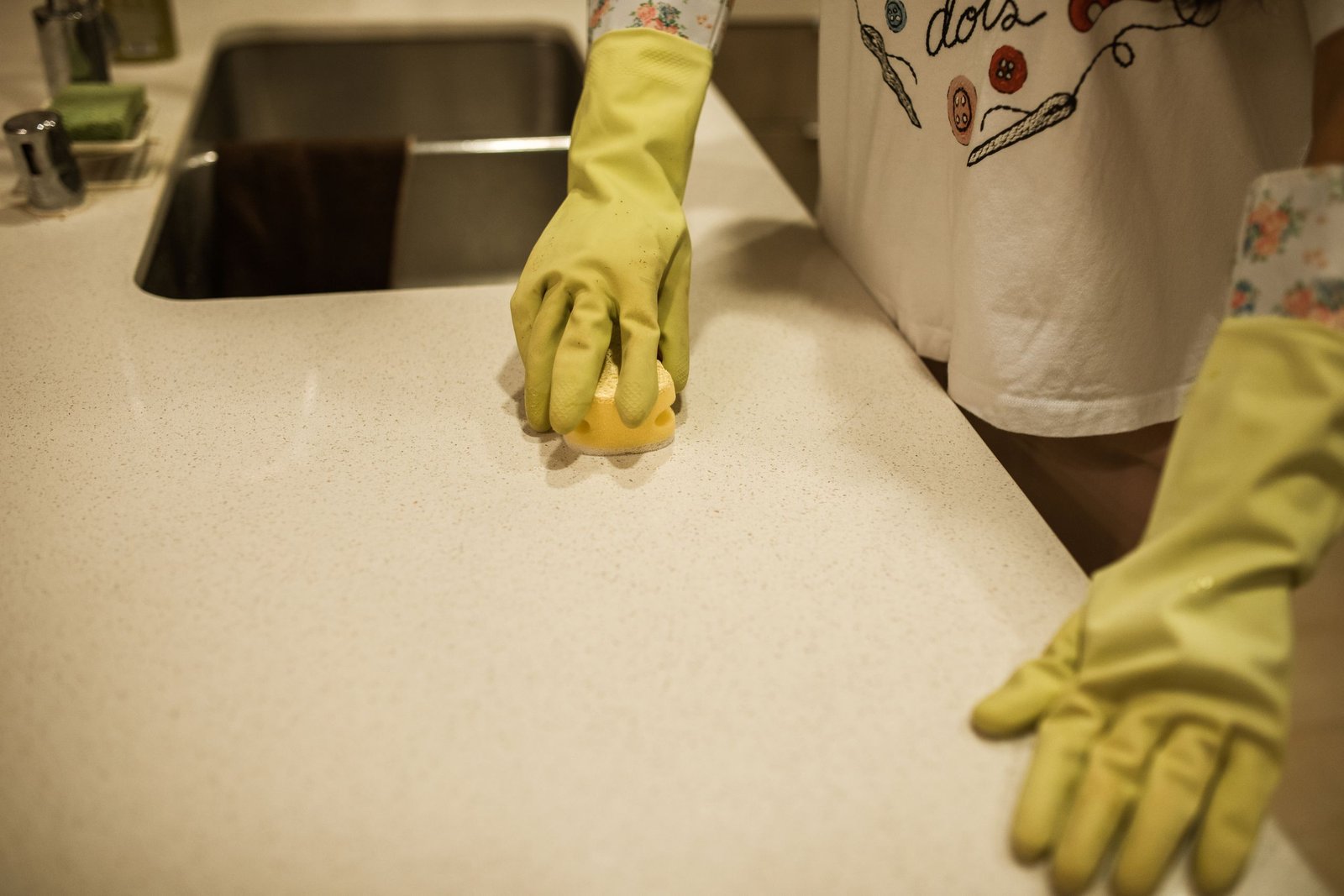
Never mix bleach with vinegar, ammonia, or any other cleaner. Bleach + vinegar creates chlorine gas; bleach + ammonia creates chloramine gas. Use one cleaner at a time and rinse well between products. Never use vinegar, lemon, or acidic cleaners on natural stone (granite, marble, travertine) — acid etches and dulls stone permanently. Use a pH-neutral cleaner or a few drops of dish soap in warm water instead. Oven cleaner is strongly caustic. Wear rubber gloves, ventilate the room (open a window, switch on the extractor), never spray near your face, and never use it on a self-cleaning oven unless the product label specifically says it is safe. Keep children and pets out of the kitchen while it works. Let the stove, oven, and cooktop cool completely before cleaning. Never spray cold water onto a hot glass cooktop — it can crack. Never spray cleaner directly onto switches, outlets, or appliance controls. Spray the cloth, then wipe. Check the sink and dishwater for knives before plunging your hands in. Good habits: use separate cloths for food-contact areas — one for countertops and food-prep surfaces, another for the sink, bins, and floor. After cleaning anything food touches, wipe it again with a cloth dampened in plain water so no cleaner residue ends up in your food.
Want a Better-Trained, Happier Dog?
Get practical guidance for obedience, behavior, and everyday dog training with a collection of helpful training guides designed for dog owners.
This post may contain affiliate links. If you purchase through our link, we may earn a commission at no additional cost to you.
What You Will Need
Mild dish soap, distilled white vinegar (5%), baking soda, all-purpose cleaner or homemade spray; Clean microfibre cloths (separate ones for food areas and for sink/bin areas), a sponge, a scrub brush, an old toothbrush; Spray bottle, rubber gloves, bin bag.
Daily — After the Last Meal
- Countertops: clear everything off, wipe with warm soapy water, then wipe again with a plain-water cloth to rinse.
- Chopping boards: wash with hot soapy water, rinse, and stand upright to dry.
- Dishes: wash or load the dishwasher — do not leave dirty dishes overnight. Leave the sink empty.
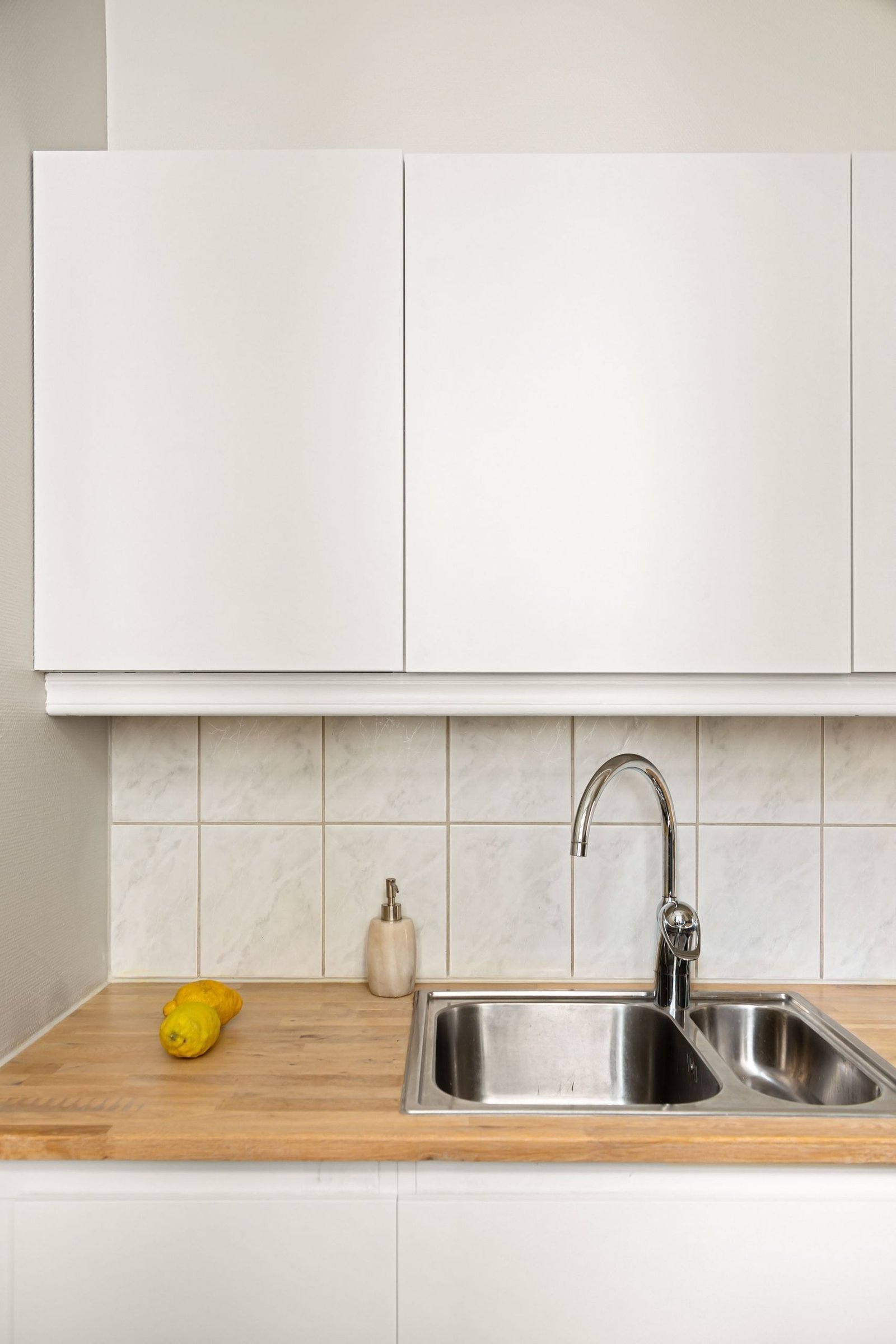
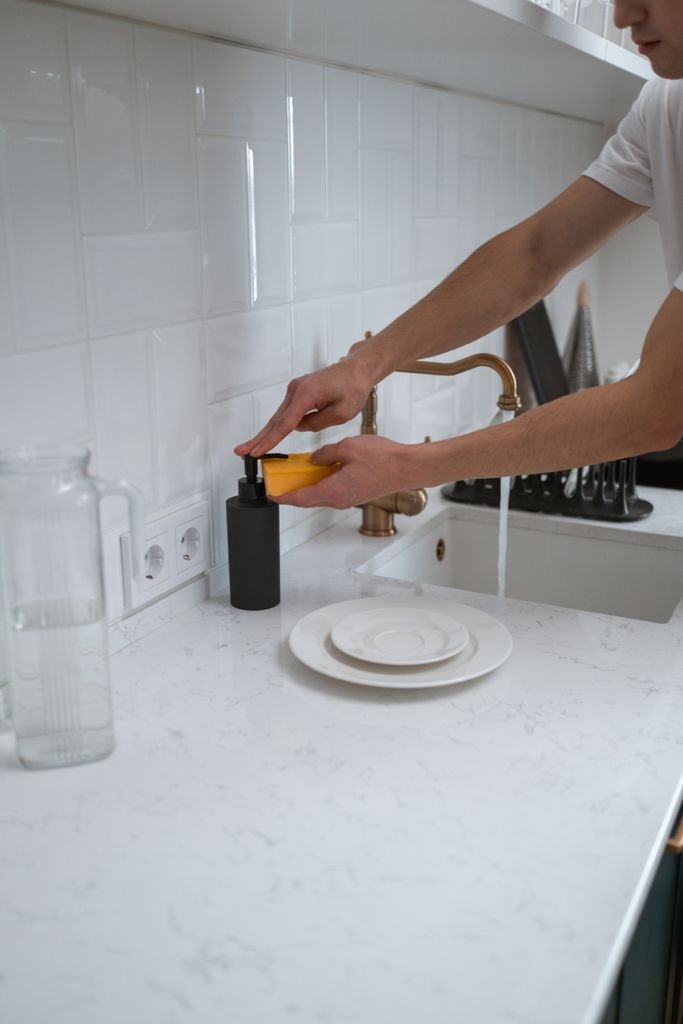
- Sink: wipe the basin with dish soap and a sponge; rinse. Wipe the tap and handles. Empty the sink strainer of food debris.
- Cooktop: once cool, wipe with a damp cloth and a little dish soap to catch fresh spills before they bake on. Wipe stove knobs and the front of the oven door.
- Wipe the dining table (if you eat in the kitchen).
- Take out the rubbish if the bin is full or smells.
- Sweep up obvious crumbs from the floor.
- Hang dish towels to dry; swap them if they smell damp.
Weekly — 30-45 Minutes
- Backsplash: spray with warm soapy water, leave 5 minutes, wipe, and rinse. Clean around taps, soap dispensers, and countertop edges where grease collects.
- Sink deep clean: sprinkle 1/2 cup (about 100 g) of baking soda into the sink, scrub, and rinse. For a stainless steel sink, follow with undiluted white vinegar on a cloth to restore shine (never on a stone sink surround). Clean the strainer and overflow with an old toothbrush.
- Drain freshener: pour 1/2 cup of baking soda down the drain, follow with 1 cup of white vinegar, wait 15 minutes, then flush with a kettle of hot (not boiling) water.
- Stove grates: remove burner grates, rings, or drip pans; soak in hot soapy water for 20-30 minutes, scrub, rinse, and dry fully before replacing.
- Cooktop deep clean: wipe with warm soapy water; for burnt-on spots, use a paste of 3 tablespoons of baking soda + 1 tablespoon of water, leave 15 minutes, wipe off, and rinse.
- Oven: wipe out loose crumbs and spills from the oven floor with a damp cloth.
- Microwave: heat a microwave-safe bowl with 1 cup of water + 2 tablespoons of white vinegar on high for 3-5 minutes until steamy; leave the door closed 5 minutes, then wipe inside. Wash the turntable in hot soapy water and dry.
- Fridge: wipe door handles and the outside; throw out expired food; wipe inside spills with warm soapy water, then rinse with a plain-water cloth.
- Cabinets: wipe fronts and handles with warm soapy water (about 1 teaspoon of dish soap per 4 cups / 1 litre of warm water). Dry immediately — standing water damages wood and laminate.
- Small appliances: wipe the outside of the kettle, toaster, coffee maker, and blender. Empty the toaster crumb tray.
- Floor: sweep fully, including under the table and along skirting boards. Mop with warm water + a small amount of floor cleaner or dish soap (about 1 teaspoon per bucket); rinse the mop often and dry any standing water.
- Bins: empty all kitchen bins, wipe the inside with warm soapy water, dry, put in a fresh bag, and wipe the lid and pedal.

Monthly — Deeper Jobs
- Fridge full clean: empty completely (use a cool bag for perishables). Remove shelves and drawers; wash in warm soapy water, rinse, and dry. Wipe inside walls with warm soapy water (1 teaspoon dish soap per 4 cups / 1 litre warm water), rinse with a plain-water cloth, and dry before restocking. Wipe jars and bottles before returning them. Place an open box of baking soda inside to absorb odours; replace it every month.
- Oven full clean: paste of 1/2 cup baking soda + 3 tablespoons of water, spread inside (avoiding heating elements), leave overnight (or at least 8 hours), wipe off, then spray lightly with vinegar and wipe again — or use a commercial oven cleaner exactly per its label, with gloves and ventilation.
- Door glass: paste on the glass, leave 30 minutes, wipe off.
- Oven racks: soak in hot soapy water with 1/2 cup of baking soda for 2-4 hours (or overnight for heavy grease), scrub, rinse, and dry.
- Extractor hood and grease filter: remove the metal grease filter; soak in a sink of hot water + 1/2 cup of baking soda + a squirt of dish soap for 20-30 minutes. Scrub, rinse, and dry completely before refitting. Wipe the outside of the hood with warm soapy water and dry to avoid streaks.
- Cupboards inside: empty one or two cupboards (rotate each month so all get done over the year). Wipe shelves with warm soapy water, dry, and check for expired food or leaks. Wipe the tops of wall cabinets, where grease and dust settle unseen.
- Kettle descaling: fill halfway with equal parts water and white vinegar (1:1), boil, leave 20-30 minutes, then empty and rinse thoroughly. Boil once with plain water and discard before using. (Check the manufacturer’s instructions first for plastic kettles.)
- Dishwasher: empty the filter and rinse it under running water. Wipe the door seal with a damp cloth. Run an empty hot cycle with 1 cup of white vinegar in a bowl on the top rack (or use a dishwasher cleaner per its label).
- Pantry: check for expired items, open packets, and signs of pests. Wipe shelves and reseal open packets in airtight containers.
- Walls and switches: wipe greasy spots near the stove with warm soapy water (test a hidden spot first on painted walls). Wipe light switches and outlet covers with a damp cloth — never spray directly.
Every 3-6 Months
- Behind and under the fridge: pull it out carefully, vacuum the coils at the back (dust on coils makes the fridge work harder), and mop the floor underneath.
- Reseal natural stone countertops if water no longer beads on the surface. Follow the sealer product’s instructions and keep food off the surface until fully cured.
- Replace sponges and dish cloths that smell or look worn — a smelly sponge spreads more bacteria than it removes.
- Check the bin: replace it if the lid or pedal is broken, or if odours linger after cleaning.
What NOT to Do
- Do not mix bleach with vinegar, ammonia, or any other cleaner — the fumes are dangerous.
- Do not use vinegar, lemon, or acidic cleaners on granite, marble, or any natural stone.
- Do not pour grease down the sink drain — it solidifies, blocks pipes, and causes bad smells. Pour cooled grease into a container and bin it.
- Do not use abrasive scourers on stainless steel, non-stick, or glass cooktops — they scratch permanently. Use a soft sponge or baking soda paste.
- Do not spray cleaner directly onto appliance controls, switches, or outlets — spray the cloth instead.
- Do not use the same cloth for bin/sink jobs and food-prep surfaces.
- Do not leave food-contact surfaces unrinsed — always wipe with plain water after cleaning.
- Do not use oven cleaner on a self-cleaning oven unless the label says it is safe, and never without gloves and ventilation.
- Do not soak wooden chopping boards or utensils — they warp and crack. Wash, rinse, and dry promptly.
- Do not mop a wooden or laminate kitchen floor with a soaking-wet mop — wring it out well.
- Do not ignore the extractor filter — a grease-clogged filter is a fire risk as well as a smell problem.
Tick-Off Checklist
Daily
- Countertops cleared and wiped with warm soapy water, then rinsed with plain water
- Chopping boards washed with hot soapy water, rinsed, and stood upright to dry
- Dishes washed or loaded — sink left empty
- Sink basin, tap, and handles wiped and rinsed
- Sink strainer emptied of food debris
- Cooktop wiped once cool with a damp soapy cloth
- Stove knobs and oven door front wiped
- Dining table wiped (if eating in the kitchen)
- Bin taken out if full or smelly
- Floor swept of obvious crumbs
- Dish towels hung to dry or swapped if damp
Weekly
- Backsplash degreased (soapy water, 5 minutes dwell, wipe, rinse)
- Sink deep-cleaned with 1/2 cup baking soda, scrubbed and rinsed
- Drain freshened (1/2 cup baking soda + 1 cup vinegar, 15 minutes, hot-water flush)
- Burner grates / rings / drip pans soaked 20-30 minutes, scrubbed, dried, replaced
- Cooktop deep-cleaned; burnt spots treated with baking soda paste (15 minutes)
- Oven crumbs and spills wiped out
- Microwave steamed (1 cup water + 2 tbsp vinegar, 3-5 minutes) and wiped; turntable washed
- Fridge handles and outside wiped; expired food thrown out; inside spills wiped
- Cabinet fronts and handles wiped and dried immediately
- Small appliances wiped; toaster crumb tray emptied
- Floor swept fully and mopped; standing water dried
- Bins emptied, wiped inside, dried, and re-bagged; lids wiped
Monthly
- Fridge fully emptied, shelves and drawers washed, inside wiped and rinsed, dried before restocking
- Baking soda odour absorber replaced in the fridge
- Oven fully cleaned (baking soda overnight or commercial cleaner per label, gloves + ventilation)
- Oven racks soaked (1/2 cup baking soda, 2-4 hours or overnight), scrubbed and dried
- Extractor grease filter soaked (hot water + 1/2 cup baking soda + dish soap, 20-30 minutes), scrubbed, dried, refitted
- Hood exterior wiped and dried
- Inside of one or two cupboards wiped, checked for expired food and leaks
- Tops of wall cabinets wiped
- Kettle descaled (1:1 water and vinegar, boiled, 20-30 minutes dwell, rinsed)
- Dishwasher filter rinsed, door seal wiped, empty hot cycle run with vinegar
- Pantry checked for expired items and pests; shelves wiped
- Greasy wall spots near the stove wiped; light switches and outlet covers wiped with a damp cloth (never sprayed)
Every 3-6 Months
- Behind/under fridge coils vacuumed + floor mopped
- Stone resealed if water doesn’t bead
- Smelly/worn sponges & cloths replaced
- Broken/smelly bin replaced
Download Your Free Printable Checklist
Get the full Kitchen Cleaning Checklist as a free, print-friendly PDF to keep in your kitchen.
PDF • Print-friendly
Looking for more free printables? See all free printables on our Cleaning Resources page.