
How to Clean Granite and Marble Countertops
A streak-free, damage-free routine for natural stone — without etching, dulling, or staining it. Granite and marble look beautiful, but they are natural stone, not a hard-wearing laminate — and the wrong cleaner can etch, dull, or stain them in seconds. The good news: with one golden rule and a short daily habit, stone worktops stay looking new for years. This guide covers the daily clean, the weekly deep clean, stain removal by type, sealing, and the mistakes that damage stone — for both granite and marble.

The Golden Rule
Use only pH-neutral cleaners on natural stone. If a product label says “stone-safe” or “pH-neutral”, it is fine. NEVER use vinegar, lemon juice, citric acid, bleach, ammonia-based cleaners, or abrasive pads / scouring powder / steel wool on granite or marble. Vinegar and other acids etch marble on contact and wear down granite sealant.
Want a Better-Trained, Happier Dog?
Get practical guidance for obedience, behavior, and everyday dog training with a collection of helpful training guides designed for dog owners.
This post may contain affiliate links. If you purchase through our link, we may earn a commission at no additional cost to you.
Granite vs. Marble — Why the Care Is Different
Granite: hard and scratch-resistant, less porous, resists brief acid contact better — but acids still dull the sealant over time. Tolerates brief heat better, but trivets are still recommended. Seal every 6-12 months.
Marble: soft and very porous, scratches and chips more easily, and etches on contact with acids — lemon, vinegar, wine, tomato and citrus cleaners can leave a dull mark in minutes. Sensitive to heat; always use trivets. Seal every 3-6 months.
Honed (matt-finish) stone needs sealing more often than polished stone, because the surface is more open.
What You Will Need
- pH-neutral stone cleaner, or mild dish soap (clear, not coloured)
- 2-3 clean, soft microfibre cloths
- Warm water
- A spray bottle
- Baking soda (for poultices)
- Plastic wrap and painter’s tape
- A plastic scraper or old credit card — never a metal blade on stone
- Impregnating stone sealant suitable for your stone type (not a topical coating)
- Trivets and chopping boards
Daily Cleaning (2 Minutes)
Wipe up spills immediately. Water, oil, coffee, wine and especially anything acidic should never sit on stone. Blot, don’t rub, then wipe.
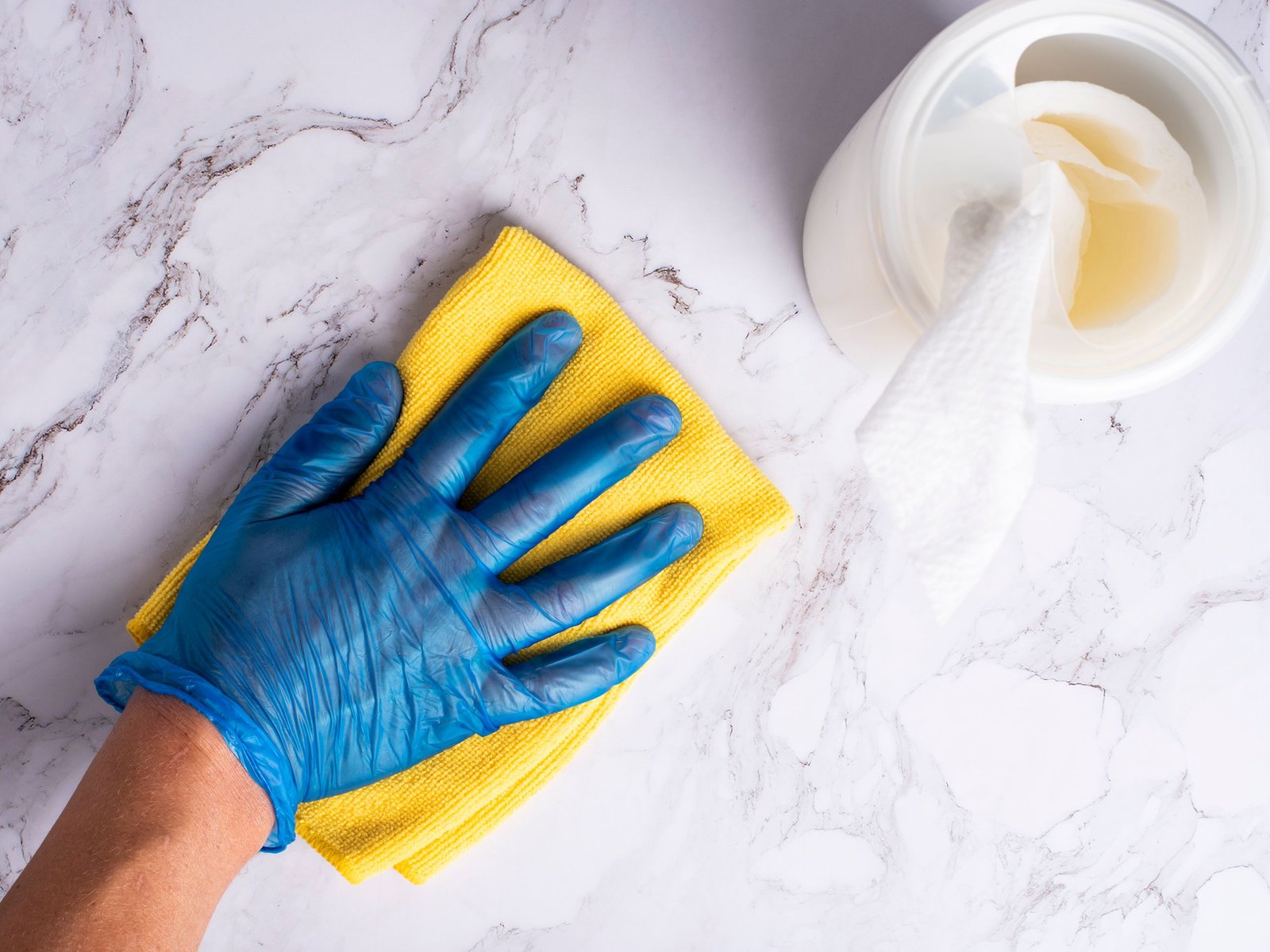
Spray and wipe: spray lightly with pH-neutral stone cleaner, or use a cloth dampened in warm water with just 2-3 drops of mild dish soap per 500 ml (2 cups) of water. Too much soap leaves a film that dulls the stone. Wipe in one direction with a soft microfibre cloth, then go over it again with a second cloth dampened in plain warm water to remove any soap residue.
Dry and buff with a clean, dry microfibre cloth. This prevents water spots — especially on dark granite — and leaves a streak-free shine.
Marble extra habit: wipe around the sink and hob every time you cook. Tomato sauce, lemon and wine drips are the most common causes of etching, and they happen in seconds.
Weekly Deep Clean (10 Minutes)
Clear everything off the worktops. Dust off crumbs and grit with a dry microfibre cloth first — grit dragged across marble scratches it. Wash the whole surface with the mild soap solution above (2-3 drops per 500 ml warm water), working in sections. Rinse with a cloth dampened in plain water, then dry and buff. Check for stains, dull patches or water marks, and treat them with the stain guide below. Check the sealant if it has been a few months since the last seal.
Stain Removal by Stain Type
Always test any treatment on a hidden corner first and wait 10 minutes. Identify the stain before treating — the wrong treatment can make things worse.
Oil and Grease Stains (cooking oil, butter, salad dressing)
Blot up any excess oil immediately. Make a poultice: 3 tablespoons of baking soda + 1 tablespoon of water to a thick paste. Spread about 5 mm thick, extending slightly beyond the stain edges. Cover with plastic wrap, tape the edges down, and leave for 24 hours. Remove the wrap, let the paste dry completely, then wipe away with a damp cloth and dry. Repeat once if a shadow remains.
Organic Stains (coffee, tea, wine, food, fruit juice)
Blot immediately — never rub. For fresh stains, the daily soap solution usually lifts them if caught quickly. For set stains, use the same baking soda poultice (3 tbsp + 1 tbsp water), covered with plastic wrap, for 24 hours. For stubborn stains on light granite only, a few drops of 3% hydrogen peroxide may be added to the poultice instead of water. Never use hydrogen peroxide on dark stone — it can lighten the colour — and never on marble without professional advice.
Water Marks and Rings
Buff gently with a dry microfibre cloth — many light marks disappear with buffing alone. For stubborn marks, use a baking soda poultice for 12-24 hours. If the mark is a dull, rough patch on marble rather than a surface ring, it is probably an etch mark, not a water mark — see below.
Etch Marks on Marble (Dull Spots from Acid)
An etch mark is not a stain: acid has dissolved a tiny layer of the marble surface, leaving a dull spot. No cleaner removes it, and scrubbing makes it worse. For very light etching, a marble polishing powder (from stone suppliers) applied gently with a soft cloth can sometimes restore the shine — follow the product instructions exactly and test a hidden spot first. For obvious or widespread etching, call a stone professional for honing and polishing. Prevention is everything: wipe acidic spills immediately, use coasters under citrus drinks and wine glasses, and never place a lemon half or tomato directly on marble.
Rust Stains
Use a baking soda poultice, covered, for 24 hours. Never use rust removers containing hydrofluoric acid or harsh chemicals on stone — they cause severe damage. If the poultice does not work, call a professional.

Sealing: How Often and How to Do It
Sealant does not make stone stain-proof — it buys you time to wipe up spills before they soak in. An unsealed worktop stains in minutes; a well-sealed one gives you hours.
How to Test Your Sealant: Sprinkle a few drops of water on the worktop in several spots and wait 10-15 minutes. If the water beads up and sits on the surface, the seal is still good. If it soaks in and leaves a dark patch, it is time to reseal.
How to Seal: Clean the worktop thoroughly with the daily routine and let it dry completely — at least 2 hours, ideally overnight. Apply the impregnating sealer evenly with a clean cloth or applicator pad, following the product’s instructions, working in small sections. Let it sit for the time stated on the product (usually 15-20 minutes), then wipe off all excess with a clean cloth. Do not leave pools of sealer to dry — they leave a sticky haze. Let it cure for 24 hours before heavy use or placing items back. Some products need a second coat — follow the label. Always seal in a ventilated room and keep children and pets away until cured.
Frequency: granite every 6-12 months (every 6 months in a busy kitchen); marble every 3-6 months.
Heat and Knife Precautions
- Always use trivets under hot pots, pans and baking trays — on both granite and marble. Repeated heat exposure can crack the sealant and, in extreme cases, the stone itself; marble can scorch and discolour.
- Never cut directly on the stone. Knives dull quickly on granite, and marble scratches easily. Always use a chopping board.
- Never slide heavy pots or appliances across the worktop. Lift them — dragging can scratch marble and chip edges on both stones.
- Use coasters under drinks, especially citrus juice, wine and fizzy drinks — all acidic.
What NOT to Do
- Never use vinegar, lemon juice, or any acidic cleaner on granite or marble.
- Never use bleach, ammonia-based cleaners, or bathroom cleaners on natural stone.
- Never use abrasive pads, scouring powder, or steel wool.
- Never use “all-purpose” sprays unless the label explicitly says stone-safe / pH-neutral.
- Never leave spills sitting — especially oil, wine, coffee, and anything acidic. Blot immediately.
- Never place hot pots directly on the stone, and never cut food directly on the worktop.
- Never seal a dirty or damp worktop — you will trap dirt and moisture under the sealant.
- Never try to sand, grind, or aggressively polish out etch marks yourself — call a stone professional.
- Never use coloured cloths or coloured dish soap — dyes can transfer to light marble.
Tick-Off Checklist
- Spills blotted immediately, never left sitting (especially acidic spills on marble)
- Daily clean done: pH-neutral cleaner or 2-3 drops mild dish soap per 500 ml warm water
- Surface rinsed with plain water and dried / buffed with a clean microfibre cloth
- No vinegar, lemon, bleach, ammonia, or abrasive cleaners used
- Weekly deep clean done: surface cleared, dusted, washed, rinsed, dried
- Stains identified by type before treatment (oil / organic / water mark / etch / rust)
- Oil stains treated with baking soda poultice (3 tbsp + 1 tbsp water), covered 24 hours
- Organic stains treated with baking soda poultice, covered 24 hours
- Water marks buffed, then poulticed 12-24 hours if needed
- Etch marks on marble recognised (not scrubbed); light etching only treated with marble polishing powder, major etching left to a professional
- Rust stains treated with baking soda poultice 24 hours; no harsh rust removers used
- Sealant tested: water beaded after 10-15 minutes, or reseal done if it soaked in
- Worktop fully clean and dry before sealing; sealer applied evenly, excess wiped off, cured 24 hours
- Trivets used under all hot pots and trays
- Chopping board used for all cutting — never cut directly on stone
- Coasters used under citrus, wine, and fizzy drinks
- Heavy items lifted, never dragged across the worktop
Download Your Free Printable Checklist
Get the printable granite and marble countertop cleaning checklist to keep in your kitchen.
PDF • Print-friendly
Looking for more free printables? See all free printables on our Cleaning Resources page.