DIY Cat Food With Taurine: The Purrfect Power-Up Your Feline Actually Craves
I started making DIY Cat Food With Taurine after realizing that some commercial foods didn’t always satisfy my cats the way fresh meals did. Preparing homemade recipes with quality animal protein has helped me provide food that my cats enjoy while giving me confidence in every ingredient I use.
Over the years, I’ve found that a balanced homemade diet can work well when it’s carefully prepared. Before making any long-term changes to your cat’s feeding routine, I always recommend talking with your veterinarian to ensure the recipe meets your cat’s nutritional requirements.
Save For later
Key Takeaways
- Animal-based protein and taurine are essential nutrients for every healthy cat.
- Heart, liver, and muscle meat help create a balanced homemade feline diet.
- Taurine supports healthy vision, heart function, and overall well-being.
- Maintaining the proper calcium-to-phosphorus balance is important for bone health.
- A gradual switch to homemade food helps reduce digestive problems.
- Freezing meal-sized portions keeps homemade cat food fresh and convenient.
Pro Tip
I always weigh my ingredients before mixing a batch because consistency matters with homemade cat food. After preparing the recipe, I divide it into individual servings instead of storing one large container. This makes feeding easier and helps prevent repeated thawing and refreezing. I also label every container with the preparation date so I always use the oldest batch first. If I’m introducing a new recipe, I mix a small amount into my cat’s regular food for several days. This slow transition has worked much better than changing meals all at once.
Other Posts
- Homemade Cat Food Recipes With Taurine
- Homemade Cat Food Recipes
- Cat Food Recipes for Sensitive Cats
What Makes This Special
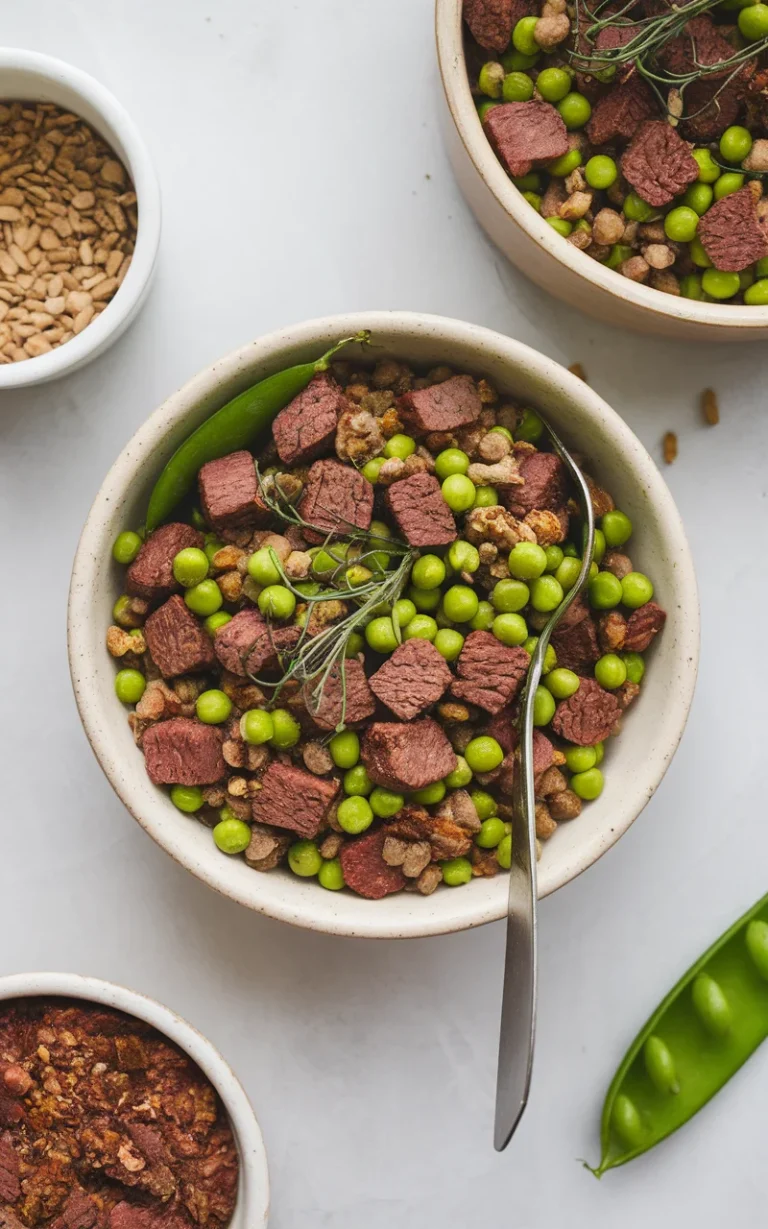
This recipe focuses on real feline needs: muscle meat for protein, organ meats for vitamins and taurine, and healthy fats to support energy, skin, and coat.
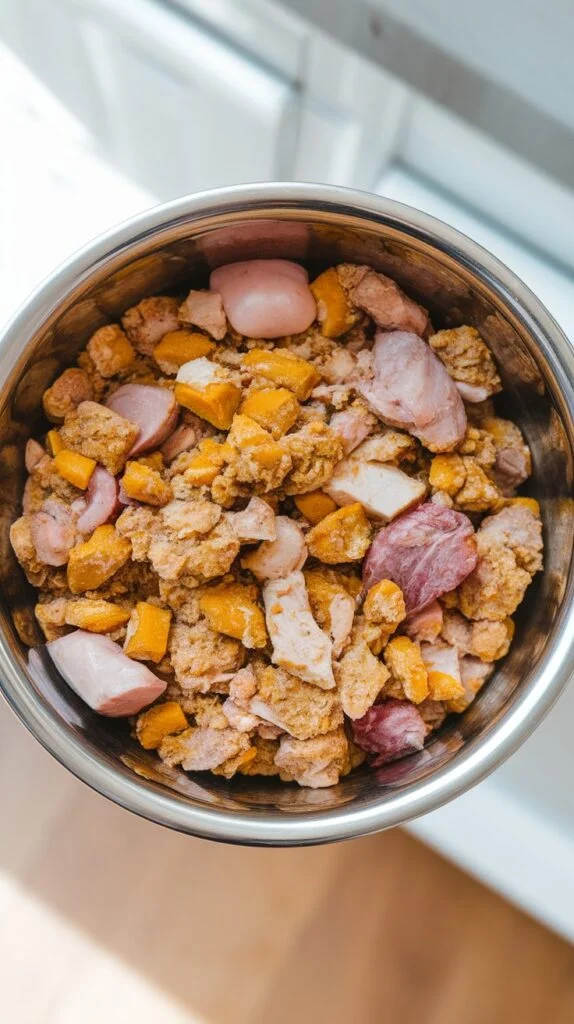
Over the years, I’ve noticed cats on commercial diets often have dull coats or inconsistent energy. Homemade, balanced meals eliminate the guesswork—you know exactly what’s going into the bowl. Using a mix of chicken thighs, hearts, and liver plus taurine and micronutrients mirrors what cats would eat in the wild, keeping them active, shiny, and satisfied.
Ingredients Breakdown
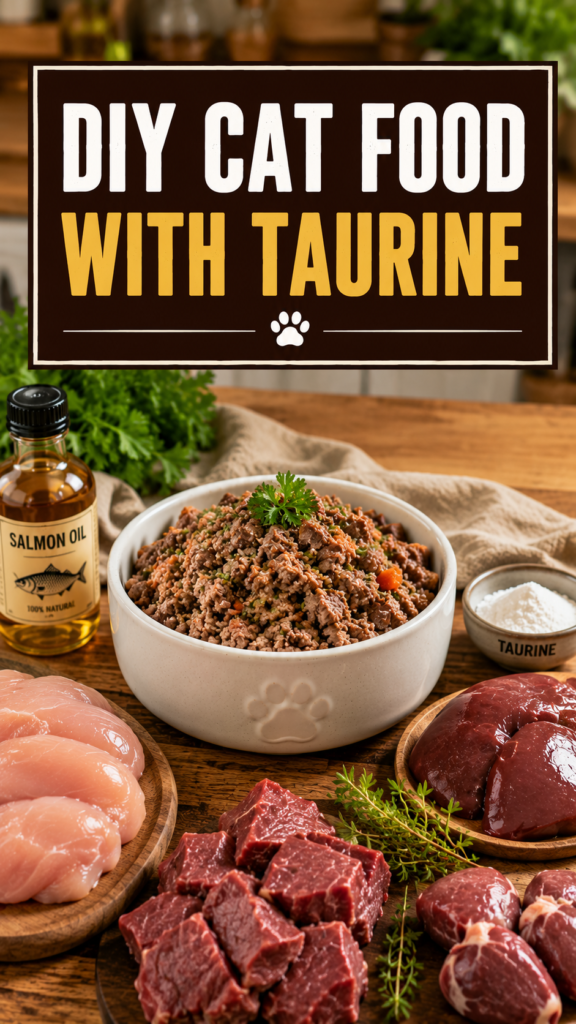
- Chicken thighs, skin-on, bone-out (2 lbs / ~900 g): Lean protein and fat for energy and flavor. I always leave some skin for calories, but trim if your cat is overweight.
- Chicken hearts (8 oz / ~225 g): Natural taurine and essential co-factors—heart is a favorite for most cats.
- Chicken liver (4 oz / ~115 g): Rich in vitamin A, B vitamins, and copper. Keep measured; too much can be toxic.
- Egg yolks (2 large): Choline, biotin, and fats that support coat and brain health.
- Taurine powder (1,000–1,500 mg total): Essential. Even with heart included, cooking reduces natural taurine. I usually start at 1,250 mg per batch.
- Salmon oil (2 tsp): Supports skin, coat, heart, and joints. I’ve seen shiny coats improve in just a few weeks.
- Bone meal powder (2 tsp) or calcium carbonate (1.5 tsp): Balances phosphorus from meat—critical for bone and kidney health.
- Water or no-salt chicken broth (1/2–3/4 cup): Helps texture and hydration. Cats often drink too little, so I add moisture.
- Optional pumpkin puree (2 tbsp): Gentle fiber for digestive health.
- Optional iodized source (tiny pinch of kelp or 1/8 tsp iodized salt): Supports thyroid. Use sparingly.
- Optional vitamin E (200 IU) and B-complex: Provides extra micronutrient coverage if freezing long-term.
The Method – Instructions
Prep your station: I sanitize surfaces, bowls, and the grinder or food processor. Cold tools help keep meat safe.
Trim and chop: Cut chicken thighs into ~1-inch pieces. I leave skin for flavor and energy but remove excess if a cat is prone to weight gain.
Add organs: Roughly chop hearts and liver. I measure liver carefully—more isn’t better.
Grind or pulse: Use a meat grinder for ideal texture. I prefer a coarse mince with a food processor; cats enjoy some bite rather than paste.
Mix the slurry: In a separate bowl, whisk water/broth, egg yolks, salmon oil, taurine, calcium, and optional vitamins. This ensures even distribution of supplements.
Combine: Pour slurry over meat and organs. Fold gently until uniform. Add pumpkin if using.
Test taste and texture: Offer a tiny sample raw for sniffing. If hesitant, slightly warm a spoonful (never hot) to release aroma.
Portion: Spoon into meal-sized containers or silicone trays (~2–4 oz per serving depending on cat size).
Serve or freeze: Refrigerate portions for 24–48 hours, and freeze the rest immediately.
Transition gradually: I always start with 25% new food mixed into their usual diet, increasing to 50%, 75%, and 100% over a week to prevent digestive upset.
How to Store
Fridge: 24–48 hours max at ≤40°F (4°C). Keep covered to prevent oxidation.
Freezer: 2–3 months in airtight containers. Label with date and batch notes.
Thawing: Overnight in fridge. Quick thaw by placing sealed container in cool water. Never leave at room temperature for hours.
Reheating: Do not cook. Warm by placing container in warm water just above room temperature.
Nutritional Perks
Taurine for heart and vision: Essential for cardiac function and retinal health. Deficiency leads to heart disease and blindness.
High animal protein: Fuels lean muscle and supports a sleek coat. Cats are obligate carnivores—plants are optional.
Balanced calcium-to-phosphorus: Protects bones and kidneys. I never skip this step.
Omega-3s from salmon oil: Shinier coat, calmer skin, and joint support. Many picky cats eat more readily with a little oil.
Micronutrient coverage: Liver and yolks provide vitamins A, D, E, K, and B-complex. Optional supplements help fill gaps, especially if freezing.
Avoid These Mistakes
- Skipping taurine: Critical for heart and eyes. Always supplement.
- No calcium source: Meat alone is high in phosphorus; deficiency can strain kidneys.
- Overloading liver: Keep ≤5% of the mix. Too much vitamin A is toxic.
- Onions/garlic: Never. Toxic even in tiny amounts.
- Microwave warming: Hot spots and nutrient damage occur. Warm water bath is safer.
- Sudden full switch: Gradual transition avoids GI upset.
- Guessing measurements: Use a scale. Precision ensures safety.
Different Ways to Make This
- Turkey variant: Replace chicken thighs with turkey, adjust fat with skin or extra oil.
- Rabbit and chicken heart mix: Lean, highly digestible, keeps calcium and taurine in check.
- Lightly cooked version: Sear meat exterior for palatability, then cool and mix in supplements.
- Allergy-friendly: Substitute pork shoulder + turkey hearts, maintaining taurine and calcium balance.
- Texture tweaks: Half minced, half chunky to engage cats and slow eating.
FAQ
Is taurine absolutely necessary?
Yes. Even with heart included, cooking and freezing reduce taurine. Deficiency causes heart disease and vision loss.
How much should I feed my cat per day?
2–4% of ideal body weight daily. A 10-lb cat eats roughly 3–5 oz (85–140 g), split into 2 meals. Adjust for activity and condition.
Can I make a big batch and freeze it?
Yes, freeze in single portions up to 2–3 months. Label batches for tracking preferences.
What if my vet is skeptical?
Share the recipe, feeding amounts, and consider a nutrition consult. Bloodwork can confirm balance.
Can I use fish instead of salmon oil?
Small amounts of canned sardines (water-packed, no salt) are okay occasionally. Avoid high-mercury fish.
Do I need a grinder?
Helpful, but a food processor works if pulsed to coarse mince. Cats like texture.
Is raw safe?
Yes, if meat is fresh, tools clean, and storage proper. Lightly cook for immunocompromised households. Always add supplements after cooking.
What signs show the diet works?
Shiny coat, consistent energy, well-formed stools, proper hydration. Monthly weight checks help adjust portions.
In Conclusion
DIY Cat Food With Taurine gives you control and clarity, plus a happier, healthier cat. Keep meat, organs, calcium, taurine, and omega-3s in balance, store smart, and transition gradually. The result: better coat, better energy, and the satisfaction of seeing your cat enjoy every bite.
All content on this site is written and reviewed by our experienced team to ensure it is accurate, reliable, and helpful for our readers. Our Our Process page explains how we carefully research and create high-quality content, while our Team page introduces the professionals behind our work. We also provide clear guidelines for content or image concerns on our Image Removal page, so you can trust that we prioritize transparency, quality, and reader safety.