
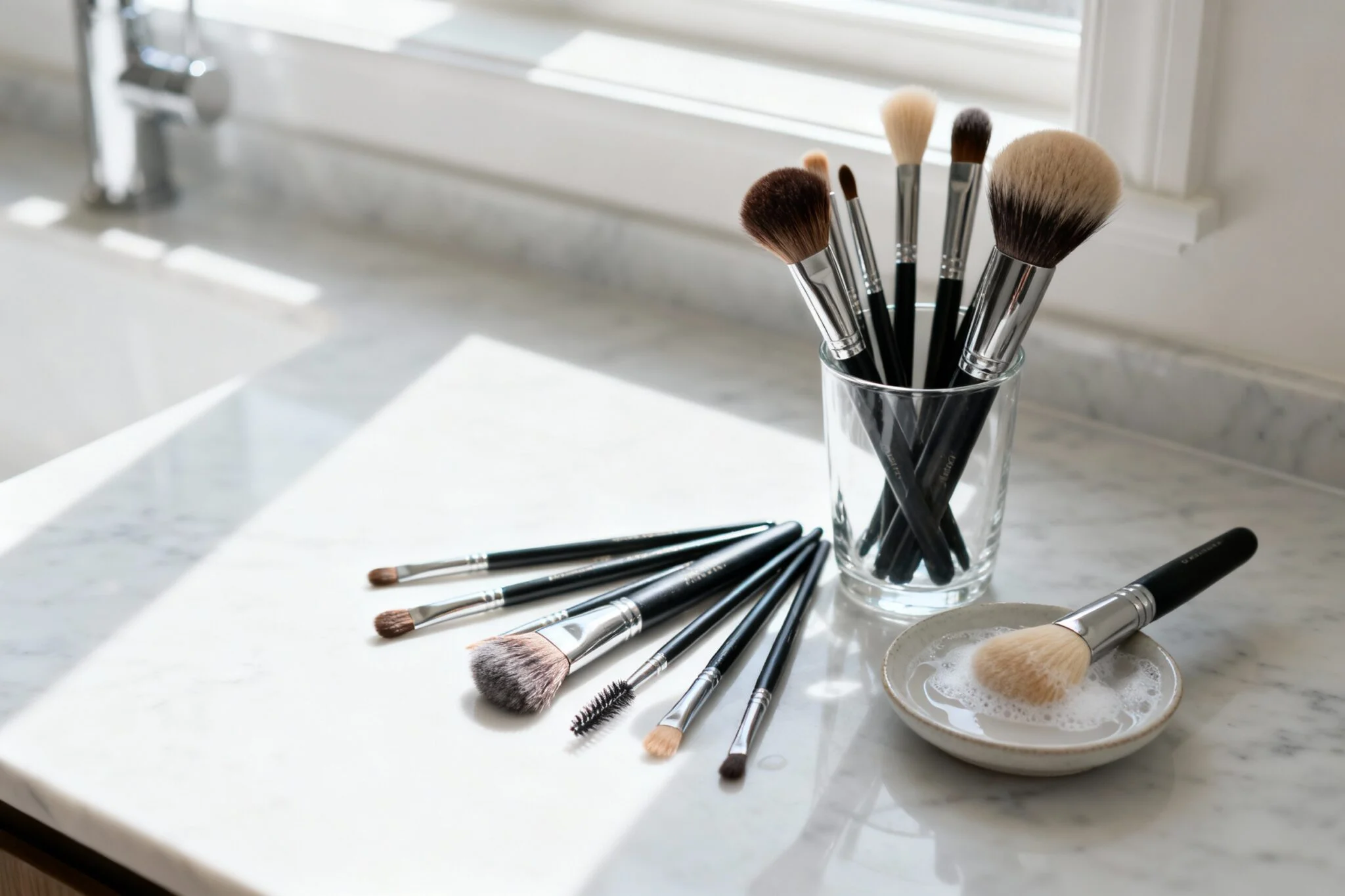
How To Clean Makeup Brushes Fast (and Make Them Last Longer)
I didn’t realize how much of a difference how to clean makeup brushes fast could make until my makeup started looking uneven no matter what products I used. My brushes seemed fine at a glance, but once I washed them properly, I noticed smoother application, better blending, and a fresher overall finish.
Over time, I learned that makeup brushes collect far more than leftover cosmetics. They can trap oil, dust, skin debris, and product buildup that affects both makeup performance and skin health. Since creating a simple cleaning routine, I’ve spent less time fixing patchy makeup and more time enjoying consistent results.
Save For Later
Key Takeaways
- Clean makeup brushes help products blend more evenly on the skin.
- Regular washing removes accumulated oils, residue, and dirt.
- Fresh brushes may help reduce clogged pores and skin irritation.
- Proper cleaning extends the lifespan of expensive makeup tools.
- A simple routine can keep brushes soft and effective for longer.
- Drying brushes correctly is just as important as washing them.
Pro Tip
One habit that saved me time was separating brushes by how often I use them. Foundation and concealer brushes get dirty much faster, so I wash those weekly. Eye brushes can usually go a little longer if they’re only used with powder products. I keep a small microfiber towel near my vanity and gently reshape brush heads immediately after washing. This prevents bristles from drying in odd directions. I also avoid standing wet brushes upright because water can loosen the glue inside the handle over time. Laying them flat has helped my favorite brushes stay in great condition for years.
Other Posts
- Shower Cleaning Hacks That Actually Work for a Faster Cleaning Routine
- Must-Know Bathroom Cleaning Hacks for a Cleaner Home
- Smart and Effective Training Tips for Fast-Learning Poodle Puppies
Why Cleaning Makeup Brushes Actually Matters
Even when brushes look fine, they’re usually not. Foundation, concealer, cream blush, and even powder products build up inside the bristles over time. That buildup hardens, traps bacteria, and changes how the brush performs.
I’ve noticed that when brushes aren’t clean, makeup starts to go on streaky. Foundation doesn’t sit right, blush looks patchy, and eyeshadow refuses to blend. On the skin side, clogged pores and random breakouts become more common—especially around the cheeks and jawline where face brushes do the most damage.
If you wouldn’t use the same face towel for weeks without washing it, the same logic applies here. Clean brushes are basic hygiene, not an optional extra.
The Fastest and Safest Way to Clean Makeup Brushes
You don’t need electric cleaners or fancy systems. I’ve tried them, and honestly, simple methods work just as well—sometimes better—without damaging your brushes.
What You Need
A mild cleanser is key. I stick to fragrance-free dish soap or baby shampoo because they break down oils without stripping the bristles. Lukewarm water is essential—never hot. You’ll also want a clean towel and a flat surface where brushes can dry properly. Silicone cleaning mats are optional but helpful if you want to speed things up.
The Five-Minute Deep Clean Method
I always start by wetting only the bristles, pointing them downward. This is important because water inside the metal ferrule loosens the glue and shortens the life of the brush. I keep that part completely dry.
Next, I add a small drop of cleanser to my palm or cleaning mat and gently swirl the brush. You can actually see old makeup lifting out as the suds change color. For dense foundation or concealer brushes, I sometimes add a tiny drop of oil first to break down stubborn residue, then follow with soap.
I rinse and repeat until the water runs clear. Once clean, I reshape the bristles with my fingers, making sure they return to their original shape. Drying matters just as much as washing, so I lay them at an angle with the bristles hanging off the edge of a counter. Upright drying and heat are the fastest ways to ruin a brush, so I avoid both completely.
Quick Spot-Cleaning When You’re Short on Time
Not every situation calls for a full wash. When I’m switching eyeshadow colors or doing multiple looks in one session, spot-cleaning keeps things moving without muddying colors.
How I Spot-Clean Brushes in Under a Minute
I spray a brush cleaner or 70% isopropyl alcohol onto a clean cloth or paper towel—not directly onto the brush. Then I swipe the bristles back and forth until no color transfers. A few seconds of air-drying and the brush is ready again.
This doesn’t replace deep cleaning, but it keeps brushes usable between washes and helps maintain smooth blending.
How Often You Should Clean Different Brushes
Not all brushes get dirty at the same rate. Cream and liquid products are the biggest offenders, while dry powders are more forgiving.
Foundation, concealer, and cream product brushes need cleaning every two to three uses. Powder brushes for blush, bronzer, and setting powder can usually go one to two weeks. Eyeshadow brushes should be washed weekly if used often, with spot-cleaning between colors. Eyebrow and eyeliner brushes used with pomades or gels should be cleaned after every use.
When skin is sensitive or acne-prone, more frequent cleaning makes a noticeable difference. I’ve seen fewer breakouts just by tightening my brush-cleaning routine.
What Actually Works for Cleaning Brushes
You don’t need a complicated routine. In fact, simpler is usually better.
Unscented dish soap cuts through oils quickly and works especially well for synthetic brushes. Baby shampoo is gentler and ideal for natural hair brushes. Solid brush cleansers are convenient and mess-free. Oils are useful for breaking down long-wear creams but should always be followed by soap to remove residue.
What Damages Brushes and Should Be Avoided
Hot water weakens glue and frizzes bristles. Conditioner coats the hairs and ruins product pickup. Hairdryers, radiators, and direct heat deform brushes permanently. Harsh disinfectants and bleach destroy fibers and can irritate skin later.
Avoiding these mistakes alone can double the lifespan of your brushes.
How to Make Makeup Brushes Last for Years
Good habits matter just as much as good cleaning.
Drying Brushes the Right Way
I always dry brushes with the bristles facing down or at an angle. I space them out so air circulates properly and let them dry fully—usually overnight—before using them again. Damp brushes stored too soon develop odor and bacteria fast.
Storing Brushes Properly
Once dry, I store brushes upright in open containers. For delicate shapes, brush guards help maintain their form. Airtight storage is a mistake because moisture needs a way to escape.
Gentle Technique Makes a Difference
I never scrub aggressively. Swirling is enough. Pressing brushes hard into mats or palms causes shedding over time. I also keep separate brushes for creams and powders to reduce buildup and cleaning time.
Natural Hair Brushes vs Synthetic Brushes
Brush material changes how you care for it.
Natural Hair Brushes
Natural hair brushes work best with powder products. I clean them with gentle soap only and avoid alcohol completely. Reshaping is important, and brush guards help them dry without losing their tapered shape.
Synthetic Brushes
Synthetic brushes are ideal for creams and liquids. They tolerate dish soap well and can be spot-cleaned with alcohol when needed. Even though they’re more durable, heat and rough handling still cause damage.
Time-Saving Habits That Actually Help
When I’m busy, I batch-wash brushes by type—eyes first, face brushes last. Keeping a solid cleanser near the sink makes cleaning faster and less messy. Rotating between two brush sets also helps because one set can dry while the other is in use. Spot-cleaning during makeup application prevents muddy colors and saves time later.
Common Questions About Cleaning Makeup Brushes
Regular hand soap can work occasionally, but it often dries out bristles. Gentle soaps keep brushes softer and usable longer.
Beauty sponges clean best when soaked, massaged with cleanser, rinsed thoroughly, and air-dried in open space. Heat methods can deform them.
Staining doesn’t always mean a brush is dirty. If water runs clear and no product transfers, it’s clean even if the bristles aren’t perfectly white.
Synthetic brushes can be lightly disinfected with alcohol after washing. Natural hair brushes last longer with proper washing and full drying instead.
Shedding usually comes from rough cleaning, heat, or water entering the ferrule. Gentle handling prevents most issues.
Small eye brushes dry within a few hours. Dense face brushes take longer, so washing at night works best.
Final Thoughts of How To Clean Makeup Brushes
Clean makeup brushes don’t require complicated routines or expensive tools. With the right soap, gentle technique, and proper drying, brushes stay soft, functional, and skin-safe for years. Regular spot-cleaning combined with weekly deep washing keeps makeup looking fresh, skin clear, and tools in top condition.
Once you build the habit, clean brushes stop feeling like a chore—and start feeling like basic self-care.
All content on this site is written and reviewed by our experienced team to ensure it is accurate, reliable, and helpful for our readers. Our Our Process page explains how we carefully research and create high-quality content, while our Team page introduces the professionals behind our work. We also provide clear guidelines for content or image concerns on our Image Removal page, so you can trust that we prioritize transparency, quality, and reader safety.