Omega-3 Delight: Homemade Cat Treats for a Shiny Coat and Healthy Paws
For years, I struggled to keep my cats’ coats looking soft and healthy, especially during seasonal shedding. After adding Omega-3 Delight Homemade Cat Treats to their routine, I noticed a visible difference in their fur quality, skin condition, and overall comfort. These nutrient-rich treats quickly became a regular part of my feeding routine.
From caring for playful kittens to senior cats, I’ve learned that omega-3 fatty acids can make a meaningful difference in everyday health. When paired with wholesome ingredients, homemade treats provide an easy way to support skin, coat health, mobility, and daily wellness without relying on heavily processed options.
Save For Later
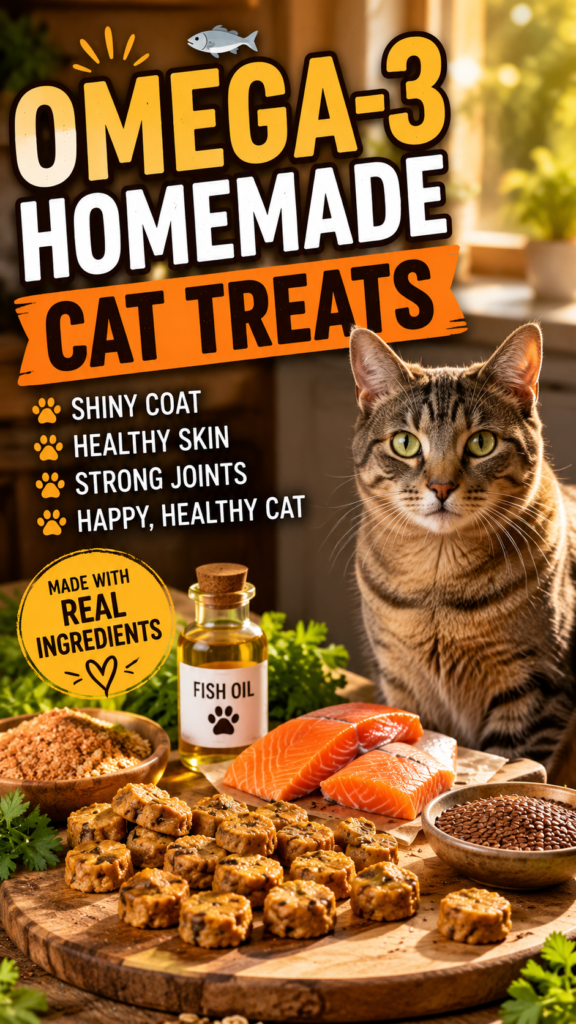
Key Takeaways
- Omega-3 fatty acids help support healthy skin and a glossy coat.
- Homemade cat treats allow better control over ingredient quality.
- Fish-based ingredients are excellent sources of beneficial fatty acids.
- Soft treats are often easier for cats of all ages to enjoy.
- Moderate treat portions help maintain a balanced diet.
- Nutrient-rich recipes can support overall feline wellness and mobility.
Pro Tip
One thing I’ve learned is that freshness matters when working with omega-3-rich ingredients. I prepare small batches rather than making a month’s supply at once. Fish oils and fatty ingredients can lose quality if stored too long. I also keep treats in airtight containers and refrigerate them immediately after cooling. If I’m freezing extras, I portion them into small servings so I only thaw what I need. My cats consistently respond better to freshly stored treats, and the aroma remains much more appealing to them.
Other Posts
- Diced Chicken Thigh and Broccoli Cat Treat Recipe for Healthy Homemade Rewards
- Homemade Beef Cat Food Recipe for High-Protein Feline Nutrition
- Best Homemade Cat Food Recipes for Healthy and Happy Cats
Ingredients for These Omega-3-Packed Treats
From my experience, keeping ingredients simple works best. Here’s what I use:
- 1 can of wild-caught salmon or tuna, drained (rich in omega-3s)
- 1 egg (helps bind the treats and adds protein)
- ¼ cup oat flour or whole wheat flour (for structure; I often use oat for sensitive tummies)
- 1 tablespoon ground flaxseed (another omega-3 powerhouse)
- 1 tablespoon fish oil or olive oil (enhances coat shine)
- 1 teaspoon catnip (optional but my cats love it)
Optional extras I sometimes include:
- A sprinkle of parsley for fresh breath
- A dash of turmeric for its anti-inflammatory properties
Step-by-Step: How to Make These Irresistible Cat Treats
Step 1: Preheat the Oven
I always preheat my oven to 350°F (175°C) and line a baking sheet with parchment paper. This ensures even cooking and prevents sticking, which is particularly helpful when handling sticky dough.
Step 2: Mix the Ingredients
In a large bowl, I combine the salmon or tuna, egg, flour, flaxseed, and oil. I mix until a sticky dough forms. If it feels too dry, I add a splash of water or extra oil. Over the years, I’ve noticed that a slightly sticky dough produces the softest treats that cats can easily chew, especially older ones or kittens.
Step 3: Add the Fun Stuff
If I’m using catnip, I fold it in at this stage. I’ve observed that catnip increases excitement and engagement—my cats immediately perk up when they smell it.
Step 4: Shape the Treats
I scoop small spoonfuls of dough and roll them into bite-sized balls, then flatten slightly to form mini cookies. Imperfect shapes are totally fine—cats aren’t judging, and the texture matters more than appearance.
Step 5: Bake to Perfection
I bake for 10–12 minutes until golden and slightly firm. I always let the treats cool completely before serving. Hot treats can burn their mouths, which I’ve unfortunately learned the hard way with a curious young kitten.
Tasty Variations to Keep Your Cat Interested
- Swap salmon for sardines to increase omega-3 content and flavor intensity.
- Use almond flour for cats with grain sensitivities; I’ve done this with excellent results.
- Mix in a little pumpkin puree to aid digestion.
- Top with a tiny piece of cooked chicken to create a “surf-and-turf” treat for special occasions.
Common Mistakes to Avoid
- Using too much flour: Treats should be soft, not dry and crumbly.
- Adding salt or seasonings: Cats don’t need it, and some spices are toxic.
- Skipping the cooling process: Hot treats = burnt tongues.
- Overfeeding: Even healthy treats should be given in moderation.
FAQs: Everything You Need to Know About Omega-3 Cat Treats
Q: How often should I give these treats to my cat?
A: Usually 2–3 treats a day is plenty. If your cat has dietary restrictions, I always check with a veterinarian first.
Q: Can I store these treats?
A: Yes! I store them in an airtight container in the fridge for up to a week. For large batches, freezing in small portions works well for up to a month.
Q: Can I use canned mackerel or sardines instead of salmon or tuna?
A: Absolutely, as long as they’re packed in water or oil, not brine or salt.
Q: What if my cat doesn’t like fish?
A: I’ve successfully swapped fish with shredded cooked chicken or turkey and added a bit of fish oil to retain omega-3 benefits.
Q: Are these treats safe for kittens?
A: Yes, but in smaller portions. I always introduce new treats slowly and monitor for any signs of intolerance.
Q: Can I add supplements like taurine?
A: Yes. Taurine is essential for cats’ heart and eye health, and adding it to treats can help maintain adequate levels. Always follow your vet’s guidance.
Q: What if my cat has a grain allergy?
A: No problem. I use almond or coconut flour as grain-free alternatives, which work just as well.
Final Thoughts: Healthy, Happy, and Purring
Over the years, I’ve realized that small, thoughtful additions to a cat’s diet can have a huge impact. These omega-3-packed treats aren’t just snacks—they’re a mini health boost. From shinier fur to healthier skin, and joints that can handle all the jumping and pouncing, my cats genuinely benefit from every bite.
Making these treats has turned snack time into a bonding ritual, and I’ve learned that cats notice when you put effort into their health. Get your apron on, preheat the oven, and prepare to watch your feline friend purr louder than ever—they’ll be following you around like you’re their personal chef, guaranteed.
All content on this site is written and reviewed by our experienced team to ensure it is accurate, reliable, and helpful for our readers. Our Our Process page explains how we carefully research and create high-quality content, while our Team page introduces the professionals behind our work. We also provide clear guidelines for content or image concerns on our Image Removal page, so you can trust that we prioritize transparency, quality, and reader safety.