
How To Stop Your Puppy From Biting: A Comprehensive Guide
Bringing home a new puppy is exciting, but dealing with sharp little teeth can quickly become stressful. I remember thinking the playful nipping would disappear on its own, but the biting kept happening during playtime, walks, and even quiet moments on the couch. Learning how to stop puppy biting early made a huge difference in creating better habits before the behavior became harder to manage.
Once I understood why puppies bite, training became much easier and less frustrating. Most puppies use their mouths while teething, exploring, or trying to interact with people. Instead of punishing the behavior, I focused on redirection, consistency, and calm training techniques. Over time, those small daily changes helped my puppy become gentler and more controlled.
Save For later
Key Takeaways
- Puppy biting is a normal part of development and teething
- Consistent training helps reduce nipping behavior over time
- Redirecting bites toward toys works better than punishment
- Puppies often bite more when overstimulated or overtired
- Positive reinforcement encourages calm and gentle behavior
- Early socialization can improve bite control during play
Pro Tip
One mistake I made early on was allowing playful biting sometimes and correcting it other times. That inconsistency confused my puppy and slowed progress. What worked best for me was keeping chew toys within reach in every room so I could redirect immediately. I also noticed biting increased in the evenings when my puppy became overly tired. Short naps throughout the day actually reduced rough behavior more than extra playtime. During training, I stayed calm and avoided loud reactions because excitement often encouraged more biting. If the nipping continued, I quietly ended play for a minute to show that biting stopped the fun. Repeating the same response every day helped the training stick much faster.
Related Posts
- Best Tips to Stop Puppy Barking at Home
- Easy Steps to Teach Your Dog to Roll Over
- Positive Puppy Training Techniques for Better Behavior
Why Puppies Bite
Before tackling the behavior, it’s important to understand why puppies bite:
- Teething: Puppies experience discomfort as their teeth come in, leading them to chew and bite.
- Exploration: Puppies explore their world through their mouths. Biting is a way to learn about objects and textures.
- Play: Biting during play is normal, especially if they learned it with littermates.
- Attention Seeking: Puppies may bite to get your attention or to initiate play.
- Defensive Behavior: Fear or stress can trigger a bite.
Understanding the root cause makes your training more effective.
Effective Techniques to Stop Puppy Biting
1. Consistent Training
Consistency is crucial. Start by teaching commands like “no bite” or “gentle.”
- Speak firmly but calmly.
- Reward your puppy immediately when they obey.
- Positive reinforcement encourages repetition of the desired behavior.
Over time, your puppy learns that being gentle leads to rewards, while biting does not.
2. Redirect Biting to Toys
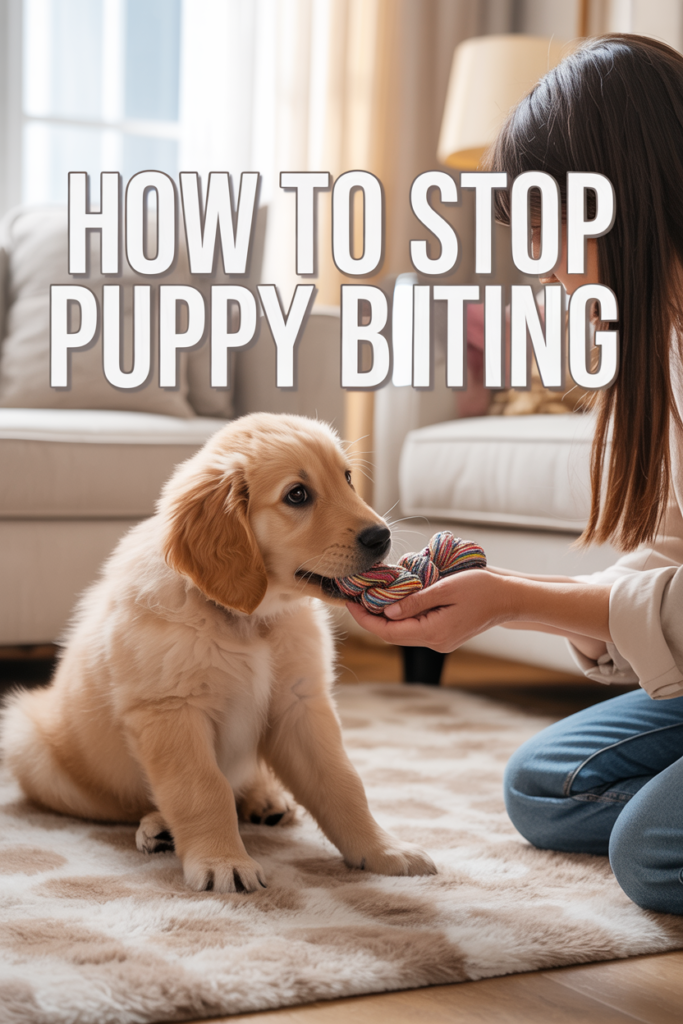
Offer chew toys whenever your puppy bites hands, feet, or furniture.
Toy options:
- Rubber chew toys
- Rope toys
- Treat-dispensing or puzzle toys
Redirecting teaches them what’s acceptable to bite.
3. Socialization
Socialization helps puppies learn appropriate behavior from other dogs and people.
- Puppy classes or supervised playdates are ideal.
- Reward gentle play and intervene if interactions become too rough.
- Gradually expose your puppy to new experiences and people.
A well-socialized puppy is less likely to bite out of fear or overstimulation.
4. Use Positive Reinforcement
Reward good behavior immediately with:
- Treats
- Praise
- Playtime
Avoid yelling or physical punishment, which can increase fear and worsen biting.
Positive reinforcement encourages learning through rewards rather than fear.
5. Create a Calm Environment
Overstimulation can trigger biting.
- Keep noise levels low during early training.
- Use white noise or calming music to soothe your puppy.
- Provide a quiet, comfortable space for rest and retreat.
A relaxed puppy is less likely to bite out of anxiety or excitement.
6. Teach Bite Inhibition
Bite inhibition is learning to control bite strength.
- If your puppy bites too hard, let out a high-pitched “ouch!”
- Stop play briefly and ignore them for a few seconds.
- Resume play and reward gentle behavior.
Repeat consistently to teach your puppy that hard bites end the fun.
7. Provide Exercise and Mental Stimulation
A tired puppy is a well-behaved puppy.
- Daily walks, playtime, and outdoor adventures help burn energy.
- Puzzle toys or treat-dispensing toys challenge their minds.
- Rotate toys to maintain engagement and reduce boredom-induced biting.
8. Avoid Encouraging Rough Play
Never use your hands, feet, or clothing for play.
- If your puppy becomes rough, stop the game and walk away.
- This teaches that biting ends the fun.
- Always use toys for interactive play.
9. Seek Professional Help if Neede
Persistent biting may require guidance from a professional trainer or behaviorist.
- They can assess your puppy’s behavior.
- Provide a tailored training plan for your pup’s needs.
FAQ: Puppy Biting
Q: Why does my puppy bite so much?
A: Common reasons include teething, exploration, play, attention seeking, or fear.
Q: How can I stop biting on command?
A: Use calm commands like “no bite” or “gentle” and reward obedience immediately.
Q: What should I do if biting occurs during play?
A: Yelp or say “ouch!” and pause play for a few seconds. Resume and reward gentle behavior.
Q: Are chew toys effective?
A: Yes! Rubber, rope, and treat-dispensing toys help redirect biting and relieve teething discomfort.
Q: Can socialization help reduce biting?
A: Absolutely. Interaction with other dogs and people teaches gentle behavior.
Q: How much exercise does my puppy need?
A: Typically 30 minutes to 2 hours daily, depending on breed, age, and energy level.
Q: When should I seek professional help?
A: If biting persists despite consistent training and redirection, consult a professional trainer or behaviorist.
Final Thoughts
Stopping puppy biting requires patience, consistency, and understanding. Remember: biting is natural, but it can be managed.
With early training, positive reinforcement, proper socialization, and adequate exercise, your puppy will learn to bite less and enjoy a calmer environment.
All content on this site is written and reviewed by our experienced team to ensure it is accurate, reliable, and helpful for our readers. Our Our Process page explains how we carefully research and create high-quality content, while our Team page introduces the professionals behind our work. We also provide clear guidelines for content or image concerns on our Image Removal page, so you can trust that we prioritize transparency, quality, and reader safety.