
9 Essential Commands to Teach Your Labrador Retriever First
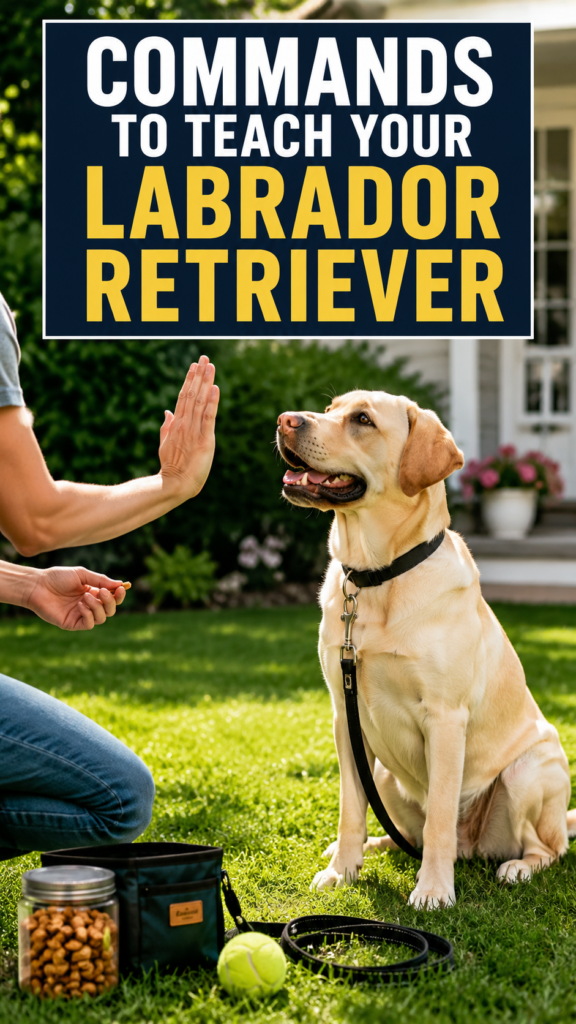
When I first started teaching commands to teach your Labrador Retriever, I thought my dog’s intelligence would make training effortless. Instead, I learned that excitement without direction often leads to jumping, pulling on the leash, and ignoring cues. Once I focused on a handful of essential commands, everyday life became much calmer, and my Labrador was much more enjoyable to be around. If you’re wondering where to begin, these are the commands I recommend teaching first.
I’ve found that consistency matters far more than long training sessions. Spending just a few minutes each day practicing basic obedience helped my Labrador build confidence while creating better habits. With patience, positive reinforcement, and clear communication, you can raise a well-mannered companion that’s happy to listen both at home and outdoors.
Save For Later
Key Takeaways
- Start with essential commands before teaching advanced tricks.
- Keep training sessions short, fun, and rewarding.
- Use positive reinforcement to encourage good behavior.
- Practice commands in different environments for reliability.
- Be consistent with your words, timing, and rewards.
- Daily practice strengthens obedience and your relationship.
Pro Tip
One of the best habits I developed was practicing commands before mealtime or playtime because my Labrador was naturally motivated to pay attention. I also kept my commands short and used the same cue every time to avoid confusion. If my dog became distracted, I’d move to a quieter area instead of repeating the command over and over. Small wins each day added up much faster than long weekend training sessions.
Other Posts
- Simple Steps to Teach Your Dog to Roll Over
- How to Teach Your Dog to Focus
- Step-by-Step Guide to Teaching Your Dog to Roll Over
Why Start With These 9 Commands?

Labradors love people, treats, and activity, which makes them highly trainable if you choose the right foundations. These nine commands cover safety, manners, and daily life, helping you maintain calm and control. You’ll use them at the door, on walks, during meals, and whenever distractions appear. By starting early, keeping training sessions short, and rewarding consistently, you turn your Lab’s natural motivation into positive habits. Their love for treats becomes a superpower when used wisely.
1) Name Recognition: “Buddy!” Means “Look at Me”
Before teaching anything else, your dog needs to respond to their name. This is the first step in building focus and attention. Without it, other commands are much harder to teach.
How to teach it:
- Say your dog’s name once in a cheerful tone.
- Reward immediately when they look at you with a “Yes!” and a treat.
- Repeat 5–10 times in short, fun sessions.
- Gradually introduce small distractions, like stepping back or moving your hand.
Pro tip: Avoid repeating the name multiple times. One name should equal one chance to earn a reward. This helps your dog understand that paying attention is valuable.
2) Sit: The Polite Default
“Sit” is the command that solves most daily chaos. You can use it for calm at the door, before meals, or when greeting guests. It’s simple, versatile, and essential for building structure in a Lab’s life.
How to teach it:
- Hold a treat above your Lab’s nose and move it slightly backward.
- As their rear touches the floor, say “Yes!” and give the treat.
- Add the verbal cue “Sit” once the motion becomes predictable.
- Practice before walks, meals, and greetings to build automatic calm.
Proofing Sit in Real Life: Practice in multiple rooms, outdoors, and around people to help your Lab generalize the behavior. Labs can forget commands when excitement rises, so short, fun sessions work best.
3) Down: Settle That Big Labrador Energy
The “Down” command teaches your Lab to relax on cue, which is crucial when visitors arrive or when you’re out in public. High-energy Labs need a clear signal to calm down.
How to teach it:
- Start from a Sit position and lure your dog to the ground with a treat.
- Reward when elbows touch the floor and gradually add the cue “Down”.
- Praise calm behavior and occasionally give a jackpot treat for longer holds.
Settle vs. Down: “Down” is a specific position, while “Settle” is about maintaining calm wherever your Lab is. Rewarding relaxed behavior on a mat or bed helps teach “Settle.”
4) Stay: The Life-Saver
“Stay” prevents your Lab from dashing through doors, running into streets, or grabbing things off counters. Proper training focuses on duration, distance, and distraction.
3D Method:
- Duration: Ask for a Sit, give the Stay command, start counting 2 seconds, reward, and gradually increase to 10–15 seconds.
- Distance: Step back gradually and reward your Lab for holding the position. Increase distance over time.
- Distraction: Add toys, claps, or movement around them to make Stay reliable in real-world situations.
Release word: Always use “Free”, “Okay”, or “Break”. This helps your Lab know exactly when the command ends.
5) Come: The Recall You Can Trust

A solid recall keeps your Lab safe and allows for more freedom off-leash. Without it, every walk can turn into stressful cardio for you.
How to build it:
- Start indoors or in a safe area.
- Call your Lab with a happy tone and move backward to encourage following.
- Reward generously with high-value treats like chicken or cheese.
- Avoid using recall to end play every time. Mix in occasional play rewards.
Emergency Recall: Reserve a special word like “Here!” or “Now!” for urgent situations and pair it with your best reward for instant response.
6) Leave It: Because Labs Eat Everything
Labs will grab socks, rocks, and random objects on walks. “Leave it” protects their safety and your sanity.
Two-step approach:
- Trade-up drill: Hold a treat in a closed fist. Reward when your Lab backs off with a better treat from the other hand.
- Ground rule: Place a less-interesting treat on the floor, cover it, and reward your Lab for disengaging with a higher-value treat. Add the cue “Leave it”.
Golden rule: They never get the item you asked them to leave. Rewards always come from you.
7) Drop It: The Sock Surrender
“Drop it” teaches your Lab to release items already in their mouth. This is important for household items or toys that shouldn’t be carried around.
How to teach it:
- Offer a toy and show a higher-value treat.
- Reward immediately when they release the item.
- Occasionally return the toy to prevent possessiveness.
Pro tip: Start with safe objects and gradually move to household items.
8) Heel (or Let’s Go): Chill Walks, Zero Shoulder Dislocations

Labs often pull because the world is so exciting. Teaching Heel or Let’s Go ensures safe and calm walks.
Loose-leash basics:
- Reward your Lab for walking beside you with a slack leash.
- Change directions often, stop if they pull, and resume when the leash loosens.
- A front-clip harness can provide extra control, especially for young Labs.
Heel vs. Let’s Go: Heel means precise positioning by your leg, perfect for crowded areas. Let’s Go allows polite walking with more freedom. Teaching both gives flexibility in different environments.
9) Place: Go to Your Spot and Relax
“Place” directs your Lab to a mat or bed where they remain calmly. It’s ideal for mealtimes, guests, or other busy moments.
How to teach it:
- Toss a treat on the mat to encourage your Lab to step on it.
- Add the cue “Place” and ask for a Down on the mat. Reward calm behavior.
- Gradually increase time and introduce distractions like doorbells or visitors.
Bonus tip: Use a distinct mat so your Lab always knows where to go. Portable mats work well in new environments.
Training Tips That Make Everything Faster
- Keep Sessions Short: 3–5 minutes, 2–3 times daily, keeps your Lab engaged. Stop before they lose interest.
- Use the Right Rewards: Rotate treats, combine food with play, and praise. Some Labs respond better to interactive games than food.
- Consistency Wins: Always use the same cues, release words, and markers like “Yes!” for clarity.
- Manage the Environment: Gates, leashes, and closed doors prevent rehearsals of bad behavior. Smart management accelerates learning.
Common Mistakes and How to Fix Them
- Too many repetitions: Once your Lab succeeds a few times, move on or make it harder.
- Repeating cues: Say it once. If they don’t respond, guide them and try again.
- Training only at home: Practice in different locations to help your Lab generalize.
- Underpaying: Big challenges require bigger rewards, especially for recall.
FAQ
How long will it take my Labrador to learn these commands? Most Labs pick up the basics within a week or two, but consistent performance around distractions takes longer.
What age should I start training? Begin as soon as your puppy comes home, usually around 8 weeks. Short, upbeat sessions are ideal. Older Labs can learn too but may need more patience.
What if my Lab only listens when I have treats? Gradually fade visible treats and mix in life rewards like play or outside time. Unpredictable rewards stick better.
Can I train these commands without a trainer? Yes. These basics are fully DIY, though a positive-reinforcement trainer can speed up progress and help with tricky behaviors. Group classes also provide mental stimulation.
My Lab gets too excited around guests. Which commands help most? Focus on Sit, Place, and Stay with staged distractions. Reward calm behavior consistently.
Do I need a clicker? Both a clicker or a marker word like “Yes!” work. Clickers help with timing, but your voice is effective in real life.
Wrapping It Up
Teaching these nine commands transforms your Labrador’s energy into calm, obedient behavior. Keep training short, fun, and rewarding, and your dog will learn to listen anywhere, even in distracting situations. With patience, consistency, and positive reinforcement, you’ll have a happy, well-mannered Lab that thrives on structure and enjoys learning with you every day.
All content on this site is written and reviewed by our experienced team to ensure it is accurate, reliable, and helpful for our readers. Our Our Process page explains how we carefully research and create high-quality content, while our Team page introduces the professionals behind our work. We also provide clear guidelines for content or image concerns on our Image Removal page, so you can trust that we prioritize transparency, quality, and reader safety.