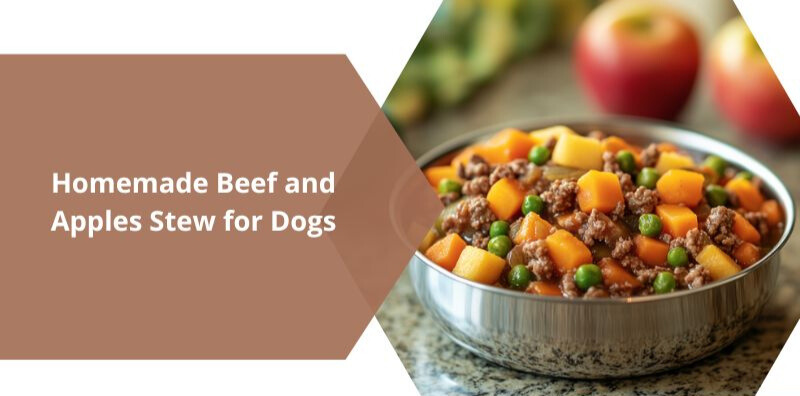
Beef and Apple Stew for Dogs: Wholesome Homemade Goodness
I’ve spent a lot of time reading ingredient labels on commercial dog food, and I’ll be honest — half the stuff listed on those bags I can’t even pronounce. That’s what pushed me toward making homemade meals for my dog in the first place, and I haven’t looked back since.
This beef and apple stew is one of my favorite recipes to make because it’s straightforward, uses ingredients I already keep at home, and my dog reacts to the smell of it cooking like it’s the greatest thing that’s ever happened to him. There’s something really satisfying about putting a bowl of actual real food in front of your dog and watching them go at it.
What I love most is knowing exactly what’s in every bite — quality protein from lean ground beef, natural sweetness from apple, and a solid mix of vegetables that cover all the nutritional bases. No fillers, no preservatives, just a proper meal that happens to be something dogs genuinely enjoy eating.
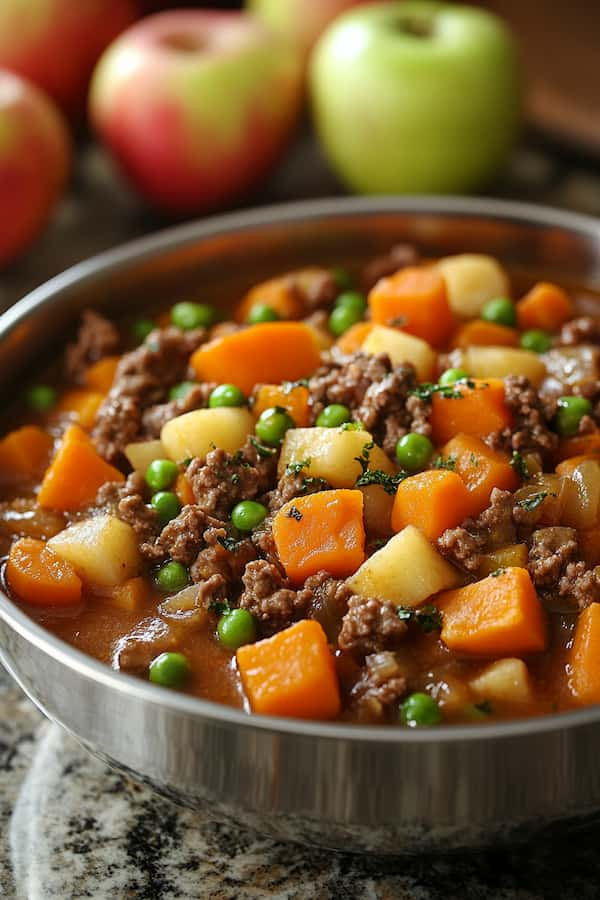
This beef and apple stew for dogs is a simple, wholesome homemade recipe built from lean ground beef, fresh apple, sweet potato, carrots, peas, and low-sodium beef broth. It takes about 40 minutes to make, stores well in the fridge or freezer, and works as a complete meal or a tasty addition to your dog’s regular food.
Key Takeaways
- Lean ground beef gives dogs the quality protein they need for muscle health and energy
- Apples add natural fiber and vitamins that support digestion and immunity
- Sweet potato, carrots, and peas bring a solid range of vitamins A, C, K, and B-complex to the bowl
- Low-sodium broth keeps the stew flavorful without the salt risks
- Proper portioning based on body weight helps make sure your dog gets the right amount
- Leftovers store in the fridge for up to four days or freeze well for up to two months
- Gradual food transitions help avoid stomach upset when introducing this stew
Why Beef and Apple Are a Winning Combo for Dogs
I get why some people raise an eyebrow at apple in a dog recipe — it sounds a little unusual at first. But once I understood what it actually brings to the table nutritionally, it made complete sense to me.
Ground beef is my go-to protein for homemade dog food because it’s affordable, easy to cook, and packed with the amino acids dogs need to maintain strong muscles and stay energetic. I always go for the lean variety so I’m not loading the stew with unnecessary fat.
Apples bring something beef alone can’t offer — dietary fiber that helps keep digestion moving smoothly, plus a natural source of vitamins C and K. Together, beef and apple create a balance of protein, fiber, and micronutrients that makes this stew genuinely well-rounded.
Here’s a quick look at why I keep reaching for these two ingredients:
- High-Quality Protein: Lean ground beef delivers essential amino acids that support muscle development and keep dogs active and healthy
- Digestive Health: The fiber in apples helps regulate digestion and supports consistent, healthy bowel movements
- Vitamins and Minerals: The combination of apple, sweet potato, carrots, and peas covers vitamins A, C, K, and several B vitamins — all important for immune strength and overall wellness
Beef and Apple Stew for Dogs
Here’s everything I use to make one batch of this stew. These quantities work well for a medium-sized dog over several days, and I’ll get into portioning more in the feeding section.
| Ingredient | Amount |
|---|---|
| Lean ground beef | 1 lb |
| Medium apple, diced | 1 |
| Small sweet potato, diced | 1 |
| Medium carrots, diced | 2 |
| Peas | ½ cup |
| Low-sodium beef broth | 2 cups |
Step-by-Step Instructions
Step 1: Brown the Beef
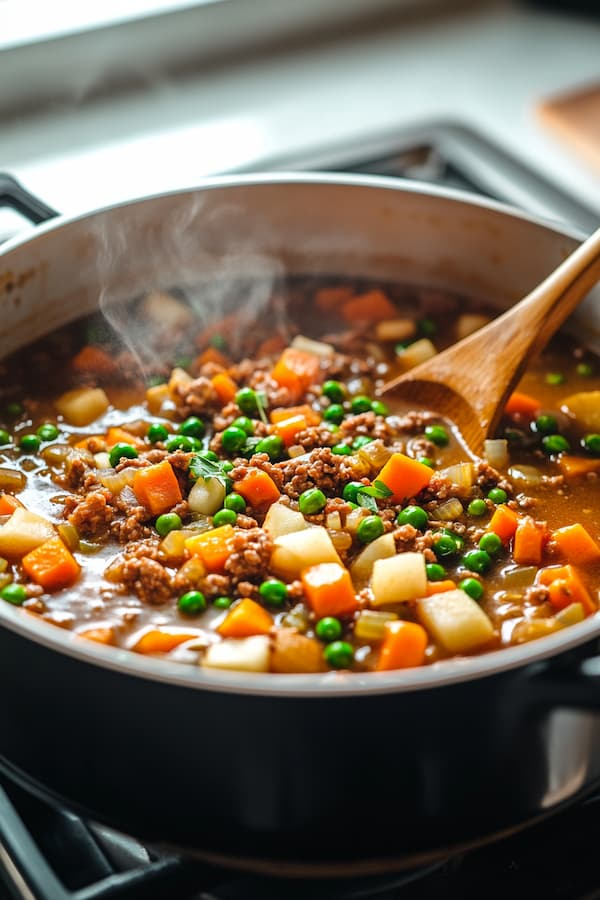
I start by adding the ground beef to a large pot over medium heat, breaking it up into small pieces as it cooks. I make sure every bit of pink is gone before moving on — fully cooked meat is non-negotiable when it comes to food safety for dogs.
Step 2: Prepare Veggies and Fruit
While the beef is cooking, I dice the apple, sweet potato, and carrots into small, even pieces. Keeping everything roughly the same size means it all cooks at the same rate, and smaller chunks are much easier and safer for dogs to eat.
Step 3: Combine Ingredients
Once the beef is fully browned, I add the apple, sweet potato, carrots, and peas straight into the pot. I give everything a good stir so it’s all evenly mixed — that way each spoonful my dog gets has a bit of everything in it.
Step 4: Add Broth and Simmer
I pour in the low-sodium beef broth, bring the whole pot to a gentle boil, then lower the heat, cover it, and let it simmer for 20 to 30 minutes. I stir it occasionally and check that the vegetables are tender before turning off the heat. Using low-sodium broth is something I never skip — regular broth has way more salt than a dog’s diet should include.
Pro Tip: If your dog prefers a thicker stew, let it simmer uncovered for the last five minutes to let some of the liquid reduce. It makes the texture heartier and easier to scoop into a bowl.
Step 5: Cool and Serve
Before I serve any of it, I let the stew cool down completely to room temperature. I also do a quick check for any chunks that might be too large, especially if I’m feeding a smaller dog. Once it’s cooled, it’s ready to serve — and the reaction from my dog every single time makes the whole process worth it.
Storage and Serving Tips
I usually make a full batch at the start of the week and store it in airtight containers in the fridge, where it stays fresh for up to four days. Dividing it into individual meal-sized portions before refrigerating makes serving much faster on busy days.
If I want to prep even further ahead, I freeze portions in freezer-safe containers or zip bags and they keep well for up to two months. When I’m ready to use a frozen portion, I thaw it in the fridge overnight and warm it gently on the stove or in the microwave before serving.
I always make sure the stew is at room temperature before putting the bowl down — dogs can’t tell when food is too hot, and I’d rather take the extra two minutes than risk burning their mouth.
Pro Tip: Label your frozen portions with the date before you put them in the freezer. It takes five seconds and saves a lot of guessing later.
Feeding Guidelines
Getting the portion size right matters more than most people realize when switching to homemade food. My general rule of thumb is about half a cup to one cup of stew per ten pounds of body weight per day, split into two meals — morning and evening works best in my experience.
So for a 30-pound dog, that works out to roughly one and a half to three cups of stew daily, divided across two servings. Puppies, very active dogs, and nursing mothers may need a bit more, while senior dogs or less active ones might do fine with slightly smaller portions.
I always pay attention to my dog’s weight and energy levels and adjust from there. If I’m ever unsure, I check in with my vet — especially when introducing a new recipe for the first time.
Speaking of introducing new food, I never just swap it in overnight. I mix a small amount of the stew into my dog’s regular food and gradually increase it over about a week. It gives their digestive system time to adjust without any unnecessary stomach upset.
Customization and Add-Ins
One of the things I appreciate most about this recipe is how easy it is to tweak based on what I have on hand or what my dog needs at any given time.
- Leafy Greens: I sometimes stir in a handful of chopped spinach or kale near the end of cooking for an extra boost of fiber and nutrients
- Herbs: A sprinkle of fresh parsley or a small pinch of turmeric can add a bit of flavor and come with their own mild health benefits for dogs
Pro Tip: If you add turmeric, pair it with a tiny pinch of black pepper — it helps the body absorb the active compounds more effectively, and the same principle applies to dogs.
Common Mistakes to Avoid
I’ve seen people make well-intentioned homemade dog food and accidentally include things that are harmful. Here are the two mistakes I always remind people to watch out for:
- Seasoning the Stew: I never add salt, onions, garlic, or any kind of spice blend to this recipe. What tastes good to us can genuinely be toxic or hard on a dog’s system
- Overfeeding: Homemade stew is nutrient-dense, so it’s easy to give too much without realizing it. I always keep portion sizes in check and factor in anything else my dog is eating that day
Nutritional Benefits of This Recipe
Every ingredient in this stew pulls its weight nutritionally, which is part of why I keep coming back to this recipe.
- Protein: Lean beef supports healthy muscle mass and keeps dogs energized throughout the day
- Fiber: Between the apple, sweet potato, and peas, there’s plenty of fiber to keep digestion on track
- Vitamins: The mix of vegetables covers a solid range of vitamins that support immune health, eyesight, and coat condition
- Low Sodium: Using low-sodium broth keeps this meal heart-healthy and appropriate for long-term regular feeding
FAQs
Can I use a different protein instead of ground beef?
Yes, I’ve made this with ground chicken and ground turkey and both work really well. They’re leaner options and carry similar nutritional value. Just make sure whatever protein you use is fully cooked through before adding the vegetables.
Is it safe for me to feed this stew to my dog every day?
In my experience, yes — as long as it’s properly portioned for your dog’s size and weight, this stew is wholesome enough for daily feeding. I’d still recommend checking in with your vet if you’re planning to use it as your dog’s sole food source long-term.
Final Thoughts
At the end of the day, making this beef and apple stew for dogs is one of the simplest ways I know to show my dog I care about what he eats. It doesn’t take a lot of time, the ingredients are easy to find, and the result is a meal I feel genuinely good about putting in his bowl.
Whether I serve it as his main meal, mix it into his kibble, or pull it out on a cold evening when he deserves something warm and comforting — he always cleans the bowl. And honestly, that never gets old.
If you’ve been thinking about making homemade dog food but weren’t sure where to start, this is the recipe I’d point you to first. It’s approachable, nutritious, and your dog is going to love it.
All content on this site is written and reviewed by our experienced team to ensure it is accurate, reliable, and helpful for our readers. Our Our Process page explains how we carefully research and create high-quality content, while our Team page introduces the professionals behind our work. We also provide clear guidelines for content or image concerns on our Image Removal page, so you can trust that we prioritize transparency, quality, and reader safety.