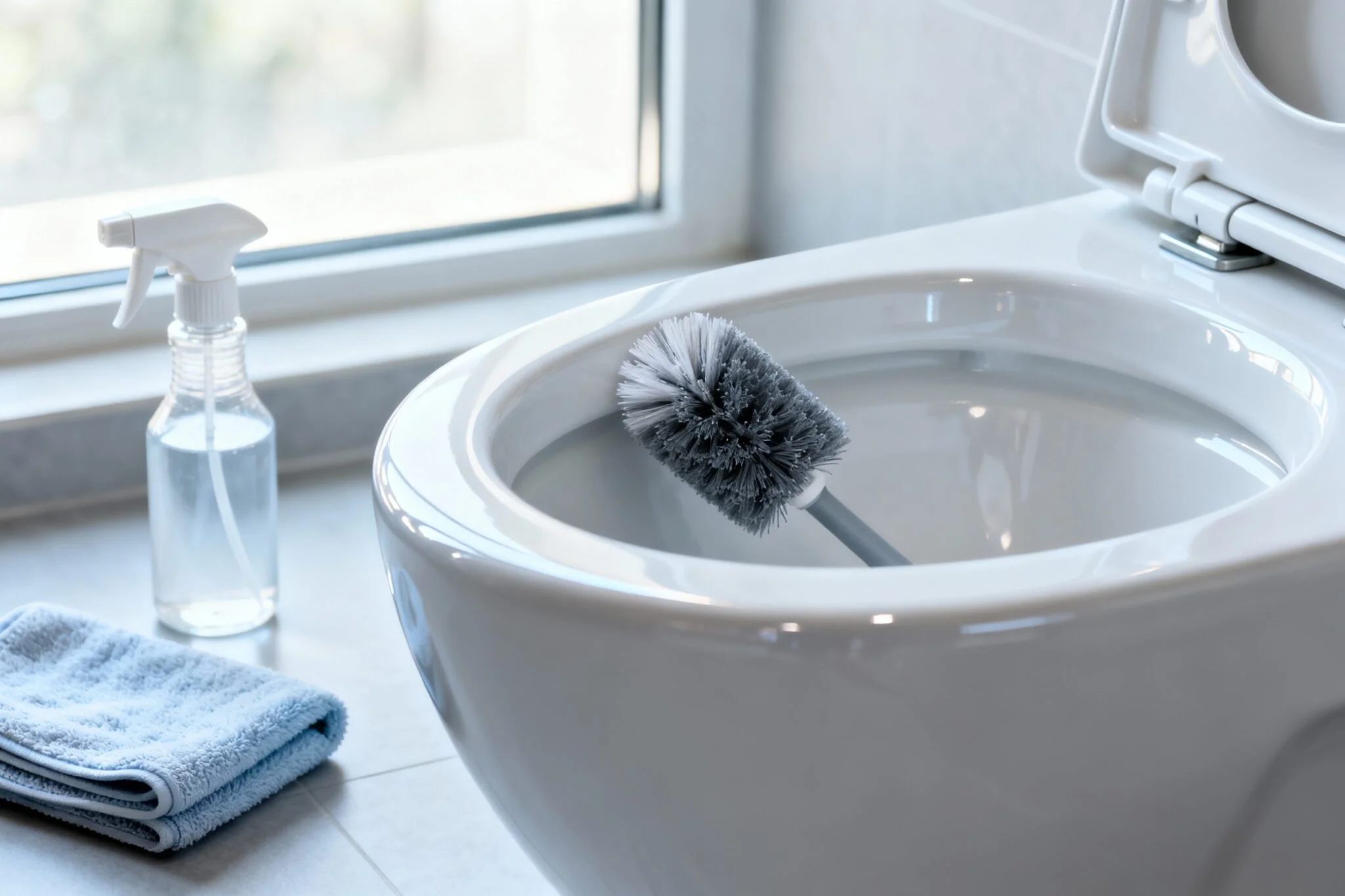
The Best Toilet Cleaning Hacks You Need To Try
Toilet cleaning is one of those chores we all quietly avoid. I’ve done it the lazy way, the rushed way, and the “spray everything and hope for the best” way. None of those worked well. What actually works is being a little smarter about the process. When you use the right order and the right tools, the job becomes quicker, less messy, and honestly a lot more satisfying than you’d expect. You don’t need to choke on fumes or scrub for half an hour. You just need a better method.
Start With a Dry Bowl (Trust Me)
Most of us pour cleaner straight into the bowl while it’s full of water. I used to do the same. The problem is that water dilutes your cleaner instantly, which means it has to work twice as hard. That’s wasted effort.
Turn off the water valve behind the toilet and flush once to empty most of the water out. If there’s still a bit left, that’s fine. Use a few pieces of toilet paper to wipe the sides so they’re damp but not dripping. Now when you apply any cleaner, it clings to the surface instead of sliding off. You’ll notice right away that stains respond faster and you scrub less.
It’s a small step, but it completely changes how effective everything else becomes.
The Power Combo: Pumice + Acid
Hard water stains and that stubborn ring around the bowl can stick around for months if you don’t deal with them properly. I’ve seen people attack them with pure force, scrubbing aggressively and getting nowhere. The secret isn’t more strength. It’s the right combination.
A mild acid like white vinegar or citric acid breaks down mineral deposits. That chalky buildup you see isn’t dirt — it’s minerals from water. Once you loosen that layer, a pumice stone can gently remove what’s left without scratching standard porcelain.
How to Use It Properly
First, apply vinegar or sprinkle citric acid around the stained ring. Make sure it covers the area fully. Let it sit for at least 15 to 30 minutes. This waiting time is important. The acid needs time to soften the buildup.
Next, wet your pumice stone completely. Always keep both the stone and the porcelain wet. Then scrub lightly in short strokes only over the stained area. You don’t need heavy pressure. If you’re pressing hard, you’re doing too much.
Turn the water back on and flush. The shine you see afterward feels earned. If your toilet has a special coating or finish, skip the pumice and stick to acid treatments only.
Borax + Vinegar = The Overnight Reset
Sometimes the bowl looks dull, stained, and tired no matter how much you scrub. When that happens, an overnight treatment works wonders.
Borax helps loosen buildup and neutralize odors. Vinegar reacts with it and boosts the cleaning power without filling your bathroom with harsh chemical smells.
Overnight Treatment Steps
Lower the water level by turning off the valve and flushing. Sprinkle about half a cup of borax around the inside of the bowl and swish it so it coats the sides.
Pour in a cup of vinegar. You’ll see a little fizzing — that’s normal. Then leave it alone overnight. Don’t rush this part.
In the morning, scrub with a stiff brush and flush. You’ll notice the grayish film that keeps returning every week is much lighter or completely gone. Doing this once in a while saves you from constant heavy scrubbing later.
Toilet Brush Upgrades That Actually Matter
I didn’t realize how much a brush matters until I replaced an old one. A cheap brush with worn bristles just spreads grime around. It also holds onto moisture and smells terrible.
Silicone bristle brushes are a game changer. They don’t trap debris the same way traditional bristles do. They rinse cleaner and dry faster. That means fewer odors and less bacteria hanging around in the holder.
A curved brush head helps you reach under the rim easily. You shouldn’t have to twist your wrist into strange angles just to clean properly. And always choose a holder that allows airflow. If your brush sits in a sealed cup full of water, you’re basically growing swamp water in your bathroom.
Clean the Brush While You’re There
After scrubbing, don’t just drop the brush back into the holder. Trap it under the toilet seat so it hangs over the bowl. Pour a bit of hot water and a splash of vinegar over the bristles. Let it drip dry for about ten minutes before putting it away. This simple habit keeps smells under control and extends the life of the brush.
Under-the-Rim Gunk: The Hidden Villain
If your toilet isn’t flushing as strongly as it used to, the problem might be hiding under the rim. Those small jets push water into the bowl during a flush. When they clog with mineral buildup, you get weak flushing and streaks down the sides.
Quick Jet Clean
Wear gloves. Soak paper towels in vinegar and press them under the rim so they sit against the jets. Leave them there for 20 to 30 minutes.
After that, use a stiff nylon brush or an old toothbrush to scrub each hole. Flush a few times to clear loosened debris. If needed, repeat with a stronger citric acid solution. Avoid metal tools because scratches make future buildup worse.
Once those jets are clear, you’ll notice the difference immediately in how the toilet flushes.
The Tank: Silent Source of Stains
Most people ignore the tank completely. I used to, too. But when the tank has mineral buildup or mildew inside, it feeds that problem right back into the bowl.
Simple Tank Refresh
Carefully remove the lid and set it somewhere safe. Pour in one to two cups of white vinegar. Let it sit for 30 to 60 minutes.
Use a soft brush to gently scrub the tank walls, float, and flapper. Don’t use harsh abrasives. Then turn off the water, flush to drain the tank, and turn the water back on to refill it.
Avoid drop-in bleach tablets. They slowly damage rubber parts, which leads to leaks and expensive repairs. Keeping the tank clean naturally protects both your toilet and your wallet.
Stain-Specific Hacks That Work Fast
Not every stain responds to the same treatment.
Brown or rust streaks usually need an oxalic acid-based cleaner. Apply it, wait a few minutes, scrub lightly, and flush.
Blue rings from cleaner residue often break down with vinegar first. If they stick around, a baking soda paste adds gentle scrubbing power.
If you notice odors that won’t disappear, clean around the seat hinges and base bolts. Sometimes grime hides in those small areas. Removing the seat for a deep clean takes only a few minutes and makes a huge difference.
Daily Micro-Habits That Prevent Heavy Scrubbing
The easiest way to avoid a major cleaning session is to do tiny maintenance regularly.
Keep a spray bottle of half vinegar and half water on the tank. After a flush, give the bowl a quick spray and swish with the brush. It takes seconds.
Wipe the seat, lid, and handle every couple of days. Let your brush dry fully before putting it away. If you live in an area with hard water, plan a monthly citric acid treatment so minerals never get the chance to build up heavily.
These habits keep everything under control so you’re never facing a disaster.
Natural vs. Chemical: Choosing What Works for You
Natural cleaners like vinegar, citric acid, baking soda, and borax handle most routine maintenance without strong fumes. For everyday cleaning, they’re more than enough.
Stronger chemicals like bleach or hydrogen peroxide disinfect quickly. Acid-based commercial cleaners melt heavy mineral buildup faster. Just never mix bleach with acids or ammonia. That combination creates dangerous fumes. Use one product at a time and rinse thoroughly before switching.
I prefer natural options for regular upkeep and save stronger products for rare situations that truly need them.
Frequently Asked Questions
How Often Should You Deep-Clean?
A light cleaning once a week keeps things fresh. A deeper session once a month works well for most homes. If you have hard water or a busy household, you might need to do it more often.
Can Bleach Handle Everything?
Bleach disinfects very well, but it doesn’t remove mineral stains effectively. Clean stains first, then disinfect if needed.
Is a Pumice Stone Really Safe?
Yes, for standard porcelain toilets, as long as everything stays wet and you use gentle pressure. Avoid using it on coated or specialty finishes.
Why Does My Toilet Still Smell?
Check under the seat hinges, around the base, and inside the tank. If odors persist even after thorough cleaning, there could be a plumbing issue that needs professional attention.
Can You Clean Without Harsh Fumes?
Absolutely. Vinegar, citric acid, and baking soda handle most cleaning tasks when used properly and with ventilation. Strong chemicals should only be used occasionally.
Conclusion of Best Toilet Cleaning Hacks
Toilet cleaning doesn’t have to feel overwhelming. When you start with a dry bowl, use the right stain-fighting methods, keep your brush clean, and pay attention to hidden areas like the rim and tank, the whole process becomes easier. Build small habits into your routine, and you’ll rarely face stubborn buildup again. It’s not glamorous work, but when everything looks clean and fresh, it feels completely worth it.