Chicken, Rice, and Pumpkin Dog Food Recipe for Dogs with Allergies
Finding a reliable chicken, rice, and pumpkin dog food recipe for dogs with allergies can feel overwhelming when your dog is constantly dealing with itching, digestive upset, or recurring skin problems. After many years of working with dogs and helping owners identify food-related issues, I’ve seen how much of a difference a simple homemade diet can make.
I started recommending meals built around gentle ingredients because many sensitive dogs do better when unnecessary additives and complicated ingredient lists are removed. This recipe combines lean protein, easy-to-digest carbohydrates, and fiber-rich pumpkin to create a balanced meal that many allergy-prone dogs tolerate well.
Save For later

Key Takeaways
- Chicken, rice, and pumpkin are commonly used ingredients for sensitive dogs.
- Pumpkin provides natural fiber that supports healthy digestion.
- Homemade dog food helps avoid many unnecessary fillers and additives.
- This recipe may support skin comfort and digestive wellness.
- Easy-to-find ingredients make meal preparation simple and affordable.
- Portions can be adjusted based on your dog’s size and activity level.
Pro Tip
When I prepare homemade meals for dogs with allergy concerns, I keep a simple food journal for the first few weeks. I write down ingredients, serving sizes, and any noticeable changes in skin, ears, stool quality, or energy levels. This makes it much easier to identify what works and what doesn’t. I also cook ingredients separately before combining them, which allows adjustments if a dog reacts to a specific ingredient. Small observations over time often provide the most useful information when managing food sensitivities.
Related Posts
- Homemade Pumpkin Peanut Butter Dog Chews for Healthy Snacking
- Easy Chicken and Rice Muffins for Dogs With Sensitive Stomachs
- Best Beef Dog Food Recipes for Dogs With Allergies
Why Chicken, Rice, and Pumpkin?
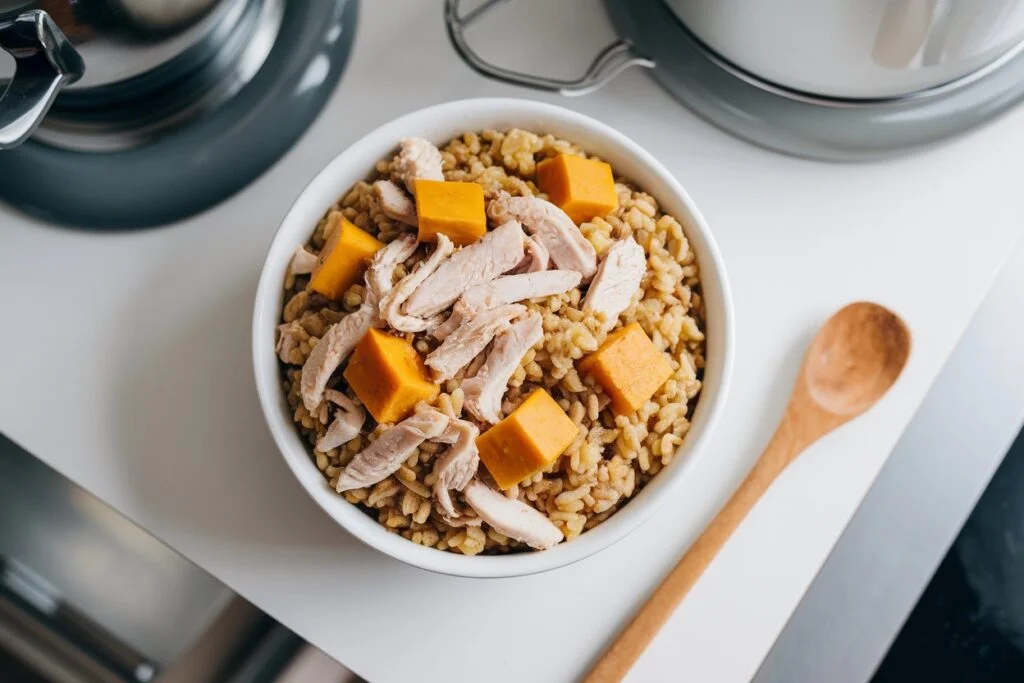
Before jumping into the recipe, it’s important to understand why these ingredients work so well, especially for dogs with allergies. I’ve seen countless dogs improve within weeks when switching to this simple combination.
Chicken
Chicken is a lean, highly digestible protein that supports muscle maintenance without overwhelming the digestive system. In my experience, many dogs who react to beef or complex protein blends tolerate chicken very well. According to veterinary nutrition data, lean poultry proteins are among the most commonly recommended proteins for elimination diets.
If your dog is allergic to chicken, turkey or lean lamb are excellent substitutes.
Rice
Rice is a gentle carbohydrate that provides energy without irritating the gut.
• White rice is easier to digest and ideal for dogs with active digestive upset
• Brown rice contains more fiber, magnesium, and B vitamins, which support gut health and energy metabolism
Both options work well depending on your dog’s tolerance.
Pumpkin
Pumpkin is one of the most powerful natural digestive aids for dogs. I’ve used it for dogs with diarrhea, constipation, and inconsistent stools. Its soluble fiber absorbs excess water in the gut while also helping stools move along when things are sluggish.
Pumpkin is also rich in vitamins A, C, and E, which support immune health and skin repair—critical for dogs dealing with allergy flare-ups.
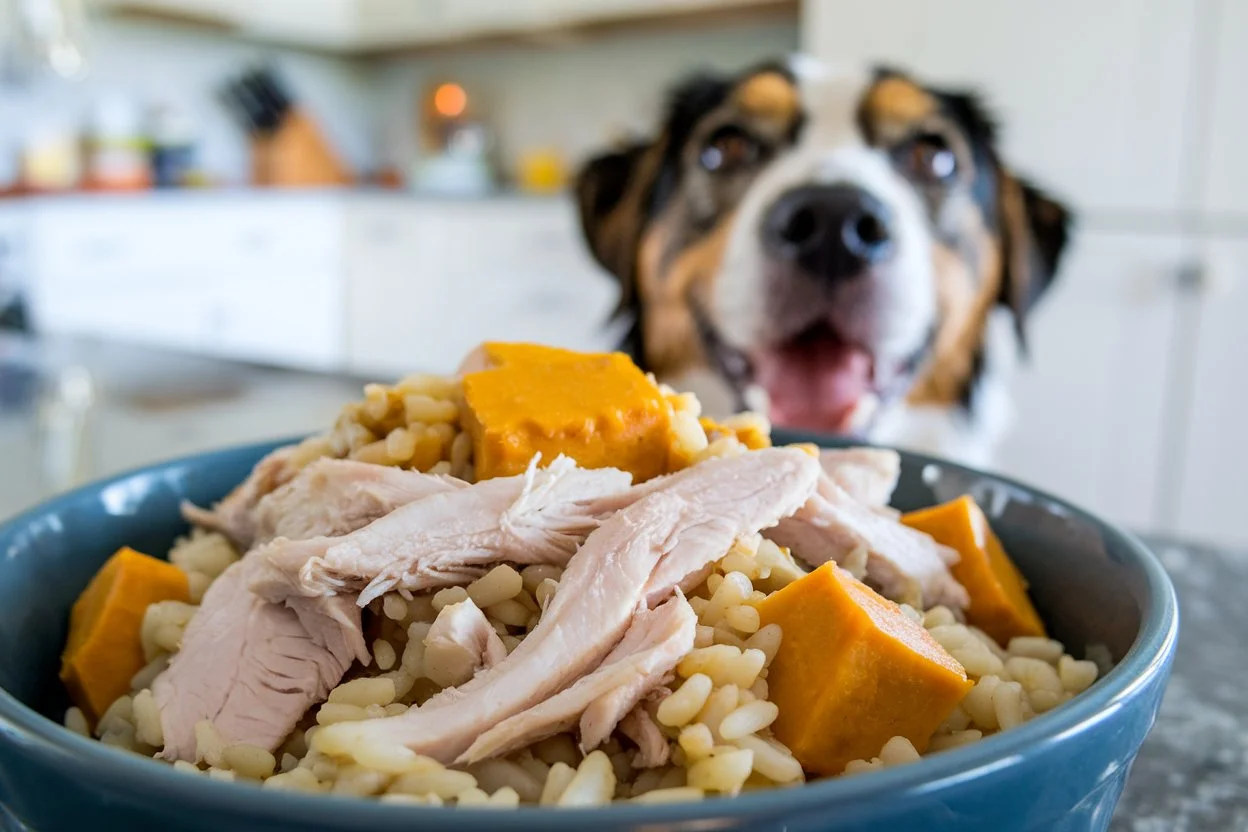
Chicken, Rice, and Pumpkin Allergy-Friendly Recipe
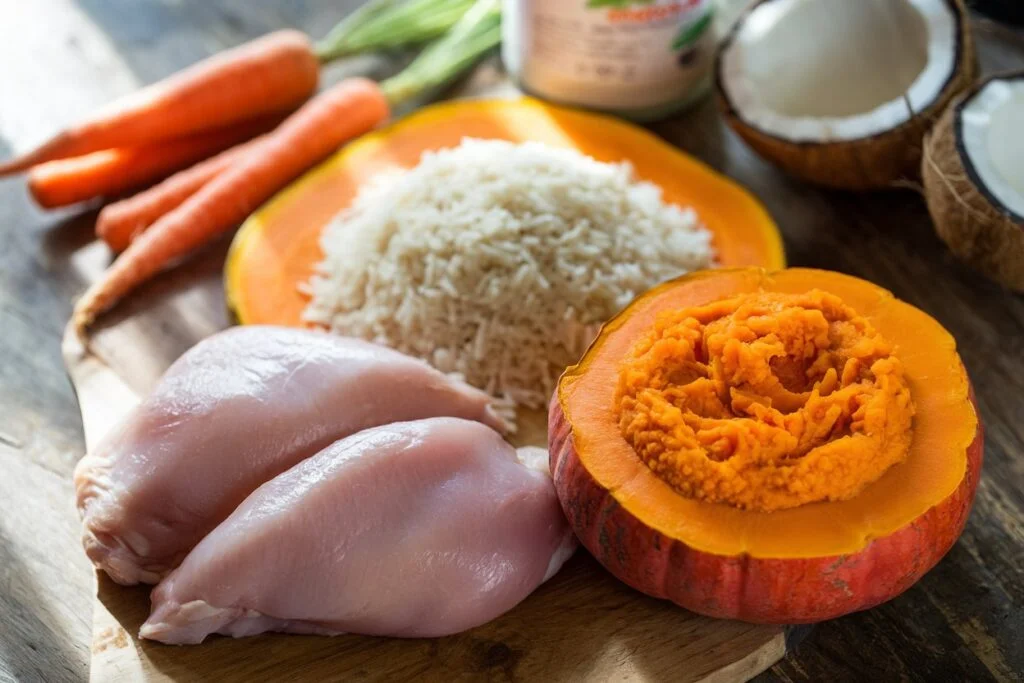
Ingredients:
2 lbs boneless, skinless chicken breasts (or thighs for extra moisture)
1 cup brown or white rice
1 cup pumpkin puree (100% pure pumpkin, not pie filling)
1 cup chopped carrots (optional, for added fiber and beta-carotene)
1 tablespoon coconut oil (optional, supports skin and coat health)
2 cups water
Instructions:
Prepare the Chicken
If using a crockpot or Instant Pot, place the chicken directly into the pot. There’s no need to cut it beforehand—it will shred easily once cooked. If cooking on the stove, dice the chicken into smaller pieces for even cooking.
Add the Rice and Pumpkin
Add the rice and pumpkin puree directly to the pot. Pumpkin should be plain and unsweetened. I always double-check labels because added sugars can worsen inflammation and allergies.
Toss in Some Veggies (Optional)
Carrots are optional but beneficial. They provide beta-carotene, which converts to vitamin A and supports skin health—something allergy dogs often struggle with.
Add Water
Pour in 2 cups of water. Keeping the ingredient list minimal is important for dogs with allergies, so water is often better than broth.
Cook it Low and Slow
Crockpot Method: Cook on low for 4–6 hours
Instant Pot Method: Cook on high pressure for 15 minutes, then quick release
Shred the Chicken
Remove the chicken, shred it with two forks, and mix it back into the rice and pumpkin mixture.
Add Coconut Oil (Optional)
If your dog has dry skin or excessive shedding, coconut oil can help. In my grooming experience, dogs with allergy-related skin issues often benefit from small amounts of healthy fats.
Cool and Serve
Allow the food to cool completely before serving. Hot food can irritate a dog’s mouth and digestive tract.
How Much Should I Feed My Dog?
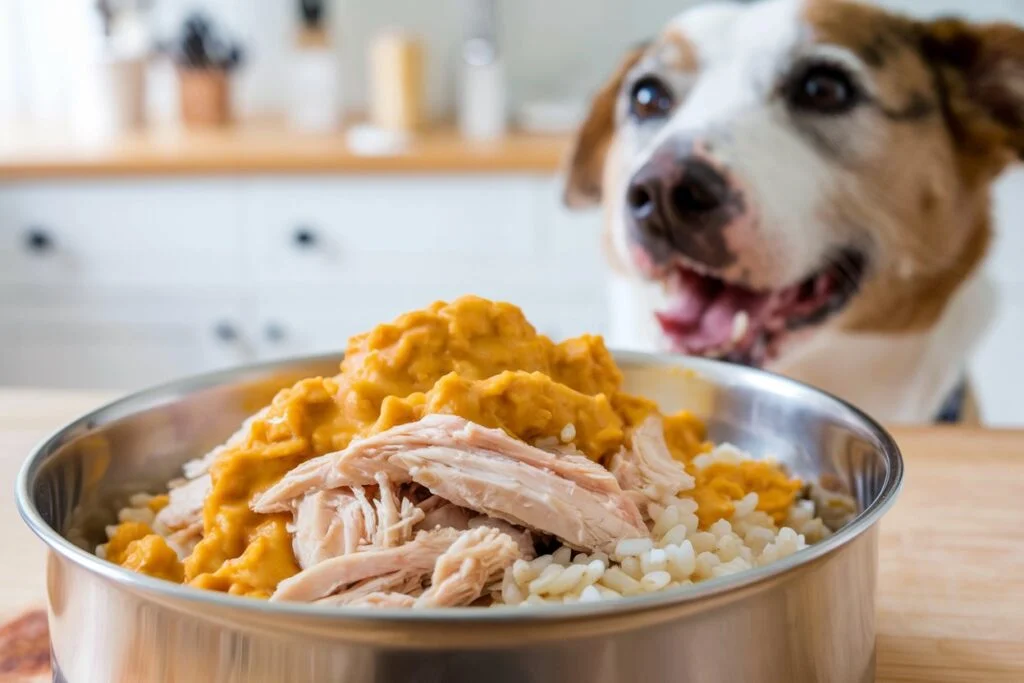
Portion size depends on weight, activity level, and age. These are general guidelines I’ve used successfully, but your vet should always have the final say.
Small dogs (10–20 lbs): ½ to 1 cup per meal
Medium dogs (20–50 lbs): 1 to 1½ cups per meal
Large dogs (50–100 lbs): 1½ to 3 cups per meal
Serve twice daily. Monitor weight and stool consistency and adjust portions as needed.
Why Homemade Dog Food?
After 20 years working closely with dogs, one thing is clear: when owners control the ingredients, dogs with allergies often thrive. Commercial foods can contain hidden allergens like corn, soy, artificial preservatives, and unnamed meat by-products.
Benefits of homemade dog food include:
• No fillers or mystery ingredients
• Fresh, whole foods that are easier to digest
• Ability to customize for allergies and sensitivities
• Better stool quality and fewer skin flare-ups
Studies show that up to 20% of chronic skin conditions in dogs are food-related, making diet one of the most powerful tools you have.
Can You Freeze This Recipe?
Yes, and I highly recommend it. This recipe freezes extremely well.
Divide into meal-sized portions and freeze for up to 3 months. Thaw overnight in the refrigerator and warm slightly if needed—just never serve it hot.
FAQs
Can I substitute chicken with another protein?
Yes. Turkey, lamb, or lean beef can be used if chicken isn’t tolerated.
How long can I store this in the fridge?
3–4 days in an airtight container.
Is this recipe safe for puppies?
Yes. I’ve used similar recipes for puppies with sensitive stomachs. Adjust portions and ensure overall calorie needs are met.
Final Thoughts
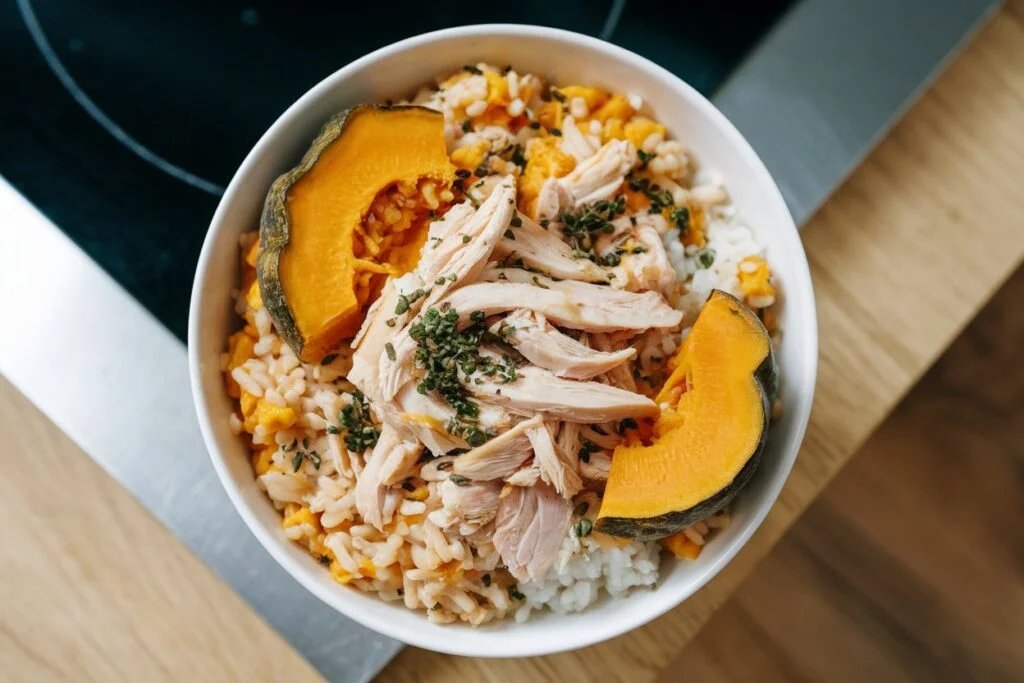
Managing dog allergies can feel overwhelming, but diet is one area where you have real control. This Chicken, Rice, and Pumpkin Dog Food Recipe has helped many dogs I’ve worked with experience fewer flare-ups, better digestion, and healthier coats.
As always, consult your veterinarian before making major dietary changes, especially for dogs with diagnosed allergies or medical conditions. From my experience, simple, clean ingredients often make the biggest difference.
All content on this site is written and reviewed by our experienced team to ensure it is accurate, reliable, and helpful for our readers. Our Our Process page explains how we carefully research and create high-quality content, while our Team page introduces the professionals behind our work. We also provide clear guidelines for content or image concerns on our Image Removal page, so you can trust that we prioritize transparency, quality, and reader safety.