Cleaning Supplies Every Home Needs
A small, well-chosen kit that covers every room — no cupboard overflowing with sprays and gadgets. You don’t need a cupboard full of specialised sprays to keep a home clean. Most households get by beautifully with five core cleaners and a handful of tools — and buying the right basics saves money, space, and a lot of decision fatigue. This guide lists exactly what to buy, what each item is for (and not for), what to skip, and how to store it all safely.
The Core Five Cleaners
These five handle roughly 95% of everyday household cleaning. If you buy nothing else, buy these.
Want a Better-Trained, Happier Dog?
Get practical guidance for obedience, behavior, and everyday dog training with a collection of helpful training guides designed for dog owners.
This post may contain affiliate links. If you purchase through our link, we may earn a commission at no additional cost to you.
- Dish soap (mild liquid): Use for: Washing dishes by hand, wiping kitchen counters, cleaning sinks, spot-cleaning fabrics, and washing most washable surfaces when diluted (about 1 teaspoon per 4 litres of warm water). NOT for: Laundry machines (it foams too much), floors in large quantities (it leaves a sticky film if not rinsed well), or anything that must stay grease-free for painting or sealing.
- Distilled white vinegar (5%): Use for: Descaling kettles and showerheads, cutting limescale on taps, cleaning glass and mirrors (diluted 1:1 with water), and freshening the washing machine (1 cup in an empty hot cycle). NOT for: Natural stone (marble, granite, travertine), waxed wood, cast iron, or aluminium — vinegar’s acid etches stone, strips wax, and corrodes metal. Never mix vinegar with bleach or hydrogen peroxide in the same bottle or solution.
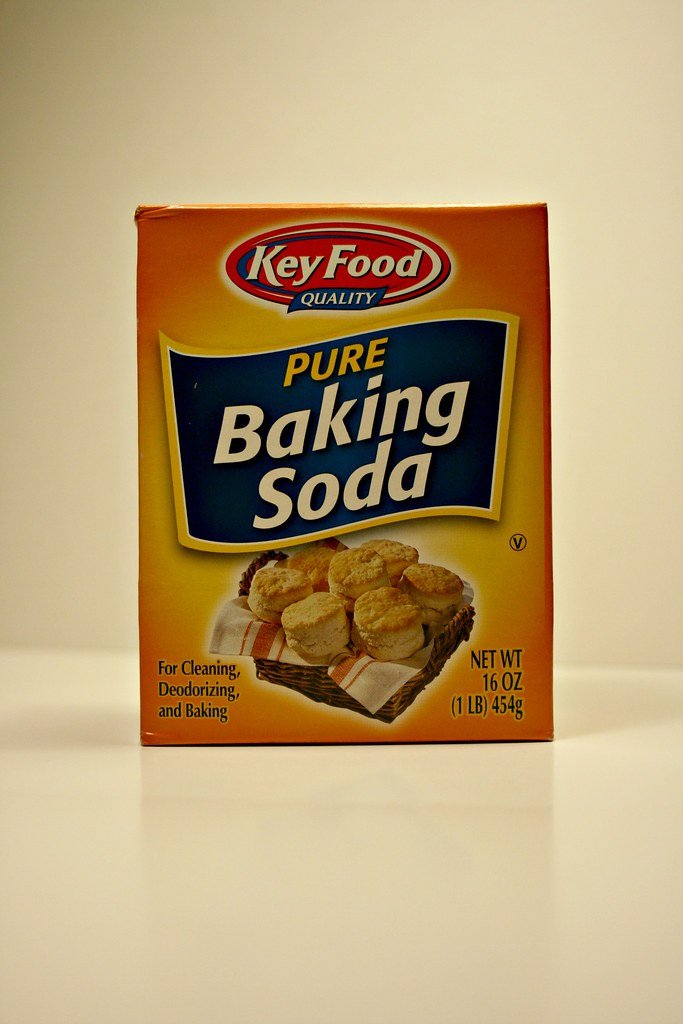
- Baking soda (bicarbonate of soda): Use for: Gentle scouring of sinks, tubs, and cooktops (as a paste: 3 tablespoons baking soda + 1 tablespoon water), deodorising fridges, carpets, and bins, and freshening laundry (1/2 cup in the drum). NOT for: A substitute for a disinfectant — baking soda cleans and deodorises but does not reliably kill germs. Do not pour it into a spray bottle with vinegar and expect a miracle cleaner; the fizz is mostly theatre, and the two neutralise each other.
- An all-purpose cleaner: Use for: Daily wipe-downs of counters, tables, appliance exteriors, and bathroom surfaces. A store-bought all-purpose spray is convenient; a homemade mix of 1 part vinegar to 1 part water with a few drops of dish soap works for most homes. NOT for: Disinfecting after illness or raw-meat contact (use a proper disinfectant for that), or for stone and waxed surfaces if it is vinegar-based.
- A disinfectant: Use for: Toilet seats and handles, kitchen surfaces after raw meat, door handles and light switches during illness, and bin interiors. Check the label for its contact time — most need to stay wet on the surface for 3-10 minutes to work. NOT for: Everyday wiping of every surface — overusing disinfectant wastes money, damages some finishes, and builds chemical residue. Clean first, then disinfect only where it matters.
Optional extras (nice, not essential): a bathroom-specific limescale remover for hard-water areas, an oven cleaner for heavy grease (or a baking-soda paste left overnight), and a wood cleaner or oil soap for real-wood furniture. Buy these only if your home actually needs them.
The Tools: What Actually Gets Used
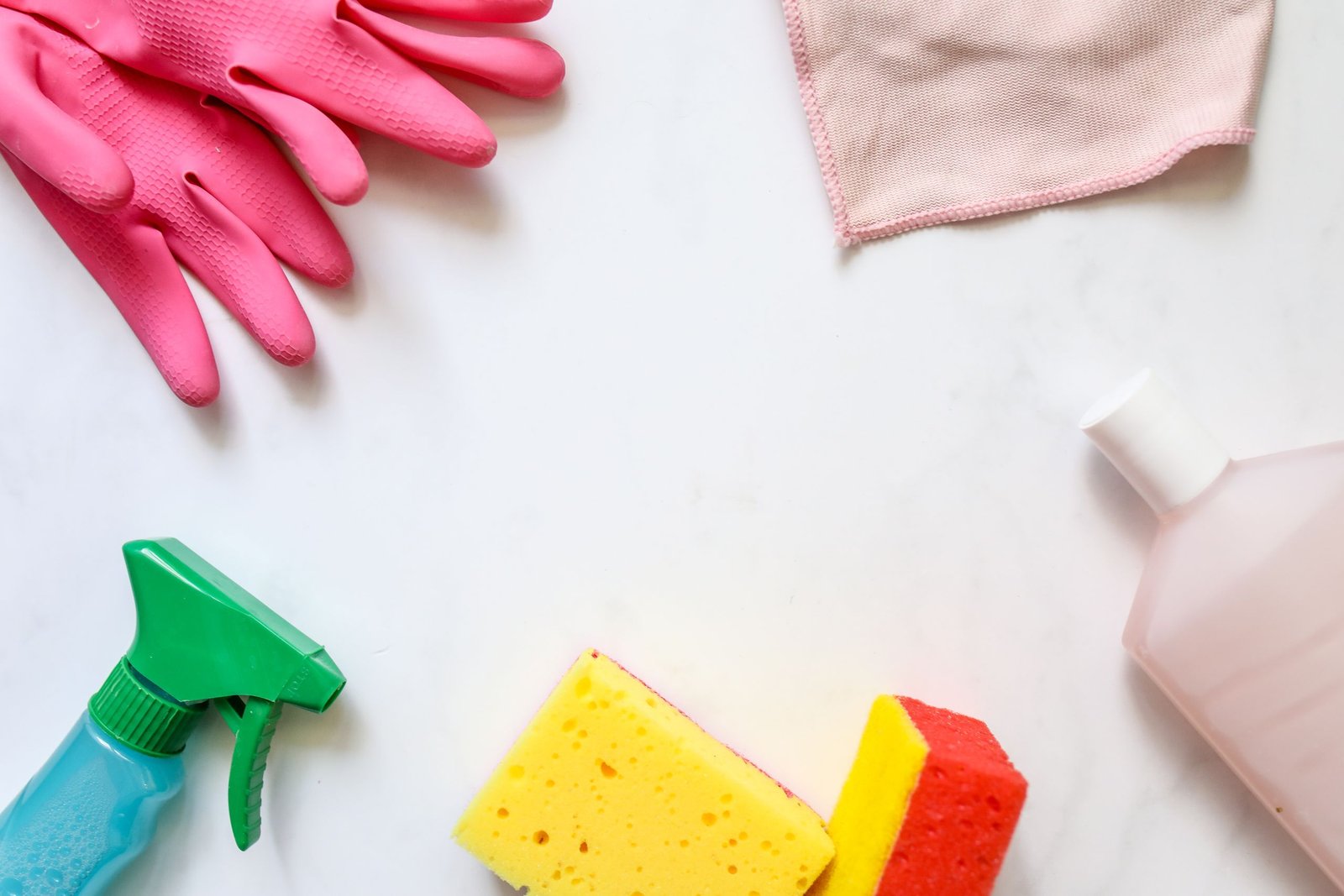
Microfibre cloths (at least 6-8): The workhorse of the whole kit. Use them damp for dusting, wiping, and polishing. Keep separate cloths for kitchen, bathroom, and glass to avoid cross-contamination — colour-coding helps. Wash them in the machine without fabric softener, which coats the fibres and ruins their absorbency.
A non-scratch scrub sponge: For sinks, tubs, and cooktops. Avoid steel wool on non-stick, glass, and acrylic.
An old toothbrush: Perfect for grout lines, tap bases, and around fixtures.
Paper towels: For the genuinely grim jobs (pet accidents, raw-meat spills) where you want to throw the mess away, not wash it into your cloths.
A toilet brush with a holder: Non-negotiable — replace the brush head every 6 months.
A broom and dustpan: For hard floors, daily crumbs, and sweeping before mopping.
A mop: A flat microfibre mop for hard floors is enough for most homes; a spin mop is better for large tiled areas. Never use a steam mop on laminate or unsealed wood — the moisture swells the boards.
A vacuum cleaner: With attachments for upholstery, stairs, and edges. A stick vacuum suits small homes; a bagged or bagless upright suits larger ones with carpets. Empty or replace the filter as the manual says — a clogged vacuum just pushes dust around.
Two spray bottles: One for your all-purpose mix, one for plain water. Label both clearly.
A squeegee: For shower glass and windows — 30 seconds after a shower prevents most water marks.
Rubber gloves (2 pairs): One pair for the bathroom, one for the kitchen.
A bucket, a dustpan brush, and a lint roller: Small, cheap, and used constantly.
Safety Gear: The Part People Skip
Rubber gloves — wear them for every job involving chemicals, toilets, bins, or mould. Safety glasses for overhead jobs (ceiling fans, high shelves) and for spraying oven cleaner or bleach. A dust mask or N95 respirator for dusty jobs (attics, ceiling fans, mouldy grout, sanding). A paper dust mask is fine for dust; use an N95 for mould. First aid basics: If a cleaner splashes in your eyes, rinse with clean water for at least 15 minutes and seek medical advice if irritation persists. If swallowed, do not induce vomiting — call your local poison centre and keep the product label handy.
Storage: Keep It Safe, Dry, and Findable
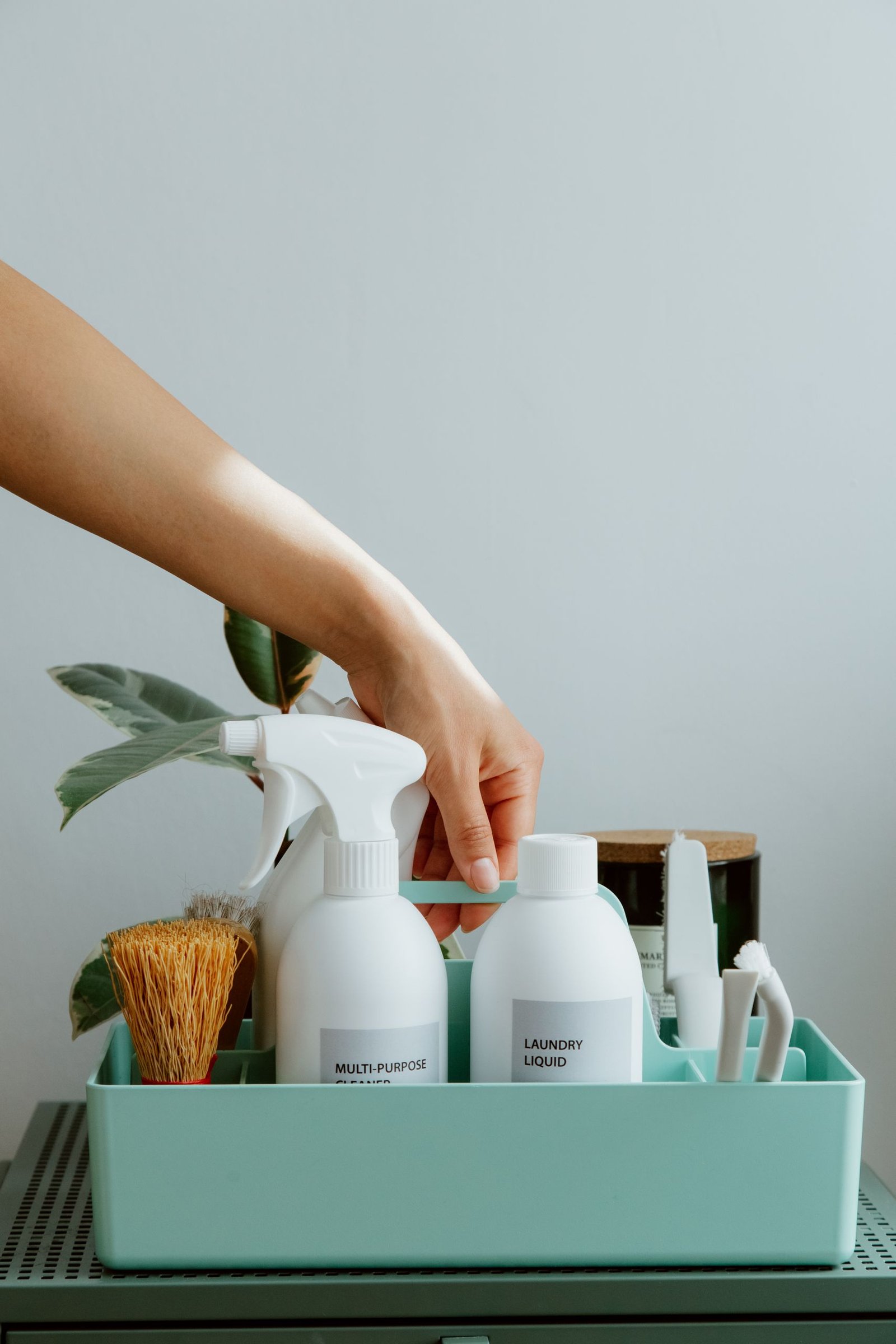
One caddy, one cupboard. Keep daily supplies in a portable caddy and bulk stock in a single cupboard — ideally high, dry, and away from food.
Up high, locked if needed. All chemicals go on a high shelf or in a cupboard with a child-proof latch if children or pets live in (or visit) the home. Never store cleaners under the kitchen sink without a latch — it is the first place a curious toddler reaches.
Original containers, original labels. Never decant cleaners into food or drink bottles. If you make a homemade mix, label the bottle with its contents and the date you made it, and replace vinegar-based mixes within a month.
Cool, dry, and upright. Heat and damp degrade cleaners and can warp containers. Keep them away from radiators, boilers, and damp basements.
Check expiry and condition. Bleach loses strength after about 6 months once opened; aerosol cans dent and leak; cracked bottles go in the bin (rinsed, with the cap on, per local disposal rules).
Budget vs Premium: Where to Spend and Where to Save
Save on: Dish soap, vinegar, baking soda, microfibre cloths, spray bottles, and buckets. Store brands and bulk packs perform identically to premium versions for these.
Spend on: A good vacuum cleaner (the single most-used cleaning tool in the house), a sturdy mop, and quality rubber gloves that do not split after two uses.
Middle ground: All-purpose cleaners and disinfectants. A mid-range product with clear labelling and a stated contact time beats both the cheapest mystery spray and the most expensive “eco-luxury” bottle.
What to Skip
Single-use floor wipes for every room when a washable microfibre mop does the same job cheaper and with less waste. A different spray for every surface (one for glass, one for wood, one for granite, one for stainless steel) — unless you genuinely have all those surfaces, the core five cleaners above cover nearly everything. Expensive “miracle” gadgets (electric spin scrubbers, UV sanitisers, robot mops) before you own the basics. A robot mop is a luxury, not a replacement for a broom and a mop. Duplicates: two half-empty bottles of the same cleaner, three toilet brushes, or a drawer of cloths you never wash. Use one up before opening the next. Scented everything: plug-ins, beads, and heavily fragranced sprays mask odours instead of removing them. Clean the source of the smell, then ventilate — fresh air is free.
What NOT to Do
Never mix bleach with vinegar, ammonia, or any other cleaner. Bleach + vinegar creates chlorine gas; bleach + ammonia creates chloramine gas. Both can cause serious breathing injuries. Use one product at a time and rinse between steps. Never mix hydrogen peroxide with vinegar in the same bottle or solution — it forms peracetic acid, which irritates skin, eyes, and lungs. Never store cleaners in food or drink containers — a child, guest, or tired adult can mistake them in seconds. Never use a cleaner on a surface it warns against — check the label for stone, wood, and electronics warnings before you spray. Never skip gloves for toilets, bins, mould, or bleach — skin contact causes irritation, and cuts become infection risks. Never spray cleaners directly onto electronics, walls, or into the air — spray onto a cloth instead, and ventilate the room. Never leave a damp mop, cloth, or sponge sitting in a bucket — they breed mildew and smell within a day. Rinse, wring, and air-dry them after every use. Never buy in bulk what you have not tried — a gallon of a cleaner you hate is a gallon of clutter.
Tick-Off Checklist
- Dish soap (mild liquid) stocked — for dishes, counters, sinks, and spot-cleaning;
- Distilled white vinegar (5%) stocked — for limescale, glass, and descaling (never on stone, waxed wood, cast iron, or aluminium);
- Baking soda stocked — for gentle scouring and deodorising (not a disinfectant);
- All-purpose cleaner stocked — for daily wipe-downs (not a substitute for disinfectant after illness or raw meat);
- Disinfectant stocked — for toilets, raw-meat surfaces, illness, and bins (check contact time, 3-10 minutes);
- Microfibre cloths (6-8) stocked, colour-coded by room, washed without fabric softener;
- Non-scratch scrub sponge, old toothbrush, and paper towels stocked;
- Toilet brush with holder stocked (head replaced every 6 months);
- Broom and dustpan, mop (never steam on laminate or unsealed wood), and vacuum with attachments stocked;
- Two labelled spray bottles (all-purpose mix and plain water), squeegee, rubber gloves (2 pairs), bucket, dustpan brush, and lint roller stocked;
- Safety gear stocked: gloves, safety glasses, dust mask or N95;
- First aid known: eye splash rinsed 15 minutes, swallowed = do not induce vomiting, call poison centre;
- Supplies stored high, latched, away from food, in original labelled containers;
- Homemade mixes labelled with contents and date, replaced within a month;
- Bleach checked — loses strength about 6 months after opening;
- No cleaners stored in food or drink containers;
- No bleach mixed with vinegar or ammonia; no peroxide mixed with vinegar;
- No damp mop, cloth, or sponge left sitting in a bucket.
Download Your Free Printable Checklist
Get the free, print-friendly checklist for cleaning supplies every home needs — perfect for your cleaning cupboard.
PDF • Print-friendly
Looking for more free printables? See all free printables on our Cleaning Resources page.