
DIY Dog Deodorizing Spray: You Have To Try It!
If you live with a dog, you already know how quickly smells can take over. One walk through wet grass, one roll in something suspicious, or even just a rainy day can leave your dog carrying an odor that follows them straight into your home. Baths help, but bathing too often can dry out the skin, and many store-bought sprays smell strong without truly fixing the problem.
Making your own dog deodorizing spray gives you a practical, gentle way to keep your dog fresh between baths. You stay in control of what touches their coat, how strong the scent is, and how often it can be used without irritation. Once you start using it, it becomes part of everyday dog care rather than a last-minute fix.
Why Making Your Own Dog Deodorizing Spray Is Worth It

You know exactly what touches your dog’s skin
Dogs may not complain, but their skin reacts quickly to harsh ingredients. Many commercial sprays rely on alcohol and synthetic fragrances to cover odors fast, but those ingredients can dry out the coat and lead to itching over time. A homemade spray uses simple, gentle components that freshen without stressing the skin.
You control the scent
Every dog owner has a different tolerance for fragrance. Some prefer barely-there freshness, while others want something a little more noticeable. When you make the spray yourself, you can adjust the scent strength and choose oils that feel clean rather than overpowering.
It fits real daily life with dogs
Dogs get smelly between baths. Mud, damp fur, outdoor play, and warm weather all contribute. A DIY spray lets you freshen your dog whenever needed without worrying about overuse or buildup. It’s designed for regular, realistic use.
It saves money without sacrificing quality
Once you have the ingredients, you can make multiple bottles at a very low cost. More importantly, the spray actually works by neutralizing odor instead of masking it briefly and fading within an hour.
What You’ll Need to Make a Dog-Safe Deodorizing Spray

Base Ingredients
Distilled water keeps minerals from settling on the coat and helps the spray stay light and clean.
Witch hazel or apple cider vinegar helps break down odors instead of just covering them. Witch hazel is especially good for sensitive skin, while diluted apple cider vinegar works well for stronger smells.
Aloe vera gel is optional, but it adds comfort for dogs with dry or slightly irritated skin and helps keep the coat soft.
Essential Oils (Dog-Safe Only)
Lavender offers a calming scent and is gentle when used correctly.
Chamomile is mild and works well for dogs with sensitive skin.
Cedarwood helps with odor and can naturally discourage pests.
Peppermint adds a fresh smell and helps repel bugs, but it should be used very sparingly.
Essential oils like tea tree, cinnamon, citrus, and eucalyptus should never be used on dogs, even in small amounts.
How to Make the Spray at Home

Step 1: Combine the base
Add distilled water to a clean spray bottle. Mix in witch hazel or apple cider vinegar, then add aloe vera gel if you are using it. This creates a balanced base that freshens without feeling heavy on the coat.
Step 2: Add essential oils carefully
Add only a few drops of your chosen oil. The goal is light freshness, not strong fragrance. Using less keeps the spray safe and comfortable for your dog.
Step 3: Shake and store
Shake the bottle well so everything blends properly. Store it in a cool, dark place to help the ingredients stay effective.
How to Use the Spray Properly
Shake before each use
Water and oils separate naturally, so shaking ensures an even mist.
Lightly mist the coat
Spray lightly over areas that hold odor, such as the back, sides, and legs. A gentle mist is enough to freshen the coat.
Avoid the face
Dogs do not enjoy being sprayed near their eyes or nose. If the face needs attention, spray a brush and apply it that way instead.
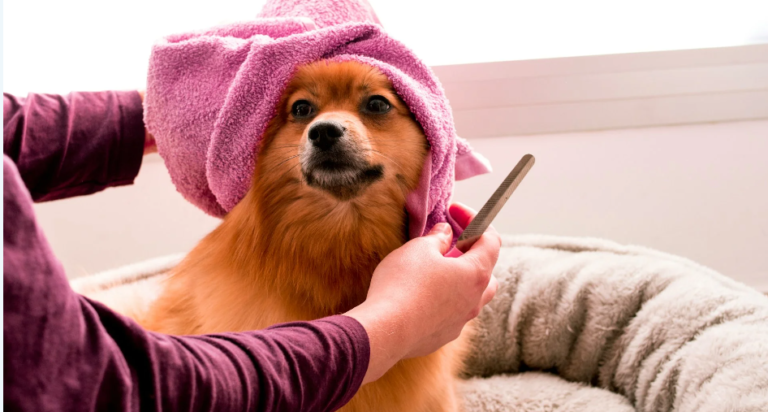
Brush through for best results
Brushing helps distribute the spray evenly and leaves the coat looking cleaner and smoother.
The spray can also be used lightly on dog beds, blankets, and furniture where your dog rests to keep smells from settling in.
Common Questions Dog Owners Have
Is it safe for puppies?
Yes, as long as essential oils are kept to an absolute minimum. Mild options like chamomile or lavender should be used sparingly.
How often can it be used?
The spray is gentle enough for frequent use. Many dog owners use it daily or every other day between baths.
What if my dog dislikes sprays?
Spraying the mixture onto a brush and brushing it into the coat works just as well and keeps nervous dogs relaxed.
Can baking soda be added?
Baking soda is effective for carpets but can irritate a dog’s skin. It should not be used directly on the coat.
Is this safe for cats?
No. Cats are very sensitive to essential oils, and even diluted amounts can be harmful. This spray is for dogs only.
Conclusion of DIY Dog Deodorizing Spray
A homemade dog deodorizing spray is a simple, reliable solution for everyday life with dogs. It keeps your dog smelling clean between baths, protects their skin, and helps your home stay fresh without harsh chemicals. When your dog inevitably finds something questionable to roll in, you already have a safe, effective solution ready to use.