6 Dog Bathing Tips Every Owner Should Know
Bathing a dog might sound simple enough—water, shampoo, rinse, and done—but anyone who’s tried it knows it can quickly turn into a chaotic mess. Your dog might bolt mid-lather, leaving you soaked, shampoo in your eyes, and the house smelling… somehow worse than before. It happens to all of us.
The good news is, with a few thoughtful steps, bath time can become not only manageable but actually enjoyable—for both you and your furry friend. From preparation to drying, every stage matters. Let’s walk through the process in detail so you can turn bath time into a smooth, bonding experience.
1. Brush First, Bathe Later
Before turning on the water or even picking up the shampoo, grab a brush. Brushing first is essential. It removes loose hair and dirt, untangles mats that will only tighten when wet, and allows the shampoo to reach the skin more effectively.
If your dog has short hair, a rubber curry brush works wonders, massaging the skin while picking up loose fur. Long-haired dogs benefit from a slicker brush or dematter, which helps prevent painful tugging during the bath.
Brushing also has a calming effect. Think of it as a gentle “check-in” before the bath—many dogs enjoy the attention and the slow, soothing strokes. Personally, I’ve noticed that even the most anxious pups seem more relaxed once they’ve had a good brushing session. It’s a simple step that can save a lot of stress later.
2. Use Lukewarm Water: The Comfort Zone
Water temperature is one of the most overlooked aspects of a dog bath. Too cold, and your dog shivers and stiffens; too hot, and it can irritate their sensitive skin. The ideal is lukewarm water, comfortably warm to your wrist but never scalding.
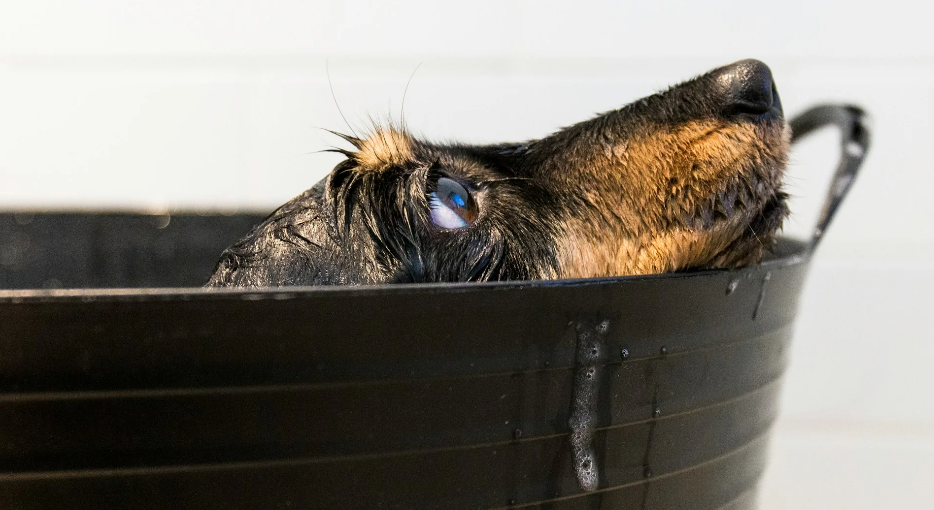
For dogs who panic at the sound of running water, filling the tub ahead of time helps. Some dogs react more to the noise than the bath itself. Adding a non-slip mat or towel to the bottom of the tub gives them a sense of stability, so they don’t feel like they’re skating on ice. Trust me, once your dog feels secure, the bath goes much smoother.
3. Pick the Right Shampoo (And Never Use Yours)
Dog skin is far more delicate than human skin. Using your own shampoo, even the nicest-smelling one, can cause irritation, dryness, or allergic reactions. Stick to dog-specific shampoos suited to their particular needs:
- Gentle oatmeal shampoos for dry or itchy skin
- Medicated or antifungal shampoos for certain conditions (always consult a vet first)
- Deodorizing shampoos for dogs who love rolling in… questionable substances
If you prefer a natural approach, there are safe DIY homemade shampoos, but always check ingredients carefully. Avoid tea tree, citrus, or peppermint oils unless labeled dog-safe—they can be toxic. Choosing the right shampoo ensures your dog’s skin and coat stay healthy, soft, and shiny.
4. Start at the Neck, Work Your Way Down
When it comes to applying shampoo, start at the neck and move toward the tail. Avoid eyes, ears, and any sensitive areas. Massage the shampoo gently into the coat and down to the skin. This ensures a thorough clean without causing discomfort.
If your dog is particularly dirty or stinky, leave the shampoo on for a few minutes—but keep an eye on their movements. Many dogs see this as an opportunity to make a break for it! For the face, a damp washcloth works best; it’s gentle and prevents shampoo from getting into their eyes.
5. Rinse Like You Mean It
Rinsing is arguably the most critical step. Leftover shampoo can cause itching, irritation, or a crusty residue in the coat. Rinse thoroughly and repeat if necessary. Running your hands through the coat ensures no soap hides in long-haired fur.
For efficiency, a handheld sprayer or a simple pitcher works well. If your dog is small, the kitchen sink can even be an excellent alternative. The goal is to make sure every trace of shampoo is gone, leaving the coat smooth, soft, and free of residue.
6. Dry Smart (Before the Zoomies Begin)
Just because the water is off doesn’t mean the job is done. Most dogs go into Zoomie mode seconds after their bath, shaking, running, and splashing water everywhere. To prevent chaos, start towel-drying immediately. Microfiber towels are especially effective—they soak up more water and cut down drying time.
For dogs with thick or long coats, a blow dryer on low heat and low speed works, but keep it moving and avoid directly blowing on ears and face. If your dog hates the dryer, air-drying in a warm, safe space is fine, just be prepared for a little extra shaking along the way.
Final Thoughts of Dog Bathing Tips Every Owner Should Know
Bath time doesn’t have to be an Olympic sport. With preparation, the right tools, and patience, it can become a bonding moment instead of a battle. Remember these key points:
- Brush before bathing to remove loose hair and calm your dog
- Use lukewarm water to keep them comfortable
- Choose a dog-safe shampoo tailored to their needs
- Lather gently and rinse thoroughly to avoid irritation
- Dry quickly and efficiently to prevent chaotic bursts
And of course, always end with a treat. No matter how wiggly or dramatic your dog is, they deserve a reward for surviving bath time. With these steps, you’ll find that bathing your dog can be manageable, even enjoyable, and leave both of you smelling fresh and happy.