Dog House Ideas for Multiple Dogs
When you share your life with more than one dog, a single small shelter just doesn’t cut it. Multiple dogs need space to sleep together, room to spread out when they want alone time, and a layout that keeps the peace at bedtime. The right dog house for a multi-dog household balances togetherness with personal space — and these twelve ideas cover everything from side-by-side duplexes to full backyard dog villages.
1. The Classic Duplex Dog House

A duplex gives each dog its own private unit under one shared roof, with a solid wall down the middle. This is the go-to design for two to four dogs who get along but like their own sleeping quarters. Build it wide enough that each side fits your largest dog comfortably, and add a shared porch so they can still lounge together outside.
Want a Better-Trained, Happier Dog?
Get practical guidance for obedience, behavior, and everyday dog training with a collection of helpful training guides designed for dog owners.
This post may contain affiliate links. If you purchase through our link, we may earn a commission at no additional cost to you.
2. The Open-Plan Pack Lodge
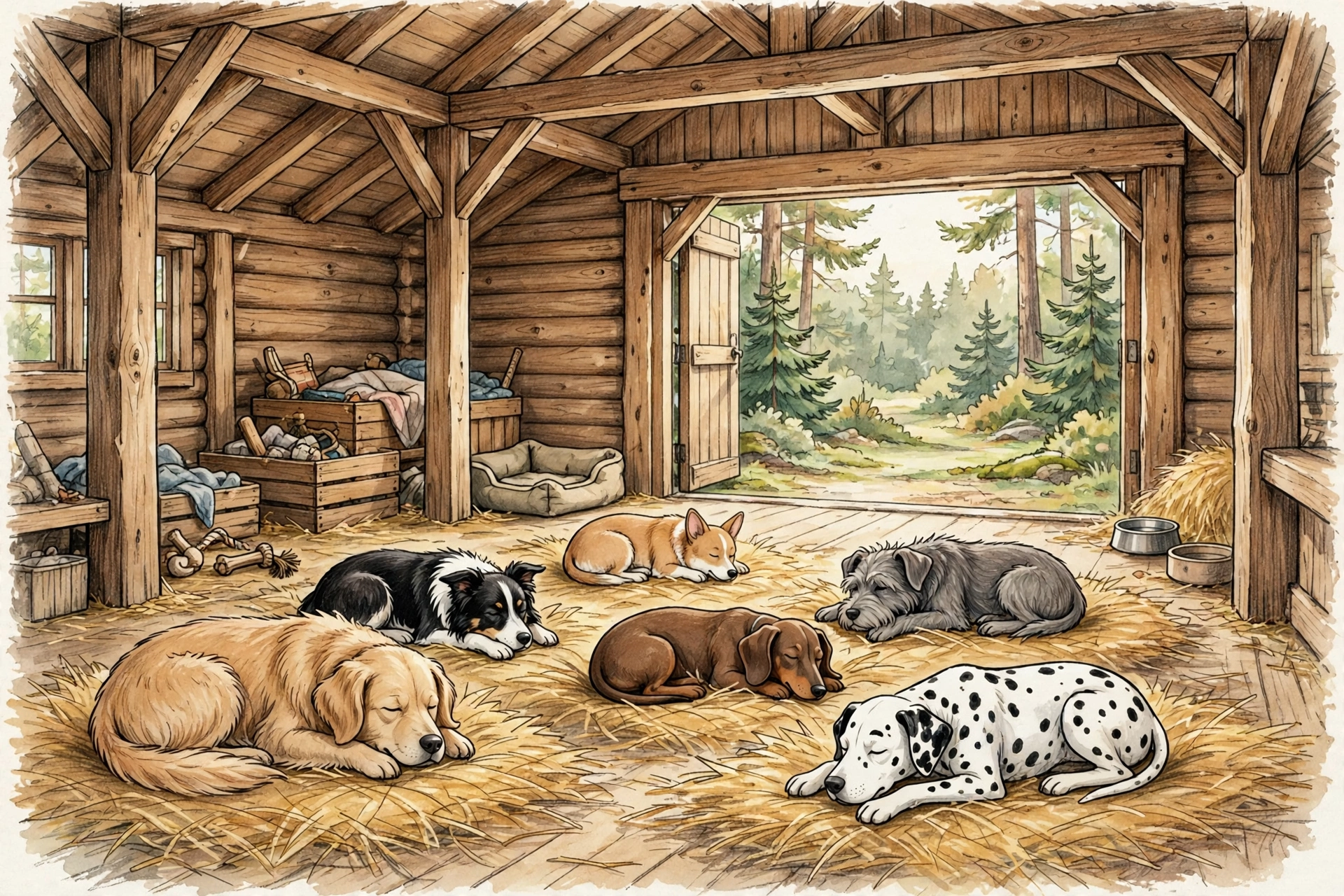
Some dogs are happiest piled together in one big space. An open-plan lodge is a single oversized house with no interior walls, letting your whole pack curl up in one warm den. This design works beautifully for bonded dogs, and it’s simpler to build than a partitioned house — just size it generously so nobody feels crowded. If you’re unsure how much room your crew needs, check our dog house size guide before you start cutting lumber.
3. Partitioned House With Removable Dividers

Can’t decide between open-plan and separate rooms? Build a large house with removable dividers. Slide the panels in when a new rescue needs a quiet settling-in space, or take them out when the whole gang wants to snuggle. Plywood dividers on simple grooves cost almost nothing and make one house work for every stage of pack life.
4. The Dog House Compound

Instead of one big structure, cluster two or three smaller houses around a shared yard. Each dog picks its favorite, and you can add another house as your pack grows — no rebuilding required. This modular approach is perfect if you foster or your household keeps expanding. Arrange the houses in a U-shape around a communal lounging area for a true pack headquarters.
5. Raised Multi-Dog Deck House
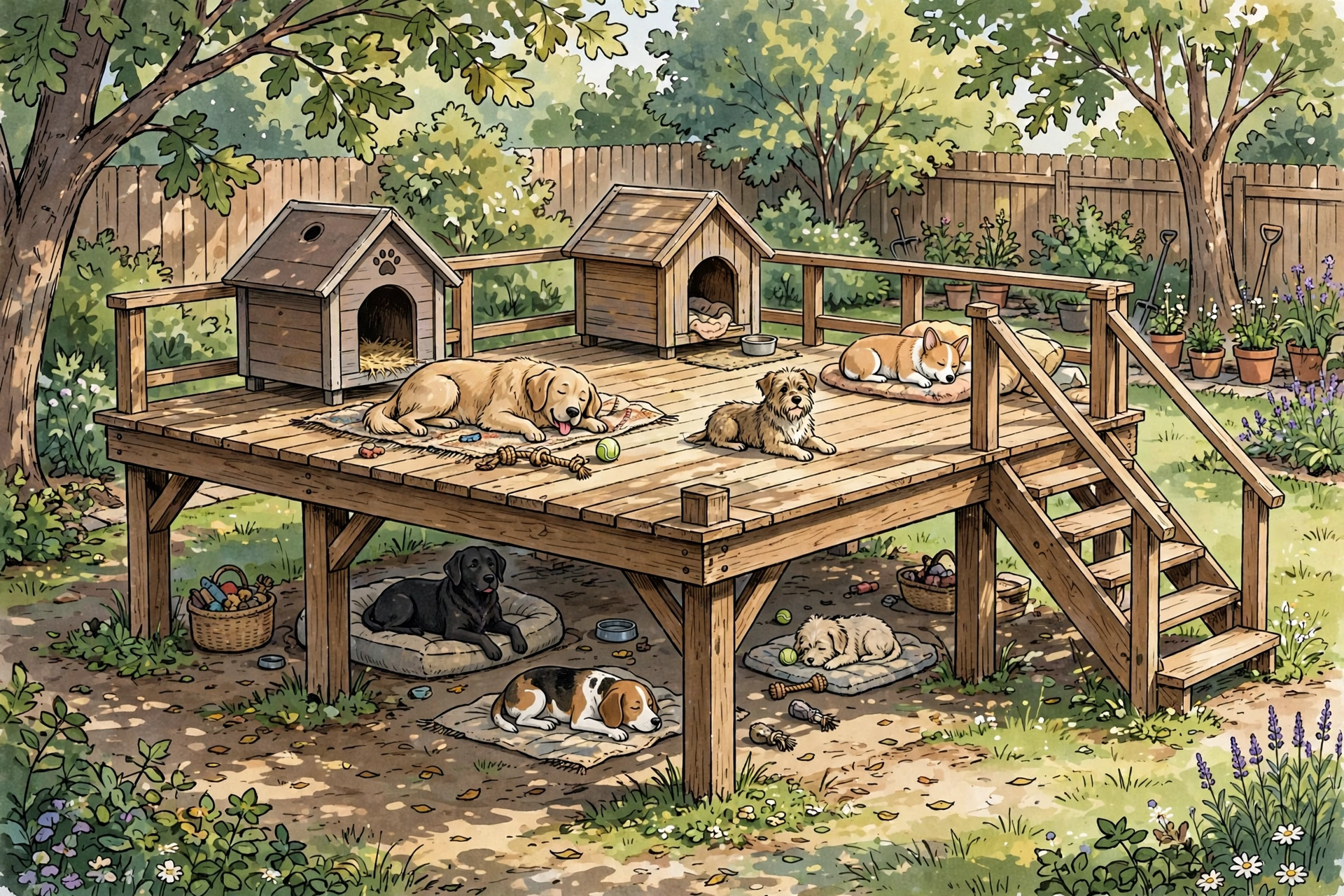
Elevate a wide platform about a foot off the ground and place individual houses or one long shelter on top. The raised deck stays dry in rain, gives dogs a lookout perch, and creates shaded hangout space underneath. This design shines in wet climates and pairs well with our dog house with run ideas if you want to fence the whole setup.
6. The Three-Bay Ranch House
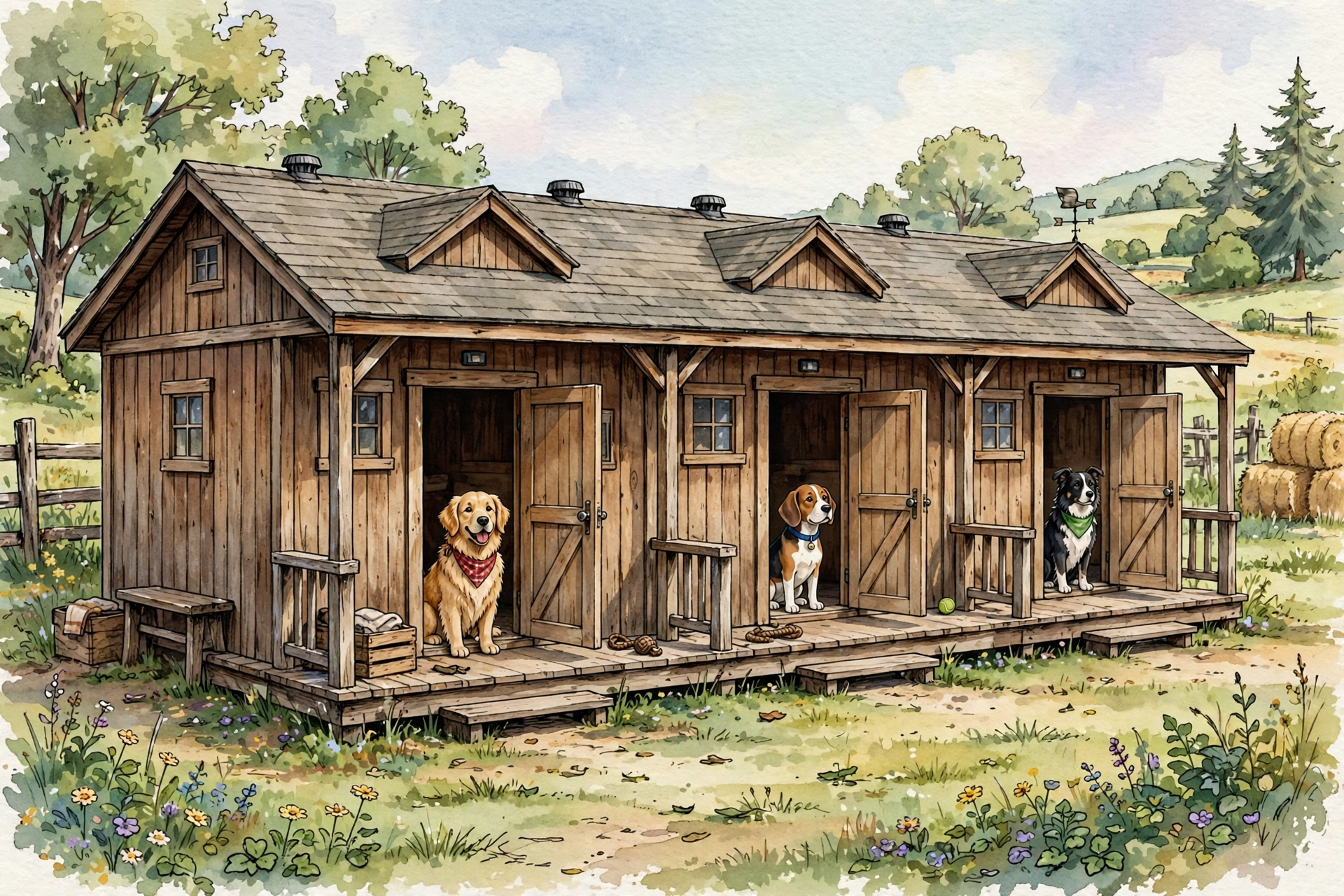
Think of it like a tiny ranch: three (or more) identical bays in a row, each with its own door, sharing one long roofline. It’s the most scalable multi-dog design — build three bays now, extend the row later. Give each bay a slightly different interior (a bed in one, straw in another) and let your dogs choose their favorite.
7. Bunk-Style Stacked House
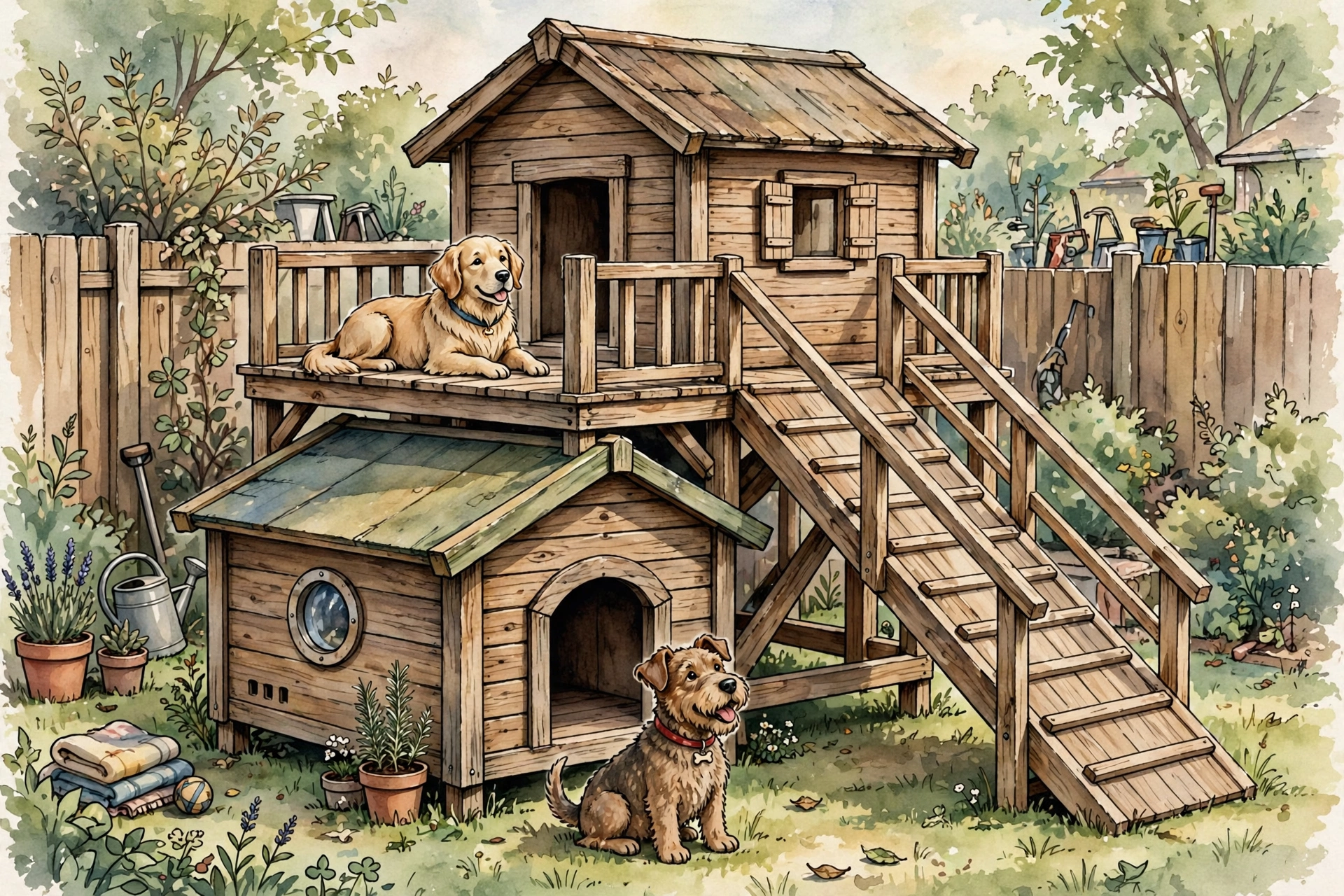
Short on yard space? A stacked design puts one sleeping level above another, connected by a sturdy ramp. Small and medium dogs adapt to ramps quickly, and the footprint stays compact. Make sure the upper level has a railing and the ramp has good traction — older dogs may prefer staying on the ground floor.
8. L-Shaped Corner Pack House

An L-shaped house tucks neatly into a yard corner and naturally creates two wings — perfect for dogs that like each other but need a little distance at night. Put the bossier dog’s bed in one wing and the shy one’s in the other, with a shared central entrance. The corner placement also leaves more open yard for play.
9. Insulated Winter Pack House
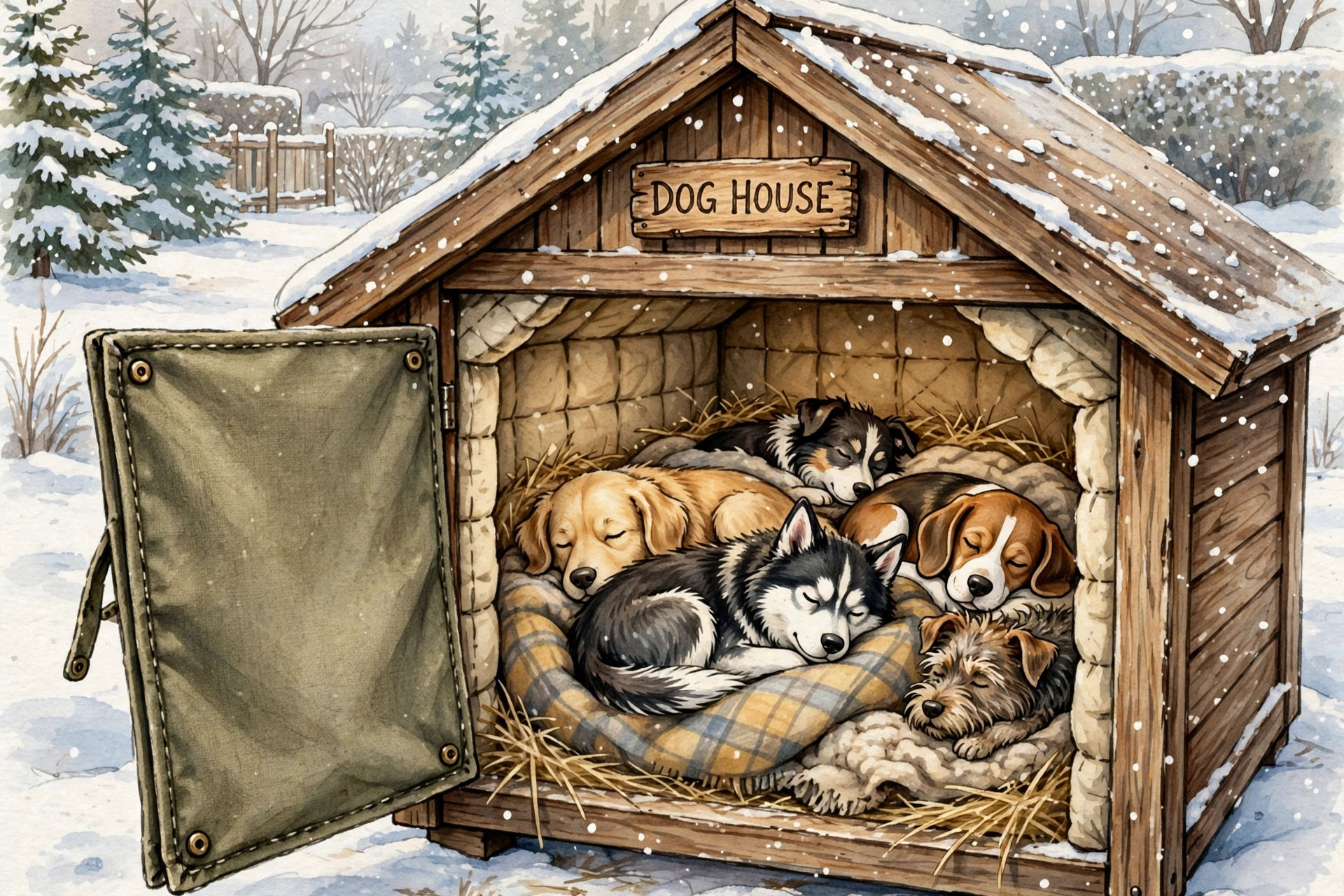
Multiple dogs generate a surprising amount of shared body heat, which makes a well-insulated communal house incredibly efficient in winter. Line the walls with rigid foam insulation, add a draft-proof door flap, and let your pack keep each other warm. For households in truly cold regions, this is often the warmest option short of a heated house — and far cheaper to run.
10. The Kennel Block With Individual Shelters
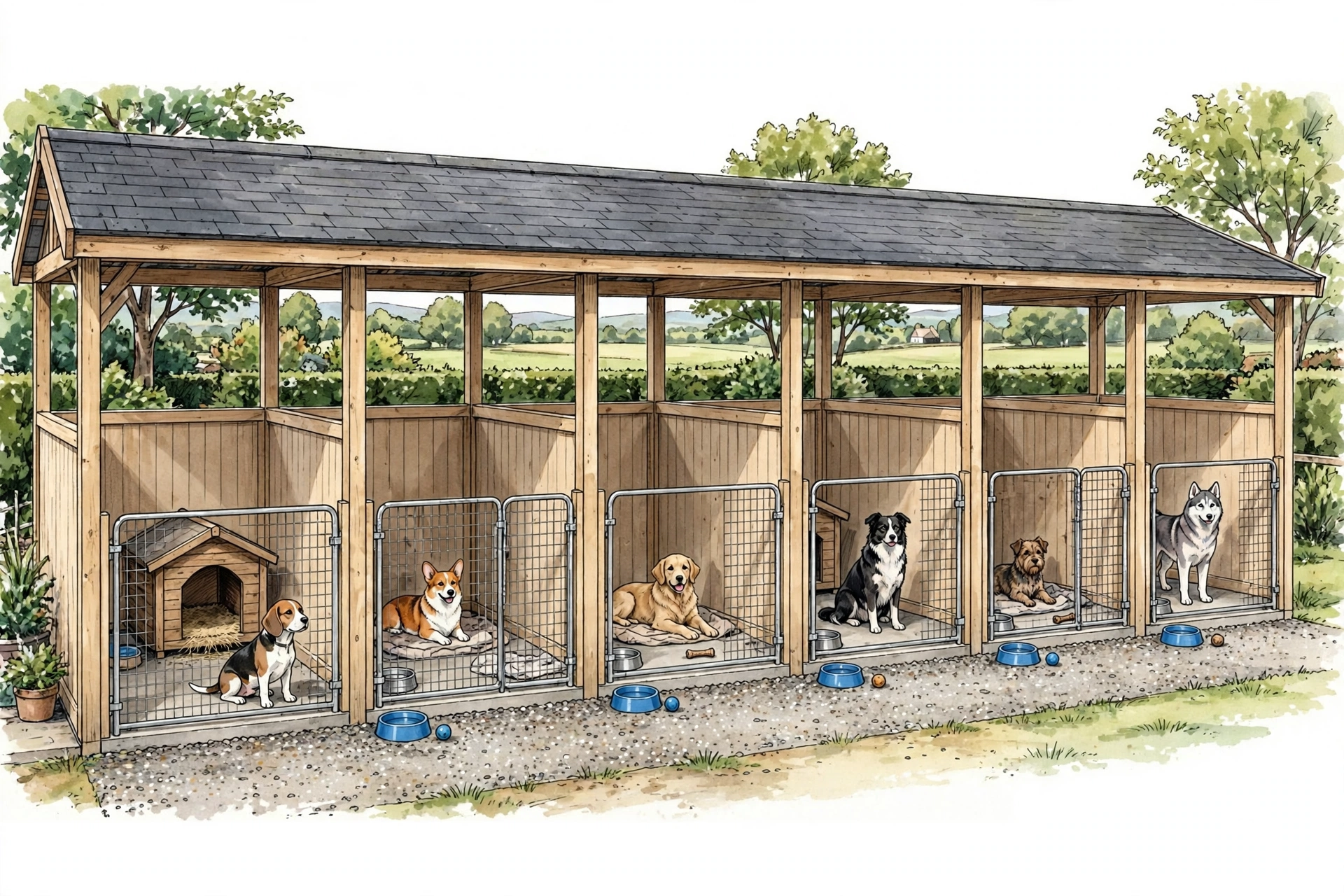
For larger properties, a kennel block combines individual sleeping shelters with attached runs in one long structure. Each dog gets its own bedroom plus private outdoor space, all under one roof for easy cleaning and feeding. This is the design serious multi-dog owners swear by, and it blends seamlessly with our dog house and kennel ideas for a complete setup.
11. Divided Duplex for Different Sizes
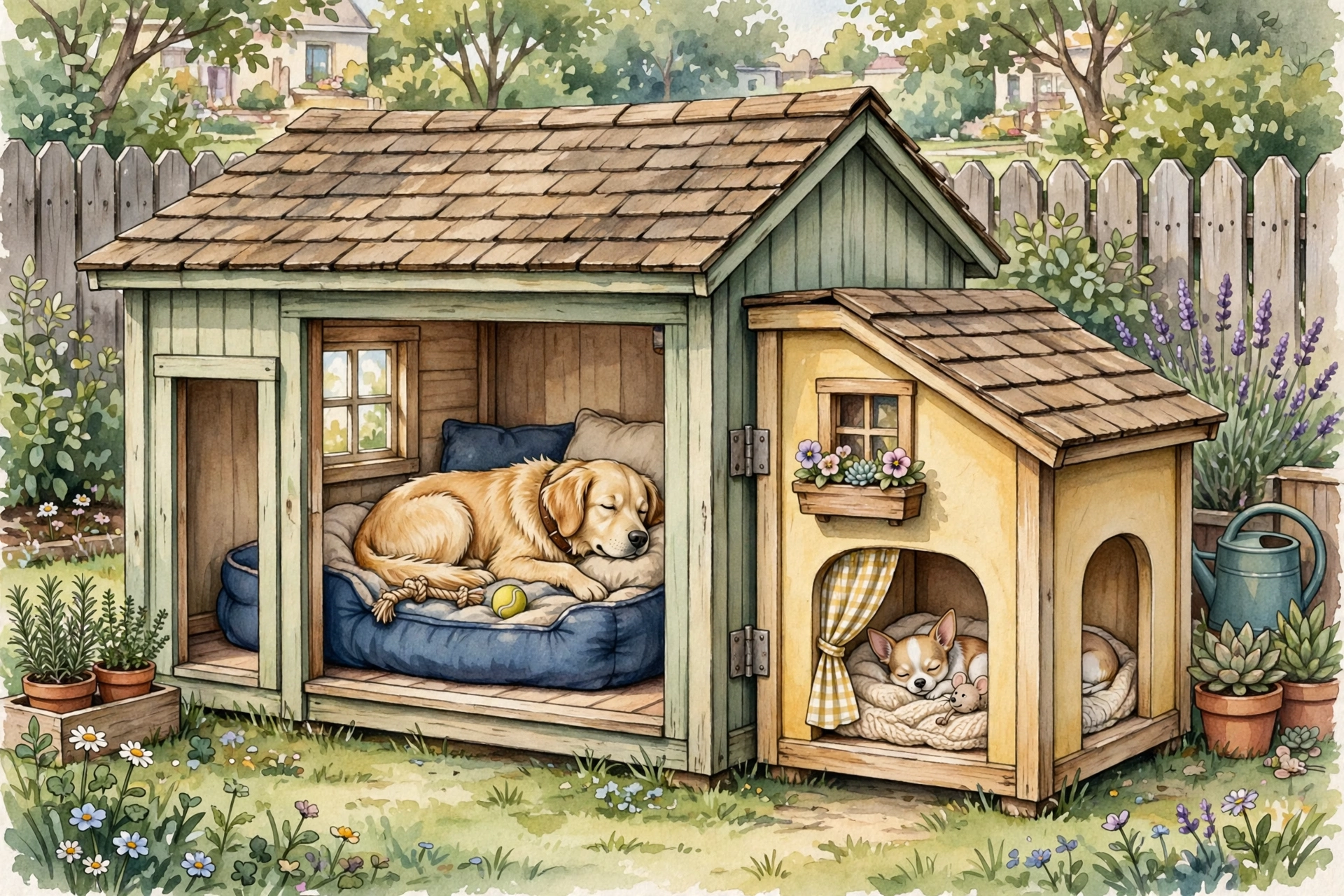
When your pack mixes a Great Dane with a Chihuahua, one-size-fits-all won’t work. Build a duplex with unequal sides — a spacious suite for the big dog and a cozy nook for the little one. Offset the doorways so each dog has a private entrance, and you’ll eliminate the bedtime squabbles over who gets the big room.
12. The Backyard Dog Village
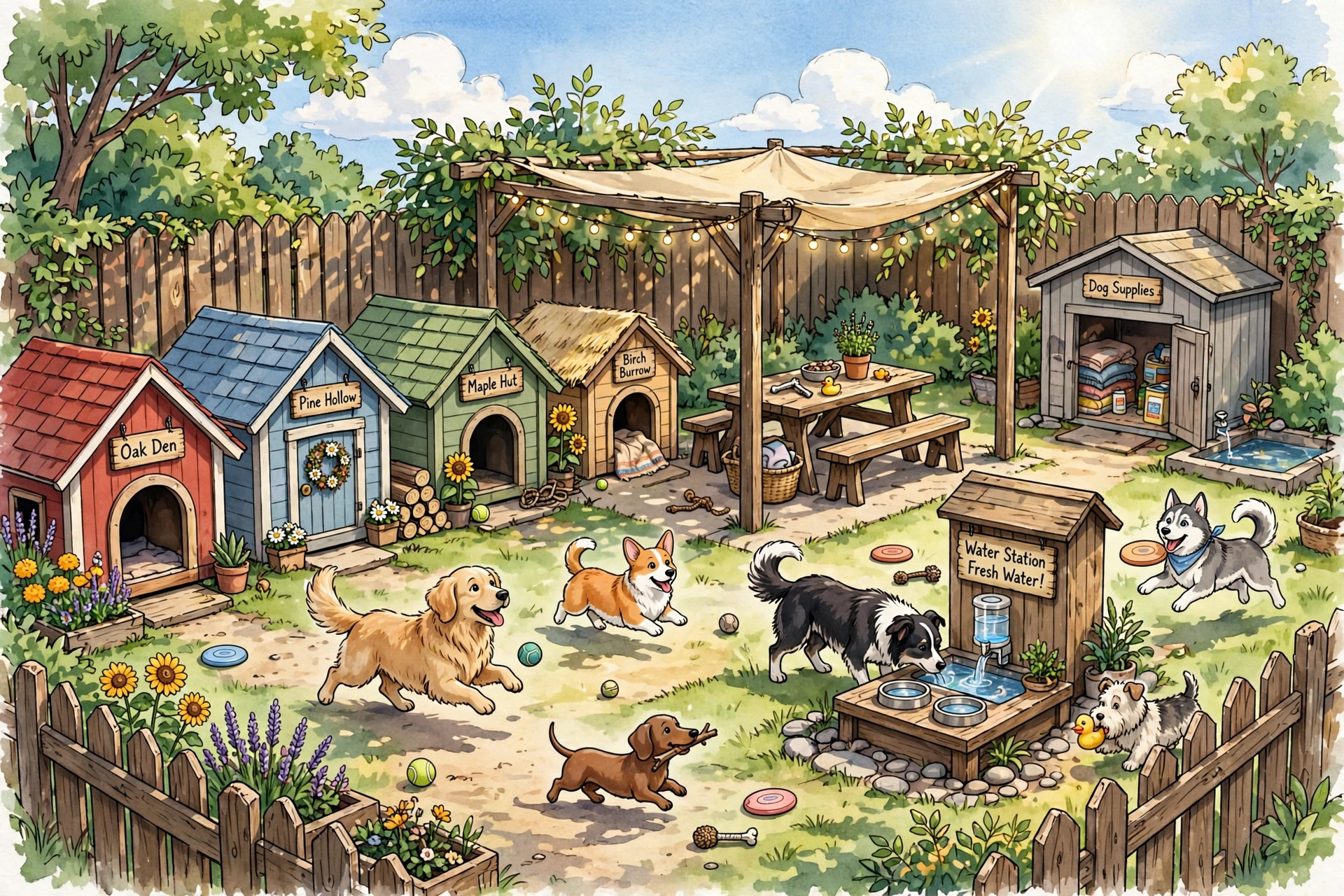
Go all out: fence a dedicated zone with two or three houses, a shared shaded patio, and a communal water station. Add a sandbox for digging and a few sturdy toys, and your dogs have their own private resort. It’s the ultimate multi-dog setup for large yards, and it keeps the pack’s mess contained in one easy-to-maintain area. Start with our large dog house ideas for the centerpiece shelter, then build the village around it.
Final Thoughts
The best dog house for multiple dogs is the one that matches your pack’s personality — cuddlers want open space, independents want their own rooms, and mixed packs need a bit of both. If you’re starting with just a pair, our dog house ideas for two dogs will help you nail the basics before scaling up. Whichever design you choose, build it a little bigger than you think you need — packs have a way of growing.