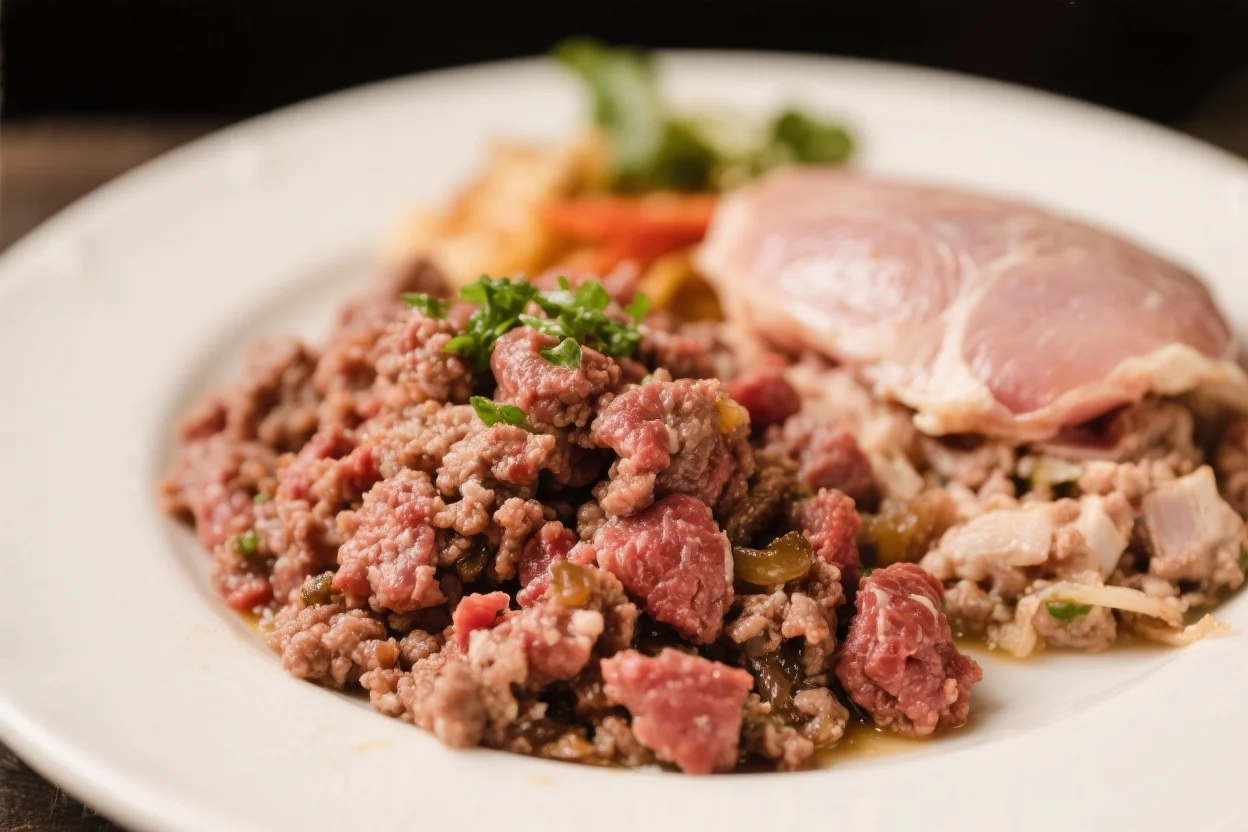
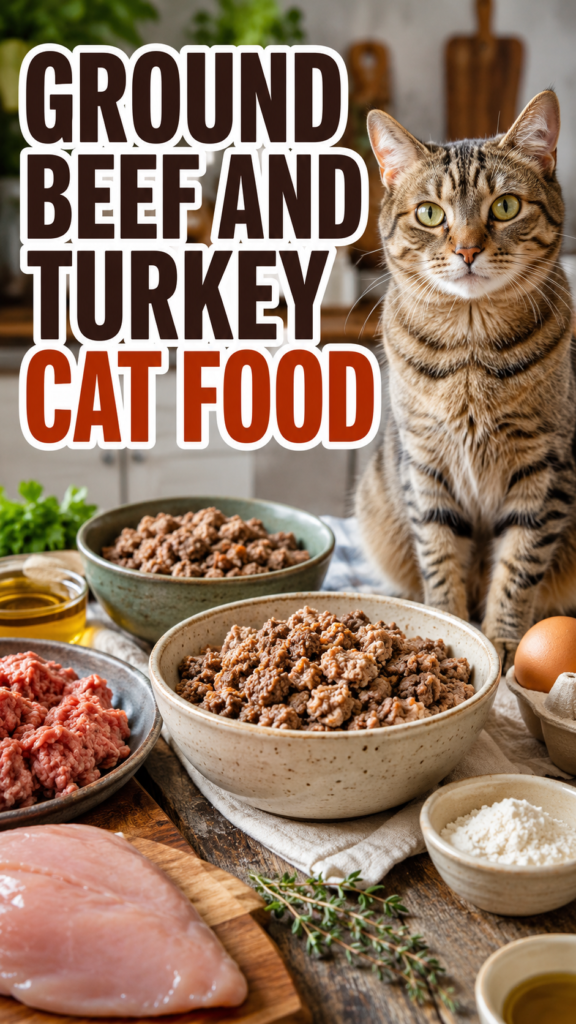
Ground Beef and Turkey Cat Food – A Simple, Protein-Rich Homemade Meal
Feeding my cats wholesome food has always been a priority, and this Ground Beef and Turkey Cat Food recipe is one of the meals I return to again and again. Many commercial foods contain ingredients I’d rather avoid, so I started preparing simple homemade recipes that focus on quality protein and moisture-rich nutrition.
Over the years, I’ve cared for cats with different preferences and sensitivities, and I’ve learned that uncomplicated meals often work best. This combination of ground beef and turkey creates a flavorful, protein-packed dish that is easy to prepare, affordable, and convenient for weekly meal prep.
Save For later
Key Takeaways
- Uses two animal-based proteins to create a satisfying homemade cat meal.
- Moist texture helps support daily hydration and easier eating.
- Taurine and calcium are important additions for balanced nutrition.
- Can be prepared in batches and stored for quick serving.
- Works well as an occasional meal or mixed with regular cat food.
- Slow introduction helps reduce the chance of stomach upset.
Pro Tip
When I prepare this recipe, I never cook the meat until it’s completely dry. Leaving a little natural moisture in the mixture helps improve texture and makes it more appealing to picky cats. I also divide the finished food into small daily portions before refrigerating or freezing. This saves time and prevents repeated reheating. If your cat is hesitant about homemade food, try mixing a spoonful into its usual meal for several days instead of switching all at once. I’ve found that gradual changes usually lead to better acceptance and fewer digestive issues.
Other Posts
- Ground Beef Cat Food Recipes for Healthy Homemade Meals
- Easy Ground Beef Cat Food Ideas for Everyday Feeding
- Ground Beef Sweet Potato Cat Food Recipe for Balanced Nutrition
What Makes This Recipe So Good
High-quality protein: Ground beef and turkey provide a mix of flavors and textures that most cats find irresistible. Over the years, I’ve noticed even the pickiest eaters perk up when I cook this blend.
Easy to prepare: One pan, minimal chopping, and about 20 minutes of cooking. Perfect for weeknight meals when I need something quick yet wholesome.
Customizable: You can adjust the fat, moisture, and optional supplements to suit your cat’s individual needs.
Budget-conscious: Affordable, easy-to-find ingredients make it practical for regular home cooking.
Balanced add-ins: With liver, egg, taurine, calcium, and optional pumpkin, this recipe is more nutritionally complete than plain meat.
What You’ll Need
- 1 pound ground turkey (93% lean is ideal)
- 1 pound ground beef (80–90% lean)
- 1 large egg, lightly beaten
- 1/2 cup chicken or turkey liver, finely minced (do not exceed 5–7% of total meat)
- 1/2–3/4 cup low-sodium bone broth or water (for moisture)
- 1 tablespoon salmon oil or sardine oil (omega-3s for skin and coat)
- 1/2 teaspoon finely ground eggshell powder or food-grade calcium carbonate
- 1/4 teaspoon taurine powder
- 1/8 teaspoon iodized salt or a pinch of kelp powder
- Optional: 1–2 tablespoons pumpkin purée
- Optional: 1–2 tablespoons finely minced hearts or gizzards
Important: This recipe is best for occasional or rotational feeding. For long-term exclusive feeding, consult your veterinarian or a board-certified veterinary nutritionist.
How to Make It
Prep your space: Wash hands, clean surfaces, and have a skillet and mixing bowls ready. I also prepare storage containers in advance to make portioning easier.
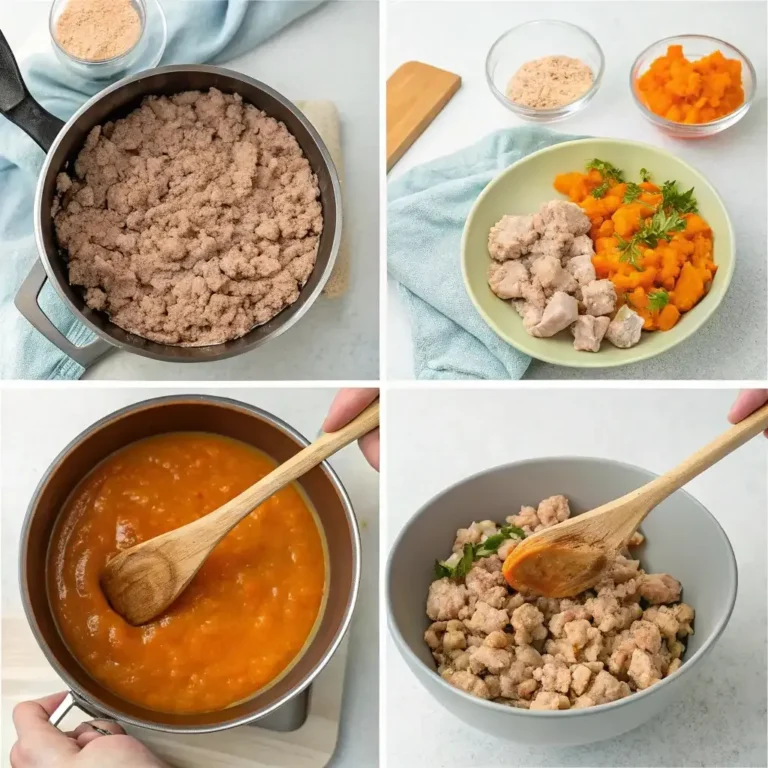
Cook the meats: Add ground turkey and beef to a skillet over medium heat. Break up the meat and cook until no pink remains. Keep heat moderate to preserve tenderness.
Add moisture: Pour in the broth or water and simmer 1–2 minutes. My cats prefer a soft, moist texture, and this helps with hydration.
Stir in liver and optional organs: Add minced liver (and hearts or gizzards if using). Cook just until the liver changes color—overcooking reduces palatability.
Cool slightly: Remove from heat and let the mixture cool until warm. This protects heat-sensitive nutrients you’ll add next.
Add supplements: Stir in the beaten egg, salmon oil, calcium source, taurine, and iodine source. Add pumpkin if using. Mix thoroughly for even distribution.
Adjust texture: If it looks dry, add a bit more warm water or broth. Aim for soft, scoopable, slightly saucy consistency.
Portion: Divide into daily servings. I generally start with 2–4% of my cat’s body weight per day, split into two meals, adjusting based on body condition and vet guidance.
Serve: Offer a small portion first to check acceptance. Warm to room temperature—cats rarely enjoy cold food straight from the fridge.
Storage Instructions
Refrigerate: Airtight container for up to 3 days.
Freeze: Portion into small containers or silicone trays for 2–3 months. Label with the date.
Thaw safely: Overnight in the fridge. Warm gently in a sealed bag under warm water; never microwave directly.
Discard leftovers: Remove uneaten portions after 1–2 hours at room temperature.
Why This Is Good for You
Control over ingredients: You decide the quality, fat level, and supplements—especially helpful for picky or sensitive cats.
Hydration support: Added water or broth increases moisture, which supports urinary tract health.
Omega-3 boost: Salmon oil promotes healthy skin, coat, and reduces inflammation.
Taurine and calcium included: These essential nutrients are built into the recipe.
Fresh aroma: Cooking fresh meat makes the meal more enticing for reluctant eaters.
Pitfalls to Watch Out For
Skipping supplements: Taurine and calcium are essential. Meat alone is not complete.
Too much liver: Keep it around 5–7%. Excess vitamin A can cause toxicity.
Overcooking: High heat reduces taurine and dries the food, lowering palatability.
Unsafe seasonings: No onion, garlic, chives, or excess salt.
Texture too dry: Moisture is key—dry, crumbly mixes turn cats away.
Rapid diet changes: Transition gradually over 5–7 days to avoid digestive upset.
Alternatives
Protein swaps: Ground chicken or rabbit works for variety.
Fat adjustments: Leaner meats for weight control; more 80% lean beef or oil for cats needing calories (vet guidance required).
Fish oil alternatives: Krill oil or sardine/anchovy oil in small doses.
Calcium source: Finely ground eggshell or food-grade calcium carbonate for consistency.
Broth alternatives: Plain water if low-sodium, onion- and garlic-free broth is unavailable.
FAQ
Can I feed this exclusively?
It’s best as part of a balanced rotation. For exclusive long-term feeding, consult your vet or veterinary nutritionist.
Do I have to add taurine?
Yes. Cooking reduces taurine, and cats can’t produce enough on their own.
Can I serve it raw?
Raw feeding carries pathogen risks. Many owners lightly cook to preserve texture while reducing risk.
How much should I feed per day?
2–4% of body weight daily, split into two meals. Adjust by age, activity, and vet guidance.
Is pumpkin necessary?
Optional—small amounts help with stool quality and hairballs.
What if my cat won’t eat it?
Warm to room temperature, add a little broth, or mix with freeze-dried meat crumbles to encourage acceptance.
Can I use multivitamins instead of individual supplements?
Only with a feline-specific product verified by your vet. Not all multivitamins cover taurine and calcium adequately.
Is ground beef safe for cats?
Yes, fully cooked and unseasoned, with balanced poultry and supplements.
Wrapping Up
This Ground Beef and Turkey Cat Food is simple, flexible, and loved by many cats. With the right supplements, gentle cooking, and careful portioning, you can serve a fresh, moist meal that supports your cat’s daily needs. Small steps, gradual transitions, and consistency make homemade feeding both manageable and rewarding.
All content on this site is written and reviewed by our experienced team to ensure it is accurate, reliable, and helpful for our readers. Our Our Process page explains how we carefully research and create high-quality content, while our Team page introduces the professionals behind our work. We also provide clear guidelines for content or image concerns on our Image Removal page, so you can trust that we prioritize transparency, quality, and reader safety.