
Homemade Rawhide Alternatives
My dog used to love rawhide. I bought the big twisted sticks in bulk, and he would settle down with one for a whole evening. It felt like the perfect chew, right up until the day I watched him gulp down a soft, soggy end piece whole. He was fine, thank goodness, but it scared me enough to look into what rawhide actually is and what else I could give him instead.
Rawhide is made from the inner layer of cattle hide. It softens as a dog chews it, and strong chewers can tear off pieces and swallow them. Those pieces can be hard to digest, and in some dogs they can cause choking or a blockage. I am not a vet, and I am only sharing what I do in my own kitchen, but once I understood the risk I decided my dog deserved better chews. The good news is that there are plenty of homemade rawhide alternatives that keep a dog busy without the worry.
I have tried all of these with my own dog. None of them turns into a soggy, swallowable lump the way rawhide does.
Want a Better-Trained, Happier Dog?
Get practical guidance for obedience, behavior, and everyday dog training with a collection of helpful training guides designed for dog owners.
This post may contain affiliate links. If you purchase through our link, we may earn a commission at no additional cost to you.
Why I Stopped Buying Rawhide
The first problem is how rawhide behaves when it gets wet. A dry rawhide stick feels hard and safe, but after a few minutes of chewing it turns soft and stretchy. My dog would chew off the softened ends and swallow them before I could take the chew away. Swallowed pieces do not break down easily, and that is where the risk of choking or a blocked gut comes from, especially for dogs who gulp their food and their chews.
The second problem is that I never really knew what was in the ones I bought. Some rawhide is treated with chemicals during processing, and the labels told me almost nothing.

My Favourite Homemade Rawhide Alternatives
Here are the chews that work best in my house, from the quickest to the longest lasting.
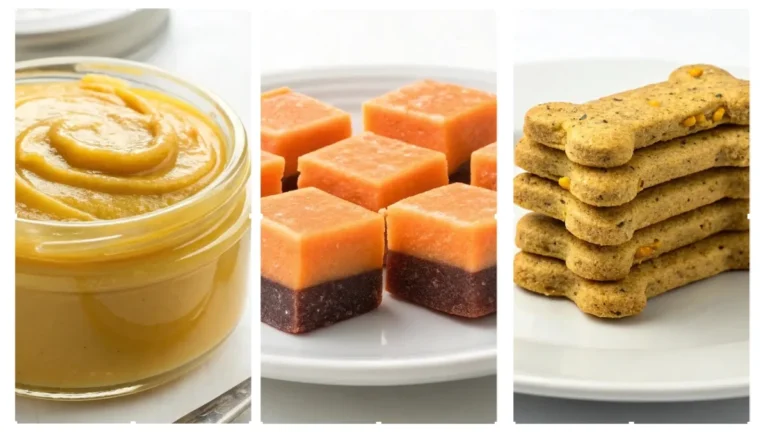
Baked sweet potato chews. These are my number one swap. I slice sweet potatoes, bake them low and slow, and they turn into chewy, leathery strips that my dog loves. The full recipe is below, and a batch lasts us about a week in the fridge.
Bully sticks. These are single-ingredient chews made from beef, and unlike rawhide they are fully digestible. I buy the thick ones, and I always take the last small piece away before he can swallow it.
Yak chews. These hard cheese chews are made from yak milk, and they last a long time. When the chew gets down to a small nub, I microwave it for a short burst until it puffs up, let it cool completely, and give it back as a crunchy treat. I never give it to him while it is still hot.
Frozen carrot sticks. On hot days I give my dog a thick carrot straight from the freezer. It is cheap, crunchy, and good for his teeth, and it keeps him busy for a few minutes. I use whole carrots rather than baby carrots for my medium-sized dog so he has something proper to hold.
Apple slices. A few slices of apple, with the core and seeds removed, make a sweet, crunchy chew. I never give the core or the seeds, and I only offer a few slices at a time.
Homemade peanut butter biscuits. I bake simple biscuits with plain peanut butter, whole wheat flour, and a little water. The only rule is that the peanut butter must be xylitol-free, so I always read the label before I buy a jar.
| Alternative | How long it lasts | Best for | What to watch |
|---|---|---|---|
| Baked sweet potato chews | 10 to 20 minutes | Everyday chewing | Bake until fully dry |
| Bully sticks | 30 minutes or more | Strong chewers | Take away the last piece |
| Yak chews | Days, in short sessions | Long-lasting chewing | Cool the puffed nub fully |
| Frozen carrot sticks | A few minutes | Hot days and puppies | Use whole carrots for big dogs |
| Apple slices | A few minutes | A light, sweet chew | Remove core and seeds |
Baked Sweet Potato Chews
This is the recipe I make most often. It takes a few minutes of prep and a few hours in a low oven, and it fills the house with a lovely smell.
Ingredients
- 2 large sweet potatoes, washed and peeled
- 1 tablespoon of olive oil
Steps
- Heat the oven to 120°C (250°F) and line a baking tray with baking paper.
- Slice the sweet potatoes into strips about 1 cm thick. Thicker strips stay chewy, thinner ones turn crisp.
- Toss the strips lightly in olive oil and spread them out on the tray in a single layer.
- Bake for 2 to 3 hours, turning the strips over halfway through, until they are dry and leathery.
- Let them cool completely on the tray before giving one to your dog.

Tips for Safe Chewing
- Always supervise your dog with any chew, even the safe ones. I never leave the room while my dog is chewing.
- Match the chew to the size of your dog. A chew that is too small can be swallowed whole, and one that is too hard can crack a tooth.
- Take away small end pieces before your dog can swallow them.
- Keep fresh water nearby, because chewing is thirsty work.
- Introduce one new chew at a time so you can see how your dog handles it.
- Skip rawhide-style chews made with added flavourings, colours, or sweeteners, and always read the label.
How I Store Them
I keep the baked sweet potato chews in an airtight jar in the fridge for about a week. If I make a big batch, I freeze half and take out a few strips at a time. Bully sticks and yak chews stay in a dry cupboard, and I throw away any chew that has gone soft, cracked, or started to smell off.

Frequently Asked Questions
Are bully sticks safer than rawhide?
In my experience, yes. Bully sticks are a single ingredient and they are digestible, while rawhide can swell and resist breaking down. I still supervise my dog with bully sticks and take away the last small piece.
Can puppies have these alternatives?
Soft options like baked sweet potato strips and frozen carrot sticks suit most puppies, but I would keep yak chews and thick bully sticks for older dogs with adult teeth. If you are unsure, ask your vet first.
How often can I give my dog a chew?
I give my dog one chew a day at most, and I count it as part of his daily food rather than an extra on top. Chews still have calories, so a daily chew means a slightly smaller dinner.
What should I do if my dog swallows a big piece of a chew?
Stay calm, watch him closely for coughing, gagging, or signs of discomfort, and call your vet straight away if you are worried. This is why I always supervise chewing and remove small pieces early.