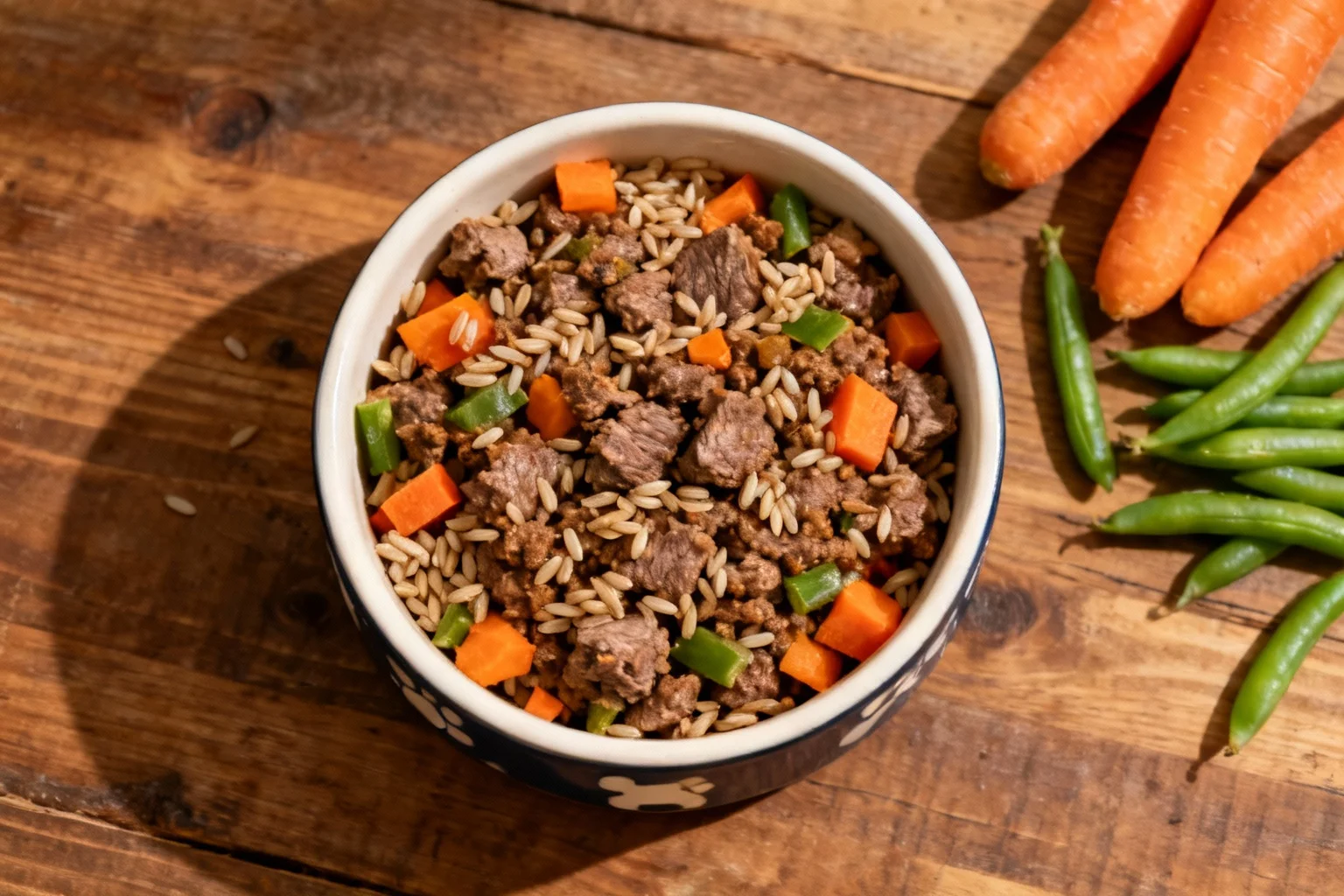
How To Make Healthy Homemade Dog Food With Beef
You know what’s wild? As dog parents, we spend hours reading labels for our own food, yet for years I watched people (including my younger self) pour whatever was cheapest into their dog’s bowl without questioning it.
I started making homemade dog food more than 20 years ago, back when I was grooming dogs daily and seeing firsthand how diet affected their skin, coat, digestion, and energy. The moment I stopped trusting ingredients I couldn’t pronounce, everything changed for my own dogs.
This beef-based homemade dog food recipe became a turning point—better digestion, shinier coats, steadier energy, and actual excitement at mealtime. I’ve fed variations of this recipe to multiple dogs over the years, and it remains one of the most balanced and reliable meals I make.
Key Takeaways:
- Homemade beef dog food gives you full control over ingredients and quality
- Lean beef supports muscle health and sustained energy
- Whole vegetables improve digestion and gut health
- Proper calcium balance is essential for long-term bone health
- Homemade diets can reduce allergies and food sensitivities when done correctly
What Makes This Recipe Awesome
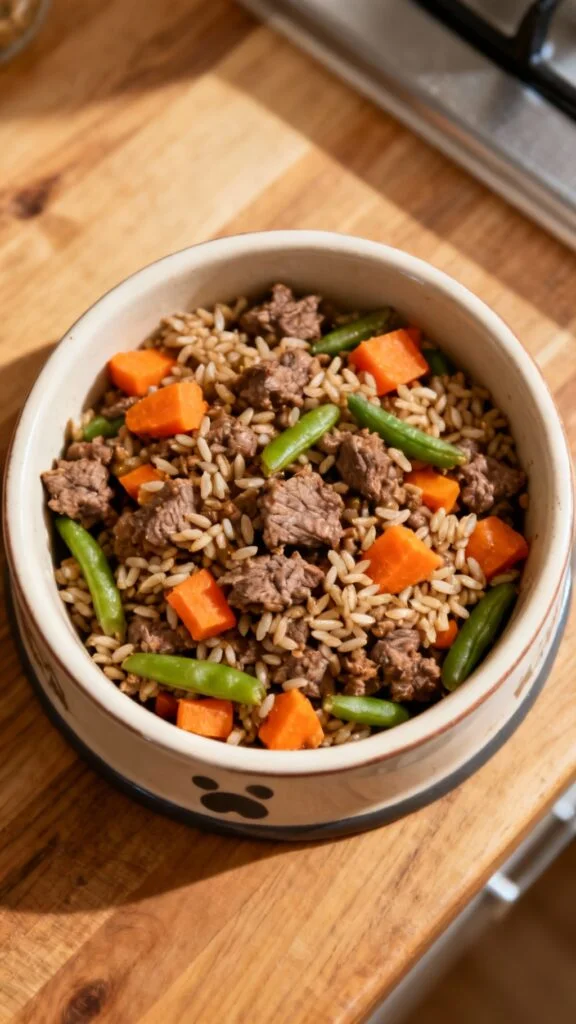
This recipe isn’t just tossing ground beef into a bowl and hoping for the best. After two decades of grooming and caring for dogs of every age and breed, I’ve learned that balance matters just as much as ingredients.
This meal combines quality protein, digestible carbohydrates, fiber-rich vegetables, and essential fats to support overall canine health.
Here’s why it works:
Lean ground beef provides essential amino acids for muscle maintenance and repair
Whole vegetables deliver vitamins, antioxidants, and fiber for digestion
Brown rice and oats supply slow-burning energy
Healthy fats support skin, coat, and brain health
You control every single ingredient—no fillers, no mystery meat
According to veterinary nutrition studies, dogs fed minimally processed diets often show improved stool quality and fewer digestive flare-ups compared to ultra-processed foods. I’ve seen this play out repeatedly in real life, especially with dogs prone to allergies or sensitive stomachs.
Real talk: while this recipe works well for most adult dogs, I always recommend checking with your vet before switching diets—especially if your dog has kidney issues, pancreatitis, or other medical conditions.
Ingredients
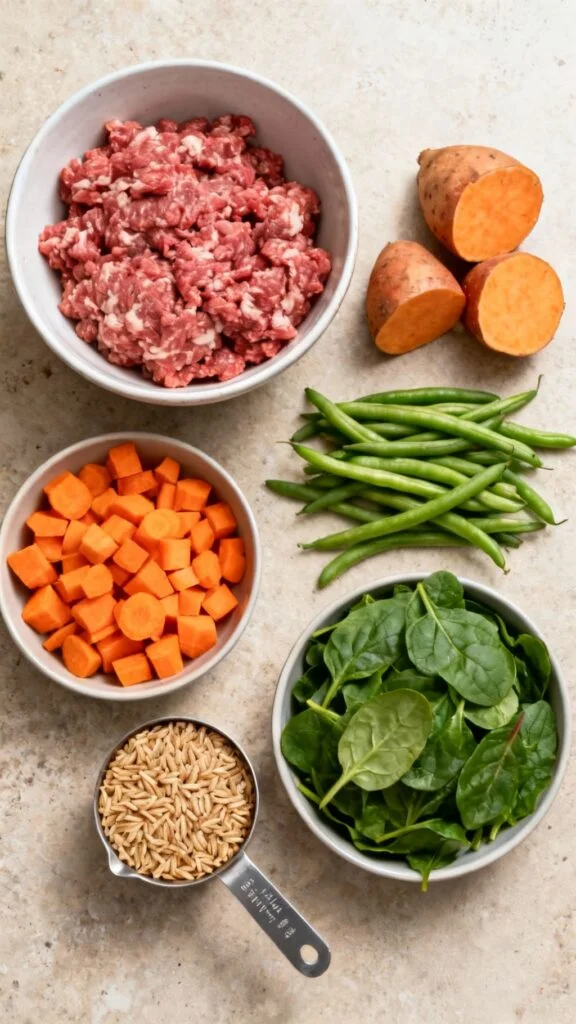
This batch makes approximately 12–15 cups of dog food. Adjust portions based on your dog’s size, age, and activity level.
Protein:
2.5 pounds lean ground beef (80/20 or 85/15)
Carbohydrates:
2 cups brown rice (uncooked)
1 cup rolled oats
Vegetables:
1 cup carrots, finely chopped or grated
1 cup green beans, chopped
1 cup sweet potato, diced
1/2 cup peas (fresh or frozen)
1/2 cup spinach, chopped
Supplements & Add-ins:
2 tablespoons olive oil or fish oil
1 teaspoon ground eggshell powder (calcium source)
1/2 teaspoon salt (optional, use sparingly)
Highly recommended:
Canine multivitamin (based on your dog’s weight)
Instructions
Step 1: Prep Your Ingredients
Chop all vegetables into very small pieces. In my experience, dogs don’t chew vegetables thoroughly, so smaller pieces improve digestion and nutrient absorption.
I always grate carrots instead of slicing them—it makes a big difference for dogs with sensitive stomachs. Dice sweet potatoes into small cubes so they cook evenly and soften properly.
Step 2: Cook the Rice and Oats
Combine brown rice and rolled oats in a large pot with about 5 cups of water. Bring to a boil, then reduce heat and simmer for 40–45 minutes until fully cooked.
The texture should be soft and slightly mushy. That’s intentional—it makes the food easier to digest, especially for senior dogs.
Step 3: Brown the Beef
Cook the ground beef over medium heat, breaking it into small crumbles. Make sure there’s no pink remaining.
I don’t drain all the fat—dogs need some fat for energy and palatability—but I do remove excess grease to avoid unnecessary calories.
Step 4: Cook the Vegetables
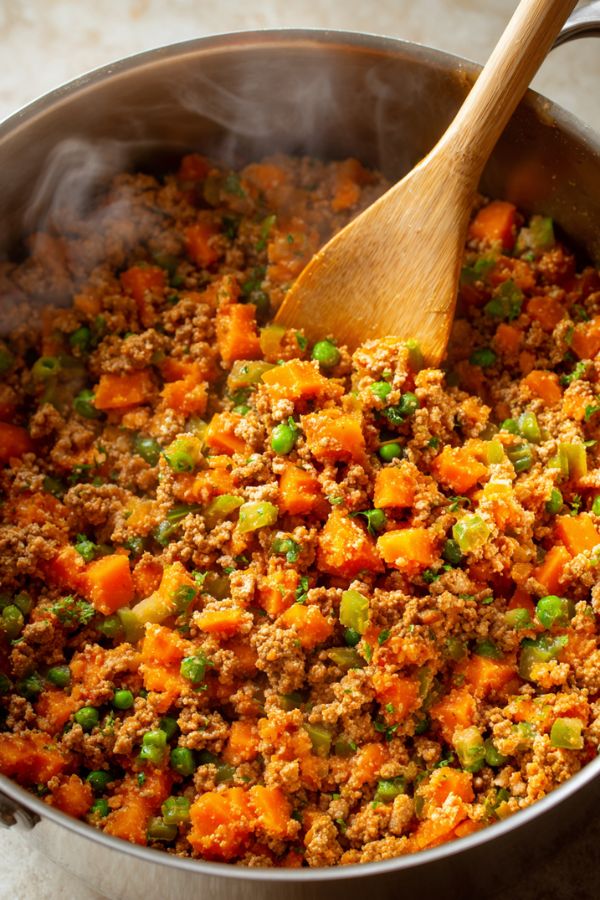
Add all chopped vegetables directly to the cooked beef. Stir well and cook for another 10–15 minutes.
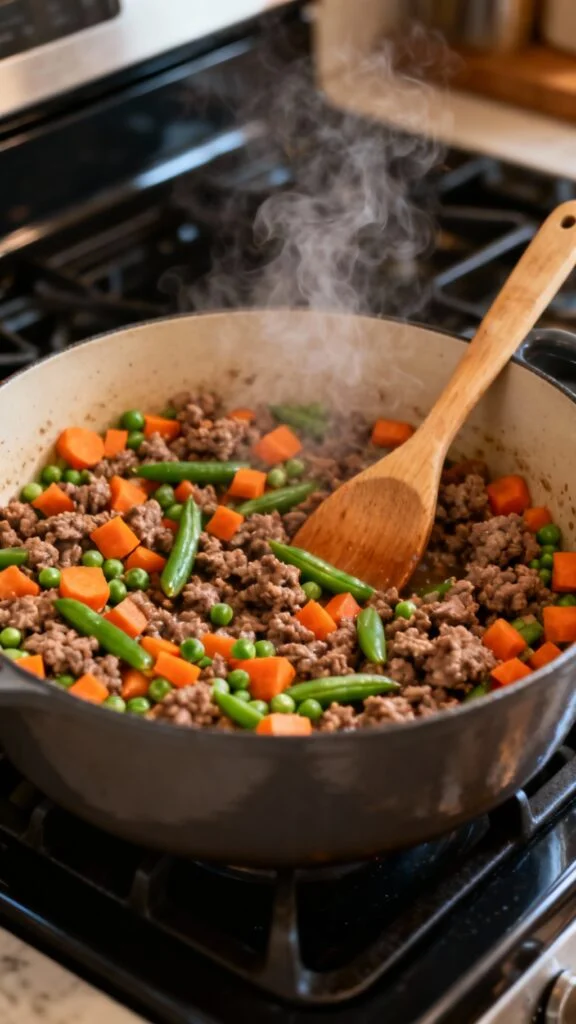
The sweet potato should be fork-tender, and the green beans soft but not mushy. Everything should blend evenly.
Step 5: Combine Everything
In a large pot or mixing bowl, combine the beef and vegetable mixture with the cooked rice and oats.
Mix thoroughly so every scoop contains a balanced blend of protein, carbs, and vegetables.
Add olive oil or fish oil and mix again. Healthy fats significantly improve coat condition—I’ve seen dull coats transform within weeks.
Step 6: Add Supplements
Once the food cools to room temperature, add ground eggshell powder and any canine multivitamin.
Calcium is non-negotiable in homemade dog food. Without it, long-term bone health can suffer. I’ve seen the consequences in dogs fed unbalanced homemade diets, so this step matters.
Step 7: Portion and Store
Allow the food to cool completely before portioning.
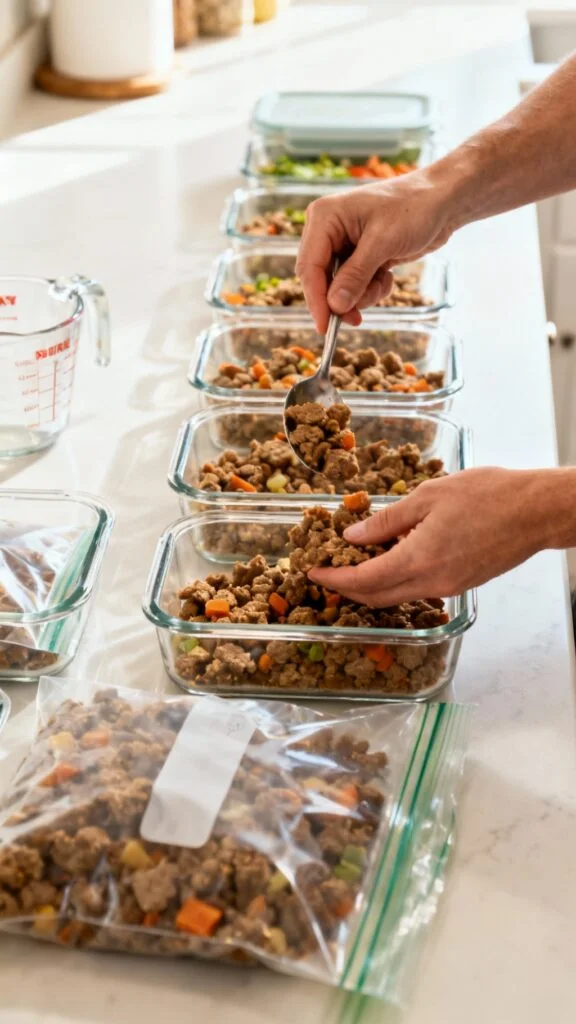
Refrigerate what you’ll use within 3–4 days. Freeze the rest in individual portions. I freeze meals flat in bags so they thaw evenly overnight.
Feeding Guidelines
Small dogs (up to 20 lbs): 1/2–1 cup per day
Medium dogs (20–50 lbs): 1–2 cups per day
Large dogs (50–100 lbs): 2–4 cups per day
Extra-large dogs (100+ lbs): 4+ cups per day
These are general guidelines. Age, metabolism, and activity level matter more than weight alone. I always start with smaller portions and adjust based on body condition.
Benefits of This Homemade Recipe
Better Digestion
Whole foods are easier to digest than highly processed kibble. In my experience, most dogs show firmer stools and less gas within the first two weeks.
Improved Coat and Skin
Healthy fats plus quality protein often lead to a shinier coat and reduced itching. Grooming dogs for years made this difference impossible to ignore.
Increased Energy
Balanced nutrition supports steady energy levels. Dogs feel full without sugar spikes or crashes.
Weight Management
You control calories and ingredients, making it easier to maintain a healthy body condition.
Allergy Management
Homemade food lets you eliminate problem ingredients and identify triggers—something that’s nearly impossible with commercial blends.
Frequently Asked Questions
Can I use a different protein source?
Yes. Turkey, chicken, or fish work well. Keep the same ratios.
Do I really need the eggshell powder?
Yes. Calcium deficiency is one of the biggest mistakes I see in homemade diets.
Can puppies eat this?
No. Puppies need different calcium and phosphorus ratios. Always consult your vet.
How long does this food last?
3–4 days refrigerated, up to 3 months frozen.
Is this cheaper than commercial food?
For me, it’s comparable to premium kibble and cheaper than canned food.
Can I prep this in bulk?
Absolutely. Bulk prep saves time and ensures consistency.
What vegetables should I avoid?
Never use onions, garlic, grapes, raisins, or avocado.
Do I need to add vitamins?
Yes. A canine multivitamin helps fill nutritional gaps.
Final Thoughts
Making homemade dog food takes effort—but after 20 years of feeding, grooming, and caring for dogs, I can confidently say it’s worth it when done correctly.
Transition slowly over 7–10 days, monitor your dog’s weight and energy, and always work with your vet. The reward is better health, fewer digestive issues, and a dog who truly enjoys mealtime.
Your dog trusts you with their health. This beef-based homemade dog food is a strong, balanced foundation for a longer, healthier life—and those tail wags at dinner time never get old.