Lamb and Apple Mix For Dogs | Fresh Treat
My dog has always been a little particular about food. Some weeks my dog will eat anything I put in the bowl, and other weeks my dog will sniff it, look up at me, and walk away like I’ve personally caused an offense. After a stretch of exactly that kind of pickiness, I decided to try making something myself instead of switching kibble brands for the fourth time that year.
That’s how I landed on this lamb and apple mix — and it’s become one of the few homemade meals my dog finishes every single time, no hesitation.
I’m not a veterinarian, and I want to be upfront about that. Everything in this post comes from my own kitchen experiments, some reading I did along the way, and conversations with my vet about what’s safe to feed dogs at home. If your dog has a health condition, allergies, or you’re not sure about portion sizes, please check with your vet before making any changes to their diet.
Want a Better-Trained, Happier Dog?
Get practical guidance for obedience, behavior, and everyday dog training with a collection of helpful training guides designed for dog owners.
This post may contain affiliate links. If you purchase through our link, we may earn a commission at no additional cost to you.
Why I Landed on Lamb and Apple
I picked lamb first because my dog has a sensitive stomach, and lamb tends to sit easier than beef or pork for a lot of dogs.
It’s also a protein my dog hadn’t had much of before, which made it a useful option when I was trying to rule out whether certain foods were behind some occasional itchiness.
Lamb is a novel protein for a lot of household dogs simply because it isn’t the default meat in most commercial kibble, which is part of why vets often suggest trying it when a dog’s usual diet seems to be causing issues.
The apple was almost an accident. I had one sitting on the counter, chopped a piece off out of curiosity, and my dog went straight for it before I’d even finished cutting the rest.
Apples bring a natural sweetness that seemed to make the lamb more appealing, plus they add fiber and vitamin C without piling on extra calories the way a lot of store-bought treats do.
Carrots came in for a similar reason — my dog already loved them as a training treat, so shredding one into the mix felt like an obvious way to sneak in some beta-carotene and a bit of crunch.
What Goes Into It
Here’s what I actually use, in the quantities that work for my own dog’s size — you’ll want to scale this based on your dog’s weight:
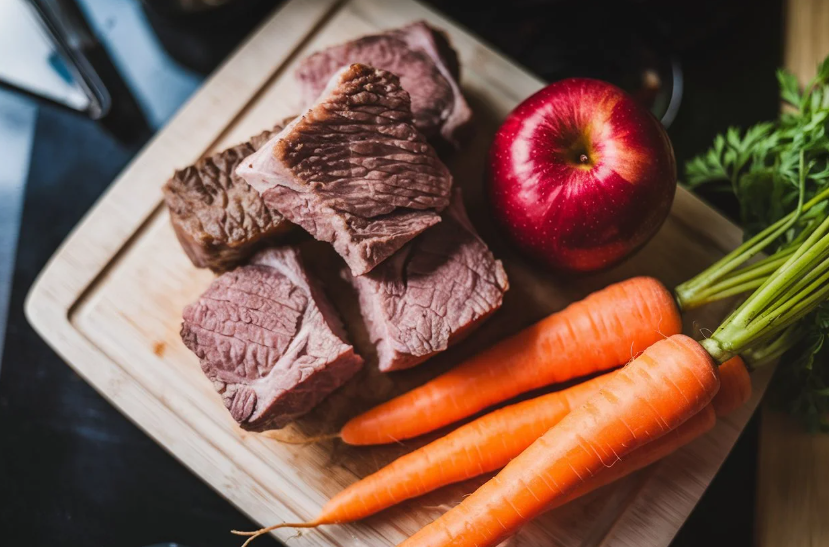
- Boneless lamb, cut into small chunks
- One apple, cored and chopped (no seeds — they contain trace amounts of cyanide compounds and are genuinely not safe for dogs)
- One carrot, shredded or finely chopped
- One egg
That’s it. No seasoning, no salt, no onion or garlic — those last two are toxic to dogs even in small amounts, so I keep this recipe as plain as possible.
How I Put It Together
- Prep the apple first. I core it completely to remove every seed — apple seeds contain a compound that releases trace cyanide when broken down, and while one seed won’t do serious harm, I’d rather not take chances. Then I chop it into pieces small enough that my dog doesn’t have to gnaw at them.
- Shred the carrot. A cheese grater does the job in under a minute, and the finer texture seems to blend into the mix better than big chunks.
- Cook the lamb. I brown it in a pan over medium heat for about 8 minutes, until it’s cooked through but not dried out and rubbery. If I’m using ground lamb instead of chunks, I cook it a little longer until there’s no pink left anywhere.
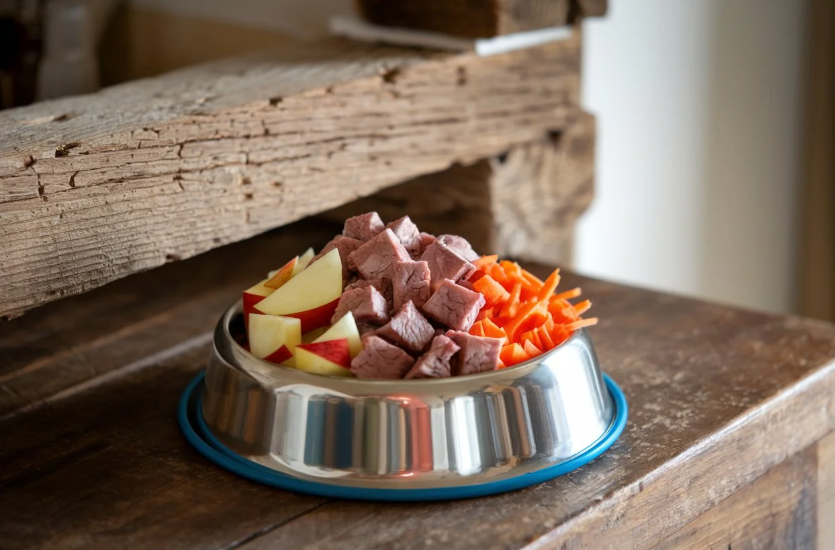
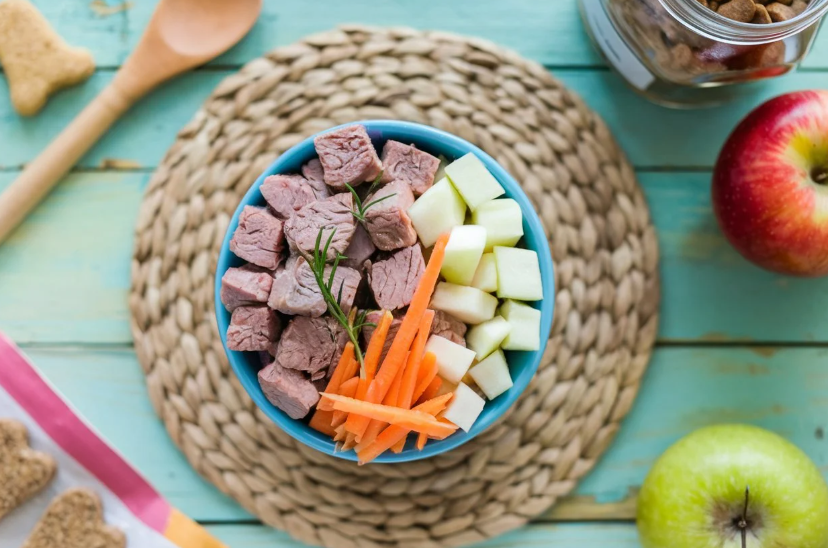
- Let it cool, then mix. Once the lamb isn’t hot anymore, I combine everything in a bowl — lamb, apple, carrot, and egg — and stir until it’s evenly distributed so every bite has a bit of each ingredient.
That’s genuinely the whole process. It takes me about 15 minutes from start to finish, which is a big part of why this has stuck as a regular meal instead of a one-time experiment.
What I’ve Noticed Each Ingredient Does
- Lamb gave my dog a protein source that didn’t cause the stomach upset some other meats have, and it’s rich in the amino acids and zinc that support a healthy immune system.
- Apple adds vitamin C and fiber, and honestly seems to be the ingredient my dog gets most excited about — the natural sweetness makes the whole bowl more appealing.
- Carrot is low-calorie and full of beta-carotene, so I don’t worry about overfeeding when I toss extra in, and it adds a nice crunch dogs seem to enjoy.
- Egg rounds things out with protein, biotin, and healthy fats, and I’ve noticed my dog’s coat looking noticeably glossier after a few weeks of regular meals with it included.
Can You Cook This in an Air Fryer?
I’ve tried this a couple of times when I wanted something with a bit more texture. After mixing the ingredients, I shape the mixture into small patties or balls, then air fry them at 350°F for around 10 to 12 minutes, until they’re golden on the outside. Let them cool fully before serving — I learned that the hard way once, standing next to a very impatient dog staring at the bowl.
How I Store Leftovers
Since I usually make more than one serving at a time, storage matters:
- Fridge: I keep it in a sealed container and use it within four days.
- Freezer: I portion it into single servings and freeze for up to three months, then thaw overnight in the fridge before serving.
A Few Swaps I’ve Tried
- No apples on hand? I’ve swapped in pear or a small handful of blueberries with good results.
- Different protein: Ground turkey or chicken works if lamb isn’t available or your dog needs variety.
- Egg allergy: I’ve left the egg out entirely and added a splash of plain bone broth instead, just for moisture.
- More bulk for active dogs: A spoonful of cooked rice or quinoa stretches the recipe further.
Questions I Get Asked Most
Can I use applesauce instead of fresh apple?
I wouldn’t. Most jarred applesauce has added sugar or preservatives that aren’t necessary for a dog’s diet. Fresh, plain apple is the safer choice.
How much should I actually feed my dog?
This depends heavily on your dog’s size and activity level, so I’d rather not throw out a blanket number that could be wrong for your pet. My vet worked out a portion based on my dog’s weight, and I’d suggest asking yours to do the same rather than guessing.
My dog won’t touch raw egg — is cooked okay?
Yes, I’ve scrambled the egg lightly before mixing it in when my dog was hesitant about the raw texture, and it worked fine that way.
Is this suitable for puppies?
I haven’t tested this specific recipe on a puppy myself, so I’d recommend checking with your vet before offering it to one, and introducing any new food gradually and in smaller portions.
Can this be used as a food topper instead of a full meal?
That’s actually how I started using it — a spoonful mixed into her regular kibble before I built up to it being a full meal on its own.
My Takeaway
This recipe started as a way to deal with a picky eater, and it turned into something I make regularly because it’s quick, doesn’t require any special ingredients, and my dog genuinely perks up the moment the apple comes out.
I’d still recommend running any new homemade meal by your vet first, especially if your dog has existing health issues, but for us, this has been a simple, low-effort addition that’s worked well.
If you try it, I’d genuinely like to know how your dog reacts to it — every dog’s preferences are a little different, and that’s half the fun of figuring out what works for yours.