How to Remove Sweat Stains from Clothes
Get rid of yellow underarm stains and sweaty marks — without ruining your clothes.
Why Sweat Stains Turn Yellow
Sweat itself is mostly colourless. The yellow colour comes when sweat mixes with the aluminium compounds in antiperspirant deodorant. That reaction builds up in the fabric over time, especially in the underarm area, and ordinary washing alone often cannot break it down. That is why sweat stains need a targeted treatment before they go in the washing machine — not just a stronger detergent.
Safety First — Read Before You Start
Always check the care label first. Do not use vinegar, peroxide, or lemon on silk, wool, or “dry clean only” garments unless the label allows it. Test coloured fabrics first: dab your chosen solution on a hidden spot (inside a seam or hem), wait 10 minutes, and check for colour change or fading before treating the visible stain. Never use hot water on a fresh stain before treating it — heat sets sweat and protein stains into the fabric. Never mix bleach and vinegar — together they create harmful chlorine gas. Use only one treatment at a time, and rinse well between methods. Hydrogen peroxide and lemon are for whites only — they can bleach or lighten coloured fabrics. Never use chlorine bleach on a yellow sweat stain — it reacts with the aluminium residue and can make the yellow worse, not better.
Want a Better-Trained, Happier Dog?
Get practical guidance for obedience, behavior, and everyday dog training with a collection of helpful training guides designed for dog owners.
This post may contain affiliate links. If you purchase through our link, we may earn a commission at no additional cost to you.
Method 1 — White Vinegar Soak (Best First Step for Most Clothes)
Mix 1 part distilled white vinegar with 4 parts cool water — for example, 1 cup (240 ml) of vinegar to 4 cups (960 ml) of water. Soak only the stained area in the solution for 30 minutes. For older, set-in stains, soak for up to 1 hour. Lift the garment out and gently rub the stain with your fingers or an old soft toothbrush. Rinse thoroughly with cool water, then wash as normal (see “Washing After Treatment” below). The vinegar breaks down the antiperspirant residue and loosens the stain so the wash can finish the job.
Method 2 — Baking Soda Paste (For Stubborn or Set-In Stains)
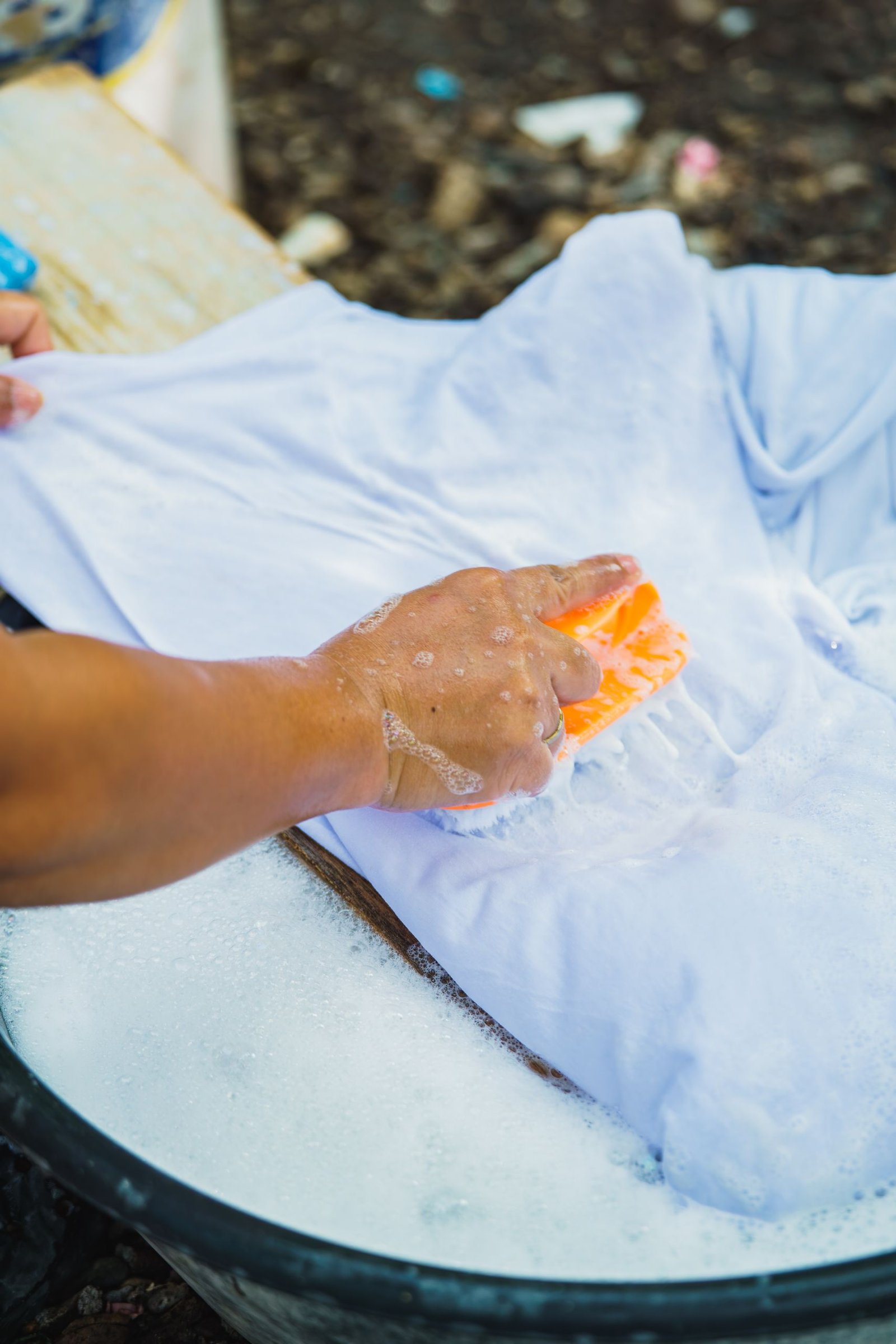
Mix 3 tablespoons of baking soda with 1 tablespoon of water to make a thick paste. Spread the paste directly over the stain, working it gently into the fabric with an old soft toothbrush. Leave it for 30 minutes. For heavy, long-standing stains, leave it for up to 1 hour. Rinse well with cool water, then wash as normal. Optional boost: add 1/2 cup of baking soda to the washing machine drum with your normal detergent — but always treat the stain first, not instead of treating it.
Method 3 — Lemon Juice and Sunlight (White Fabrics Only)
Squeeze fresh lemon juice directly onto the stain, or soak a cloth in lemon juice and press it onto the mark. Lay the garment flat in direct sunlight for 1-2 hours. The sun activates the lemon’s natural lightening effect. Rinse with cool water and wash as normal. Only use this on whites. Lemon plus sun will lighten and damage the colour of dyed fabrics, and it can weaken delicate fibres if left too long — never leave a garment in lemon and sun for more than 2 hours.
Method 4 — Hydrogen Peroxide (White Fabrics Only)
Mix 1 part 3% hydrogen peroxide with 1 part cool water — for example, 1/4 cup (60 ml) of each. Apply the mix to the stain and leave it for 20-30 minutes. Do not leave it longer than 30 minutes. Rinse thoroughly with cool water, then wash as normal. Use only household-strength 3% hydrogen peroxide. Stronger grades can damage fabric. Wear gloves, and keep it off coloured clothes, wooden surfaces, and skin for long periods.
Method 5 — Enzyme Pre-Treat (Best for Coloured Clothes)
Choose an enzyme pre-treat or a biological laundry detergent (one labelled “bio” or “enzyme”). Apply it directly to the stain and leave it for 15-30 minutes, following the product’s own instructions. Wash as normal in the machine. Enzymes break down the proteins in sweat without bleaching colour, which is why they are the best choice for coloured and patterned clothes. Do not use enzyme products on silk or wool unless the product says it is safe for them.
Washing After Treatment
After treating, wash the garment in the machine on a cool or warm cycle (30-40°C) with your normal detergent. Do not use hot water (60°C or above) until the stain is fully gone — heat will set any remaining stain. When the wash finishes, check the stain before putting the garment in the dryer. If any mark remains, repeat the treatment. The dryer’s heat will set a stain that is still there, making it much harder to remove later. Once the stain is gone, dry as normal.
How to Prevent Sweat Stains
Let antiperspirant dry fully before dressing — wait 2-3 minutes after applying it before putting on your shirt. Wear a thin undershirt under dress shirts and light-coloured tops to absorb sweat before it reaches the outer layer. Wash sweaty clothes promptly. Do not leave a sweaty shirt sitting in the laundry basket for days — the stain sets the longer it waits. Switch to an aluminium-free deodorant if yellow stains keep coming back. Without the aluminium compounds, sweat alone rarely leaves a yellow mark. Rinse underarms with cool water after heavy sweating before the garment goes in the wash.
What NOT to Do
- Do not iron over a stained area — the heat sets the stain permanently
- Do not tumble dry before checking — dryer heat sets stains, just like ironing does
- Do not use chlorine bleach on yellow underarm stains — it can react with the residue and deepen the yellow
- Do not mix vinegar and bleach, or peroxide and vinegar, in one treatment. Use one method at a time and rinse between them
- Do not scrub hard — aggressive scrubbing frays fibres and can spread the stain. Gentle rubbing with a soft toothbrush is enough
- Do not leave lemon or peroxide on fabric for hours — both are mild bleaches and will weaken fibres if overused
Tick-Off Checklist
- Care label checked — fabric safe for the chosen method
- Coloured fabric tested on a hidden spot — waited 10 minutes, no colour change
- Stain treated with cool water only — no hot water used before treatment
- White vinegar soak done (1 cup vinegar to 4 cups cool water, 30 minutes, up to 1 hour for old stains)
- Baking soda paste applied if needed (3 tbsp + 1 tbsp water, 30-60 minutes)
- Lemon and sunlight used on whites only, if needed (1-2 hours maximum)
- Hydrogen peroxide used on whites only, if needed (1:1 with water, 20-30 minutes)
- Enzyme pre-treat used for coloured clothes, if needed (15-30 minutes)
- Garment washed at 30-40°C with normal detergent
- Stain checked before drying — treatment repeated if any mark remains
- No chlorine bleach, no ironing, and no tumble drying over an untreated stain
- Prevention in place — antiperspirant dried before dressing, sweaty clothes washed promptly
Download Your Free Printable Checklist
Get the free printable checklist for removing sweat stains from clothes, so you can follow each step at home.
PDF • Print-friendly
Looking for more free printables? See all free printables on our Cleaning Resources page.