
Easy Kitchen Cleaning Hacks For Busy People
You don’t need to deep clean your kitchen every single day to keep it looking good. What truly works is having a short, repeatable reset that fits into real life. I’ve found that when cleanup feels endless, it never happens—but when it’s capped at ten minutes, it’s doable even on tired evenings.
After dinner, set a timer and focus only on the basics. Start by clearing surfaces. When counters are free of random items like mail, keys, cups, and stray spice jars, the kitchen instantly feels calmer and cleaner. You don’t realize how much visual clutter affects your mood until it’s gone.
Next, load the dishwasher with intention. Plates and bowls belong on the bottom, larger utensils should go sideways on the top rack so water can actually reach them. This small habit saves you from rewashing later. If something is stuck on, let water and soap do the work—spray first, walk away for a minute, then wipe. Patience beats scrubbing every time.
Finish with the sink. A quick rinse and wipe makes a huge difference. If you want it to smell fresh, a lemon wedge or a simple baking soda trick keeps odors from lingering. When the timer ends, you stop. Consistency matters more than perfection.
Make It Frictionless
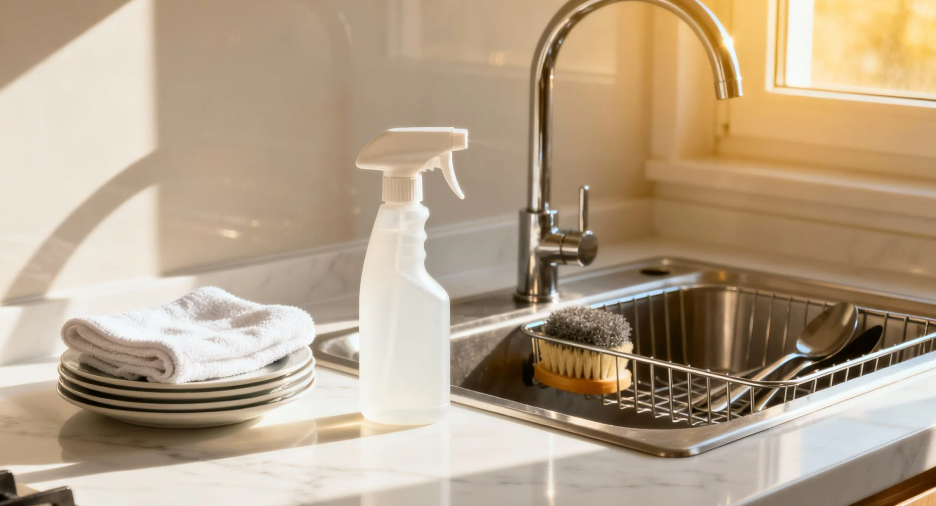
If cleaning supplies are hard to find, cleaning won’t happen. I’ve learned that motivation is unreliable, but convenience always wins. Keeping a small caddy under the sink with your most-used items—spray, cloths, scrub brush—removes the mental barrier.
When everything you need is within arm’s reach, wiping a counter or stove doesn’t feel like a task. It feels automatic. This is how kitchens stay clean without constant effort.
Stovetop and Oven: Lazy but Effective Cleaning
Cooking naturally creates grease and spills, but that doesn’t mean you have to fight them aggressively. Heat and time are your best tools.
For smooth stovetops, gentle soaking methods loosen grime so it wipes away easily. Grease that feels impossible at first usually disappears once it’s had time to soften. Burners and grates respond well to soaking too—once the buildup loosens, cleaning becomes almost satisfying.
Oven doors are another area people overthink. A simple paste and a short wait soften baked-on messes so they scrape off without scratching. Self-clean cycles work, but using them too often adds unnecessary stress to the appliance. Spot cleaning between deeper cleans keeps everything manageable.
Adding a removable liner or sheet pan under drippy dishes saves you from chiseling hardened spills later. Cleaning a liner is always easier than cleaning an oven floor.
Sink, Sponges, and the Messy Reality
Your sink handles everything—raw food, coffee residue, vegetable scraps—so regular care keeps it from becoming unpleasant. A light scrub restores shine, and finishing with a small amount of oil makes stainless look polished without much effort.
Sponges deserve more attention than they get. They absorb bacteria fast, and using an old one too long defeats the purpose of cleaning. Sanitizing them frequently and replacing them regularly keeps things hygienic.
For the disposal, regular deodorizing prevents smells from creeping up unexpectedly. When you take care of it weekly, it never reaches that “what is that smell?” stage.
Drain Rescue Without Panic
A slow drain doesn’t automatically mean a plumbing disaster. Simple household ingredients can clear buildup when given time to work. Covering the drain and letting the reaction finish before flushing restores flow and keeps things moving smoothly.
Countertops and Appliances Without the Drama
Different surfaces need different care, but cleaning doesn’t have to be complicated. Gentle soap and warm water handle most countertops safely. Drying immediately prevents water spots and streaks, which saves you from redoing the job.
Laminate surfaces respond well to light scrubbing when stains appear, as long as you don’t rush. Stainless appliances look best when cleaned in steps—wash, dry, then lightly buff. Going with the grain matters more than most people realize.
Microwaves are one of the easiest appliances to clean if you use steam. Once food splatters loosen, a single wipe is usually enough, and the whole appliance feels fresh again.
Fingerprint Protection That Actually Works
A tiny amount of oil on stainless steel creates a subtle barrier that reduces fingerprints. Used sparingly, it keeps surfaces looking clean longer without making them slick or greasy.
Fridge: Clean Less by Organizing Better
A fridge doesn’t need to look styled—it needs to stay functional and safe. Liners or mats catch spills before they become sticky messes, which saves time during cleanups.
Grouping food by category makes everything easier to see and use. When items are visible, they get eaten instead of forgotten. A quick weekly check before shopping prevents expired food from piling up and keeps odors under control.
The Baking Soda Habit
Baking soda absorbs smells, but only when it’s fresh. Replacing it regularly and labeling the date keeps it effective instead of decorative.
Dishes Without the Overwhelm
Dish piles feel worse than they actually are. Soaking items while you cook makes cleanup easier later. Washing in a logical order keeps the water cleaner and the process smoother.
When the pile feels intimidating, setting a short timer helps break the mental block. Even a few minutes of progress changes how the kitchen feels and makes it easier to continue.
Hard Water and Cloudy Glasses
Mineral buildup doesn’t mean your glasses are ruined. A short soak removes haze and brings back clarity without heavy scrubbing.
Floors, Crumbs, and Real Life
Crumbs multiply faster than expected, especially in busy kitchens. Quick daily passes prevent sticky floors and uncomfortable surprises later.
Letting cleaners sit before wiping saves effort, and light weekly mopping maintains cleanliness without turning into an all-day project. Entry mats catch dirt before it spreads, which quietly reduces how often you need to clean.
A Speed-Clean Toolkit That Makes Sense
You don’t need endless products. A small set of versatile tools handles most messes effectively. When your supplies are simple and familiar, you’re more likely to use them consistently.
Labeling for Future You
Labeling bottles with their purpose and mix date removes guesswork. It saves time and prevents hesitation when you’re cleaning quickly.
Keeping the Kitchen Clean When You Hate Cleaning
Short routines work better than ambitious plans. Daily resets, small focused tasks, and stopping when the timer ends keep cleaning from taking over your life. Good enough really is good enough.
Handling Post-Dinner Chaos Fast
Stacking dishes, starting the dishwasher, soaking pans, wiping surfaces, and doing a quick floor sweep restores order quickly. Waking up to a tidy kitchen changes how the whole next day feels.
Natural Cleaners and When to Go Stronger
Natural cleaners work well for everyday messes like grease and odors. When sanitation matters, targeted disinfecting is important. Knowing when to switch keeps your kitchen both clean and safe.
How Often to Deep Clean
Light weekly upkeep prevents buildup, while deeper cleaning every few months keeps appliances from getting out of control. Handling spills early always saves time later.
Keeping the Sink Smelling Fresh
Regular rinsing, disposal care, and cleaning hidden areas prevent smells before they start. When addressed early, sink odors rarely become a problem.
Do You Really Need So Many Cleaners?
Most kitchens stay clean with just a few basics. Simplicity makes routines sustainable, and sustainable routines are what actually keep a kitchen clean long term.
Conclusion of Kitchen Cleaning Hacks For Busy People
A clean kitchen doesn’t come from marathon cleaning sessions or rigid schedules. It comes from small habits, smart shortcuts, and knowing when to stop. When cleaning fits into your life instead of fighting it, your kitchen stays ready for cooking, guests, and everyday living—without draining your time or energy.